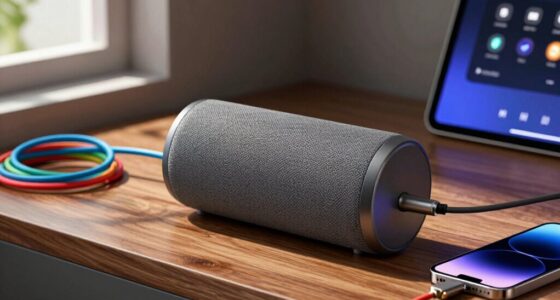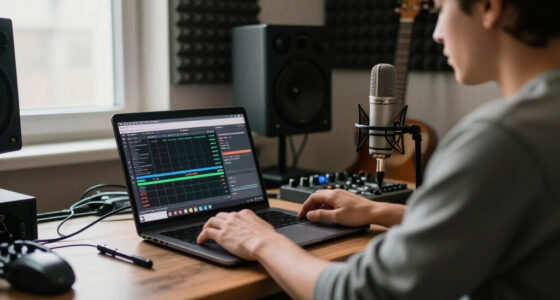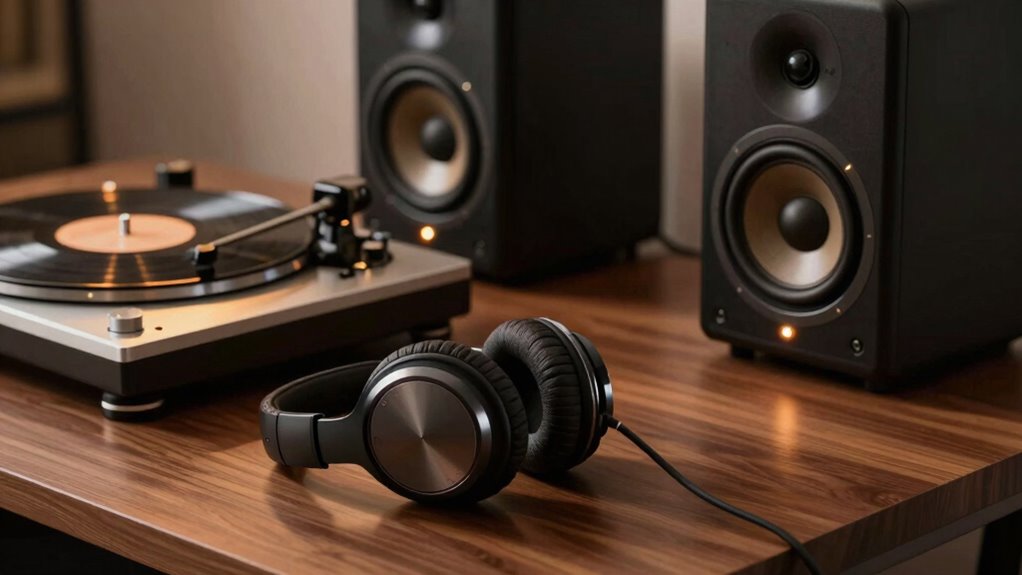
The reason some songs sound perfect on one setup and strange on another comes down to calibration, speaker placement, and room acoustics. Your equipment and environment affect how music is reproduced, with improper calibration or placement causing distortion or unbalanced sound. Headphones bypass room issues, making differences more noticeable. To get consistent quality, you need to optimize these factors. Keep exploring, and you’ll discover how small adjustments can make a big difference in your listening experience.

Get audio and creator gear delivered free with Prime
- Fast, free delivery on millions of items
- Prime Video, Amazon Music and more included
- Member-only deals all year
Key Takeaways
- Differences in calibration settings can cause variations in how frequencies are balanced across setups.
- Speaker placement influences sound wave interactions, affecting clarity and perceived tonality.
- Room acoustics can introduce echo, phase issues, or muffling, altering the listening experience.
- Headphones bypass room effects, making calibration more noticeable and consistent.
- Inconsistent calibration and placement lead to discrepancies in sound quality between setups.
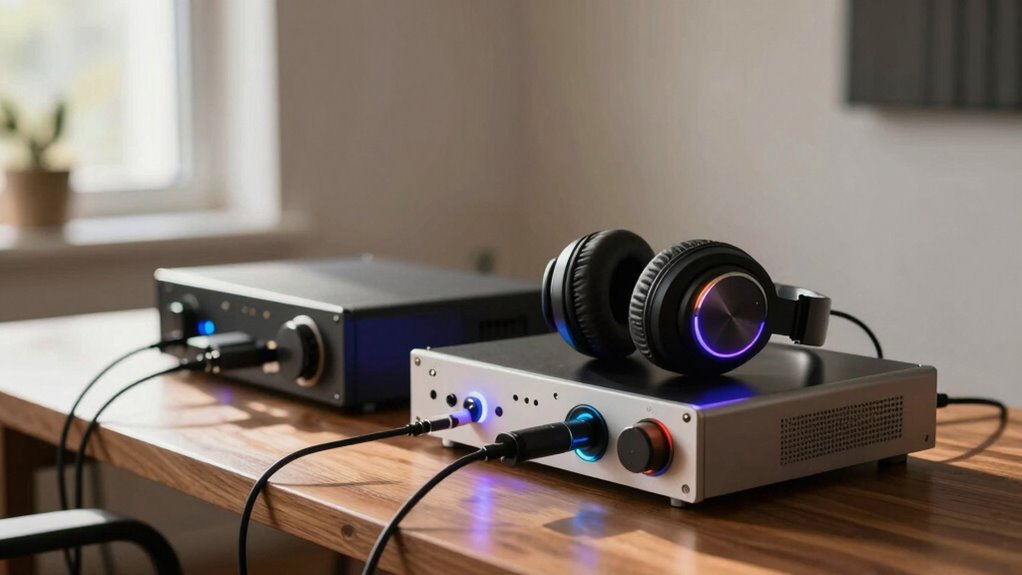
Have you ever noticed that a song sounds perfect on your headphones but feels off when played through your car’s stereo? It’s a common experience, and the reason often boils down to how your audio setup interacts with the environment. Two key factors influence this: audio calibration and speaker placement. When you understand how these elements work together, you’ll realize why some songs sound incredible on one setup and weird on another. Proper audio calibration ensures your sound system accurately reproduces the music as intended, minimizing distortions caused by room acoustics or equipment limitations.
Audio calibration is about fine-tuning your sound system so it produces the best possible audio quality in your specific space. When you calibrate, you’re adjusting levels, equalization, and sometimes even time alignment to compensate for room acoustics and speaker characteristics. If your calibration isn’t set properly, your speakers might be emphasizing certain frequencies or creating phase issues, which can make a familiar song sound distorted or unnatural. Headphones, on the other hand, deliver sound directly to your ears without interference from room acoustics, so they often seem more accurate. That’s why a track can sound pristine on your headphones but weird through your car stereo if calibration isn’t optimized for your vehicle environment.
Speaker placement plays a crucial role too. The position of your speakers determines how sound waves travel and interact with your surroundings. For example, if your speakers are too close to walls or corners, they can create booming bass or muddled sound, altering the intended mix of a song. Proper placement involves positioning speakers at ear level, equidistant from your listening position, and away from reflective surfaces that can cause echo or phase cancellation. When your speakers are correctly placed, the sound reaches your ears as the artist intended, preserving clarity and balance. But if they’re awkwardly placed—say, behind a pillar or too close to a wall—the sound can become skewed, making familiar tracks feel unfamiliar or off. Additionally, speaker placement can influence how your brain perceives the sound, affecting overall clarity and tonal balance. Understanding the importance of room acoustics can also help you optimize your setup further, ensuring the sound quality is as close to the original recording as possible.
A well-balanced system also considers sound quality and how various frequencies are emphasized or subdued, which can be affected by both calibration and placement. In essence, what you’re hearing depends heavily on how well your system is calibrated and where your speakers are positioned. Even if you have a high-end setup, poor calibration or bad speaker placement can sabotage your listening experience. Conversely, a well-calibrated system with thoughtfully placed speakers can make your favorite songs sound just as good as in a professional studio. So, the next time a song feels weird on your setup, check your calibration and experiment with speaker placement. It might just be the difference between a good listen and a great one.
As an affiliate, we earn on qualifying purchases.
Frequently Asked Questions
How Do Room Acoustics Affect Song Sound Quality?
Room acoustics directly influence your song’s sound quality by affecting sound reflections, clarity, and bass response. The room dimensions determine how sound waves bounce and interfere, while acoustic treatments help absorb or diffuse unwanted echoes. When you optimize these factors, your setup delivers clearer, more balanced audio. Without proper room acoustics and treatments, even the best recordings can sound dull or muddy, impacting your overall listening experience.
What Role Does Headphone Type Play in Sound Perception?
You perceive sound differently based on your headphone type because of its sound signature and comfort. If your headphones emphasize bass or treble, you’ll experience a distinct sound that can make songs feel different than on other setups. Comfort also plays a role—if headphones fit poorly, your perception of sound quality diminishes. Selecting headphones with a balanced sound signature and good comfort guarantees you enjoy music as intended, enhancing your listening experience.
Can Playback Equipment Calibration Improve Sound Consistency?
Yes, calibration can improve sound consistency by ensuring your playback equipment accurately reproduces the audio signal and frequency response. When you calibrate your setup, you adjust settings to match the original recording’s intended sound, reducing discrepancies caused by different hardware. This process helps maintain clarity, balance, and tonal accuracy across various listening environments, so you enjoy a more uniform, high-quality experience regardless of the equipment you use.
How Does Speaker Placement Influence Audio Experience?
Think of speaker placement as a secret recipe for perfect sound—your setup shapes your listening experience. Proper speaker positioning guarantees balanced audio and clear imaging, while strategic placement minimizes reflections and echoes. By fine-tuning your speakers’ position, you enhance your audio tuning, making music more immersive and true to life. Small adjustments can transform your space into a concert hall, proving that where you place your speakers truly matters.
Do Personal Hearing Differences Affect How Songs Sound?
Yes, your personal hearing differences considerably affect how songs sound to you. Auditory perception varies due to hearing variability, meaning your ears process frequencies and sound cues differently than others. This can make certain songs seem richer, distorted, or dull depending on your hearing sensitivity. So, even with the same setup, your unique auditory perception shapes your listening experience, making some songs sound better or worse based on your individual hearing profile.
As an affiliate, we earn on qualifying purchases.
Conclusion
So, next time your favorite song sounds off on a different setup, remember it’s all about how your gear interacts with the track’s unique mix. Did you know that nearly 70% of listeners report noticing significant differences in sound quality across various devices? It’s a reminder that your setup shapes your listening experience more than you might realize. Embrace those differences—they’re part of what makes music listening so personal and exciting.
As an affiliate, we earn on qualifying purchases.
high-quality headphones for audio mixing
As an affiliate, we earn on qualifying purchases.
As an affiliate, we earn on qualifying purchases.
Halloween Picks
halloween
As an affiliate, we earn on qualifying purchases.