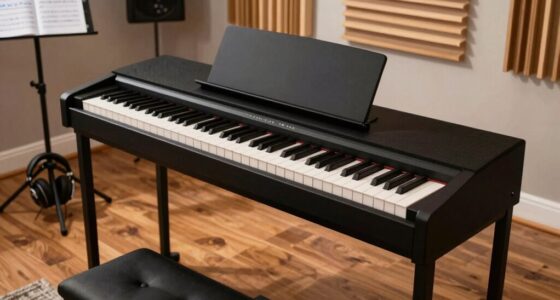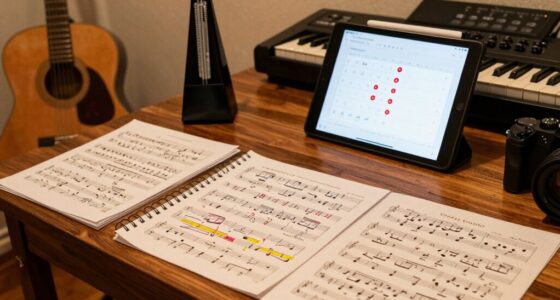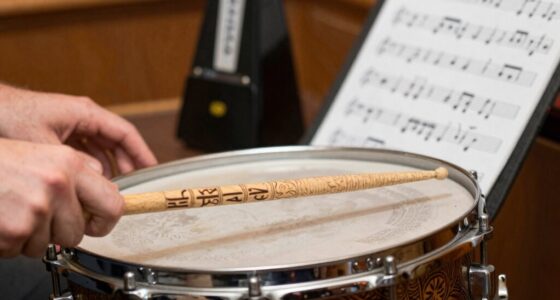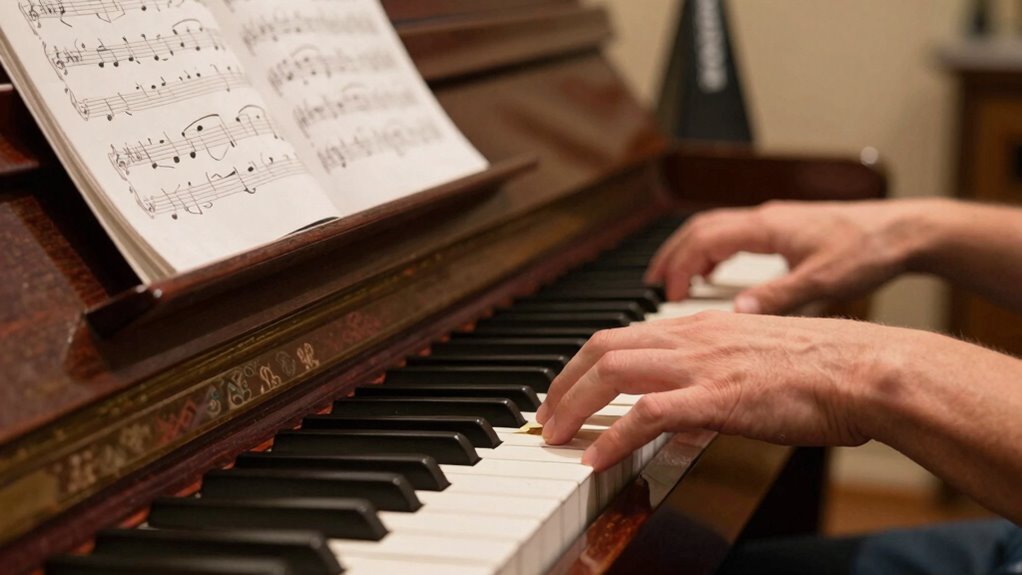

To build better musical memory without boredom, mix up your practice routines by playing at different tempos, transposing sections, and adding improvisations. Use visual, auditory, and kinesthetic techniques to keep your mind engaged, and break the music into smaller chunks to master each part. Incorporate storytelling, imagery, and rhythmic mnemonics to strengthen recall. Keep things stimulating and varied—if you stay curious, you’ll discover even more ways to make memorization enjoyable.

Get audio and creator gear delivered free with Prime
- Fast, free delivery on millions of items
- Prime Video, Amazon Music and more included
- Member-only deals all year
Key Takeaways
- Incorporate varied practice routines, tempos, and keys to keep sessions engaging and stimulate different aspects of memory.
- Use multisensory techniques like visualization, singing, and movement to deepen internalization and prevent monotony.
- Break music into manageable chunks and gradually connect them, making memorization feel like solving a stimulating puzzle.
- Add improvisation, rhythmic variations, or transpositions to challenge your memory creatively and maintain interest.
- Combine notation study with storytelling, imagery, or emotional associations to make memorization more engaging and memorable.
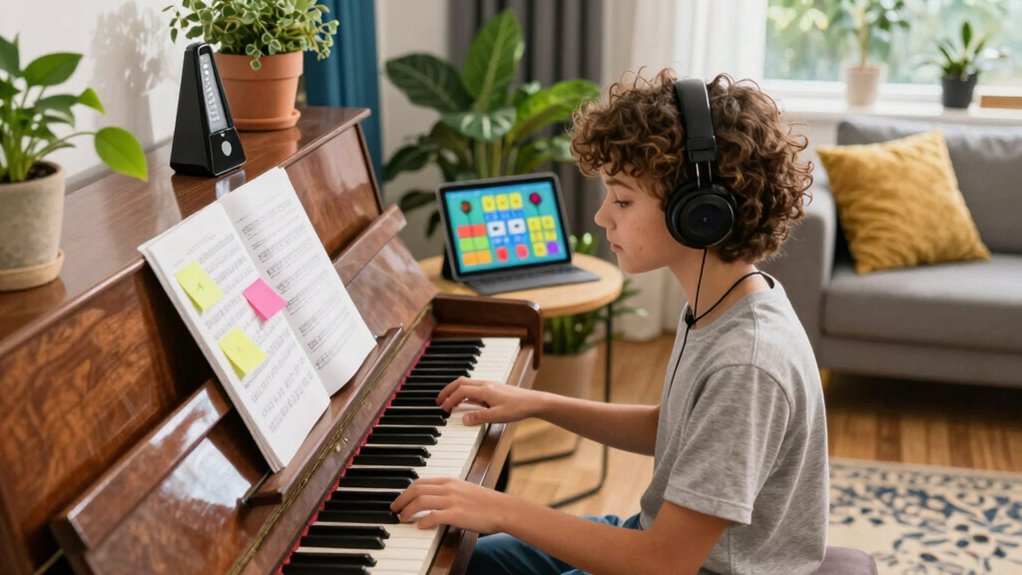
Have you ever wondered why some people remember melodies effortlessly while others struggle? The secret often lies in how you approach learning music and the strategies you use. Building better musical memory isn’t just about endless repetition; it’s about engaging your brain in smarter ways. One effective method is understanding musical notation. When you familiarize yourself with musical notation, you create a visual map of the piece, which helps your brain process and recall melodies more efficiently. Instead of just playing by ear or relying on muscle memory, you start to see the structure of the music—notes, rhythms, and patterns—which makes memorization more intuitive.
Understanding musical notation creates a visual map, making melody recall more intuitive and structured.
But simply reading notation isn’t enough. You need to incorporate memory techniques that make the learning process lively and engaging. For example, chunking is a powerful tool. Break the piece into smaller sections or phrases, and focus on mastering each one individually before connecting them. This approach prevents overwhelm and cements each part firmly in your mind. Additionally, associating parts of the melody with emotions, stories, or images can strengthen your recall. If a certain passage makes you think of a happy memory, that emotional connection helps lock it into your memory more securely.
To keep practice from feeling boring, you should vary your methods. Instead of always playing through the same sections repeatedly, try changing your practice routine. Play the melodies at different tempos, add improvisations, or transpose sections into different keys. These variations stimulate your brain and prevent routines from becoming monotonous. Incorporating rhythm claps, singing, or even visualizing the music can also make memorization more dynamic and enjoyable. Exploring varied practice techniques can also enhance your musical memory and keep your sessions engaging. Moreover, experimenting with different learning environments or incorporating multisensory methods can further deepen your connection to the music and improve retention. Using mnemonic devices tailored for musical elements can be surprisingly effective. For instance, associating specific rhythms with words or phrases can help you internalize difficult passages faster. Combining these memory techniques with active engagement ensures that your mind stays alert and interested, rather than bored or disengaged. Remember, the goal is to develop a deep internalization of the music—so it becomes second nature—without sacrificing enjoyment along the way. As you integrate understanding musical notation with creative memory techniques, you’ll find that memorizing melodies becomes less about tedious repetition and more about an engaging mental puzzle. This way, you build a stronger, more resilient musical memory that makes performing and improvising much more natural and enjoyable. Additionally, exploring innovative learning strategies can further reinforce your musical memory and keep your practice sessions fresh and stimulating. Fostering a multisensory approach by combining auditory, visual, and kinesthetic methods can also deepen your connection to the music and enhance overall retention. Strengthening your musical memory through these diverse methods allows for more effortless and expressive performances.
As an affiliate, we earn on qualifying purchases.
Frequently Asked Questions
Can Musical Memory Improve With Age?
Yes, musical memory can improve with age, thanks to aging benefits like accumulated experience and continued mental engagement. While memory decline is common, regular musical practice helps keep your brain active, enhancing memory retention and recall. By consistently challenging yourself with new pieces or techniques, you strengthen neural pathways, making your musical memory more resilient as you age. So, staying musically active benefits your brain at any age.
What’s the Role of Physical Movement in Memory?
Physical movement plays a crucial role in memory through kinesthetic learning and embodied cognition. When you move, you engage your body and brain simultaneously, creating stronger neural connections. This active participation helps you remember musical patterns more effectively. Incorporate gestures, movements, or even dancing while practicing. By doing so, you make the learning process more engaging and memorable, ultimately enhancing your musical memory and making practice sessions more enjoyable.
How Long Does It Take to See Progress?
You’ll see progress in as little as a few weeks if you stay consistent with your practice and focus on targeted listening. Remember, Rome wasn’t built in a day; patience and dedication pay off. By practicing regularly and tuning into the details, your musical memory improves steadily. Stick with it, and you’ll notice your ability to recall and perform pieces becomes more natural and confident over time.
Are There Specific Genres Better for Memory?
Certain genres can boost your musical memory more effectively, especially those with complex structures like classical or jazz. Genre diversity helps, exposing you to various patterns and styles, which strengthens memory. Your listening habits also matter—frequently revisiting different genres deepens neural connections. So, mix it up and listen actively across genres; this variety keeps your brain engaged and enhances your ability to remember music longer.
Can Musical Memory Help With Language Skills?
Think of musical memory as a bridge, connecting your mind to language acquisition. When you strengthen your musical memory, you’re fundamentally training your brain to recognize patterns, tones, and rhythms—skills that translate well to language learning. This mental symphony enhances your pronunciation, vocabulary, and comprehension. So, by practicing music, you’re not just memorizing melodies; you’re also empowering your ability to grasp new languages more effortlessly.
As an affiliate, we earn on qualifying purchases.
Conclusion
Building better musical memory doesn’t have to be dull. By keeping practice engaging with varied techniques, you’ll stay motivated and improve faster. Did you know that musicians with strong memory skills can recall pieces up to 30% faster? So, make your practice enjoyable and challenge yourself with new methods. Remember, the more fun you have, the more your brain will remember. Keep experimenting, stay inspired, and watch your musical memory flourish!
musical improvisation practice tools
As an affiliate, we earn on qualifying purchases.
As an affiliate, we earn on qualifying purchases.
multisensory music learning aids
As an affiliate, we earn on qualifying purchases.
As an affiliate, we earn on qualifying purchases.
Fall Picks
fall essentials
As an affiliate, we earn on qualifying purchases.