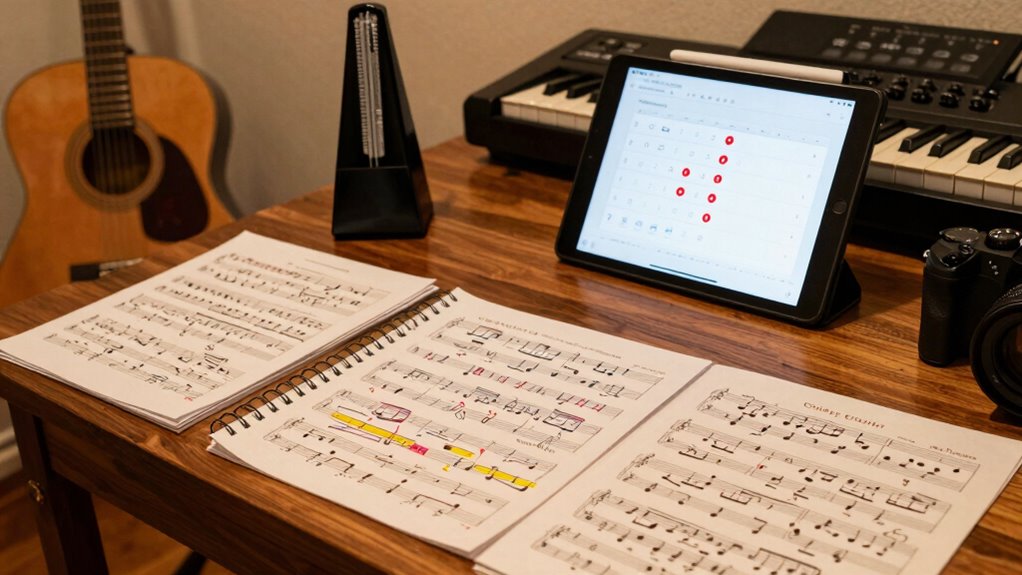

To build a practice setlist that targets your weak spots, first identify the areas where you struggle, such as rhythm, fingerwork, or technique. Break down challenging sections into manageable parts and focus on them deliberately. Mix easier drills with more difficult material to prevent frustration while pushing your boundaries. Regularly update your setlist by removing mastered exercises and adding new challenges, ensuring continuous growth. Keep exploring the steps to refine your approach even further.

Get audio and creator gear delivered free — and shop member deals
- Fast, free delivery on millions of items
- Access to Prime Big Deal Days deals on October 6–7
- Prime Video, Amazon Music and more included
Key Takeaways
- Identify specific technical or musical weaknesses through self-assessment or feedback.
- Include targeted exercises that focus exclusively on problematic sections or skills.
- Break down difficult passages into manageable parts, practicing slowly to build mastery.
- Balance challenging material with simpler drills to reinforce confidence and prevent frustration.
- Regularly review and update the setlist to address evolving weak spots and track progress.

Creating a practice setlist is a essential step in improving your skills and staying motivated. When you design your setlist thoughtfully, you guarantee that each session targets specific areas for growth, helping you progress more efficiently. One of the key aspects of crafting an effective setlist is employing techniques for effective practice. These techniques include breaking down complex passages into manageable sections, focusing on tricky spots, and gradually increasing the difficulty level. By doing so, you prevent frustration and build confidence as you master each part.
Balancing difficulty levels is also imperative. If your setlist contains only easy exercises, you might not challenge yourself enough to improve. Conversely, consistently practicing very difficult pieces can lead to frustration and burnout. Instead, aim for a mix of exercises that range from simple drills to more challenging passages. This balance pushes your skills without overwhelming you, allowing steady progress. For example, start with warm-up exercises that are straightforward, then work on segments that target your weaker spots, and finish with more advanced material to consolidate your skills. This approach ensures you’re continually building on your strengths while addressing your weaknesses.
When selecting exercises for your setlist, focus on identifying your weak spots. Pinpoint the techniques or sections where you struggle most, and dedicate specific practice time to them. If you notice you’re having trouble with a particular rhythm or fingering, include exercises that isolate those issues. Repetition is key, but it’s important to keep it deliberate and focused. Instead of mindlessly playing through a piece, slow down, isolate problem areas, and work on them with patience. This targeted approach accelerates improvement and makes your practice sessions more productive.
In addition, vary your practice methods to stay engaged and avoid stagnation. Incorporate scales, technical drills, and sight-reading along with your repertoire. This helps develop a well-rounded skill set and prevents boredom. Keep your setlist flexible; as you improve, update it to include new challenges and remove exercises you’ve mastered. This dynamic process keeps your practice sessions fresh and aligned with your evolving goals. Moreover, utilizing high-quality projectors can create an inspiring environment, boosting motivation and focus during practice.
Ultimately, building a practice setlist that targets weak spots requires deliberate planning. By applying techniques for effective practice, balancing difficulty levels, and focusing on areas needing improvement, you create a clear, purposeful path toward mastery. Your consistent, intentional efforts will lead to steady progress, greater confidence, and a more enjoyable musical journey.
musical practice setlist organizer
As an affiliate, we earn on qualifying purchases.
As an affiliate, we earn on qualifying purchases.
Frequently Asked Questions
How Often Should I Update My Practice Setlist?
You should update your practice setlist every few weeks to keep progressing. Regular updates allow you to add new pieces for repertoire expansion and focus on refining techniques that need improvement. Listen to yourself and assess your strengths and weaknesses; if something feels stagnant, it’s time for a change. This way, your practice remains effective, engaging, and targeted toward your growth as a musician.
What if I Struggle to Identify My Weak Spots?
If you struggle to identify your weak spots, start a musical self-evaluation by recording yourself playing and listening critically. Seek expert feedback from a teacher or seasoned musician to gain insights. They can help you pinpoint specific areas needing improvement. Regularly assessing your progress and being open to feedback will make it easier to recognize weaknesses, so you can tailor your practice setlist effectively.
How Can I Stay Motivated During Targeted Practice?
Ever wonder how you stay motivated during targeted practice? You can boost your mental resilience by setting clear, achievable goals for each session. Break down your practice into small milestones, celebrating progress along the way. Keep reminding yourself why you started, and visualize success. Staying focused on your growth fuels motivation, making even the toughest drills feel worthwhile. With consistent effort, you’ll see improvement and stay inspired to push forward.
Should I Include New Pieces Alongside Challenging Ones?
Yes, you should include new pieces alongside challenging ones to balance your repertoire and keep things fresh. This approach helps you avoid burnout and maintains your motivation. Prioritize difficulty by focusing on the tricky sections of both new and familiar pieces. Mixing challenging and easier material creates variety, making your practice sessions more engaging and effective. This balanced setlist ensures steady progress while preventing frustration.
How Long Should I Spend on Each Practice Session?
You should aim for a practice duration of about 30 to 60 minutes per session, depending on your schedule and focus. Break this into focused segments, like 15-20 minutes on weak spots and challenging pieces, with short breaks in between. Keep your session length manageable to maintain concentration and avoid fatigue. Consistent, focused practice sessions help you improve steadily without burnout.
As an affiliate, we earn on qualifying purchases.
Conclusion
Your practice setlist is like a garden—tend to its weeds, nurture its blooms. Focus on your weak spots, just as a gardener clears the weeds to let the flowers flourish. With each targeted session, you’re cultivating growth and resilience. Remember, every effort is a seed planted in your musical landscape. Keep tending, keep growing—soon, your strengths will bloom brighter than ever, transforming your practice into a vibrant, thriving masterpiece.
As an affiliate, we earn on qualifying purchases.
As an affiliate, we earn on qualifying purchases.
Halloween Picks
halloween
As an affiliate, we earn on qualifying purchases.