


Chord progressions are the familiar patterns of chords that form the harmonic foundation of jam music, guiding mood and interaction. Common progressions like 12-bar blues, ii–V–I, and I–IV–V appear everywhere, making it easier for musicians to improvise and communicate. These progressions foster confidence and spontaneity. If you keep exploring, you’ll discover how to identify, adapt, and creatively incorporate these patterns into your own jam sessions.
Key Takeaways
- Common jam session progressions include 12-bar blues, ii–V–I, and I–IV–V, providing familiar harmonic frameworks.
- Recognizing these patterns helps musicians improvise smoothly and anticipate chord changes.
- Modal interchange and rhythmic variations add color and complexity to standard progressions.
- Repeating progressions foster musical communication and spontaneous improvisation among players.
- Developing ear skills for these patterns enhances musical intuition and improvisational confidence.
Blue Note – Blues Guitar Chord Progressions and Blues Scales in 12 Major Keys
As an affiliate, we earn on qualifying purchases.
As an affiliate, we earn on qualifying purchases.
What Are Chord Progressions, and Why Do They Matter in Jam Music?
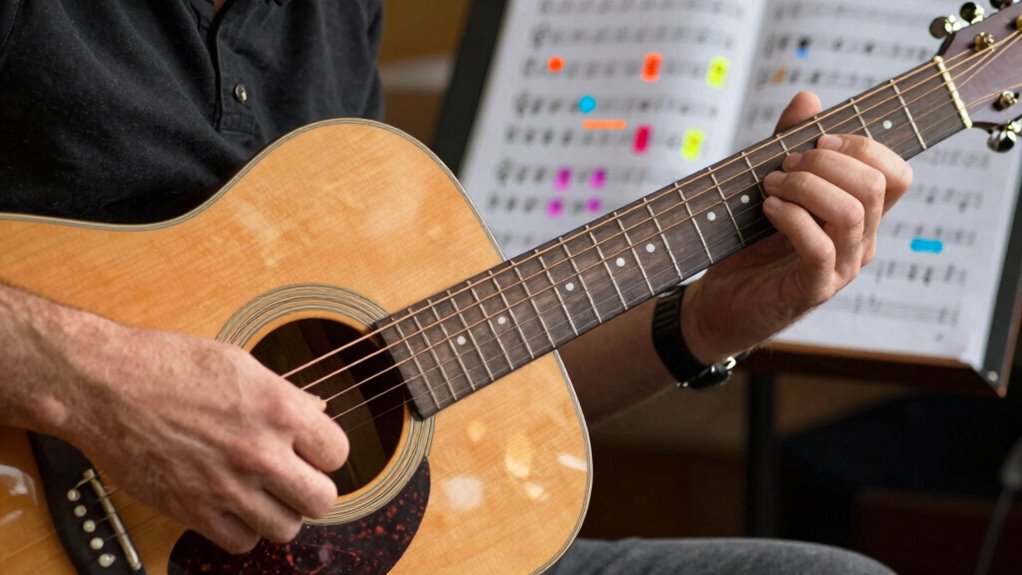
What exactly are chord progressions, and why are they so important in jam music? Chord progressions are sequences of chords that create the harmonic foundation of a song. They’re essential because they guide the mood and energy, shaping the emotional impact on listeners and performers alike. Understanding music theory helps you recognize how these progressions work, making it easier to improvise and communicate with fellow musicians. In jam sessions, familiar progressions give you a shared language, allowing everyone to build on a common harmonic framework. Whether you’re creating tension or resolution, chord progressions set the tone and keep the music flowing smoothly. Mastering them elevates your ability to connect emotionally through your playing, making your jams more compelling. Additionally, contrast ratios influence how clearly these progressions are perceived, especially in different lighting and acoustic environments.

ii V I Two Five One Jazz Chord Progression Music: Guitar Tab Notebook
As an affiliate, we earn on qualifying purchases.
As an affiliate, we earn on qualifying purchases.
The Most Common Chord Progressions Used in Jam Sessions
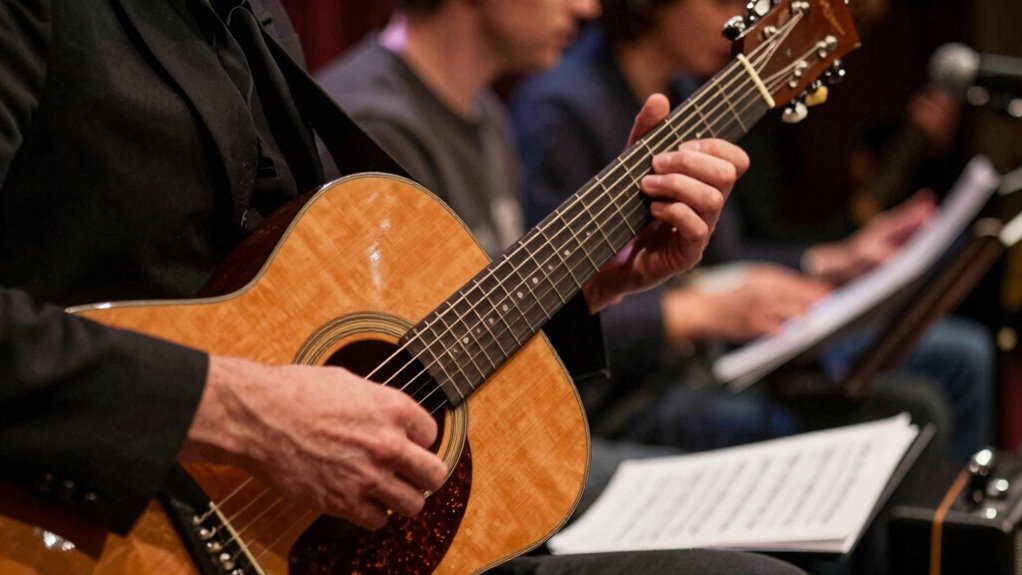
In jam sessions, certain chord progressions tend to come up repeatedly because they provide a familiar framework for improvisation and group cohesion. The 12-bar blues is a classic example, with its simple, repeating rhythmic pattern that everyone recognizes. Another common progression is the ii–V–I, frequently used in jazz jams, often incorporating modal scales like Dorian or Mixolydian to add flavor. These progressions often rely on specific rhythmic patterns that encourage interaction, making it easier for players to anticipate changes. The I–IV–V progression also appears often, especially in rock and blues jams, grounded in straightforward rhythmic cycles. Mastering these progressions helps you improvise confidently, knowing the familiar patterns and modal scales that fit seamlessly within them.

Guitar Scales & Modes Chart 18×36 Inch – Complete Guitar Scale Reference with Pentatonic, Blues & Modes – Improve Soloing, Improvisation & Guitar Theory, Rolled in Tube, Not Folded
Master Essential & Intermediate Scales – Includes Pentatonic, Blues, Ionian, Aeolian, Dorian, Mixolydian, Phrygian, Lydian, Melodic & Harmonic…
As an affiliate, we earn on qualifying purchases.
As an affiliate, we earn on qualifying purchases.
How Familiar Progressions Make Improvisation and Interaction Easier
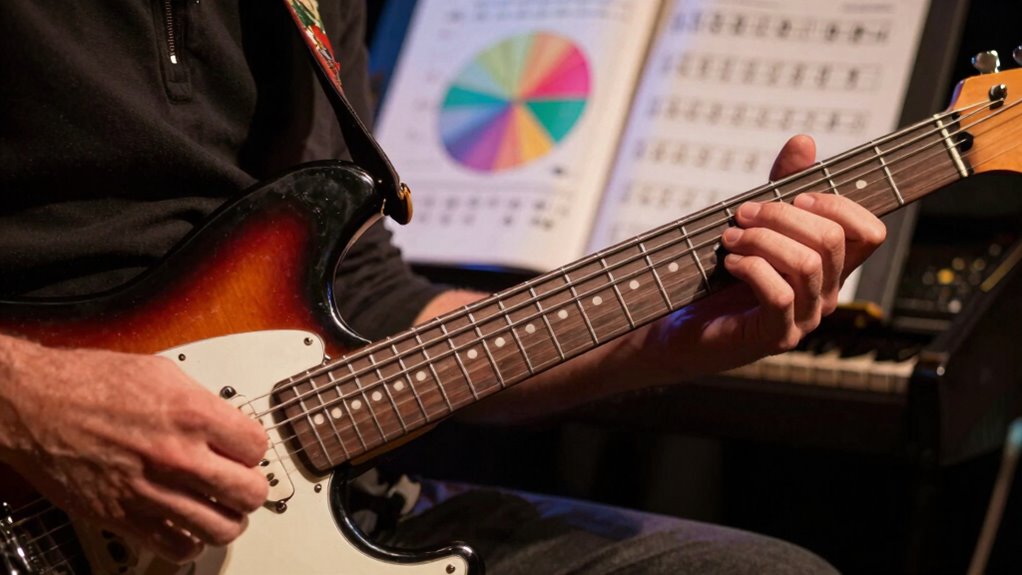
Familiar chord progressions simplify improvisation and group interaction because they create a shared musical language. When everyone recognizes common patterns, it’s easier to follow each other’s cues, anticipate progressions, and respond creatively. Knowing these progressions helps you navigate rhythm patterns smoothly, keeping the groove tight. Additionally, familiar progressions often involve modal shifts, which add color without confusion, making improvisation feel natural. Recognizing these patterns can also boost confidence for musicians, encouraging more spontaneous and expressive playing. shared musical language allows for more seamless collaboration and a deeper connection among players.

Pearl Jam: Single Video Theory
Factory sealed DVD
As an affiliate, we earn on qualifying purchases.
As an affiliate, we earn on qualifying purchases.
Creative Ways to Vary and Modify Classic Jam Progressions

To keep jam sessions fresh and engaging, you can creatively vary and modify classic progressions instead of sticking to the standard patterns. One effective method is using modal interchange—borrowing chords from parallel modes to add unexpected color and complexity. For example, swapping a major chord for its minor relative creates a surprising shift in mood. Rhythmic variation also energizes your playing; experiment with syncopation or changing the strumming pattern to break the predictability. You might also combine modal interchange with rhythmic shifts, such as emphasizing certain chords on off-beats, to create dynamic tension. Exploring chord voicings and inversions can further enrich your harmonic palette, making your progressions more interesting. These techniques keep your progressions interesting, encourage spontaneous creativity, and help you develop a more versatile approach to jam music.
Tips for Recognizing and Incorporating Jam Progressions Into Your Playing
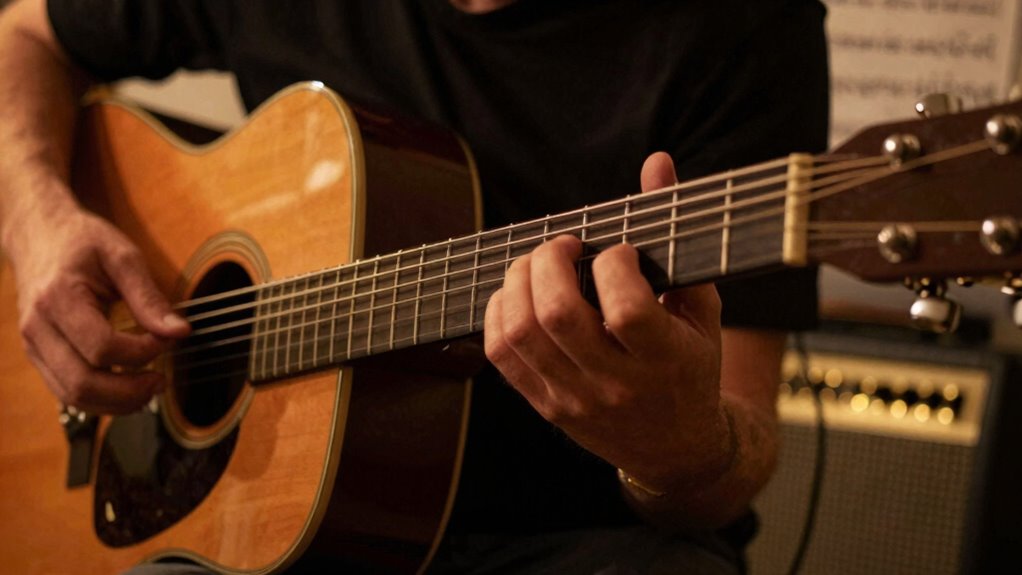
Recognizing jam progressions by ear is a valuable skill that can substantially enhance your improvisation and musical intuition. To do this, focus on identifying common rhythm patterns and listening for subtle modal interchange moments, which often signal key shifts. Practice by isolating sections and humming along to internalize the chord changes. Additionally, understanding the vintage design elements of the music’s context can help you better anticipate typical progression patterns found in retro styles.
Frequently Asked Questions
How Do Different Genres Influence Jam Chord Progression Choices?
Genre influence and cultural variations shape your jam chord progressions profoundly. For example, jazz often uses complex, extended chords, while blues favors simple, soulful progressions. Latin music incorporates rhythmic, modal patterns, and rock tends to emphasize power chords. Your choice reflects these genre influences and cultural variations, guiding your improvisation and creating authentic, genre-specific sounds that resonate with listeners and enrich your musical expression.
Can Understanding Progressions Improve Songwriting Beyond Jam Sessions?
Your songwriting can skyrocket beyond ordinary with a solid grasp of progressions. Understanding harmony theory and common patterns enables you to craft compelling melodies and emotional shifts. By applying these techniques, you’ll create more cohesive and memorable songs, elevating your music’s impact. Progressions aren’t just for jam sessions—they’re the backbone of powerful songwriting, helping you communicate your unique voice with clarity and finesse.
Are There Cultural Differences in Common Jam Progressions Worldwide?
Yes, there are cultural variations in common jam progressions worldwide. You’ll notice regional styles influence chord choices and structures, reflecting local musical traditions. For example, jazz in the US often uses complex progressions, while African and Middle Eastern styles favor modal or rhythmic-based progressions. By exploring these cultural differences, you can expand your musical vocabulary, inspiring new ideas and authentic expressions in your jam sessions.
How Do Live Performances Impact the Use of Standard Progressions?
Live performances greatly influence the use of standard progressions through live improvisation and audience influence. As a musician, you might deviate from typical patterns to surprise your audience or respond to their energy, creating a unique experience. Audience reactions can inspire you to extend, alter, or simplify progressions, making each performance distinctive. This dynamic interaction keeps jam sessions fresh, emphasizing spontaneity and personal expression over rigid adherence to common progressions.
What Tools or Software Can Help Analyze Jam Chord Progressions?
Think of analyzing jam chord progressions as hitting two birds with one stone. Software tools like Capo, Chordify, and Ableton Live offer powerful chord analysis features that make this easy. These tools help you identify patterns and understand the flow of chords in real time. By using them, you can deepen your musical insight, improve improvisation, and capture those spontaneous moments that make live performances magic.
Conclusion
Understanding common jam progressions can boost your improvisation and connection with other musicians. Did you know that over 60% of jam sessions feature just a handful of familiar patterns? Recognizing these can make your playing more confident and spontaneous. So, keep listening, practicing, and experimenting with these progressions—you’ll find yourself blending seamlessly into any jam and creating music that feels both fresh and rooted.