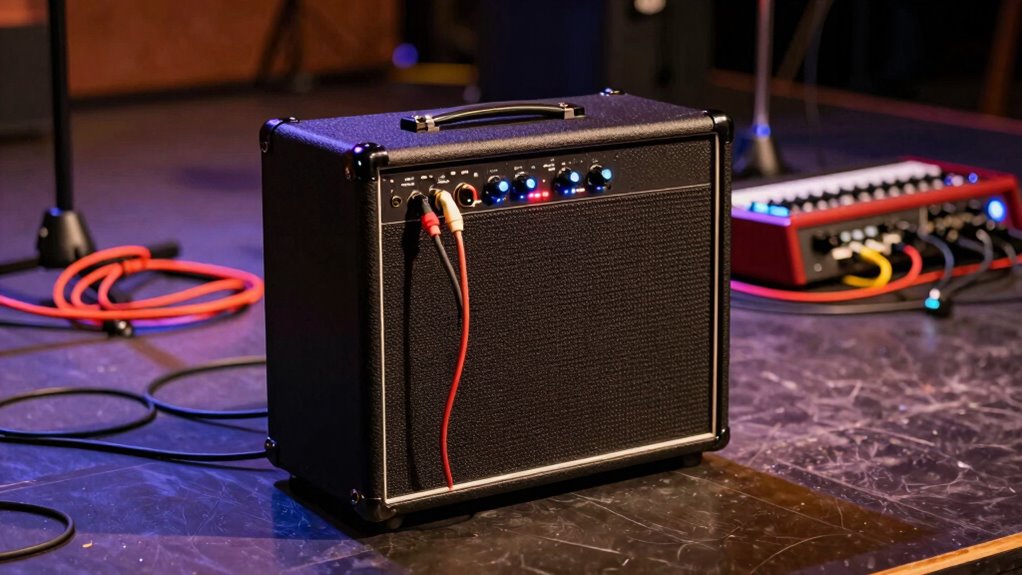
When choosing a keyboard amplifier for rehearsal rooms and stage use, focus on good sound dispersion to evenly cover the space and prevent dead zones. Make sure it has enough power—smaller rooms need a few hundred watts, while larger stages may require over 500—to deliver clear, balanced sound without distortion. Proper cooling and wattage are essential for reliability during long gigs. Keep these factors in mind, and you’ll be prepared for any performance scenario—there’s more to discover as you explore further.

Get audio and creator gear delivered free with Prime
- Fast, free delivery on millions of items
- Prime Video, Amazon Music and more included
- Member-only deals all year
Key Takeaways
- Choose amplifiers with wide sound dispersion to ensure even coverage across rehearsal and stage areas.
- Match wattage to room size: smaller rooms need a few hundred watts, larger stages require 500+ watts.
- Ensure proper cooling systems to prevent overheating during extended use and maintain consistent performance.
- Use built-in volume controls and limiters to prevent distortion and protect equipment.
- Combine effective sound dispersion with appropriate power management for clear, balanced, and powerful sound.
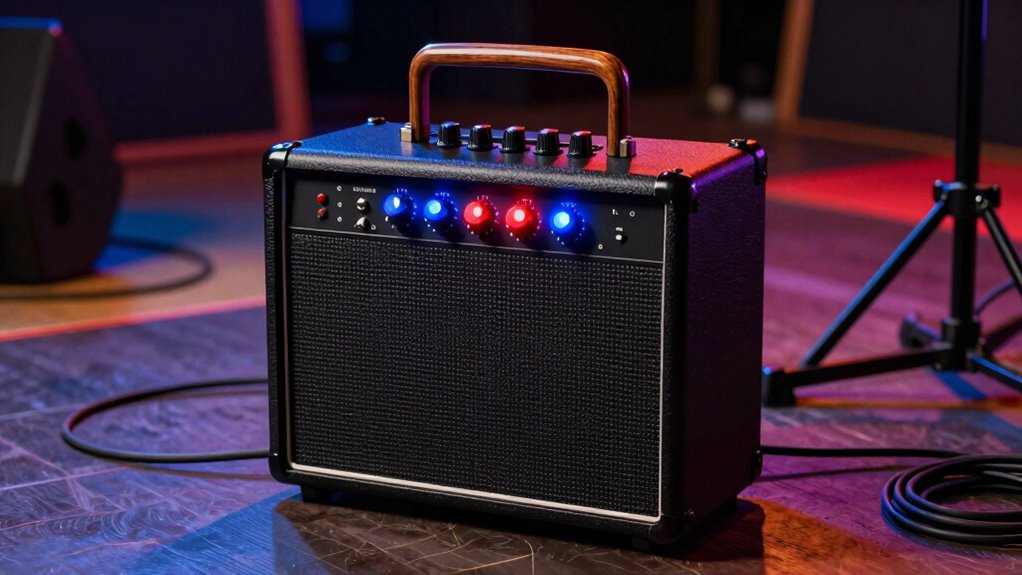
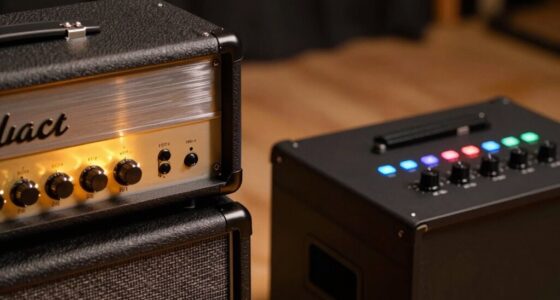
If you’re looking to amplify your keyboard sound, understanding the basics of keyboard amplifiers is essential. These devices are designed to project your sound clearly across rehearsal rooms or onto the stage, ensuring your performance is heard by everyone. One of the key factors to contemplate is sound dispersion. Good sound dispersion means your keyboard’s tone spreads evenly throughout the space, preventing dead zones or overly loud spots. When choosing an amplifier, look for models that offer wide dispersion angles, which help distribute sound more uniformly. This helps create a more balanced sound that reaches every corner of your performance area. This guarantees your keyboard’s tone reaches the entire audience or band members without the need for excessive volume. Proper sound dispersion also reduces feedback and muddiness, giving your performance a cleaner, more professional quality. Additionally, selecting an amplifier with solid sound dispersion features can significantly improve your overall sound clarity. Power management is equally important when selecting a keyboard amplifier. It determines how effectively the amplifier converts electrical energy into sound output. An amplifier with insufficient power may struggle to fill larger spaces or compete with other band members, resulting in a weak or muffled sound. Conversely, an overly powerful amp can lead to distortion or damage to your equipment if not properly managed. Ideally, you want an amp that provides enough headroom for your typical playing volume while maintaining clarity and tone quality. Many models come with built-in volume controls and limiters, which help regulate power output and prevent your sound from clipping or distorting during intense playing. Good power management also involves choosing an amplifier with appropriate wattage ratings for your venue size. Smaller rehearsal rooms might only need a few hundred watts, while larger stages could require 500 watts or more. Proper cooling systems are also crucial, as they help prevent overheating and maintain consistent performance during long sessions and contribute to amplifier longevity. Being aware of the amplifier’s power handling capacity ensures you select a model that can meet your specific performance needs without risking damage. When contemplating your amplifier’s features, think about how it handles sound dispersion and power management together. An amplifier with well-designed dispersion features and smart power controls helps you achieve a balanced, clear, and powerful sound, no matter the size of the room or stage. Considering amplifier durability can also ensure your equipment withstands the rigors of frequent gigs and rehearsals. By focusing on these aspects, you’ll ensure your keyboard’s tone is heard loud and clear, with consistent quality throughout every performance. Ultimately, understanding sound dispersion and power management helps you select an amplifier that complements your playing style and venue demands, giving you confidence in every rehearsal and show.
keyboard amplifier with wide sound dispersion
As an affiliate, we earn on qualifying purchases.
As an affiliate, we earn on qualifying purchases.
Frequently Asked Questions
How Do I Connect My Keyboard to a Keyboard Amplifier?
To connect your keyboard to a keyboard amplifier, first check the keyboard’s connectivity options—most have a standard 1/4-inch output. Use a compatible cable to connect this output to the amplifier’s input, confirming amplifier compatibility. Turn on the amplifier first, then your keyboard, and adjust volume levels gradually. This setup ensures clear sound reproduction while preventing damage and guarantees your gear works seamlessly together.
What Is the Ideal Wattage for Rehearsal Versus Stage Use?
For rehearsal, aim for an amplifier with around 50 to 100 watts, balancing sound quality and power efficiency without overwhelming your space. On stage, you need 200 watts or more to cut through the band’s sound, ensuring clear sound quality even at higher volumes. Higher wattage amps offer more headroom, but choose based on your venue size and sound needs to optimize both sound quality and power efficiency.
Can I Use a Guitar Amplifier for My Keyboard?
You can technically use a guitar amplifier for your keyboard, but guitar amps have limitations. They often lack keyboard-specific features like wider frequency response and dedicated channels, which are essential for clear, full sound. Guitar amps may distort or clip with keyboards, especially at higher volumes. For the best sound quality and reliability, it’s better to choose an amplifier designed for keyboards, which handles the full range and offers tailored controls.
How Do I Prevent Distortion at High Volumes?
To prevent distortion at high volumes, start by adjusting the gain control to avoid overloading the amplifier. Proper speaker placement is essential—place speakers away from walls and at ear level to reduce sound pressure buildup. If distortion persists, lower the volume slightly and check your input levels. These steps help maintain clear sound, ensuring your keyboard remains crisp and undistorted during performances or rehearsals.
What Features Should I Look for in a Stage Keyboard Amp?
When choosing a stage keyboard amp, look for durable construction to withstand gigs and transport. Prioritize features that allow sound customization, like multiple channels, tone shaping controls, and effects. These features help you tailor your sound to different venues and styles. A robust build ensures longevity, while versatile sound options give you control over your performance. This combination makes your amp dependable and adaptable for any stage situation.
200 watt keyboard amplifier for rehearsal
As an affiliate, we earn on qualifying purchases.
As an affiliate, we earn on qualifying purchases.
Conclusion
Understanding the basics of keyboard amplifiers is like having a reliable map for your musical journey. With the right amp, your sound cuts through the mix clearly and powerfully, whether in rehearsal or on stage. Remember to choose an amp that matches your needs and keep it properly maintained. When you get it right, you’ll perform with the confidence of a captain steering a steady ship through any musical storm.
stage keyboard amplifier with cooling system
As an affiliate, we earn on qualifying purchases.
As an affiliate, we earn on qualifying purchases.
keyboard amplifier with built-in limiter
As an affiliate, we earn on qualifying purchases.
As an affiliate, we earn on qualifying purchases.
Halloween Picks
halloween
As an affiliate, we earn on qualifying purchases.