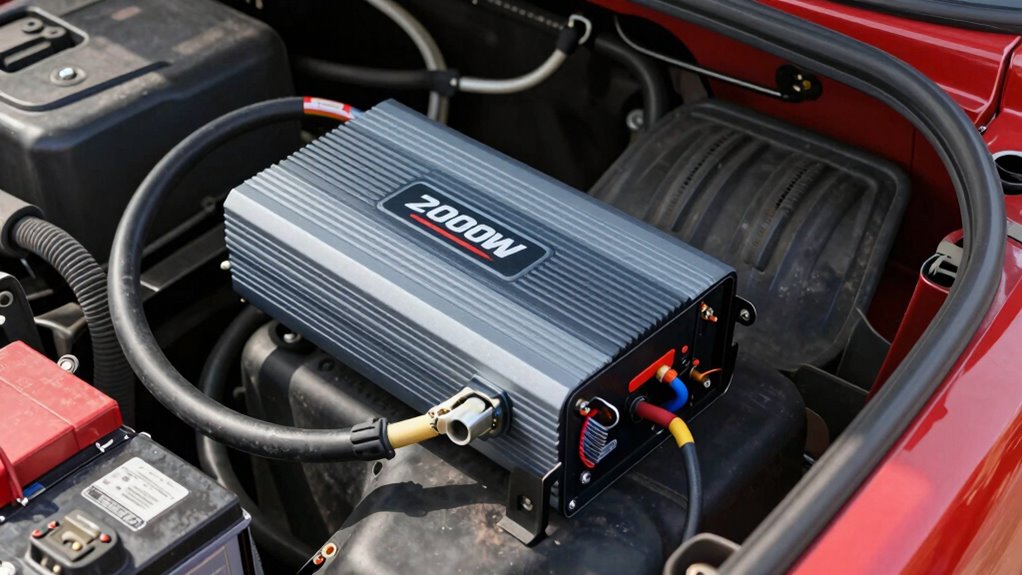
To avoid common mistakes when setting up a 2000W power inverter in your truck or SUV, make sure your battery can handle the load and use high-quality deep-cycle or AGM batteries. Always connect positive cables first, tighten all connections securely, and double-check wiring for exposed terminals or loose wires. Use the right tools and equipment, verify voltage levels, and secure all components properly. Paying attention to these details ensures safety and reliability—continue to explore essential tips for a smooth setup.
Key Takeaways
- Confirm inverter specifications match your vehicle’s battery capacity and power requirements.
- Use high-quality, appropriately rated cables and secure all connections tightly with insulated tools.
- Connect positive (red) cable first, then negative (black), ensuring no loose or exposed terminals.
- Verify system voltage with a multimeter before powering on, checking for correct and safe levels.
- Regularly inspect wiring and battery terminals for corrosion or damage to prevent safety hazards.
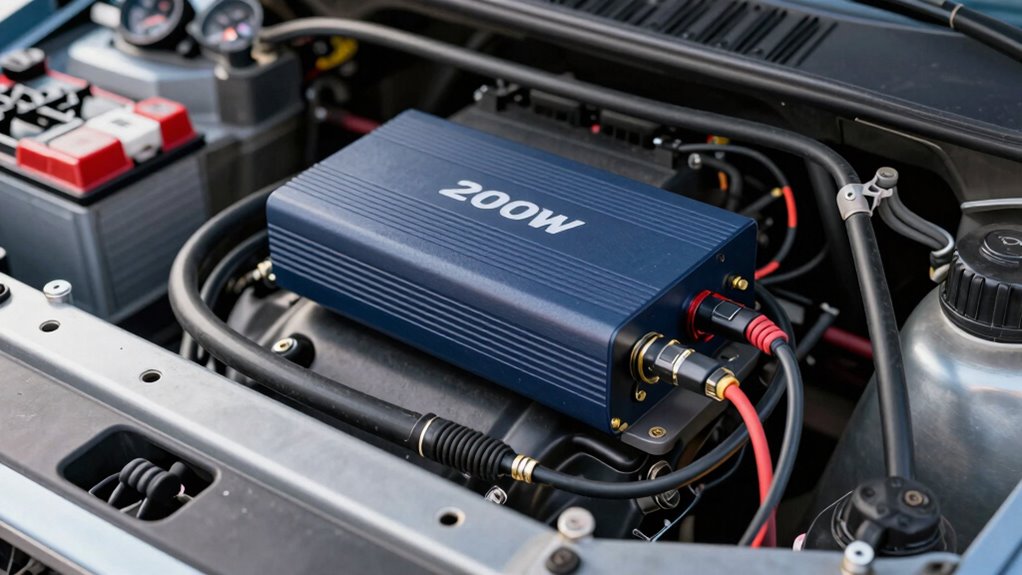
Setting up your 2000W power inverter correctly is essential to guarantee safe and reliable operation. One of the most important aspects to focus on is ensuring battery safety. Before you start connecting anything, double-check the inverter’s specifications and confirm that your vehicle’s battery can handle the load. Using a high-quality, deep-cycle or AGM battery is recommended, as these are designed to withstand the demands of high-power devices. Always wear insulated gloves and safety glasses when handling batteries to protect yourself from potential sparks or acid leaks. Remember, batteries store a significant amount of energy, so mishandling can lead to dangerous situations. Never connect the inverter directly to a damaged or corroded battery terminal, as this increases the risk of shorts or sparks. Properly securing the battery terminals with the correct tools—such as insulated wrenches—is crucial to prevent loose connections that could cause arcing or overheating.
When it comes to installation tools, having the right equipment at hand makes a huge difference. You’ll need a set of insulated screwdrivers, pliers, and possibly a terminal crimping tool to ensure tight, secure connections. Using the appropriate tools helps prevent accidental slips that could damage the battery terminals or wiring. Before connecting the inverter, verify that you have all the necessary cables and connectors rated for the inverter’s power output. Using undersized wires can lead to excessive voltage drops or overheating, which are serious safety hazards. Keep your work area clean and organized to avoid accidentally disconnecting the wrong terminal or damaging the wiring. If your inverter comes with a fuse or circuit breaker, make sure to install it correctly, following the manufacturer’s instructions. This adds an extra layer of protection by preventing overloads or short circuits that could damage your vehicle’s electrical system or cause fires.
Always connect the positive (red) cable first and then the negative (black) cable, ensuring each connection is firm before moving on. Once everything is connected, double-check all your connections and make sure there are no loose wires or exposed terminals. Before powering up the inverter, turn on the vehicle and test the system with a multimeter to verify voltage levels. This step confirms that your setup is safe and ready for use. Additionally, selecting a high-quality inverter designed for your specific power needs can significantly improve safety and performance. By paying close attention to battery safety and using the correct installation tools, you minimize the risk of accidents and ensure your 2000W power inverter operates smoothly. Proper setup not only protects you but also prolongs the lifespan of your equipment, giving you reliable power whenever you need it on the road.

BELTTT 2000W Pure Sine Wave Inverter, Inverter 12V DC to 120V AC for Solar, RV, Truck, Outdoor, Power Inverter with Dual AC and 20A Socket, 5V 2.1A USB, Surge 4000W, Hardwire Port, Remote Controller
【POWERFUL DC to AC CONVERTER】: This solar inverter delivers 2000W of continuous battery DC 12V to AC 110V…
As an affiliate, we earn on qualifying purchases.
As an affiliate, we earn on qualifying purchases.
Frequently Asked Questions
Can I Run Multiple Devices Simultaneously With a 2000W Inverter?
Yes, you can run multiple devices simultaneously with a 2000W inverter, but you need to take into account their combined device capacity to avoid overload. Make sure the total power draw doesn’t exceed the inverter’s limit. Proper power distribution is essential, so distribute the load evenly and avoid plugging in high-wattage devices together. This way, you ensure safe operation and prevent tripping your inverter’s circuit.
Is It Necessary to Upgrade My Vehicle’s Battery for Inverter Use?
You probably don’t need to upgrade your vehicle’s battery unless you plan to run high-power devices constantly. A standard battery can handle a 2000W inverter if your battery capacity is sufficient and your alternator load isn’t overwhelmed. Just keep an eye on your battery’s voltage and avoid draining it too much. Upgrading is only necessary if you notice frequent power drops or if you’re running heavy loads regularly.
How Long Can I Run a 2000W Inverter Continuously?
You can run a 2000W inverter continuously for about 30 minutes to an hour, depending on your vehicle’s battery capacity. Keep in mind, prolonged use depletes your battery faster, potentially shortening your inverter’s lifespan. If you plan extended use, consider upgrading your battery or adding a dedicated power source to prevent voltage drops and ensure reliable performance. Always monitor your battery to avoid unexpected shutdowns.
What Safety Precautions Should I Follow During Setup?
Remember, safety first—don’t put the cart before the horse. During setup, guarantee grounding safety by properly connecting the inverter to a grounded point to prevent shocks. Always install fuse protection to safeguard against electrical surges and shorts. Double-check all connections for tightness, avoid loose wires, and follow manufacturer instructions closely. These precautions help keep you safe and your inverter functioning smoothly on the road.
Does the Inverter Affect My Vehicle’s Fuel Efficiency?
Using a 2000W power inverter can impact your vehicle’s fuel efficiency by increasing engine load, especially if it’s not properly installed. The added electrical demand may affect vehicle aerodynamics and cause your engine to work harder, which burns more fuel. To minimize this, make certain your inverter is correctly set up and avoid running multiple high-power devices simultaneously, helping maintain ideal fuel efficiency during your travels.
deep cycle AGM battery for RV
As an affiliate, we earn on qualifying purchases.
As an affiliate, we earn on qualifying purchases.
Conclusion
Remember, a well-installed inverter can power your adventures or work with confidence. Follow this checklist closely, double-check connections, and avoid common mistakes. Patience and attention to detail are key—after all, haste makes waste. When you take your time now, you’ll enjoy reliable power on your journeys ahead. Stay safe, stay prepared, and keep in mind that a stitch in time saves nine—investing effort now pays off later.
insulated battery terminal wrench
As an affiliate, we earn on qualifying purchases.
As an affiliate, we earn on qualifying purchases.
vehicle inverter wiring kit
As an affiliate, we earn on qualifying purchases.
As an affiliate, we earn on qualifying purchases.