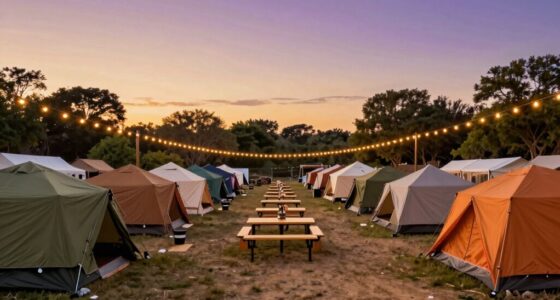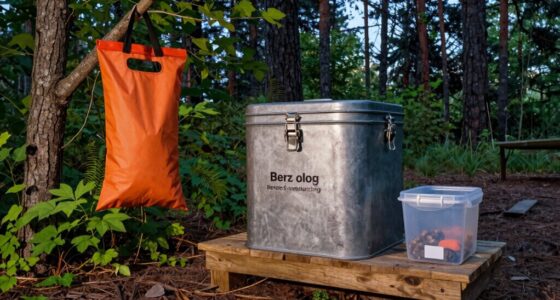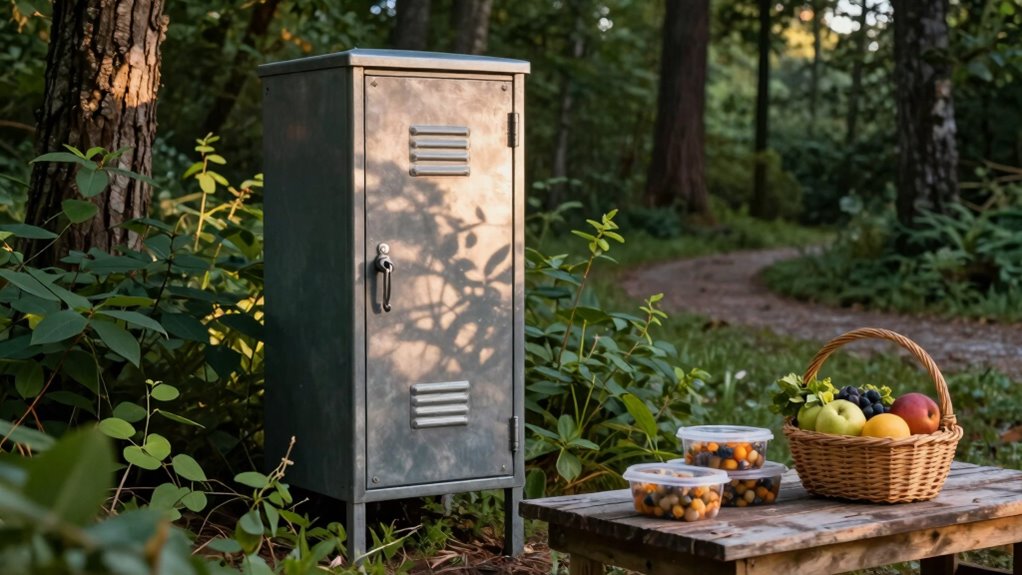

To store food at camp safely, use bear-proof containers or coolers that seal tightly and keep food secure. Hang food high in trees, at least 10-15 feet above ground and away from the trunk, to prevent animals from reaching it overnight. Never store food inside tents or mess tents, and clean up thoroughly after meals. Proper waste disposal and maintaining cleanliness help keep wildlife away. Keep these tips in mind, and you’ll discover more ways to protect your supplies and enjoy your trip.

Get audio and creator gear delivered free with Prime
- Fast, free delivery on millions of items
- Prime Video, Amazon Music and more included
- Member-only deals all year
Key Takeaways
- Use bear-proof containers and coolers to securely store food and prevent animal access.
- Hang food at least 10-15 feet high and 4-6 feet away from trees to keep it out of animals’ reach.
- Never store food or trash inside tents; keep all supplies in a designated, secure outdoor area.
- Clean up thoroughly after cooking and eating, and dispose of waste in bear-proof cans or pack it out.
- Avoid leaving wrappers, crumbs, or scent-attracting items around the campsite to reduce wildlife attraction.
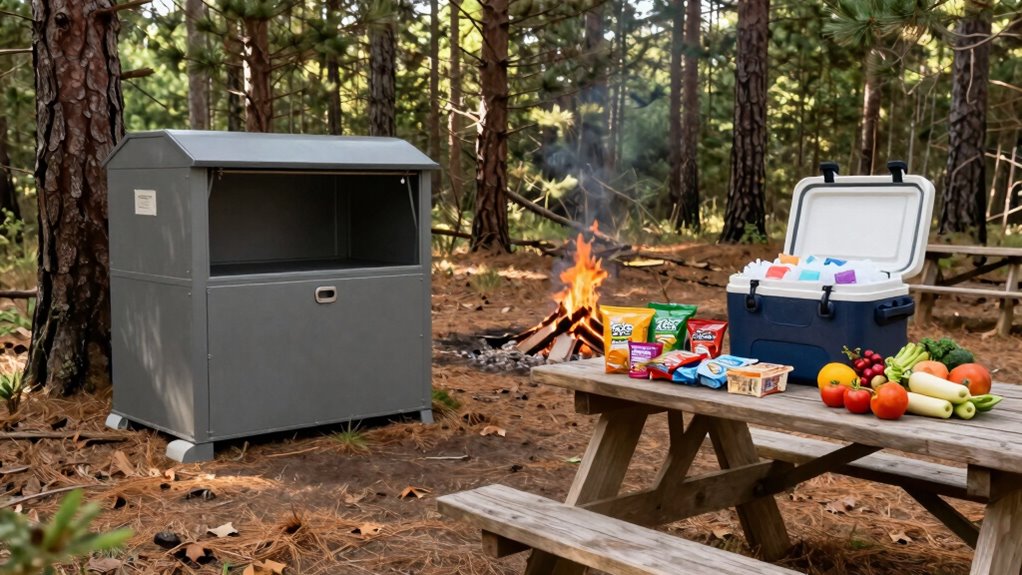
Ever wonder how to keep your food fresh and safe while camping? Proper food storage is vital, especially if you want to enjoy your trip without the hassle of spoiled meals or unwanted wildlife encounters. When it comes to campfire cooking, you need to be especially careful. Leaving food out in the open not only attracts insects but can also draw curious animals that may become aggressive or dependent on your supplies. To prevent this, always plan ahead and find secure storage methods that keep your food out of reach of wildlife while still being accessible for cooking.
One of the most effective ways to store food during camping is to use bear-proof containers or coolers. These sturdy containers are designed to withstand animal attempts to break in, which is essential if you’re in bear country. Keep your food sealed tightly inside, and avoid leaving any wrappers or crumbs around your campsite—wildlife can smell even the tiniest bit of food. When you’re ready for campfire cooking, bring out only what you need and keep the rest stored away. This minimizes the chance of animals being lured to your site by the smell, helping you maintain wildlife safety. Proper food storage practices are a key part of responsible camping and wildlife conservation.
Another key tip is to hang your food high in a tree, using a bear bag or a strong rope and a secure knot. Make sure the bag is at least 10 to 15 feet above the ground and 4 to 6 feet away from the trunk. This method works well in keeping animals at bay, especially nocturnal ones that might wander into your camp while you sleep. Remember, the goal is to keep your food out of their reach without creating a mess or leaving clues for animals to follow. Proper food storage also minimizes the risk of wildlife becoming habituated to human presence, which can be dangerous for both animals and campers. Incorporating wildlife safety measures like these is crucial to protect both your supplies and the local ecosystem.
Additionally, never store food inside your tent or sleeping area. The scent can seep through your gear, attracting animals even if you can’t see them. Instead, designate a specific, secure spot outside your tent for food storage. Always clean up thoroughly after cooking and eating, disposing of trash properly—preferably in bear-proof trash cans or by packing it out with you. By taking these precautions, you help guarantee your safety and the safety of the wildlife around you.
In the end, good food storage isn’t just about keeping your meals fresh; it’s about respecting nature and maintaining wildlife safety. When you combine proper storage practices with mindful campfire cooking, you create a safer, more enjoyable outdoor experience for everyone.
As an affiliate, we earn on qualifying purchases.
Frequently Asked Questions
What Are the Best Non-Perishable Foods for Camping Storage?
For camping storage, you should choose non-perishable foods with a long shelf life and good food preservation qualities. Think canned goods, dried fruits, nuts, granola bars, and vacuum-sealed meats. These options are durable, require minimal prep, and resist spoilage. Storing them properly keeps pests away and maintains freshness, ensuring you have reliable nutrition during your trip. Always check expiration dates and keep foods in airtight containers for best shelf life.
How Do You Prevent Animals From Accessing Stored Food?
You prevent animals from accessing your food by using wildlife deterrents and securing containers. Place your food in airtight, animal-proof containers and keep them away from tent entrances or picnic areas. Hang bear bags or suspend containers between sturdy trees, ensuring they’re out of reach. Regularly clean up crumbs and spills, and avoid leaving food unattended. These steps keep wildlife curious animals at bay while protecting your supplies.
What Are Eco-Friendly Food Storage Options for Camping?
To keep your camp food eco-friendly, opt for reusable containers instead of plastic bags, which cut down waste and are durable. Use biodegradable wraps for sandwiches and snacks, as they break down naturally and reduce pollution. Store food in airtight, eco-conscious containers to prevent odors that attract animals. By choosing these options, you protect the environment while keeping your food fresh and safe during your camping trip.
How Long Can Food Be Safely Stored at Camp?
You might think food lasts forever, but food spoilage happens quickly without proper care. Typically, you can store perishable food safely for about 1-2 days at camp if kept in insulated storage containers and kept cold. Non-perishable items last longer, but always check for signs of spoilage before eating. Using airtight storage containers helps prevent contamination and keeps food fresh longer, ensuring your camping trip stays safe and enjoyable.
What Are Common Mistakes to Avoid When Storing Food Outdoors?
You should avoid common mistakes like neglecting proper sealing, which can lead to food contamination by pests or bacteria. Always use airtight containers to keep food secure and prevent spoilage. Don’t leave food exposed or in direct sunlight, as this encourages bacteria growth and attracts animals. Also, forgetting to store food away from sleeping areas can cause issues. Proper sealing and careful placement are key to safe outdoor food storage.
As an affiliate, we earn on qualifying purchases.
Conclusion
Storing food at camp is like locking up a treasure chest—keep it secure and out of reach. Use bear-proof containers, hang food high in the trees, and never leave scraps behind. Think of your food as a tempting magnet for wildlife, and you’re the guardian keeping danger at bay. Follow these tips, and you’ll enjoy your adventure without the unwanted guests crashing your party. Stay vigilant, and your camping trip will stay safe and sweet!
As an affiliate, we earn on qualifying purchases.
outdoor wildlife resistant cooler
As an affiliate, we earn on qualifying purchases.
As an affiliate, we earn on qualifying purchases.
Fall Picks
fall essentials
As an affiliate, we earn on qualifying purchases.