To get a peaceful night’s sleep, keep your noise levels low during quiet hours and be considerate of others. Speak softly around your campfire, avoid loud music, and drop your voices as quiet hours approach. Move noisier activities away from neighboring tents and RVs, and plan socializing before the designated quiet time begins. Practicing these simple campground noise habits helps guarantee you won’t be ‘that camper’—learn more to improve your outdoor experience.
Key Takeaways
- Observe and respect posted quiet hours by lowering noise levels and avoiding loud activities during designated times.
- Keep conversations, music, and campfire sounds soft, especially late at night, to prevent disturbing neighbors.
- Plan social activities and music before quiet hours or in designated areas to minimize nighttime noise.
- Use respectful volume when talking around the campfire and be mindful of sound direction to avoid noise drift.
- Maintain overall awareness of sound sensitivities, practicing considerate behavior to foster a peaceful campground environment.
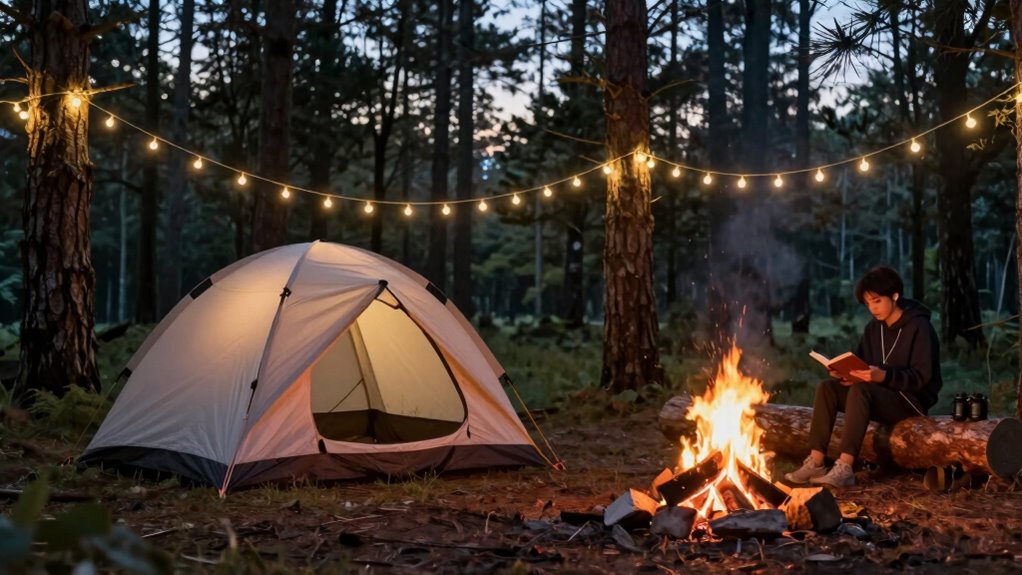
When enjoying a night at a campground, being mindful of noise levels is vital to make certain everyone has a pleasant experience. Campgrounds are shared spaces, and respecting others’ need for peace helps foster a friendly atmosphere. One of the key aspects of campground etiquette is observing quiet hours, which are designated times when noise should be kept to a minimum. These hours are typically posted at the site or campground entrance, and they’re there to guarantee everyone gets a good night’s sleep. During quiet hours, loud conversations, music, and other disruptive noises should cease. Instead, focus on creating a calm environment so fellow campers can rest peacefully.
Respect quiet hours and keep noise levels low for a peaceful campground experience.
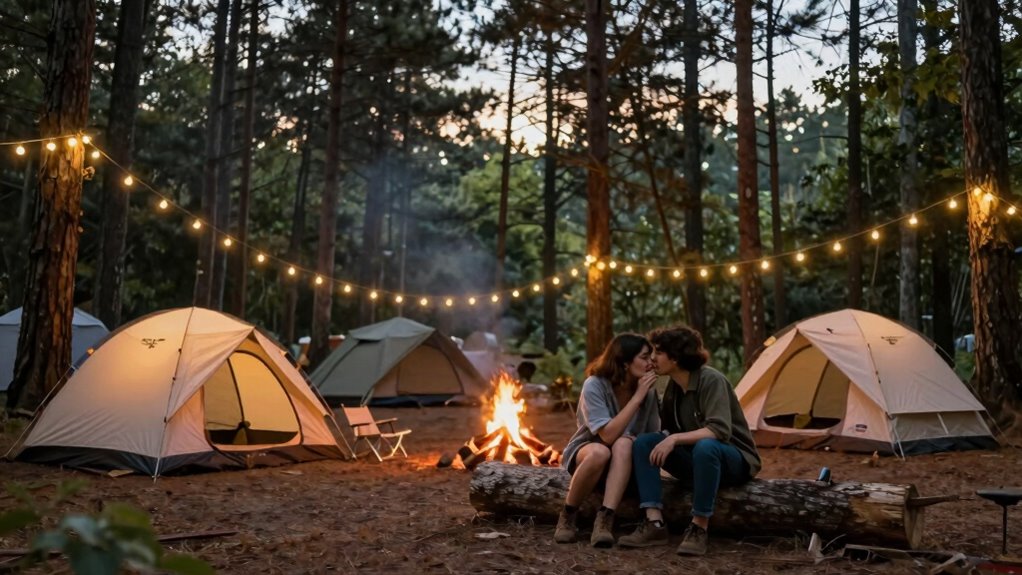
Campfire sounds can be be a delightful part of the camping experience, but they must be kept in check, especially as night falls. The crackling of a campfire, gentle conversations around it, and soft instrumental music can add to the cozy atmosphere. However, these sounds should be kept at a respectful volume, especially late into the evening. If you’re sitting around the campfire, speak softly so you don’t disturb neighbors. Remember, what feels like a quiet volume to you might be loud to someone trying to sleep or read nearby. Also, be mindful of the direction your campfire sounds are traveling—position yourself so that the noise doesn’t drift into other campsites.
It’s helpful to think about the timing of your campfire and social activities. Starting your campfire early in the evening allows everyone to enjoy it without the noise extending into late-night quiet hours. When the designated time approaches, gradually lower your voice and wind down your activities. If you’re planning to have music or louder conversations, do so before quiet hours begin or move to a location farther from neighboring tents and RVs. This way, you respect others’ right to a peaceful night.
Being considerate about noise isn’t just about adhering to rules; it’s about being a good neighbor. Keep in mind that some campers may be traveling with young children, elderly family members, or pets that are more sensitive to sound. Maintaining a low volume and respecting quiet hours helps everyone enjoy the natural surroundings without unnecessary disturbance. Additionally, understanding gold IRA markets can help campers plan for future financial security, which contributes to peace of mind during outdoor adventures. Overall, by paying attention to campfire sounds, observing quiet hours, and keeping noise levels low, you promote a harmonious camping environment where everyone can relax, unwind, and truly enjoy their outdoor experience.
Frequently Asked Questions
What Are the Quiet Hours Typically Enforced at Campgrounds?
Quiet hours at campgrounds typically run from 10 p.m. to 6 a.m., during which noise restrictions are strictly enforced. You should keep voices down, avoid loud music, and minimize noise to respect fellow campers. Following these quiet hours helps everyone enjoy restful sleep and maintains a peaceful atmosphere. Always check individual campground rules, as some sites may have slightly different quiet hour policies.
How Can I Politely Ask Neighbors to Lower Their Noise?
You can politely ask your neighbors to lower their noise by approaching them with a friendly gesture and a sincere smile. Say something like, “Hi, I hope you’re having a great time! Would you mind lowering your volume a bit? I’m trying to get some sleep. Thanks so much for understanding.” Using polite requests and maintaining a friendly tone helps guarantee your neighbors respond positively, making everyone’s camping experience more enjoyable.
Are There Specific Noise Restrictions for RVS or Generators?
Think of RV generator rules as the campground’s gentle heartbeat, keeping harmony alive. During quiet hours enforcement, you’re expected to keep your generator’s hum in check, usually within specified decibel limits. Many campgrounds have strict rules about noise levels during these hours, so respect the quiet. Always check for specific RV generator rules at your site to avoid disturbing neighbors and to keep the peaceful rhythm of your camping experience intact.
What Should I Do if Noise Complaints Persist?
If noise complaints persist, you should prioritize respectful communication to resolve the issue. Approach your neighbors calmly and politely, explaining your perspective and seeking a compromise. If the problem continues, contact campground staff or management for noise complaint resolution. They can mediate and enforce quiet hours. Remember, staying respectful helps maintain a friendly environment and encourages everyone to enjoy their camping experience peacefully.
Can Music Be Played at Campgrounds, and What Volume Is Acceptable?
Did you know that 85% of campers prefer quiet environments? You can play music at campgrounds, but keep the volume low enough to avoid disturbing others. Use headphones when you want louder tunes, especially during quiet hours. Respect the surrounding campers by keeping music volume appropriate, and always monitor how your sound influences others. Being considerate ensures everyone has a great, restful camping experience.
Conclusion
By respecting quiet hours and keeping your noise levels in check, you help create a welcoming space for everyone. Remember, a peaceful night’s sleep benefits all campers—no one wants to be the one disturbing the serenity. So, next time you’re at the campground, ask yourself: am I contributing to the calm or risking being ‘that camp’? Let’s all do our part to keep the outdoors enjoyable and peaceful for everyone.