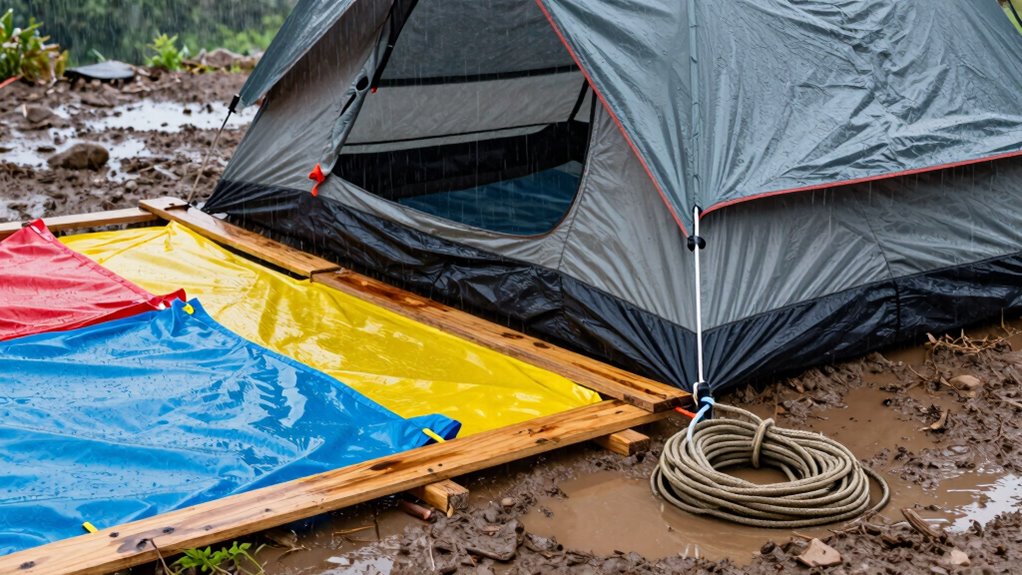
To keep your tent area dry during rain and muddy conditions, choose higher ground with good drainage and avoid low-lying spots. Elevate your tent on natural features like rocks or logs, or build a small platform if needed. Use ground covers or tarps underneath to prevent moisture from seeping in, and set up your tent so the door faces away from the rain’s direction. Master these tips to stay dry — and your setup will be even better!

Get audio and creator gear delivered free with Prime
- Fast, free delivery on millions of items
- Prime Video, Amazon Music and more included
- Member-only deals all year
Key Takeaways
- Choose a well-drained, higher ground site and avoid low-lying, water-collecting areas.
- Elevate your tent on natural features or built platforms to prevent ground moisture contact.
- Use tarps or ground covers underneath the tent for added moisture barrier protection.
- Position the tent with the door away from the prevailing rain direction to minimize splash and water entry.
- Secure seams tightly, use sealed seams, and periodically check for pooling or leaks during heavy rain.
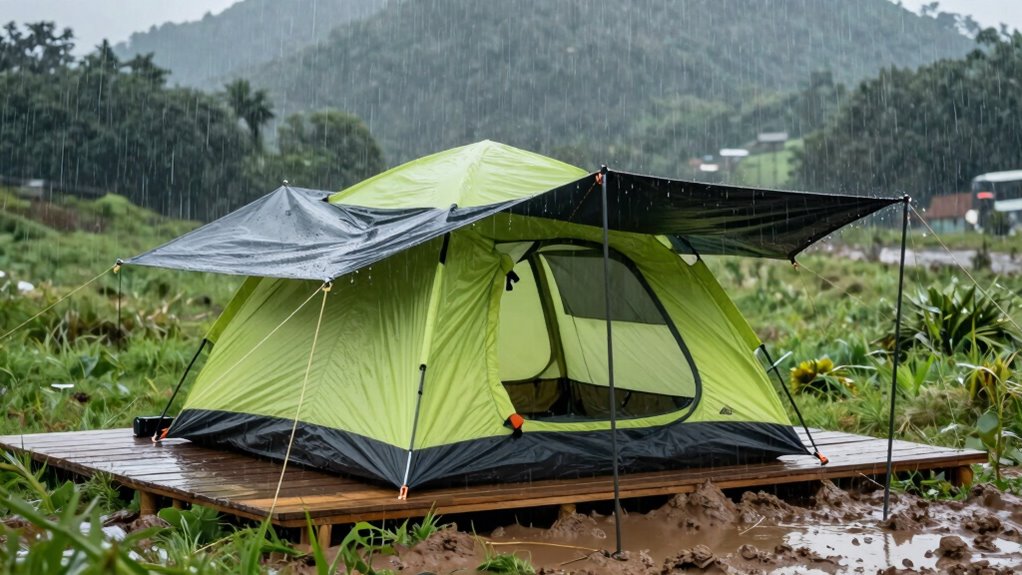
Camping in rain and mud can be challenging, but with the right preparation, it can also be rewarding. One of the most important steps you can take is guaranteeing your tent stays dry, which starts with understanding ground drainage and tent elevation. Before setting up camp, look for an area with good ground drainage. Avoid low-lying spots that tend to collect water or areas with poor soil absorption. If you can’t find a perfectly dry spot, consider creating a slight slope by clearing away debris and leveling the ground underneath your tent. This will help water flow away from your shelter, preventing pooling underneath.
Tent elevation is vital in preventing water from seeping inside during rain. Elevate your tent on a platform or use natural features like rocks or logs to raise it above ground level. If you’re using a tent with adjustable stakes or footings, position them to lift the tent slightly higher on the rain-exposed side. This small elevation helps water run off the roof and away from the tent walls, minimizing the risk of leaks and dampness. Additionally, placing your tent on an elevated area reduces contact with moist ground, keeping the floor drier and more comfortable.
Elevate your tent on natural features or a platform to keep it dry during rain.
When selecting a campsite, always scout the area first. Look for spots that are naturally higher and less prone to flooding. If the terrain is flat, consider creating a simple barrier or trench around your tent to divert water away. Using tarps or ground cloths underneath your tent can also help, but they should be placed carefully to avoid trapping water underneath. Remember, a well-placed ground cover can serve as an extra layer of protection against moisture seeping through the tent floor. Understanding ground drainage and how it influences water movement is crucial for a dry campsite.
Furthermore, pay attention to how your tent is oriented. Position it so that the door faces away from the direction of prevailing rain, which can help reduce rain splash and wind-driven moisture. Secure your tent tightly, especially around the seams, to prevent water ingress. During heavy rain, check your setup periodically to guarantee water isn’t pooling around the base or seeping in through unsealed areas.
Ultimately, success in rain and mud camping depends on good site selection and smart setup. By focusing on ground drainage and tent elevation, you create a dry, comfortable shelter even in challenging weather. Proper planning and attention to detail will help you enjoy your outdoor adventure, rain or shine.
As an affiliate, we earn on qualifying purchases.
Frequently Asked Questions
How Do I Prevent My Tent From Flooding During Heavy Rain?
To prevent your tent from flooding during heavy rain, guarantee proper ground drainage by choosing a higher, well-drained site. Position your tent with the door facing downhill or away from potential water flow, and set it up with a slight slope to encourage runoff. Use a tarp or groundsheet underneath for extra protection, and avoid low-lying areas prone to pooling. Regularly check and adjust your tent’s placement for ideal dryness.
What Are the Best Materials for a Rainproof Tent?
You should choose a tent made from durable tent fabric like polyester or nylon, which are lightweight and strong. Look for tents with waterproof coatings, such as polyurethane or silicone, that provide extra protection against rain. These coatings seal the fabric’s pores, preventing water from seeping in. Confirm the tent has sealed seams and a rainfly to maximize waterproofing, keeping you dry even during heavy downpours.
How Do I Quickly Dry My Gear After Rain Exposure?
Did you know that damp gear can harbor mold, which grows in 24-48 hours? To quickly dry your gear after rain exposure, spread items out in the sun or near a heat source, ensuring good airflow. Use a microfiber towel to remove excess moisture and consider a portable camp dryer for faster results. This quick cleanup prevents damage and keeps your gear in top shape.
Can I Set up a Rain Shelter on Uneven Ground?
Yes, you can set up a rain shelter on uneven ground by doing ground leveling first. Use natural or portable tools to create a flat surface for stability. Then, position a tarp properly by placing it with adequate overhang to prevent water runoff from seeping underneath. Secure the tarp tightly with stakes or weight, ensuring it remains stable despite the uneven terrain, keeping you dry during rain.
What Are Effective Ways to Keep Mud From Tracking Inside?
Of course, you want to keep mud out of your tent, so start with a sturdy ground tarp—it’s your first line of defense. Use a boot scraper at the entrance to remove mud before stepping inside. It’s almost like setting up a mud-free fortress! These simple tricks prevent tracking dirt, keep your tent cleaner, and save you from the never-ending chore of mud removal after a rainy day.
As an affiliate, we earn on qualifying purchases.
Conclusion
Now that you know how to keep your tent area dry, you’re like a captain steering clear of stormy seas. With the right preparations, rain and mud won’t sink your camping trip. By choosing the right spot, setting up properly, and managing drainage, you turn a soggy situation into smooth sailing. Remember, a dry tent is your anchor in the storm, letting you enjoy nature’s beauty without getting washed away. Happy camping!
waterproof camping tent with sealed seams
As an affiliate, we earn on qualifying purchases.
As an affiliate, we earn on qualifying purchases.
camping site ground leveling tools
As an affiliate, we earn on qualifying purchases.
As an affiliate, we earn on qualifying purchases.
Halloween Picks
halloween
As an affiliate, we earn on qualifying purchases.