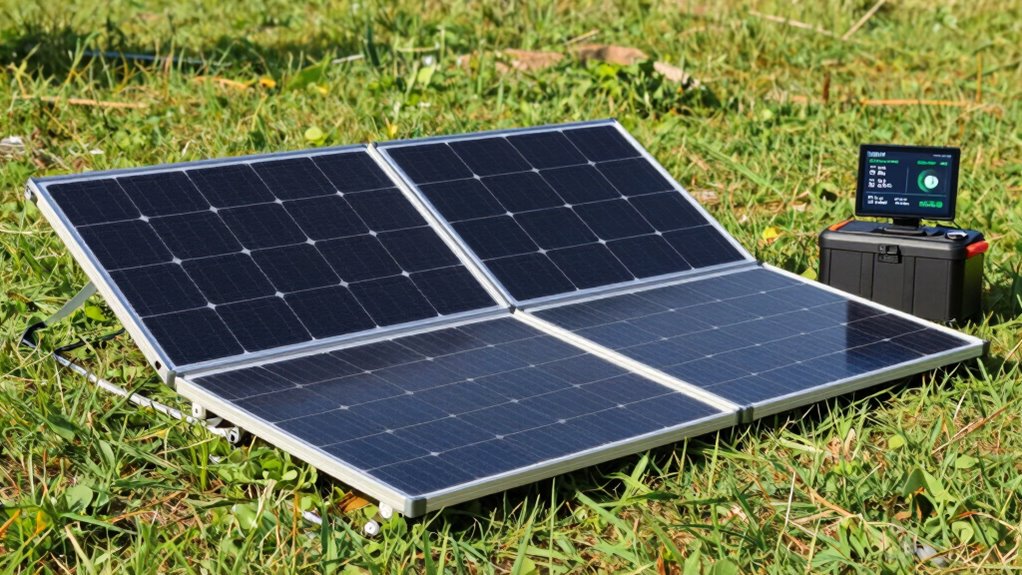

A 400W foldable solar panel’s specifications like watts versus watt-hours, surge power, and recharge time help you comprehend its performance. Watts show the instant power output, while watt-hours measure total energy over time. Surge power supports brief high-demand devices, and recharge time depends on sunlight and battery size. Grasping these details guarantees you optimize your solar setup effectively. Keep exploring to discover how to choose options that fit your outdoor power needs perfectly.
Key Takeaways
- 400W indicates maximum instantaneous power output under ideal conditions, not total energy generated.
- Watts measure real-time power, while watt-hours represent total energy over time, essential for planning recharges.
- Surge power supports brief spikes needed when starting high-demand devices, preventing damage or startup failure.
- Recharge time depends on sunlight availability, panel wattage, and storage capacity, influencing how quickly batteries refill.
- System features like efficiency and power management optimize performance, reliability, and longevity of portable solar setups.
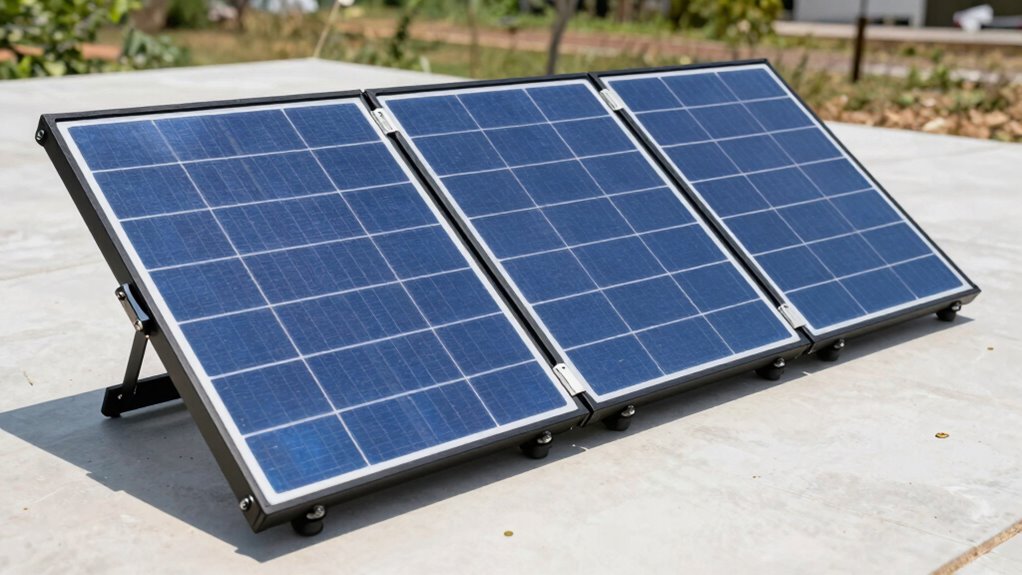
Are you looking for a reliable, portable power solution? A foldable solar panel 400W is an excellent choice, especially when understanding its specs can boost your confidence in its performance. One of the key features to consider is the battery capacity it can support or recharge, which directly impacts how long your devices can run without additional power sources. The 400W rating indicates the maximum power output under ideal conditions, but it doesn’t tell the whole story about how much energy you’ll actually get over time. That’s where efficiency ratings come into play. These ratings reveal how well the solar panel converts sunlight into usable electricity, considering factors like shading, angle, and weather conditions. Higher efficiency ratings mean you’ll generate more power in less sunlight, making your portable setup more reliable and effective.
Understanding watts versus watt-hours is crucial. Watts measure the instantaneous power output—how much energy the panel produces at any given moment—while watt-hours gauge the total energy accumulated over time. For example, a 400W panel in perfect sunlight for one hour produces 400 watt-hours of energy. But if sunlight is only available for a few hours a day, the total watt-hours accumulated will be less. This distinction helps you plan your energy needs more accurately, ensuring your devices stay powered without surprises. When evaluating a foldable solar panel, knowing how many watt-hours it can generate daily allows you to estimate how long it will take to recharge your battery bank or power your devices. Additionally, power management features can optimize your system’s efficiency and protect your devices from power fluctuations.
Watt-hours measure total energy over time, helping you plan device recharging accurately.
Surge power is another critical aspect. It refers to the panel’s ability to handle brief spikes in power, which are common when starting certain appliances or electronics. For example, a refrigerator or a power tool might demand a surge power that’s higher than the continuous running wattage. If the surge power isn’t supported, the device might not start or could cause damage. Therefore, checking the surge power ratings of your foldable panel ensures it can handle these short bursts without issues.
Recharge time is equally important for portable solar solutions. It tells you how long it takes for the panel to fully replenish your battery or power bank under ideal sunlight. Factors like the panel’s wattage, efficiency ratings, and sunlight availability influence this. A 400W foldable panel typically recharges batteries faster than lower-wattage models, but actual times depend on weather conditions and the capacity of your storage system. Being aware of these specs helps you plan your activities, avoid power gaps, and make the most of your solar setup. Ultimately, understanding these details empowers you to optimize your portable power system, ensuring you stay connected and powered wherever your adventures take you.
Frequently Asked Questions
How Durable Are Foldable Solar Panels in Harsh Weather Conditions?
You’ll find that foldable solar panels are quite durable in harsh weather conditions thanks to extensive durability testing and weather resistance features. They’re built with tough materials to withstand rain, wind, and snow, but it’s essential to verify the specific model’s ratings. Proper maintenance and avoiding extreme conditions beyond the panel’s specified limits will ensure they last longer and perform reliably in challenging weather.
Can Foldable Solar Panels Be Integrated With Existing Power Systems?
Sure, you can integrate foldable solar panels with your existing power system—if you’re willing to navigate the tricky world of grid compatibility and inverter integration. While it might seem straightforward, you’ll need the right inverter and possibly some modifications to guarantee smooth operation. Don’t worry, it’s just a matter of matching the tech—because who doesn’t love a little DIY challenge when going green?
What Is the Optimal Storage Capacity for a 400W Solar Setup?
For a 400W solar setup, you should aim for a battery capacity that can store enough energy to meet your needs, typically around 2-4 times your daily consumption. This guarantees you have reliable energy storage during cloudy days or at night. Consider your energy consumption patterns and choose a battery capacity that balances sufficient storage with cost and space considerations. Proper sizing optimizes your system’s performance and longevity.
Are There Any Safety Concerns With High Surge Power in Portable Panels?
Worried about high surge power in your portable panels? Don’t fret—just follow safety precautions and install surge protection. Think of it as giving your device a superhero shield against unexpected power surges. High surge power isn’t inherently dangerous if you’re prepared. So, make certain your setup has proper protection, and you’ll keep your portable solar adventure safe and shock-free—no cape required!
How Do I Properly Maintain and Clean Foldable Solar Panels?
To properly maintain and clean your foldable solar panels, regularly perform cleaning techniques like gently wiping the surface with a soft cloth dampened with water and mild soap. Avoid abrasive materials to prevent scratches. When not in use, store your panels in a cool, dry place, ideally in their protective case, and guarantee they’re fully folded to prevent damage. Proper storage tips help prolong their lifespan and maintain ideal performance.
Conclusion
Now that you understand the key specs of the 400W foldable solar panel, you’re one step closer to harnessing its true potential. But there’s more beneath the surface—hidden factors that could impact your setup in unexpected ways. Will you access its full power or encounter surprises along the way? Stay tuned, because mastering these details might just change how you power your adventures forever. The next revelation awaits—are you ready to discover it?