

To keep your camp gear from disappearing, group items into clear, labeled containers by categories like sleeping, cooking, and clothing. Use durable bins and place frequently used items in easy-to-reach spots. Hang organizers for smaller essentials like flashlights and toiletries, and designate a specific camping station to keep everything organized. Regularly check and tidy your gear to prevent loss, ensuring a smooth setup and cleanup. Keep going to discover more tips for hassle-free camping organization.

Get audio and creator gear delivered free with Prime
- Fast, free delivery on millions of items
- Prime Video, Amazon Music and more included
- Member-only deals all year
Key Takeaways
- Categorize gear into labeled, transparent containers for quick identification and easy access.
- Create a dedicated camping station with designated spots for essential items.
- Use hanging organizers and gear lofts to maximize space and prevent items from getting lost.
- Regularly check and maintain gear condition to ensure organization remains intact during the trip.
- Pack systematically with checklists to prevent forgetting items and facilitate efficient setup and pack-up.
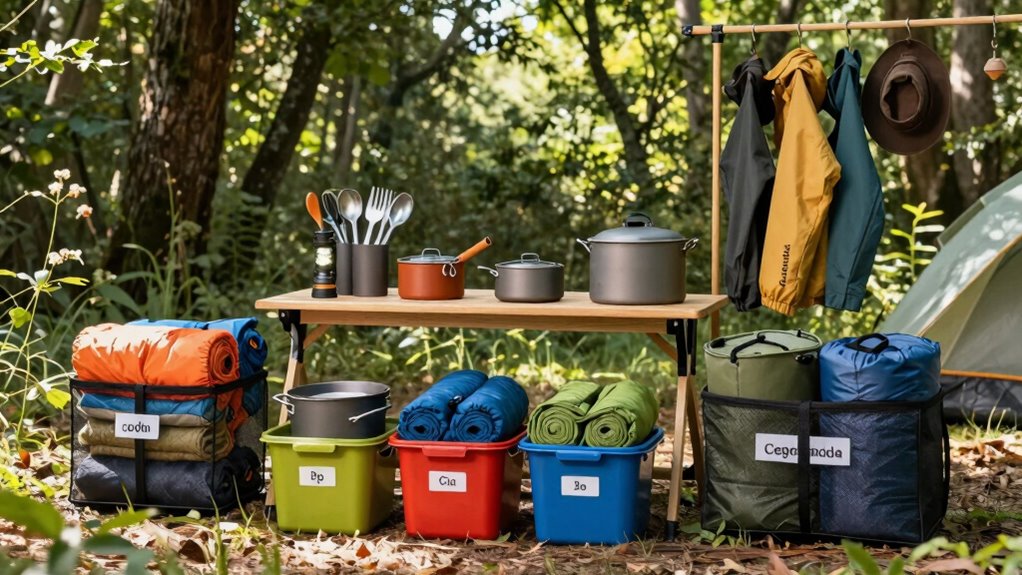
Organizing camp gear can feel overwhelming, but with a strategic approach, you can guarantee everything stays in its place and nothing gets lost. The key is to start with a solid camping checklist that covers all essentials, so you don’t forget items and end up scrambling at the last minute. Once you have your list, you can plan your gear storage tips accordingly, ensuring everything has its designated spot. This not only saves time but also keeps your campsite tidy and makes unpacking easier at the end of your trip.
First, categorize your gear into groups—sleeping gear, cooking supplies, clothing, safety equipment, and entertainment. Use clear containers or labeled bins for each category. For example, a box labeled “cooking gear” can hold utensils, small pots, and food prep items. Transparent containers help you see everything at a glance, avoiding unnecessary digging through piles, which can cause items to get lost or forgotten. When packing, place frequently used items near the top or in easily accessible spots to streamline setup and breakdown.
Incorporating gear storage tips such as using hanging organizers or gear lofts can free up ground space and keep smaller items visible and easy to reach. Hanging pockets for toiletries, flashlights, or sunglasses prevent clutter inside tents and make sure nothing falls out or gets misplaced. For clothing, pack items in compression bags or designated drawers to keep everything neat and compact, making it easier to find what you need quickly. Additionally, understanding the importance of biodiversity can inspire you to keep your campsite environmentally friendly and minimize impact by organizing your gear responsibly. Maintaining an organized campsite also helps reduce environmental impact, as it encourages responsible storage and disposal practices. Being mindful of sustainable practices can further enhance your efforts to protect the natural surroundings.
Another smart move is to create a dedicated “camping station” at your site—an organized area where essential items are kept together, like a small table or designated corner. This minimizes the risk of losing items in the chaos of setting up or breaking camp. Regularly check your gear during the trip, ensuring everything stays in its place and is in good condition. This habit helps you spot missing items early, so you can replace or repair them before heading home.
Ultimately, effective organization hinges on planning ahead and maintaining discipline during your trip. Stick to your camping checklist, follow gear storage tips, and keep everything in designated containers or areas. When you come prepared with a clear system, you’ll find setting up and breaking down camp becomes less stressful, and you’ll avoid the frustration of lost gear. Proper organization not only enhances your camping experience but also ensures you leave the wilderness as pristine as when you arrived.
clear labeled camping storage bins
As an affiliate, we earn on qualifying purchases.
As an affiliate, we earn on qualifying purchases.
Frequently Asked Questions
How Do I Prevent Gear From Getting Lost in Dense Woods?
To prevent gear from getting lost in dense woods, use gear tracking devices like GPS tags on your most valuable items. Always mark your trail with visible trail markers or biodegradable ribbons to stay on course. Keep a checklist to guarantee all gear is accounted for before moving on. Regularly check your gear’s location during your hike, and stay aware of your surroundings to avoid losing anything in the thick woods.
What Are the Best Labels for Waterproof Organization?
Did you know that 65% of outdoor gear gets misplaced? To prevent this, use waterproof tags with durable labeling systems. The best labels are made from waterproof, tear-resistant materials like tyvek or laminated paper, ensuring they withstand rain and rough handling. Clear, bold text helps you identify items quickly, even in wet conditions. These waterproof tags keep your gear organized, visible, and easy to locate during your adventures.
How Often Should I Reorganize My Camping Gear?
You should reorganize your camping gear at least once every season or after heavy use to guarantee everything stays in top condition. Regular gear maintenance helps identify damaged or worn items, while storage rotation prevents clutter and keeps your system efficient. By staying proactive, you’ll keep your gear in good shape, easily accessible, and ready for your next adventure, making packing faster and more organized each time.
Can Storage Solutions Be Eco-Friendly and Sustainable?
Like a garden thriving with care, your storage solutions can be both eco-friendly and sustainable. You can choose recyclable containers and biodegradable storage options, ensuring your gear stays organized without harming the planet. These alternatives mirror the resilience of nature, allowing you to enjoy your adventures guilt-free. By embracing eco-conscious choices, you preserve the wilderness for future explorers while keeping your camping gear neatly in place.
How Do I Organize Gear for Different Weather Conditions?
To organize gear for different weather conditions, start with weather-specific packing, setting aside gear for rain, cold, or heat. Use labeled bins or compartments for each condition, making seasonal gear rotation quick and easy. Keep frequently used items accessible, and store off-season gear in a separate, designated area. This system helps you stay prepared, prevents gear from getting lost, and guarantees you’re ready for any weather change during your trip.
hanging camping organizer pockets
As an affiliate, we earn on qualifying purchases.
As an affiliate, we earn on qualifying purchases.
Conclusion
By keeping your gear organized, you’re like a seasoned conductor, ensuring every instrument plays in harmony. I once watched a friend find a misplaced tent stake in seconds, thanks to a simple labeled bin—saving her from a frantic search. When you use smart storage solutions, your camp setup becomes a well-oiled machine, so nothing disappears into the wilderness of clutter. With organization, you’ll enjoy more relaxing adventures and less stress—making every trip truly memorable.
compact camping gear storage containers
As an affiliate, we earn on qualifying purchases.
As an affiliate, we earn on qualifying purchases.
camping gear lofts and hanging shelves
As an affiliate, we earn on qualifying purchases.
As an affiliate, we earn on qualifying purchases.
Halloween Picks
halloween
As an affiliate, we earn on qualifying purchases.