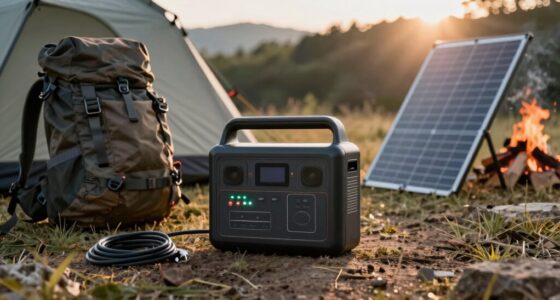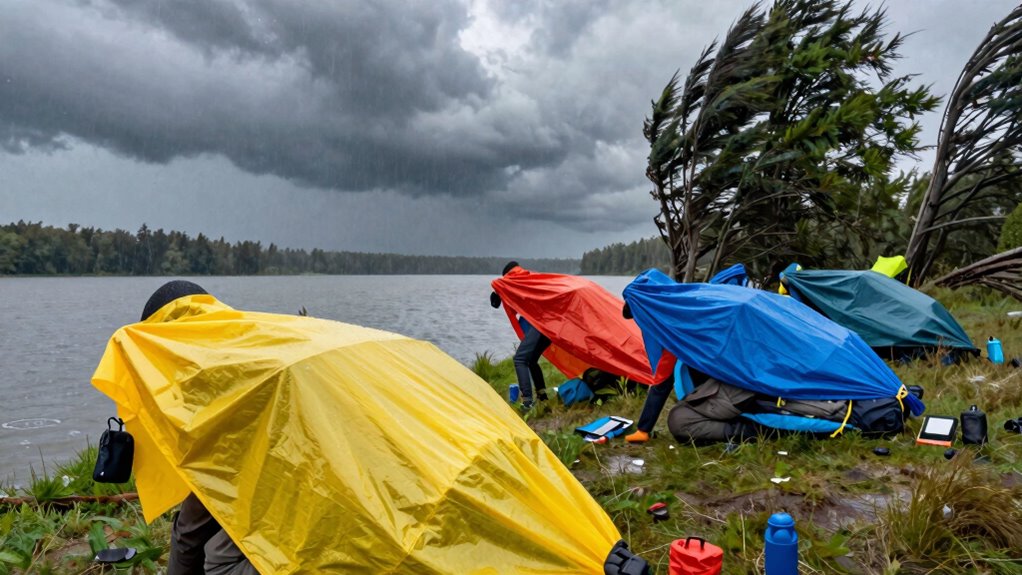

When weather changes suddenly, protect your electronics by keeping devices close to your body for warmth and conserving power by turning them off when not needed. Use waterproof cases or seal them in zip-lock bags in your backpack, and apply waterproof sprays for extra protection. Avoid exposing devices to rapid temperature shifts and let them dry fully if they get wet. Using insulated covers and proper chargers also helps. To guarantee your gear stays safe, learn more about staying prepared in unpredictable weather.

Get audio and creator gear delivered free with Prime
- Fast, free delivery on millions of items
- Prime Video, Amazon Music and more included
- Member-only deals all year
Key Takeaways
- Use waterproof cases or seal devices in zip-lock bags during sudden rain or storms.
- Keep electronics close to your body to utilize body heat and conserve battery life.
- Store devices in insulated or padded containers to buffer against rapid temperature changes.
- Avoid charging devices in damp conditions and use protected power sources like portable chargers.
- Turn off devices when not in use to prevent unnecessary power drain and protect from environmental hazards.
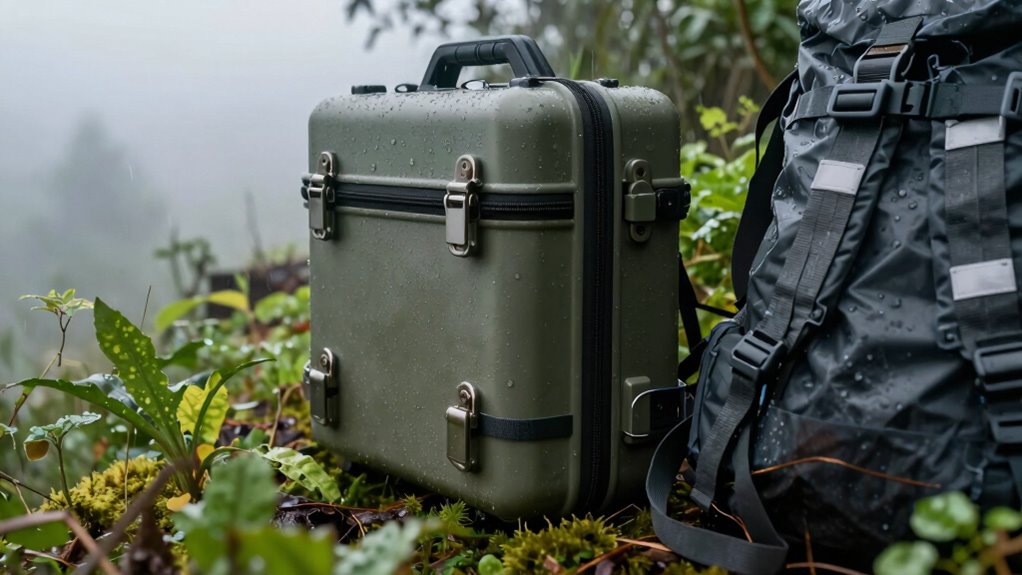
Ever wondered how to keep your electronics safe during a camping trip? Weather can change quickly, and if you’re not prepared, your devices could be at risk. To start, focusing on battery preservation is essential. Cold temperatures drain batteries faster, so consider carrying extra power sources like portable chargers or spare batteries. Keep your devices close to your body when not in use; body heat can help maintain battery life in chilly conditions. Avoid leaving devices in direct sunlight or exposed to rain, as extreme heat and moisture can weaken batteries and cause internal damage. Turning off devices when not in use also conserves power, ensuring they last longer when you need them most.
Protect your electronics with extra batteries, keep devices close, and avoid extreme temperatures during camping trips.
Device waterproofing is equally important, especially if rain or accidental splashes are likely. Invest in waterproof cases or pouches designed for electronics. These protective covers create a barrier against water, dust, and dirt, keeping your gadgets dry and functional. When setting up camp, store your devices in sealed containers or zip-lock bags inside your backpack, especially if you anticipate sudden downpours. If you’re using a smartphone or camera outdoors, consider applying waterproof sprays or coatings that add an extra layer of protection. Additionally, understanding environmental impacts can help you choose the best protective gear for your needs. Being aware of local biodiversity can also help you avoid areas where environmental hazards might threaten your gear.
Another smart move is to avoid exposing your devices to sudden temperature swings. Rapid changes from hot to cold can cause condensation inside your gadgets, leading to internal damage. To prevent this, keep your electronics in insulated or padded cases and gradually transition them from one environment to another. When you return indoors or to a vehicle, don’t turn your devices on immediately if they feel damp; give them time to dry out fully. Additionally, being aware of how environmental factors affect your devices can help you take proactive steps to prevent damage biodiversity awareness. Understanding environmental impacts can also help you choose the best protective gear for your needs.
Additionally, be mindful of charging your devices during unpredictable weather. Don’t rely on power sources that aren’t protected from moisture. If you’re in a tent or covered shelter, use portable power banks rather than plugging into outdoor outlets. Keep cords and chargers in waterproof bags or cases to avoid short circuits or corrosion. Furthermore, regularly inspecting your gear for signs of wear and tear can help you identify potential vulnerabilities before they become bigger problems. Properly caring for your devices not only extends their lifespan but also ensures they function reliably when you need them most.
In essence, protecting your electronics during a camping trip involves a combination of smart battery management and robust waterproofing measures. By preserving your device’s battery life through strategic usage and storage, and ensuring they’re shielded from water and environmental hazards, you’ll maximize their lifespan and functionality. Preparation is key—think ahead, pack the right gear, and stay vigilant against weather’s surprises. With these steps, your gadgets will be ready to serve you throughout your adventure, no matter how rapidly the weather shifts.
waterproof electronic device cases
As an affiliate, we earn on qualifying purchases.
As an affiliate, we earn on qualifying purchases.
Frequently Asked Questions
Can Electronics Be Safely Stored in a Tent During Rain?
Electronics can be safely stored in a tent during rain if you prioritize electronics security and tent insulation. Use waterproof bags or cases to protect your devices from moisture. Keep electronics off the ground and away from tent walls to avoid water seepage. Consider using a small, insulated compartment inside your tent for extra protection. These steps help prevent water damage and guarantee your electronics stay dry and functional during rainy weather.
What Are the Best Waterproof Cases for Camping Electronics?
You’ll want waterproof bags and shockproof cases to keep your electronics safe from rain and impacts. Many waterproof bags are lightweight and durable, making them perfect for camping. Shockproof cases also offer excellent protection against drops and bumps. Some popular options include sealed dry bags for larger gear and rugged cases with foam padding for smaller electronics. Don’t worry—these protectors make it easy to enjoy your adventure without stressing over weather damage.
How Do I Prevent Fogging on Electronic Screens in Humid Weather?
To prevent fogging on your electronic screens in humid weather, use a screen anti-fog solution, applying it gently with a soft cloth. Keep humidity levels in check by storing your devices in a sealed container with silica gel packs or a small dehumidifier. Regularly wipe your screen with a clean, dry cloth to remove moisture, and avoid sudden temperature changes that can cause condensation and fogging.
Is It Safe to Charge Devices in Wet Conditions?
Charging devices in wet conditions isn’t safe. Water and electricity don’t mix, and a single splash can cause a short circuit or damage your device. Always use waterproof covers and make sure your power sources are dry and protected. Battery safety is essential; avoid exposing devices to moisture while charging. Instead, wait until everything is completely dry and find a dry, sheltered spot to charge safely.
What Emergency Measures Should I Take if Electronics Get Soaked?
If your electronics get soaked, immediately turn them off to prevent further damage. Remove batteries if possible to preserve power and avoid short circuits. Use dry techniques like gently wiping with a soft cloth and placing devices in a container of uncooked rice or silica gel packets to absorb moisture. Avoid using heat sources. Once dry, check for functionality before attempting to recharge or turn on the device.
insulated protective electronics bag
As an affiliate, we earn on qualifying purchases.
As an affiliate, we earn on qualifying purchases.
Conclusion
When the skies turn angry and the weather rolls in like a brewing storm, think of your electronics as delicate butterflies needing shelter. By packing them into waterproof bags and seeking natural cover, you create a sturdy fortress against the elements. Remember, safeguarding your gadgets is like wrapping a treasure in a protective cloak—keeping them safe from nature’s chaotic dance. Stay vigilant, stay dry, and let your camp adventures continue unscathed.
As an affiliate, we earn on qualifying purchases.
camping electronics waterproof spray
As an affiliate, we earn on qualifying purchases.
As an affiliate, we earn on qualifying purchases.
Halloween Picks
halloween
As an affiliate, we earn on qualifying purchases.