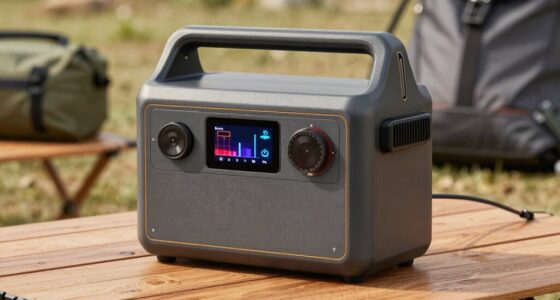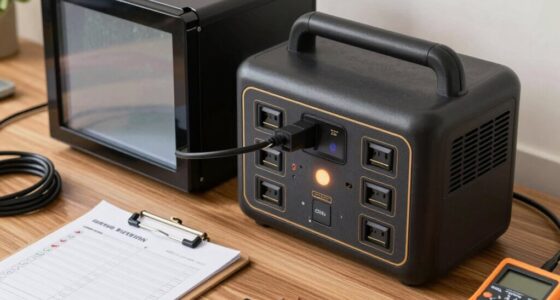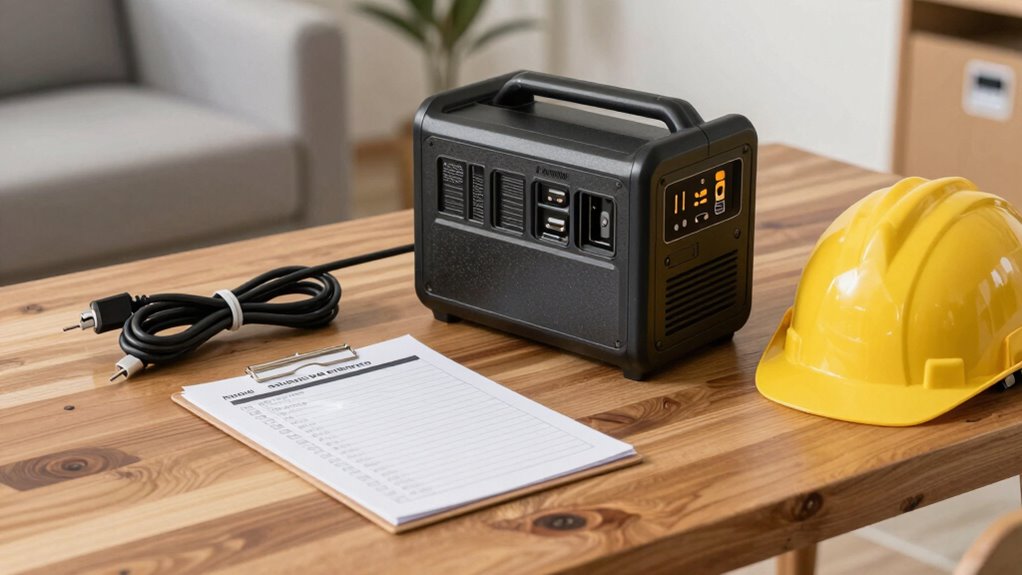

When setting up your portable battery generator during a power outage, avoid common mistakes like using the wrong charger, placing batteries on flammable surfaces, or overcharging. Make sure to connect batteries properly, keep them in a cool, dry spot, and check for damage beforehand. Don’t forget to adhere to manufacturer guidelines for installation and maintenance. Staying aware of these pitfalls ensures safety and efficiency, and you’ll discover essential tips to optimize your setup if you continue exploring.
Key Takeaways
- Always read and follow the manufacturer’s instructions for setup and operation.
- Use a stable, non-flammable surface and keep batteries away from water and extreme temperatures.
- Ensure batteries are securely connected and avoid overcharging by unplugging once fully charged.
- Regularly inspect batteries for damage, corrosion, or leaks; clean terminals as needed.
- Store and handle batteries carefully to prevent accidents, leaks, or chemical exposure during outages.
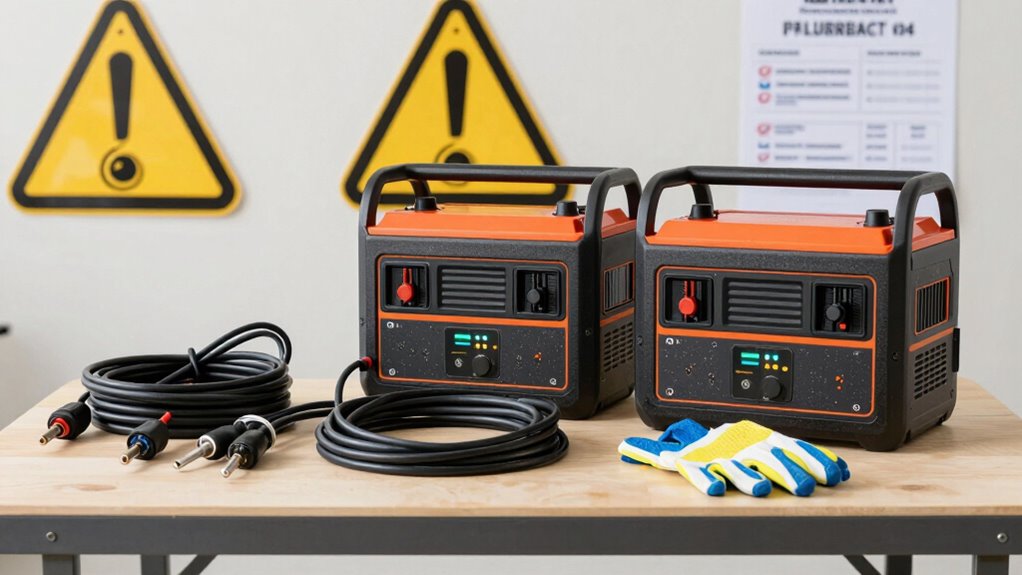
When a power outage strikes, having a portable battery generator ready can make all the difference. But, to guarantee it serves you effectively and safely, you need to pay attention to proper setup and maintenance. One common mistake is neglecting battery safety; mishandling the battery can lead to dangerous situations like fires or chemical leaks. Always read the manufacturer’s instructions carefully, and handle the battery with care—avoid puncturing, crushing, or exposing it to extreme temperatures. Make sure the battery is placed on a stable, non-flammable surface, and keep it away from water or moisture to prevent short circuits. Before using the generator, inspect the battery for any signs of damage, such as swelling, leaks, or corrosion, and never use a compromised battery. Proper storage and handling are essential to prevent battery deterioration and ensure reliable performance when needed.
Another critical aspect is following correct charging procedures. Many people overlook the importance of proper charging, which can damage the battery or reduce its lifespan. Always use the charger provided or recommended by the manufacturer. Before connecting, ensure that the charger is in good condition—no frayed cords or exposed wires. When charging, plug the charger into a grounded outlet and connect it securely to the battery terminals. Avoid overcharging by unplugging the charger once the battery reaches full capacity; leaving it connected longer than necessary can cause overheating or reduce battery efficiency over time. It’s also wise to charge the battery in a well-ventilated area, especially if it’s a larger capacity unit, to prevent the buildup of any gases that might be released during charging.
Many users make the mistake of ignoring regular maintenance and checks. Don’t forget to periodically verify the battery’s health—check for corrosion on terminals, clean them with a suitable brush if needed, and ensure connections are tight. A poorly maintained battery can fail unexpectedly, leaving you unprepared during an outage. Also, keep the battery’s charge level between 20% and 80% whenever possible; this practice prolongs its overall lifespan. Keep the battery away from extreme heat or cold, as both can degrade its performance and safety. Regularly consulting safety checklists and maintenance guides can help identify potential issues before they become serious problems.
portable battery generator with charger
As an affiliate, we earn on qualifying purchases.
As an affiliate, we earn on qualifying purchases.
Frequently Asked Questions
How Long Can a Portable Battery Generator Run During an Outage?
You can usually run a portable battery generator for several hours during an outage, depending on its battery capacity and your power efficiency. Larger capacity batteries last longer, so if you need extended power, choose one with higher capacity. Keep in mind that using energy-efficient devices helps maximize runtime. Regularly monitor the battery level to make sure it doesn’t run out unexpectedly, and consider having a backup plan for longer outages.
Can I Recharge a Portable Battery Generator Using Solar Power?
Think of your portable battery generator as a rechargeable treasure chest—yes, you can replenish it using solar power! Just connect a compatible solar panel to the generator’s input port. Keep an eye on the battery capacity and verify your solar panel’s wattage matches the generator’s requirements. With good sunlight, you’ll restore your power supply sustainably, making sure your device stays ready for the next outage.
What Safety Precautions Should I Take When Operating a Portable Generator?
When operating your portable generator, always prioritize safety by keeping it outdoors in a well-ventilated area to avoid fire hazards. Confirm proper grounding to prevent electrical shocks, and never overload the generator. Keep flammable materials away from it, and follow the manufacturer’s instructions carefully. Regularly inspect cords and connections for damage, and turn off the generator before refueling. These precautions help keep you safe during power outages.
How Do I Properly Store My Portable Battery Generator Long-Term?
To properly store your portable battery generator long-term, you should focus on battery maintenance and choose a suitable storage environment. Fully charge the battery before storing, then disconnect it to prevent drain. Keep it in a cool, dry place away from direct sunlight and extreme temperatures. Regularly check the battery’s condition and recharge if needed. Proper storage guarantees your generator remains reliable and ready for use when you need it most.
Is It Safe to Charge Multiple Devices Simultaneously From One Generator?
Yes, it’s safe to charge multiple devices simultaneously from one generator if you check device compatibility and consider the power load. Confirm your generator can handle the combined wattage of all devices. Avoid overloading it, which can cause damage or shutdowns. Always read the manufacturer’s instructions, and prioritize devices with higher power demands. This way, you keep everything safe and your generator functioning efficiently during outages.
battery maintenance kit for portable generators
As an affiliate, we earn on qualifying purchases.
As an affiliate, we earn on qualifying purchases.
Conclusion
By following this checklist, you’ll guarantee your portable battery generator stands ready like a loyal guardian during power outages. Avoid common pitfalls, and you’ll keep your home’s lifeline steady, even when the storm clouds gather. Think of your setup as a well-tuned instrument—when all the strings are in harmony, the music of safety and peace plays on, no matter how fierce the darkness. Stay prepared, and let your energy resilience shine bright like a guiding star.
non-flammable surface mats for batteries
As an affiliate, we earn on qualifying purchases.
As an affiliate, we earn on qualifying purchases.
battery terminal cleaning brush
As an affiliate, we earn on qualifying purchases.
As an affiliate, we earn on qualifying purchases.