
To avoid common mistakes when setting up your dual-fuel inverter generator for camping, start by verifying fuel compatibility and never overfill tanks, which can cause spills and fire hazards. Inspect fuel lines, connections, and tanks for leaks, and store fuels properly—gasoline in approved containers and propane upright and secure. Always operate outdoors in a well-ventilated space and follow safety guidelines. Keep these tips in mind, and you’ll guarantee safe, reliable power during your trip. Keep exploring for more essential setup tips.

Get audio and creator gear delivered free with Prime
- Fast, free delivery on millions of items
- Prime Video, Amazon Music and more included
- Member-only deals all year
Key Takeaways
- Verify fuel compatibility and proper connections for gasoline and propane before setup.
- Avoid overfilling fuel containers and inspect for leaks in fuel lines and tanks.
- Operate the generator outdoors in well-ventilated areas, turning off and cooling before refueling.
- Store fuel properly in approved containers, upright for propane, and in cool, dry locations for gasoline.
- Keep safety equipment like fire extinguishers nearby and follow manufacturer instructions diligently.
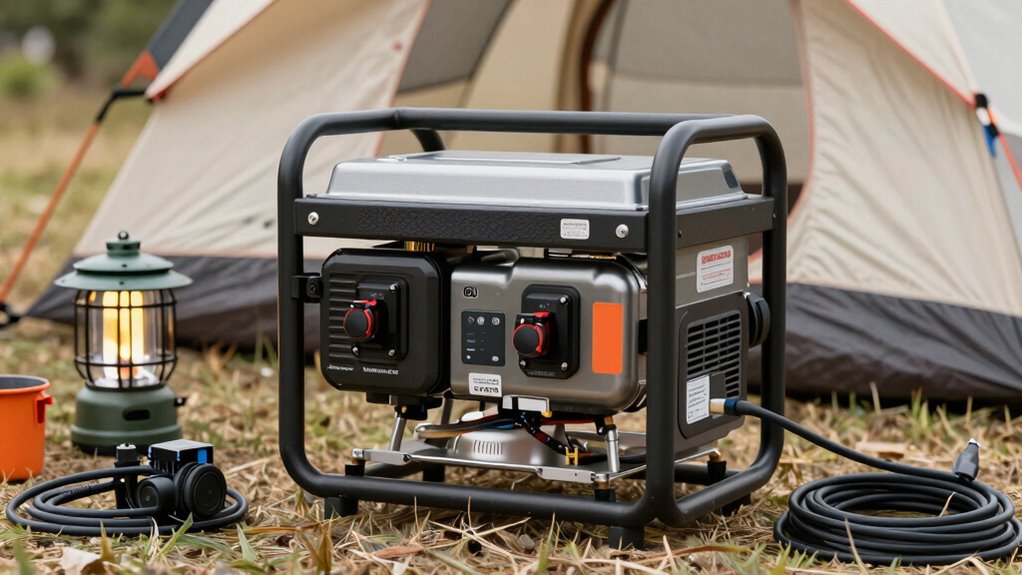
Getting your dual-fuel inverter generator ready for camping guarantees you have reliable power when you need it most. Before hitting the trail, it’s essential to understand the different fuel types your generator supports and the safety precautions associated with each. Dual-fuel models typically run on gasoline and propane, giving you flexibility depending on availability and your specific needs. Each fuel type has its advantages and considerations: gasoline is easy to find and offers quick start-up, but it’s highly flammable and requires proper storage and handling. Propane, on the other hand, burns cleaner, produces less maintenance residue, and is safer to store for long periods—yet it might be less accessible in some remote areas. To avoid common mistakes, you must familiarize yourself with the specific fuel requirements of your generator and ensure you have the correct containers and connections.
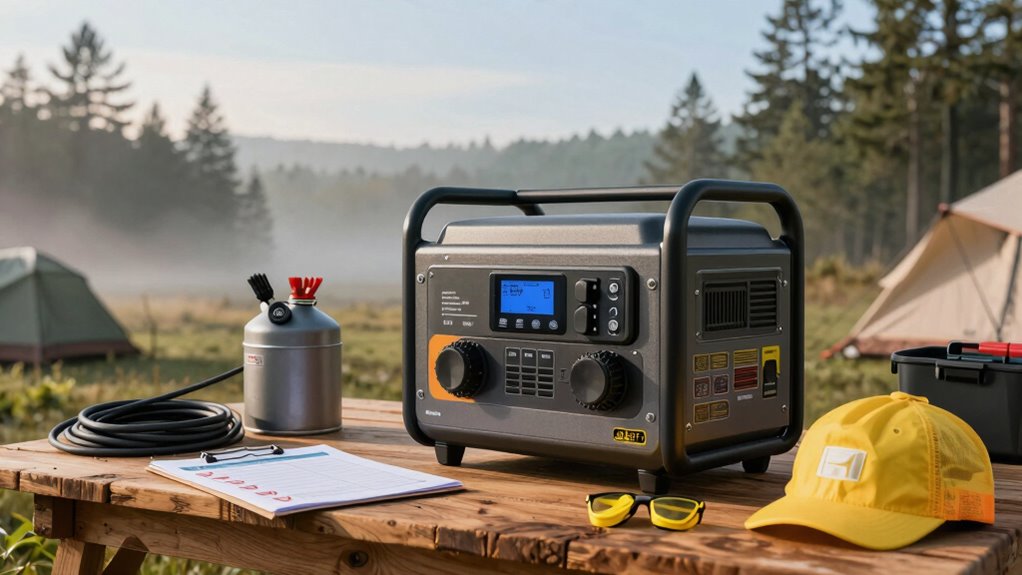
When preparing your generator, always adhere to safety precautions. Never ignore manufacturer instructions—these guidelines are designed to prevent accidents and guarantee maximum performance. Always operate your generator outdoors in a well-ventilated area to avoid carbon monoxide buildup, which can be deadly. Before fueling, turn off the engine and let it cool down to prevent fire risks. When handling gasoline, use approved containers and avoid overfilling to prevent spills that could ignite. For propane, ensure the tank is properly connected and check for leaks with a soap solution before starting. Using the correct fuel type and following safety steps minimizes risks and keeps you and your camping companions safe.
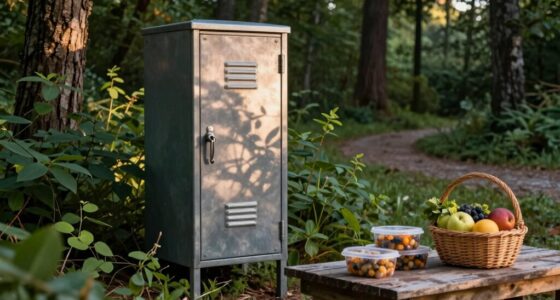
Another common mistake is neglecting to check fuel levels before departure. Running out of fuel in the middle of a trip can be frustrating and leave you without power when you need it most. Always fill your generator to a safe level ahead of time, and carry extra fuel or propane if your trip extends longer than planned. Pay attention to the storage conditions of your fuel supplies—store gasoline in approved containers in a cool, dry place away from direct sunlight, and keep propane tanks upright and secure to prevent leaks or accidents. Additionally, understanding the importance of proper fuel storage can significantly extend the lifespan of your generator and ensure safe operation during your outdoor adventures.
Proper setup isn’t just about fueling; it’s also about ensuring all safety measures are followed. Regularly inspect the fuel lines, connections, and tank integrity. Keep a fire extinguisher nearby, and have a plan for emergency shut-off procedures. By understanding the different fuel types and adhering to safety precautions, you avoid the most common mistakes that can turn a simple camping trip into a hazardous situation. Preparing thoroughly guarantees your generator will run smoothly and safely, giving you peace of mind while enjoying your outdoor adventure.
dual fuel inverter generator for camping
As an affiliate, we earn on qualifying purchases.
As an affiliate, we earn on qualifying purchases.
Frequently Asked Questions
Can I Use Regular Gasoline in a Dual-Fuel Inverter Generator?
Yes, you can use regular gasoline in a dual-fuel inverter generator, but it’s crucial to check fuel compatibility first. Gasoline versus alternative fuels like propane require different handling and storage. Using the correct type guarantees maximum performance and prevents damage. Always refer to your generator’s manual for recommended fuel types and avoid mixing fuels, which can compromise your generator’s efficiency and lifespan. Proper fuel choice keeps your camping trip running smoothly.
What Safety Precautions Should I Take When Connecting the Generator?
Your safety is your top priority—don’t underestimate the power of proper precautions! Always guarantee your generator is grounded correctly to prevent electrical shocks, and follow electrical safety guidelines strictly. Use grounded outlets and keep connections dry and secure. Before plugging in, double-check all wiring, and avoid overloading the generator. By staying vigilant and following these safety steps, you protect yourself and your gear from potential hazards.
How Often Should I Perform Maintenance on the Generator?
You should perform maintenance on your generator every 50 to 100 hours of use or at least once a year. During these checks, change the oil regularly and replace the air filter to keep it running smoothly. Always inspect spark plugs and fuel filters, and clean or replace them as needed. Regular maintenance guarantees your generator stays reliable, especially during camping trips when you depend on it most.
Is It Safe to Operate the Generator Indoors or in Enclosed Spaces?
You should never operate a dual-fuel inverter generator indoors or in enclosed spaces. For indoor safety, guarantee proper ventilation requirements are met to prevent dangerous carbon monoxide buildup. Always use the generator outdoors in a well-ventilated area, and keep it away from windows, doors, and vents. This prevents health hazards and potential accidents, keeping you safe while enjoying your camping trip or emergency power backup.
What’s the Best Way to Store Fuel for Long Camping Trips?
Imagine a sturdy fuel container sitting safely in your gear, ready for your adventure. To store fuel for long camping trips, use approved fuel containers designed for this purpose, ensuring they’re tightly sealed. Store them in a cool, well-ventilated area away from direct sunlight and heat sources. Follow storage tips like labeling containers and avoiding overfilling to prevent leaks or spills, keeping your campsite safe and your fuel fresh.
outdoor propane generator safety kit
As an affiliate, we earn on qualifying purchases.
As an affiliate, we earn on qualifying purchases.
Conclusion
By following this checklist, you’ll guarantee your dual-fuel inverter generator is set up safely and efficiently for your camping trip. Don’t worry about the extra steps—taking the time now prevents headaches later. Even if you’re new to generators, these tips help you avoid common mistakes and keep your power reliable. With a little preparation, you can enjoy your adventure worry-free, knowing your setup is solid and ready when you need it most.
portable gasoline generator with safety features
As an affiliate, we earn on qualifying purchases.
As an affiliate, we earn on qualifying purchases.
camping generator fuel storage containers
As an affiliate, we earn on qualifying purchases.
As an affiliate, we earn on qualifying purchases.
Fall Picks
fall essentials
As an affiliate, we earn on qualifying purchases.