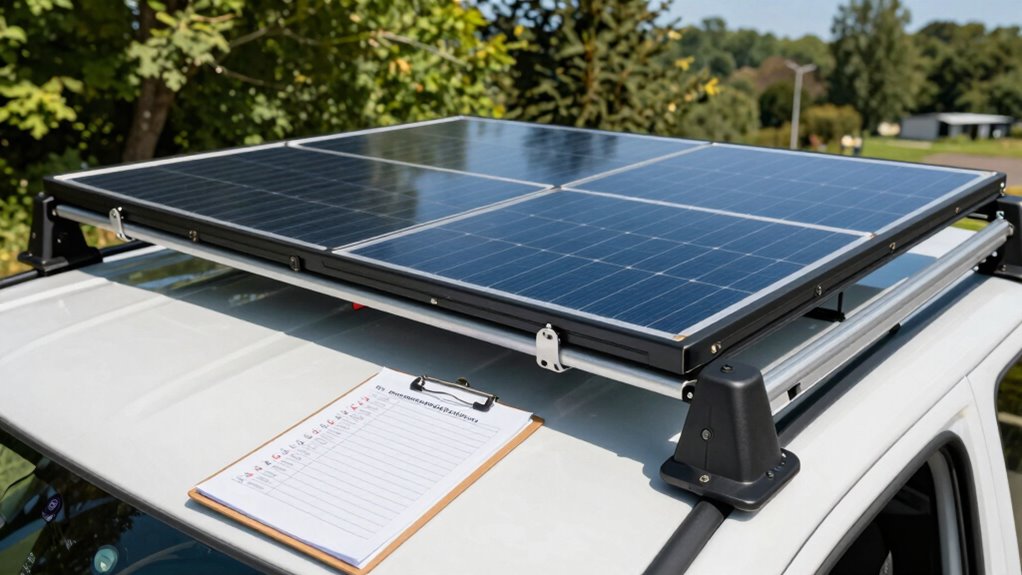
When setting up your rigid solar panel kit for van camping, avoid common mistakes like improper mounting, incorrect wiring connections, and shading issues. Make sure panels are securely fastened at the right angle and free from obstructions, double-check all wiring for secure connections and proper polarity, and verify that the system components work together smoothly. Regular inspections and maintenance prevent power losses. Keep these tips in mind, and you’ll be on your way to a reliable, efficient solar setup—more guidance awaits as you continue.
Key Takeaways
- Verify correct panel placement for maximum sunlight exposure and avoid shading during installation.
- Use appropriate gauge wiring, ensure tight, insulated connections, and double-check polarity before powering up.
- Secure panels with compatible brackets, following manufacturer guidelines for tilt angles suited to your latitude.
- Follow a detailed wiring checklist, label all wires, and test connections with a multimeter prior to system activation.
- Regularly inspect and maintain panels, wiring, and connections to prevent efficiency loss and potential system damage.
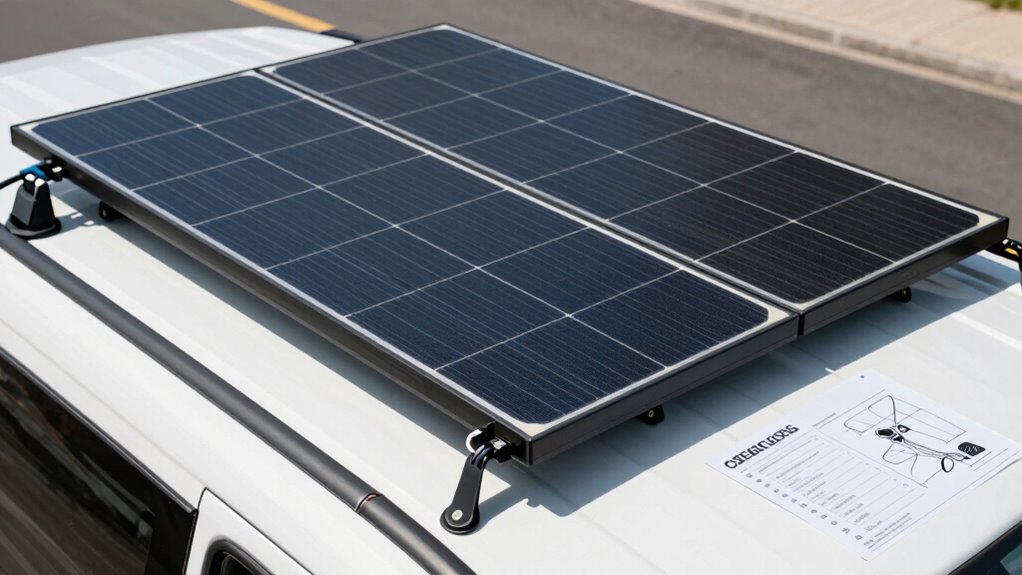
Setting up a rigid solar panel kit for van camping requires careful planning and organization to guarantee your system works efficiently. One of the most common mistakes is neglecting proper solar panel maintenance, which can lead to decreased efficiency or damage over time. Regularly inspecting your panels for dirt, debris, and potential damage ensures they operate at peak performance. Keep the surface clean and free of obstructions, especially after rough weather or long trips. Neglecting maintenance can cause a significant drop in energy production, leaving you without power when you need it most. Additionally, understanding the concept of Free Floating systems can help you optimize your setup by allowing for more flexible placement and maintenance options.
Regularly inspect and keep your solar panels clean for optimal van camping power.
Another critical aspect often overlooked is wiring safety. When installing your solar panel kit, you must pay close attention to wiring connections to prevent shorts, fires, or system failure. Use appropriate gauge wiring as specified by your solar kit instructions, and ensure all connections are tight, secure, and insulated properly. Avoid running wires where they can be pinched or damaged, and use conduit or protective sleeves if necessary. Proper wiring safety not only prolongs the lifespan of your system but also protects you and your van from electrical hazards. Remember, a loose or exposed wire can cause serious issues, so double-check all connections before powering up your system.
Planning your installation layout is equally crucial. You want to position your panels where they’ll receive maximum sunlight without shading from roof vents, antennas, or other obstructions. Mount the panels securely using compatible brackets, ensuring they can withstand vibrations during travel. Improper mounting can lead to damage or reduced efficiency, so follow manufacturer guidelines carefully. Once mounted, verify that the panels are angled correctly for your latitude to optimize energy production throughout the day.
When it comes to connecting your solar panels to the charge controller and battery, be meticulous. Follow your setup checklist to avoid common wiring errors, such as reversing polarity or connecting components in the wrong sequence. These mistakes can damage your equipment or decrease system efficiency. Use a multimeter to test connections before finalizing the setup, ensuring everything is wired correctly. Label your wires clearly for future maintenance or troubleshooting, saving you time and frustration later on.
Finally, after setup, test your entire system thoroughly. Check that your panels are delivering voltage, your charge controller is functioning properly, and your battery is charging as expected. Regular monitoring and maintenance will keep your solar setup performing reliably, extending its lifespan and providing the renewable energy you need for your van adventures. By paying attention to solar panel maintenance and wiring safety during installation, you set yourself up for a trouble-free experience that keeps your van powered efficiently on the road.
Frequently Asked Questions
How Do I Determine the Right Size Solar Panel Kit for My Van?
To determine the right size solar panel kit for your van, start with accurate power estimation. Calculate your daily energy needs by listing all devices and their consumption. Then, consider solar panel sizing based on your location’s sunlight hours and battery capacity. Bigger panels generate more power, but make certain they fit your space. By doing this, you’ll select a kit that efficiently meets your energy demands without overloading your system.
What Safety Precautions Should I Follow During Installation?
During installation, prioritize electrical safety by wearing insulated gloves and eye protection to prevent shocks or sparks. Always disconnect power sources before working on wiring, and double-check all connections for security. Use proper tools and follow manufacturer instructions carefully. Keep your workspace dry and well-ventilated to minimize hazards. By focusing on personal protection and electrical safety, you guarantee a safe, efficient setup that protects you throughout the installation process.
Can I Install the Solar Panels Myself Without Technical Experience?
Yes, you can attempt a DIY installation, but it’s important to acknowledge your limits in technical expertise. If you’re comfortable with basic electrical work and follow proper safety procedures, you might succeed. However, if you’re unsure about wiring, mounting, or system integration, consider consulting a professional. Proper installation ensures safety, efficiency, and longevity of your solar panels, so don’t hesitate to seek help if needed.
How Do I Maintain and Clean the Solar Panels Regularly?
Imagine you’re on a week-long trip, and your solar panel’s efficiency drops. To prevent this, establish a maintenance schedule, cleaning panels every few months or after dusty conditions. For panel cleaning, gently rinse with water and wipe with a soft cloth to remove dirt and debris. Regular maintenance ensures peak power generation, so stay consistent and check for any damage or loose connections during your routine.
What Troubleshooting Tips Are Available if My System Isn’t Working Properly?
If your solar system isn’t working properly, start with system diagnostics to identify any issues. Check the connections and verify the components, like the charge controller and inverter, are functioning correctly. Use a multimeter to test voltage and current levels. If a component isn’t operating as expected, troubleshoot it individually—replace faulty parts or clean dirty connections. Regularly reviewing your system helps catch problems early and keeps your setup running smoothly.
Conclusion
Now that you know the key steps, avoid common pitfalls, and double-check your setup, you’re ready to enjoy worry-free van camping. Focus on safety, follow the checklist, and trust your preparation. Embrace the freedom, the adventure, and the independence that comes with a properly installed solar kit. Stay vigilant, stay confident, and let your solar system power your journey. With the right setup, your van life will shine brighter than ever.