To prevent wet gear from causing odors, dry it thoroughly in a well-ventilated area, using fans or dehumidifiers if needed. Hang larger items on sturdy hangers and turn gear inside out for even drying. Store your gear in breathable containers away from moisture, and regularly check for dampness or smells. To keep everything fresh, use odor-neutralizing products or baking soda inside shoes and bags. Keep exploring for more tips on maintaining your gear’s freshness.

Get audio and creator gear delivered free with Prime
- Fast, free delivery on millions of items
- Prime Video, Amazon Music and more included
- Member-only deals all year
Key Takeaways
- Dry gear thoroughly in a well-ventilated area before storage to prevent mold and odors.
- Use breathable containers or bags that promote airflow and avoid trapping moisture.
- Apply odor-neutralizing agents like baking soda or specialized sprays inside gear or storage containers.
- Store gear in a dry, cool, and ventilated space, and re-dry if any dampness or smells are detected.
- Regularly inspect stored gear, re-dry as needed, and maintain proper drying and storage practices.
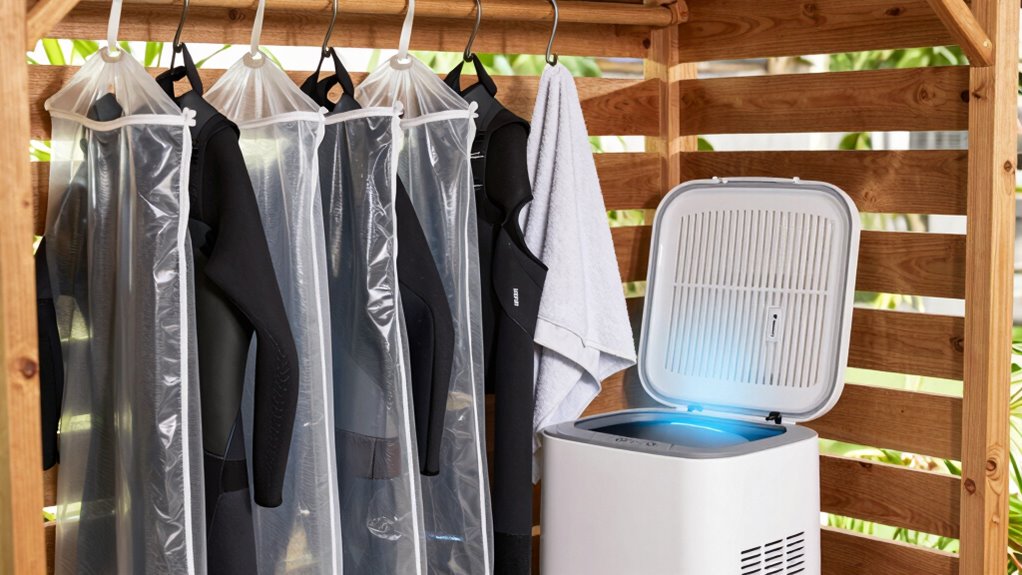
After you’ve finished using wet gear, proper storage is essential to prevent mold, odors, and damage. Wet gear, whether it’s a wetsuit, raincoat, or hiking boots, can quickly develop unpleasant smells and deteriorate if not dried and stored correctly. The key to maintaining your gear’s longevity and freshness lies in effective drying techniques and odor prevention strategies.
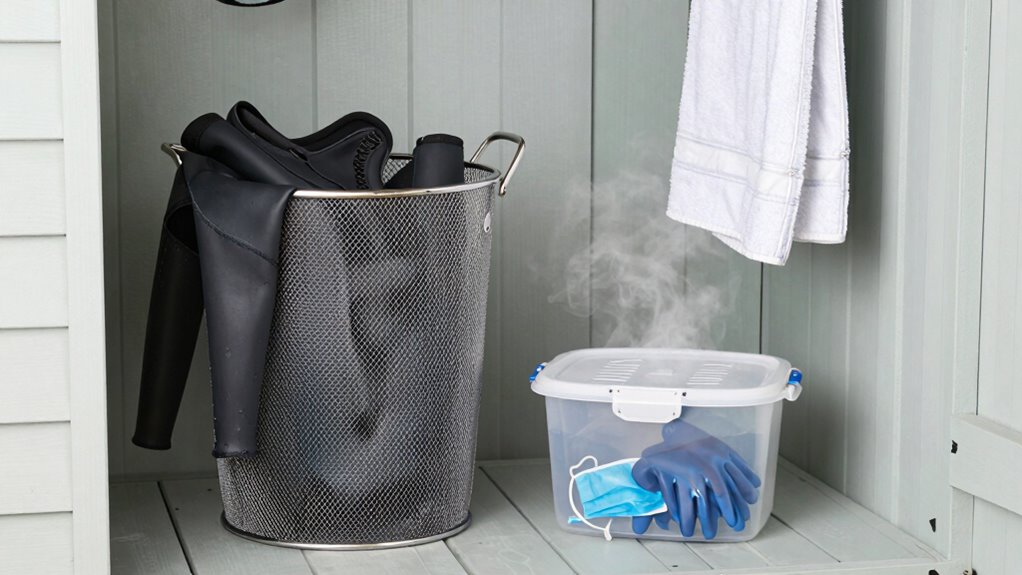
Start by taking the time to thoroughly dry your gear before storing it. Use a well-ventilated area, ideally indoors, where air can circulate freely around your items. For larger items like wetsuits or jackets, hang them on sturdy hangers to maintain their shape and allow air to reach every part. If you’re drying shoes or smaller items, placing them in a dry, ventilated space helps them dry evenly and prevents moisture build-up. Avoid leaving wet gear crumpled or folded, as trapped moisture fosters mold growth and stubborn odors.
Always dry gear thoroughly in a well-ventilated space to prevent mold and odors.
Implementing proper drying techniques is critical. For fabrics, consider using fans or dehumidifiers to accelerate the drying process. If you’re in a hurry, a blow dryer on a cool setting can help, but avoid high heat that might damage delicate materials. For rubber or plastic gear, wiping excess water with a towel before air-drying can considerably reduce drying time and prevent lingering dampness. It’s also wise to turn your gear inside out if possible, so all surfaces dry evenly. Additionally, choosing appropriate storage containers that promote airflow and breathability can help keep your gear fresh longer.
Odor prevention is just as important as thorough drying. Once your gear is dry, apply odor-fighting products like specialized sprays, baking soda, or odor-neutralizing powders. These can be sprinkled inside shoes or stored in bags to absorb moisture and keep smells at bay. Additionally, storing gear in a breathable bag or container allows air to circulate, which minimizes the risk of musty odors developing over time. Avoid airtight plastic bags unless your gear is completely dry, as trapped moisture will lead to mold and foul smells.
Regularly inspecting your stored gear also helps catch any issues early. If you notice a faint smell or dampness, re-dry the item immediately. By following these drying techniques and odor prevention methods, you guarantee your wet gear stays fresh, functional, and free of unpleasant odors. Proper storage isn’t just about keeping things tidy; it’s about protecting your gear from damage and making sure it’s ready to use whenever you need it again.
As an affiliate, we earn on qualifying purchases.
Frequently Asked Questions
Can I Use a Dehumidifier to Dry Wet Gear Indoors?
Yes, you can use a dehumidifier to dry wet gear indoors. Its effectiveness lies in reducing humidity, which speeds up the drying process and prevents musty smells. For the best results, combine it with other indoor drying methods like hanging gear in a well-ventilated area. Make sure to keep the dehumidifier running consistently until your gear feels dry, ensuring it stays fresh and odor-free.
How Often Should I Wash or Disinfect My Stored Wet Gear?
You should wash or disinfect your stored wet gear after each use, especially if it’s been exposed to dirt or sweat. Regular cleaning prevents bacteria buildup and odors. Use disinfectants like a diluted bleach solution or specialized gear cleaners for effective disinfection. For gear stored for longer periods, aim for cleaning every 1-2 weeks. This routine keeps your gear fresh, hygienic, and ready for your next adventure.
Are There Eco-Friendly Options for Odor-Absorbing Gear Storage?
Yes, you can choose eco-friendly options like biodegradable sachets and activated charcoal bags to absorb odors naturally. Place biodegradable sachets inside your storage container or bag to neutralize smells without harming the environment. Activated charcoal bags are also effective—just hang or lay them near your gear to keep odors at bay. These options are sustainable, reusable, and help you maintain fresh-smelling gear without relying on chemicals.
What Are the Best Materials for Storing Wet Gear Long-Term?
You should choose storage containers made from breathable fabrics or materials that allow airflow, like mesh or canvas, to prevent moisture buildup. Avoid airtight containers that trap humidity, which can cause odors and mold. Instead, opt for breathable fabrics combined with proper ventilation to keep your wet gear dry and fresh long-term. This approach guarantees your gear stays odor-free and in good condition, ready for your next adventure.
Can Storing Wet Gear in Plastic Cause Mold Growth?
Storing wet gear in plastic can invite mold, like unseen shadows creeping in. Plastic mold thrives in trapped moisture, so without proper ventilation airflow, mold growth accelerates. You risk creating a damp, foul-smelling environment that’s hard to escape. To prevent this, guarantee your plastic container has vents or periodically air out your gear. Good airflow keeps moisture levels low, stopping mold from taking hold and keeping your gear fresh.
odor-neutralizing sprays for shoes
As an affiliate, we earn on qualifying purchases.
As an affiliate, we earn on qualifying purchases.
Conclusion
Now that you know how to store your wet gear properly, aren’t you tired of dealing with that stubborn smell? By drying it thoroughly before storing, using breathable bags, and avoiding cramped spaces, you can keep your gear fresh and odor-free. Isn’t it worth taking a few extra steps to enjoy your outdoor adventures without the lingering stench? With these simple tips, you’ll never dread packing up wet gear again. Ready to give it a try?
As an affiliate, we earn on qualifying purchases.
moisture absorber for gear storage
As an affiliate, we earn on qualifying purchases.
As an affiliate, we earn on qualifying purchases.
Halloween Picks
halloween
As an affiliate, we earn on qualifying purchases.