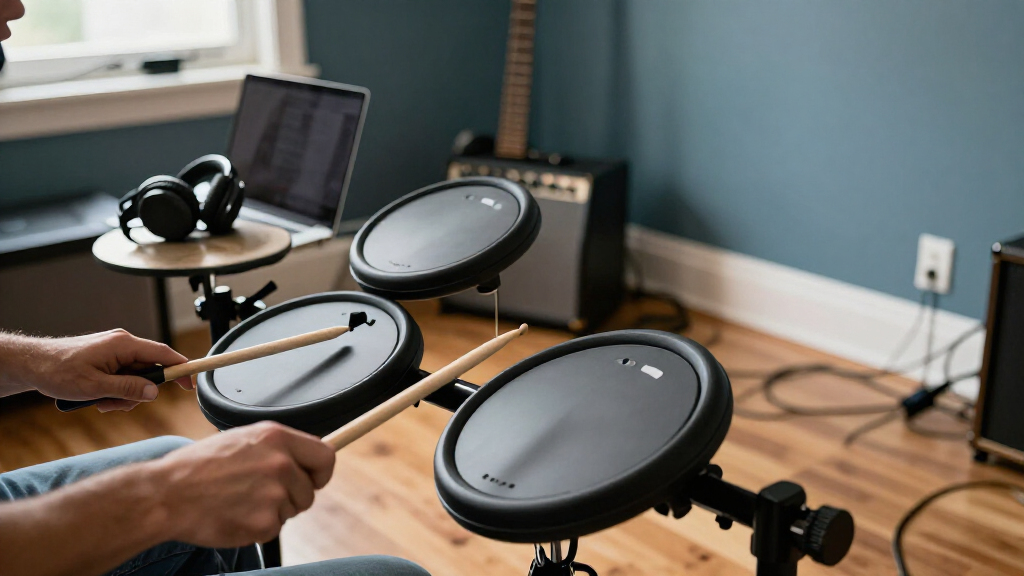
Electronic drum pads offer a versatile and compact way to practice, perform, or experiment with percussion sounds without the bulk of traditional drums. The best options balance realistic sound quality, responsiveness, durability, and ease of use. The Roland SPD-SX PRO stands out as the overall top pick for professional use, thanks to its extensive sampling capabilities. For beginners, the ROCKSOCKI 7-Pad Electronic Drum Set for Kids provides a user-friendly experience at a budget-friendly price, while the Alesis SamplePad Pro offers a good middle ground for versatile practice. Keep in mind that tradeoffs often involve size, sound variety, and price—more advanced models tend to be larger and more expensive, but also more capable. Continue reading for a detailed breakdown of these options and what to consider before buying.

Get audio and creator gear delivered free with Prime
- Fast, free delivery on millions of items
- Prime Video, Amazon Music and more included
- Member-only deals all year
Complete the kit


Key Takeaways
- The highest-quality options like the Roland SPD-SX PRO excel in sampling, sound quality, and durability but come at a higher price point.
- Budget-friendly models and kid-focused sets prioritize ease of use and portability over extensive features and sound customization.
- Size and portability vary widely; compact pads are great for travel or small spaces but may sacrifice features found in larger sets.
- Sound variety and sampling capabilities are key for creative flexibility, especially for performers and producers.
- Build quality and responsiveness differ significantly—more expensive models tend to offer better feel and longevity.
| Sboet Portable 9-Pad Electronic Drum Set |  | Best for a Full Portable Practice Layout | Drum pads: 9 | Pad layout: 3 toms, 2 crashes, 1 hi-hat, 1 ride, 1 snare, 1 bass | Pedals: 2 | VIEW LATEST PRICE | See Our Full Breakdown |
| Alesis SamplePad Pro Electronic Drum Pad |  | Best for Expandable Sampling | Pads: 8 velocity-sensitive rubber pads with blue LED illumination | Built-in sounds: More than 200 | Preset kits: 10 | VIEW LATEST PRICE | See Our Full Breakdown |
| ROCKSOCKI 7-Pad Electronic Drum Set for Kids with Headphones and Dual Speakers |  | Best for Kids and Quiet Practice | Pads: 7 | Included components: Drum pad, drumsticks, power cable, audio cable, headphones, manual, and pedals | Speakers: Dual stereo speakers | VIEW LATEST PRICE | See Our Full Breakdown |
| Roland SPD-SX PRO Sampling Pad |  | Best for Professional Stage Sampling | Playing surfaces: 9: 6 large pads and 3 shoulder pads | Preloaded sounds: More than 1,550 | External trigger inputs: Up to 8 individual triggers or pads | VIEW LATEST PRICE | See Our Full Breakdown |
| Donner DED-20 Electronic Drum Set with 7 Pads |  | Best for Guided Beginner Practice | Pads: 7 | Drum kits: 7 | Demo songs and accompaniments: 12 demo songs and 9 accompaniments | VIEW LATEST PRICE | See Our Full Breakdown |
| Alesis Strike MultiPad Electronic Drum Pad |  | Best for Live Sampling and Control | Pads: 9 velocity-sensitive RGB pads | Display: 4.3-inch color screen | Storage: 32GB | VIEW LATEST PRICE | See Our Full Breakdown |
| Alesis SamplePad 4 Electronic Drum Pad |  | Best Compact Sample-Trigger Pad | Pads: 4 velocity-sensitive, LED-illuminated pads | Preset kits: 8 | Built-in sounds: 25 percussion and electronic drum sounds | VIEW LATEST PRICE | See Our Full Breakdown |
| AKLOT B-CORE53 NEO Portable Electronic Drum Set |  | Best for Beginner Kit-Style Practice | Snare: 8-inch, dual-zone, three-layer mesh | Cymbals: 4.5-inch with adjustable stands | Pedals: Full-size hi-hat and kick pedals | VIEW LATEST PRICE | See Our Full Breakdown |
| KAT Percussion KTMP1 Electronic Drum and Percussion Pad, Black |  | Best for Adding Pedal Triggers | Pads: 4 velocity-sensitive pads | Sounds: 50 drum and percussion sounds | Connectivity: USB/MIDI | VIEW LATEST PRICE | See Our Full Breakdown |
| Roland OCTAPAD SPD-30 Digital Percussion Pad |  | Best for Expandable Percussion Performance | Type: Digital percussion pad | Material: Plastic | Dimensions: 10.75 x 21.3 x 3.5 inches | VIEW LATEST PRICE | See Our Full Breakdown |
| LEKATO PD705 Electronic Percussion Sample Pad |  | Best for Sample Flexibility | Pads: 9 dual-zone, velocity-sensitive pads | Preset sounds: Up to 592 | Drum kits: 30 | VIEW LATEST PRICE | See Our Full Breakdown |
| Donner DED-20R 7-Pad Electronic Drum Set |  | Best for Roll-Up Practice | Pads: 7 | Built-in speakers: 2.2 W stereo dual speakers | Drum sets: 7 | VIEW LATEST PRICE | See Our Full Breakdown |
| VTech Kidi Star Drum Pad, Black |  | Best for Young Beginners | Age range: 5 years and up | Drum sounds: 20 | Built-in songs: 30+ | VIEW LATEST PRICE | See Our Full Breakdown |
| OYAYO TD02 9-Pad Portable Electronic Drum Kit |  | Best Portable Velocity-Sensitive Kit | Pads: 9 velocity-sensitive pads with LED lights | Drum kits: 16 | Songs: 10 | VIEW LATEST PRICE | See Our Full Breakdown |
| Yamaha DTX-MULTI12 Electronic Percussion Pad |  | Best Premium Performance Pad | Drum, percussion, and effects sounds: 1,061 | Keyboard sounds: 216 | User sample memory: 64 MB flash ROM | VIEW LATEST PRICE | See Our Full Breakdown |
| electronic drum pad | Pads | Connectivity |
|---|---|---|
| Sboet Portable 9-Pad Electroni | — | — |
| Alesis SamplePad Pro Electroni | 8 velocity-sensitive rubber pads with blue LED illumination | MIDI In/Out, USB, 1/4-inch stereo outputs, 1/4-inch headphone output, and 1/8-inch stereo AUX input |
| ROCKSOCKI 7-Pad Electronic Dru | 7 | USB MIDI |
| Roland SPD-SX PRO Sampling Pad | — | — |
| Donner DED-20 Electronic Drum | 7 | Standard MIDI out, USB MIDI out, and 3.5 mm headphone output |
| Alesis Strike MultiPad Electro | 9 velocity-sensitive RGB pads | — |
| Alesis SamplePad 4 Electronic | 4 velocity-sensitive, LED-illuminated pads | MIDI output and USB sample transfer |
| AKLOT B-CORE53 NEO Portable El | — | USB-MIDI, AUX input, and wireless phone music |
| KAT Percussion KTMP1 Electroni | 4 velocity-sensitive pads | USB/MIDI |
| Roland OCTAPAD SPD-30 Digital | — | — |
| LEKATO PD705 Electronic Percus | 9 dual-zone, velocity-sensitive pads | — |
| Donner DED-20R 7-Pad Electroni | 7 | 3.5 mm headphone output, standard MIDI out, USB MIDI out |
| VTech Kidi Star Drum Pad | — | Bluetooth and audio cable input |
| OYAYO TD02 9-Pad Portable Elec | 9 velocity-sensitive pads with LED lights | Bluetooth, USB-C, MIDI |
| Yamaha DTX-MULTI12 Electronic | — | — |
More Details on Our Top Picks
Sboet Portable 9-Pad Electronic Drum Set
The Sboet gives beginners a broader kit layout than the seven-pad ROCKSOCKI 7-Pad, adding nine pads for a more familiar spread of toms, cymbals, snare, and bass. Its roll-up design, built-in speakers, and headphone output make it easy to set up for casual practice or pack away afterward. Seven tones, nine rhythms, demo songs, and a short recording function offer more built-in practice variety than a bare trigger pad. The tradeoff is that this is an introductory instrument, not a velocity-sensitive performance pad like the Alesis SamplePad Pro. Its listed power adapter is also not included, so buyers need a compatible 5V 2A adapter. I’d choose it for convenient, self-contained practice rather than expressive playing or stage use.
Pros:- Nine pads provide a fuller kit layout than the seven-pad ROCKSOCKI set.
- Built-in stereo speakers and a headphone output support both shared and quiet practice.
- Rhythms, demo songs, multiple tones, and recording add beginner practice options.
- Rechargeable battery is listed for up to 10 hours of playtime.
Cons:- The required 5V 2A power adapter is not included.
- Its beginner-focused feature set is less suited to advanced playing and performance use.
- The provided specifications do not identify velocity-sensitive pads.
Best for: Beginning players or families who want a portable, speaker-equipped kit with a fuller nine-pad layout for casual practice.
Not ideal for: Players seeking velocity-sensitive response, deeper sound customization, or a performance-ready sampling pad; the Alesis SamplePad Pro is better suited to those needs.
- Drum pads:9
- Pad layout:3 toms, 2 crashes, 1 hi-hat, 1 ride, 1 snare, 1 bass
- Pedals:2
- Tones, demo songs, and rhythms:7 tones, 10 demo songs, 9 rhythms
- Recording time:Up to 180 seconds
- Battery life:Up to 10 hours per charge
- Connections:3.5 mm headphone output and AUX jack
- Power:Rechargeable battery; 5V 2A adapter required and not included
Our verdict“Choose the Sboet if you want a roll-up beginner kit with nine pads and built-in speakers, but skip it for nuanced dynamics or pro-level control.”
Alesis SamplePad Pro Electronic Drum Pad
The SamplePad Pro is the most balanced choice here for players who want a pad instrument they can build around rather than a roll-up kit for basic practice. Its eight velocity-sensitive pads respond to playing dynamics, while more than 200 onboard sounds and SD-card support give it a broader sound workflow than the beginner-focused Sboet Portable 9-Pad. Expansion inputs for extra pads and pedals make room to grow, and MIDI, USB, audio, and headphone connections suit a home setup or a wider rig. That flexibility comes with a setup tradeoff: adding custom sounds requires an SD/SDHC card, which is not included. It also lacks the large library and extensive stage-output setup of the Roland SPD-SX PRO. I’d pick this Alesis for adaptable practice and percussion parts without moving into the more specialized professional tier.
Pros:- Eight velocity-sensitive pads support more dynamic playing than the listed roll-up kits.
- More than 200 built-in sounds and 10 preset kits provide variety out of the box.
- SD-card support allows custom sounds and kits to be added.
- Expansion inputs and MIDI, USB, and audio connections suit a growing setup.
Cons:- SD/SDHC card for custom sounds is not included.
- It is a pad instrument rather than a complete roll-up kit with built-in speakers and pedals.
- Its 10 preset kits and onboard library are less extensive than the Roland SPD-SX PRO’s listed sound collection.
Best for: Drummers and percussionists who want velocity-sensitive pads, custom sound loading, and inputs to expand a home or rehearsal setup.
Not ideal for: Beginners wanting a self-contained roll-up kit with built-in speakers, or touring players who need the Roland SPD-SX PRO’s extensive stage-oriented outputs.
- Pads:8 velocity-sensitive rubber pads with blue LED illumination
- Built-in sounds:More than 200
- Preset kits:10
- SD card capacity:Up to 32 GB
- SD card storage:Up to 512 sounds and 89 custom kits per card
- Expansion inputs:2 additional drum pad inputs, kick pedal input, and hi-hat pedal input
- Connectivity:MIDI In/Out, USB, 1/4-inch stereo outputs, 1/4-inch headphone output, and 1/8-inch stereo AUX input
- Included components:Power adapter, SamplePad Pro, user guide, safety instructions, and warranty information
Our verdict“Choose the SamplePad Pro for a flexible, expandable percussion pad with expressive response, but plan for a separate SD card and supporting gear.”
ROCKSOCKI 7-Pad Electronic Drum Set for Kids with Headphones and Dual Speakers
The ROCKSOCKI is aimed squarely at young beginners: its seven-pad roll-up layout keeps the setup simple, while included headphones let a child practice without relying on the dual speakers. That makes it a more ready-to-share choice than the Donner DED-20, which lists lessons and MIDI tools but does not list included headphones. USB MIDI adds a route to compatible devices and music software, though connecting a phone may require an adapter. The built-in battery is listed for up to 10 hours, and the 1.7-pound weight supports easy storage and travel. Compared with the nine-pad Sboet Portable 9-Pad, it gives up two playing surfaces and some built-in practice features. I’d favor it for children who need a simple, portable starting point, not for adults seeking advanced pad response or detailed sound control.
Pros:- Roll-up design and 1.7-pound listed weight make it easy to store or carry.
- Included headphones support quiet practice without a separate purchase.
- Dual stereo speakers and adjustable volume offer an alternative to headphones.
- USB MIDI supports use with compatible devices and music software.
Cons:- Its seven-pad layout is smaller than the nine-pad Sboet kit.
- Connecting a phone requires an adapter.
- The child-focused design may not suit adult players seeking more advanced control.
Best for: Parents of children ages 4–12 who want a lightweight roll-up practice kit with headphones included and USB MIDI for compatible devices.
Not ideal for: Adult players or children ready for a larger kit layout, deeper sound choices, or advanced performance controls; the Sboet offers nine pads, while the SamplePad Pro adds velocity sensitivity.
- Pads:7
- Included components:Drum pad, drumsticks, power cable, audio cable, headphones, manual, and pedals
- Speakers:Dual stereo speakers
- Battery:Built-in 2000 mAh lithium battery
- Battery life:Up to 10 hours
- Connectivity:USB MIDI
- Item weight:1.7 pounds
- Recommended age:4–12 years
Our verdict“Choose the ROCKSOCKI for a child’s portable first kit with headphones included, but look elsewhere for a larger layout or advanced playing features.”
Roland SPD-SX PRO Sampling Pad
The SPD-SX PRO is the clear professional pick in this lineup, built around nine playing surfaces, a substantial preloaded sample library, and outputs that let a sound engineer route parts separately. Its six large pads and three shoulder pads offer a more performance-focused layout than the Alesis SamplePad Pro, while support for up to eight external triggers gives an established rig room to expand. A color display and customizable multicolor LEDs also help make kit control more legible onstage. The tradeoff is specialization: this is a sampling pad, not a self-contained beginner kit like the Donner DED-20, and the provided product data does not list built-in speakers, battery power, or practice lessons. Its professional feature set may be unnecessary for casual home drumming. I’d put it first for stage sampling and separate output routing, not for portable, low-fuss practice.
Pros:- Nine playing surfaces combine six large pads with three shoulder pads.
- More than 1,550 preloaded samples provide a substantial onboard sound library.
- Stereo main output plus four direct mono outputs support flexible stage mixing.
- Up to eight external triggers or pads allow expansion.
Cons:- Its professional sampling focus is more involved than a beginner-oriented roll-up drum set.
- The provided specifications do not list built-in speakers or battery operation.
- The listed data gives no detail on included accessories or a warranty.
Best for: Performing drummers and electronic percussionists who need a stage-oriented sampler with multiple outputs, a large onboard sample library, and external trigger support.
Not ideal for: Children, beginners, or casual players who want a roll-up kit with built-in speakers, lessons, and battery-powered portability; the Donner DED-20 is better aligned with those needs.
- Playing surfaces:9: 6 large pads and 3 shoulder pads
- Preloaded sounds:More than 1,550
- External trigger inputs:Up to 8 individual triggers or pads
- Display:4.3-inch color display
- Supported audio files:WAV, AIFF, and MP3
- Audio outputs:Stereo main output and 4 direct mono outputs
- App compatibility:SPD-SX PRO app for Windows and Mac
Our verdict“Choose the SPD-SX PRO for stage sampling, trigger expansion, and separate audio routing, but skip it if you want a simple, self-contained practice kit.”
Donner DED-20 Electronic Drum Set with 7 Pads
The Donner DED-20 stands out among these roll-up sets by pairing a seven-pad layout with 40 drum lessons, making it the most instruction-focused option in this group. Its built-in speakers, headphone output, recording function, and MIDI connections give beginners several ways to practice or connect the kit to other equipment. Compared with the ROCKSOCKI 7-Pad, the Donner emphasizes guided learning and MIDI features rather than listing included headphones. Compared with the nine-pad Sboet Portable 9-Pad, it has fewer playing surfaces but includes an adapter and USB data cable. The central compromise is its strike response: force does not change with harder hits, limiting dynamic expression. Only one drumstick is listed, too. I’d choose it for structured learning and basic recording, not for players who need nuanced touch response.
Pros:- Forty drum lessons give beginners guided practice material.
- Recording, accompaniments, and demo songs add practice and play-along options.
- MIDI out, USB MIDI out, and a headphone output support different practice setups.
- Power adapter, USB data cable, audio cable, and two pedals are listed as included.
Cons:- Strike force does not change with increased force, limiting expressive dynamics.
- Only one drumstick is listed as included.
- Its seven-pad layout is smaller than the Sboet nine-pad kit.
Best for: New drummers who want a compact practice kit with built-in lessons, recording, and MIDI connectivity for learning at home.
Not ideal for: Players who want dynamics to respond to strike force, or buyers needing a complete pair of included drumsticks; the Alesis SamplePad Pro offers velocity-sensitive pads.
- Pads:7
- Drum kits:7
- Demo songs and accompaniments:12 demo songs and 9 accompaniments
- Drum lessons:40
- Recording time:180 seconds
- Speakers:Two stereo speakers, 2.2 W
- Connectivity:Standard MIDI out, USB MIDI out, and 3.5 mm headphone output
- Included components:Power adapter, USB data cable, 3.5 mm audio cable, one drumstick, and 2 drum pedals
- Strike response:Strike force does not change with increased force
Our verdict“Choose the DED-20 for lessons and basic MIDI-enabled practice, but pick a velocity-sensitive pad if dynamic response matters more than built-in instruction.”
Alesis Strike MultiPad Electronic Drum Pad
The Strike MultiPad is the most performance-focused choice in this group: nine velocity-sensitive RGB pads give players room to trigger layered parts, while the built-in sampler and looper support capturing and reshaping material without relying on a separate pad unit. Its color display and five effects processors make editing and sound shaping more direct than on the simpler Alesis SamplePad 4. Broad connections, including four audio outputs and USB audio/MIDI, also suit a more involved live or recording setup. The tradeoff is that its extensive sound library takes up over 6GB of the 32GB storage, and its feature set may be unnecessary for someone who only needs a few extra percussion triggers. I’d choose it for flexible performance, not minimalist practice.
Pros:- Nine velocity-sensitive pads provide more playing and triggering space than the four-pad SamplePad 4 and KTMP1.
- Built-in sampler and looper support live capture and performance arrangement.
- USB audio/MIDI, MIDI in/out, and four audio outputs suit flexible studio and stage routing.
- Color display, customizable RGB lighting, and five effects processors support hands-on editing.
Cons:- Included sounds and loops occupy over 6GB of the 32GB storage.
- Its extensive sampling and routing features may be excessive for players seeking a straightforward practice pad.
Best for: Performers and home producers who want multiple trigger zones, onboard sampling and looping, and direct audio/MIDI connections in one pad.
Not ideal for: Players who need only a few basic percussion triggers or want to devote nearly all onboard storage to their own samples.
- Pads:9 velocity-sensitive RGB pads
- Display:4.3-inch color screen
- Storage:32GB
- Included sounds:Over 6GB of sounds, loops, and instruments
- Effects processors:5
- USB audio:2-in/2-out
- Audio connections:2 audio inputs and 4 audio outputs
- Additional connections:MIDI in/out, 3 trigger inputs, and 2 headphone outputs
Our verdict“Choose the Strike MultiPad for a self-contained live sampling and looping setup; pick a simpler four-pad unit if you need only basic triggering.”
Alesis SamplePad 4 Electronic Drum Pad
The Alesis SamplePad 4 keeps its job simple: four velocity-sensitive pads handle percussion hits and custom sample triggers without the larger footprint or deeper workflow of the Strike MultiPad. Its SD/SDHC sample support lets players add their own sounds, while tuning and reverb offer useful adjustments before a performance. Eight preset kits and 25 built-in sounds make it usable right away, though the library is much smaller than the Strike MultiPad’s and there is no built-in looper listed. The four-pad limit also gives less room for separate parts than the nine-pad Strike or the Roland OCTAPAD SPD-30’s expandable trigger setup. I’d favor this model when compactness and straightforward sample triggering matter more than extensive onboard editing.
Pros:- Four velocity-sensitive, LED-illuminated pads support expressive triggering in a compact layout.
- SD/SDHC card slot allows custom samples to be added.
- Eight preset kits and 25 built-in sounds provide a usable starting library.
- Tuning, reverb, dual-zone trigger input, and MIDI output add practical flexibility.
Cons:- Four built-in pads provide less playing space than the Strike MultiPad or Roland OCTAPAD SPD-30.
- Custom samples require a separately obtained SD or SDHC card.
- Its built-in sound selection is limited compared with the Strike MultiPad’s larger library.
Best for: Percussionists and electronic drummers who want a compact four-pad unit with custom sample loading for a small live or practice setup.
Not ideal for: Players who need many simultaneous triggers, onboard looping, or an included card for storing custom samples.
- Pads:4 velocity-sensitive, LED-illuminated pads
- Preset kits:8
- Built-in sounds:25 percussion and electronic drum sounds
- Sample storage:SD/SDHC card slot
- Trigger input:Dual-zone trigger input
- Connectivity:MIDI output and USB sample transfer
- Sound controls:Tuning and reverb
- Warranty:1 year
Our verdict“Pick the SamplePad 4 for compact sample triggering with straightforward controls, but choose a larger pad if you need more zones or deeper performance tools.”
AKLOT B-CORE53 NEO Portable Electronic Drum Set
The AKLOT B-CORE53 NEO is the outlier here: rather than a single tabletop trigger pad like the KAT KTMP1, it pairs a mesh snare, cymbals, and full-size pedals in a compact desktop drum-set layout. That makes it better suited to beginners learning coordinated kit parts than to players adding a few electronic sounds to an existing rig. Its dual-zone mesh snare offers separate head and rim responses, while 30 kits, 360 sounds, demo songs, and practice controls give learners material to work with. USB-MIDI, AUX, wireless phone music, and headphone output broaden practice options. The compact arrangement still offers less room than a full-size kit, and the available description does not establish the complete included-accessories list. I’d choose it for guided, kit-style practice rather than standalone sampling.
Pros:- Dual-zone, three-layer mesh snare distinguishes head and rim playing.
- Full-size hi-hat and kick pedals support coordinated kit practice.
- Thirty kits and 360 sounds offer variety for learning and play-along sessions.
- USB-MIDI, AUX, wireless phone music, and headphone output support flexible practice.
Cons:- Its desktop kit layout is less compact as a trigger pad than the SamplePad 4 or KTMP1.
- The compact arrangement offers less playing room than a full-size drum kit.
- The supplied description does not provide a complete list of included accessories.
Best for: Beginning drummers who want a compact kit layout with pedals, a mesh snare, practice functions, and ways to play along with phone audio.
Not ideal for: Electronic percussionists looking for a portable sample-trigger pad to add to an existing acoustic or electronic setup.
- Snare:8-inch, dual-zone, three-layer mesh
- Cymbals:4.5-inch with adjustable stands
- Pedals:Full-size hi-hat and kick pedals
- Kits:30 total: 20 preset and 10 user
- Sounds:360
- Demo songs:20
- Connectivity:USB-MIDI, AUX input, and wireless phone music
- Practice features:Velocity response, metronome, tempo control, and reverb
Our verdict“Choose the B-CORE53 NEO if you want a compact beginner drum kit for coordinated practice, not a standalone percussion pad for sample triggering.”
KAT Percussion KTMP1 Electronic Drum and Percussion Pad, Black
The KAT Percussion KTMP1 is a straightforward four-pad module with a useful distinction: two additional inputs accept a hi-hat controller pedal and a bass drum trigger. That makes it a more practical choice for building out a compact playing setup than the Alesis SamplePad 4 if pedal-triggered parts are part of the plan. Its 50 drum and percussion sounds cover basic electronic and acoustic-style accents, while USB/MIDI supports connection to other gear. The tradeoff is a fixed set of four onboard pads, fewer onboard performance features than the Alesis Strike MultiPad, and no custom-sample storage listed. It also weighs 4.2 pounds, so it is portable but not the lightest pocket-sized option. I’d pick it for a modest trigger rig, not deep sound editing.
Pros:- Two additional inputs support a hi-hat controller pedal and bass drum trigger.
- Fifty drum and percussion sounds provide a wider stated sound count than the SamplePad 4.
- USB/MIDI connectivity supports use with other electronic music equipment.
- Included wood-tip maple drumsticks provide a ready-to-play accessory.
Cons:- Only four built-in pads limit the number of sounds that can be triggered directly.
- Custom sample loading and onboard looping are not listed, unlike features on the Strike MultiPad.
- Its 4.2-pound weight is less suited to ultra-light travel than a very compact pad.
Best for: Drummers assembling a compact practice or performance rig who want four onboard pads plus inputs for a kick trigger and hi-hat controller.
Not ideal for: Players who need many built-in pads, custom sample loading, or the sampler and looper functions of the Strike MultiPad.
- Pads:4 velocity-sensitive pads
- Sounds:50 drum and percussion sounds
- Connectivity:USB/MIDI
- Additional inputs:Hi-hat controller pedal and bass drum trigger
- Dimensions:27 x 13 x 16 inches
- Weight:4.2 pounds
- Included components:Drum and pad sound module, 12 pairs of wood-tip maple drumsticks, user manual, and power supply
- Warranty:1-year limited warranty
Our verdict“Choose the KTMP1 if pedal-trigger inputs matter more than onboard pad count or custom sample editing.”
Roland OCTAPAD SPD-30 Digital Percussion Pad
The Roland OCTAPAD SPD-30 suits players who want a dedicated percussion instrument with room to grow. Four dual-trigger inputs let it connect external pads or drum triggers, a stronger expansion path than the fixed four-pad layouts of the Alesis SamplePad 4 and KAT KTMP1. Its real-time phrase looper can record and overdub up to three layers, making it useful for building parts during performance or practice. Backlit controls and pad indicator lights also help when stage lighting is low. Compared with the Strike MultiPad, the listed feature set leans more toward external triggering and phrase looping than onboard sampling and sound editing; USB is the only listed connector, and the supplied data does not detail included components. I’d choose it for an expandable percussion setup, while checking which external pieces are needed.
Pros:- Four dual-trigger inputs allow connection of external pads and drum triggers.
- Phrase Loop records in real time and supports up to three overdub layers.
- Backlit LCD and pad indicator lights aid use in low-light settings.
- Responsive pad sensing is designed to keep hits distinct across the playing surface.
Cons:- USB is the only connector listed in the supplied specifications.
- Additional pads or triggers may be needed to make use of the expansion inputs.
- At 8.4 pounds, it is heavier than the KAT KTMP1.
Best for: Performing percussionists who want a dedicated pad with multiple external trigger connections and real-time phrase layering.
Not ideal for: Buyers who want extensive onboard sample editing, a detailed included-accessories package, or a lighter unit for frequent carrying.
- Type:Digital percussion pad
- Material:Plastic
- Dimensions:10.75 x 21.3 x 3.5 inches
- Weight:8.4 pounds
- Connector:USB
- External trigger inputs:4 dual-trigger inputs
- Phrase looping:Real-time recording with up to 3 overdub layers
- Color:White
Our verdict“Choose the SPD-30 for expandable triggering and layered phrase loops; choose the Strike MultiPad if onboard sampling and sound editing are your priority.”
LEKATO PD705 Electronic Percussion Sample Pad
The LEKATO PD705 suits players who want a standalone pad for varied percussion sounds and custom samples. Its nine dual-zone, velocity-sensitive pads offer more expressive playing surfaces than the Donner DED-20R, whose strike response does not vary with force. With 592 preset sounds, 30 kits, and room for custom kits, it can cover rehearsals or MIDI-based setups without limiting you to factory sounds. The MIDI, USB, and trigger connections also make it easier to add gear or work with a DAW. The tradeoff is that custom kit storage needs a separate SD card or USB drive, and the PD705 is more focused on sound programming than guided beginner practice. Choose it for flexibility; skip it if you want an all-in-one roll-up practice pad.
Pros:- Nine dual-zone, velocity-sensitive pads support more expressive playing
- 592 preset sounds and 30 drum kits offer broad onboard variety
- Supports imported samples and up to 20 custom kits
- 5-pin MIDI, USB-B, AUX, and trigger inputs suit connected setups
Cons:- Custom kit storage requires a separate SD card or USB memory drive
- Its feature set is less practice-focused than the lesson-oriented Donner DED-20R
Best for: Percussionists and home-studio players who want multiple expressive pads, imported samples, and connections to MIDI or external triggers
Not ideal for: Beginners who want built-in lessons, simple grab-and-go practice, or custom sample storage without buying a separate SD card or USB drive
- Pads:9 dual-zone, velocity-sensitive pads
- Preset sounds:Up to 592
- Drum kits:30
- Custom kits:Up to 20
- Storage support:32GB SD card or USB memory drive
- Connections:5-pin MIDI I/O, USB-B, AUX, trigger inputs
- Warranty:One year
Our verdict“Choose the PD705 if you want expressive pads and sample flexibility; pass if you prefer a simpler practice pad with lessons built in.”
Donner DED-20R 7-Pad Electronic Drum Set
The Donner DED-20R is the practical pick for a learner who needs a drum surface that stores away easily. Its roll-up, seven-pad design is easier to pack or tuck away than the more substantial tabletop OYAYO TD02, and built-in stereo speakers let practice start without a separate amp. Headphone output offers a quieter option, while recording and MIDI connections add useful ways to capture playing or connect to music software. The included lessons and demonstration material give it a more guided feel than the sample-focused LEKATO PD705, though the product information says the 40 lessons are obtained through customer service. Its biggest playing limitation is that strikes do not respond differently to force, which reduces expressive control compared with velocity-sensitive pads.
Pros:- Roll-up design is easy to store and carry
- Built-in stereo speakers and adjustable volume support self-contained practice
- Headphone output allows quieter sessions
- Recording, MIDI connectivity, and included drum pedals add practice options
Cons:- Strike response does not vary with playing force
- The 40 lessons are described as available through customer service
- Seven-pad layout is less expansive than the nine-pad LEKATO PD705 and OYAYO TD02
Best for: New players or families who need a compact, easy-to-store practice pad with speakers, headphones, and guided learning features
Not ideal for: Players who need velocity-sensitive dynamics, a realistic tabletop layout, or lesson access without contacting customer service
- Pads:7
- Built-in speakers:2.2 W stereo dual speakers
- Drum sets:7
- Demonstration songs:12
- Accompaniments:9
- Recording time:180 seconds
- Connectivity:3.5 mm headphone output, standard MIDI out, USB MIDI out
- Included accessories:Power adapter, USB data cable, 3.5 mm audio cable, drumsticks, 2 drum pedals
Our verdict“Pick the DED-20R for portable, guided practice, but choose a velocity-sensitive model if expressive dynamics matter.”
VTech Kidi Star Drum Pad, Black
The VTech Kidi Star Drum Pad is aimed at young players who are more likely to stick with drumming when play feels like a game. Its Coach mode, three games, and 30-plus built-in songs give children several ways to follow along, experiment, and hear their own recorded performances. Bluetooth and an audio input allow music playback from another device, though the player and cable are not included. Compared with the Donner DED-20R, this VTech puts more emphasis on songs and interactive play than on MIDI practice tools; compared with the OYAYO TD02, it is less focused on velocity-sensitive performance. That makes it a child-oriented starter rather than a pad for developing nuanced technique. It also runs on four AA batteries, adding an ongoing power consideration.
Pros:- More than 30 built-in songs encourage play-along practice
- Coach mode and three games add guided, interactive activities
- Bluetooth and audio input support music playback
- Recording and playback let players hear their performances
Cons:- Requires four AA batteries for regular use
- Music player, audio cable, and headphones are not included
- Its child-focused games and song features offer less performance flexibility than the LEKATO PD705
Best for: Children aged five and up who want interactive games, song play-along, and simple recording features
Not ideal for: Adult players or children focused on expressive technique, MIDI production, or a rechargeable, ready-to-play power setup
- Age range:5 years and up
- Drum sounds:20
- Built-in songs:30+
- Games:3
- Connectivity:Bluetooth and audio cable input
- Power:4 AA batteries
- Dimensions:11.1 × 18.5 × 5 inches
- Weight:4 pounds
Our verdict“Choose the Kidi Star for a child who wants songs and games; skip it if the goal is expressive, MIDI-centered drumming.”
OYAYO TD02 9-Pad Portable Electronic Drum Kit
The OYAYO TD02 balances portable practice with the kind of playing response missing from the roll-up Donner DED-20R. Its nine velocity-sensitive pads register changes in playing force, while built-in speakers make it usable without extra audio gear. A rechargeable 2000mAh battery supports practice away from a wall outlet, and Bluetooth plus USB-C MIDI give it routes into connected music setups. The LEKATO PD705 offers more preset sounds and custom-kit capacity, so it is the stronger choice for sample-focused players; the TD02 instead emphasizes a self-contained kit with 16 drum kits, pedals, and sticks included. Its two-pound tabletop form is easy to move, but the compact pad spacing feels less like a full-size drum layout.
Pros:- Nine velocity-sensitive pads provide more dynamic response than the Donner DED-20R
- Built-in 2000mAh battery supports portable practice
- Bluetooth and USB-C MIDI connect with compatible devices and music software
- Includes two pedals, drumsticks, speakers, and headphone support
Cons:- Compact pad spacing feels less like a traditional full-size drum kit
- Its 16 kits offer less sound breadth than the LEKATO PD705’s 592 presets
Best for: Mobile learners and casual players who want velocity-sensitive pads, built-in speakers, and battery-powered tabletop practice
Not ideal for: Drummers who need full-size spacing, extensive sample customization, or a larger performance surface
- Pads:9 velocity-sensitive pads with LED lights
- Drum kits:16
- Songs:10
- Tempo settings:30–250 levels
- Velocity sensitivity:30–127 levels
- Power:DC 5V adapter or built-in 2000mAh battery
- Connectivity:Bluetooth, USB-C, MIDI
- Dimensions and weight:13.78 × 10.63 × 2.36 inches; 2 pounds
Our verdict“Choose the TD02 for portable, expressive practice with built-in audio; look elsewhere if you need full-size spacing or deep sample control.”
Yamaha DTX-MULTI12 Electronic Percussion Pad
The Yamaha DTX-MULTI12 is the performance-oriented choice here for players who need a wide palette of sounds and connections to a larger rig. It combines 1,061 drum, percussion, and effects sounds with 216 keyboard sounds, user patterns, preset loops, and custom sample support. Five external trigger inputs and two foot-switch inputs make it more expandable than the portable OYAYO TD02, while MIDI and audio connections suit stage or studio setups. The tradeoff is that it is not a complete compact drum set out of the box: kick and hi-hat controllers must be added for that kind of setup. Its flash ROM sample memory is also specified at 64 MB, so buyers prioritizing extensive onboard sound selection should weigh that limit against the broader sound library.
Pros:- Large built-in library of drum, percussion, effects, and keyboard sounds
- Supports custom samples, user patterns, and preset loops
- Five external trigger inputs and two foot-switch inputs support rig expansion
- MIDI and audio connections suit performance and studio workflows
Cons:- Kick and hi-hat controllers are needed to use it as a compact electronic drum set
- User sample memory is 64 MB flash ROM
- Warranty coverage is limited to qualifying purchases from authorized U.S. retailers
Best for: Gigging percussionists and studio players who want a broad sound library, custom samples, patterns, and connections to external pads or controllers
Not ideal for: Beginners seeking an all-in-one practice kit, or buyers who do not want to add kick and hi-hat controllers for compact drum-set use
- Drum, percussion, and effects sounds:1,061
- Keyboard sounds:216
- User sample memory:64 MB flash ROM
- External trigger inputs:5
- Foot-switch inputs:2
- Included components:Power adapter, owner’s manual, data list booklet, Cubase AI5 DVD-ROM
- Warranty:1 year manufacturer warranty
Our verdict“Choose the DTX-MULTI12 for a connected performance rig with extensive sounds, but not if you need a complete compact drum set in one package.”
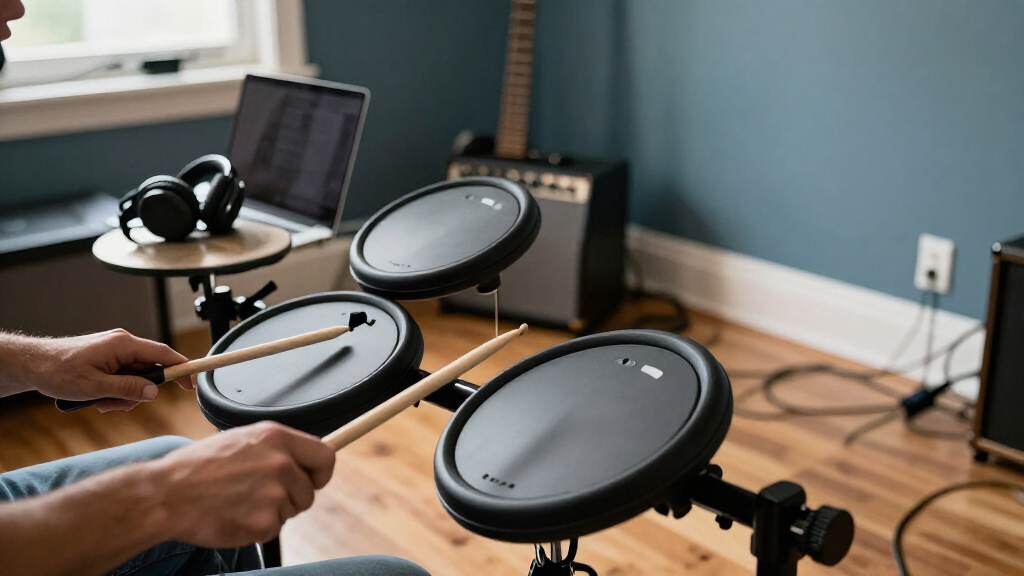
How We Picked
These products were evaluated based on key factors that influence user experience and value. Performance was assessed through sound quality, responsiveness, and sampling capabilities. Usability considered ease of setup, interface, and suitability for different skill levels. Build quality and durability were critical, especially for portable or frequently used units. Price-to-feature ratio was also a major consideration, ensuring options cater to a range of budgets. The ranking reflects a balance of professional-grade features, beginner-friendliness, and overall value, with a focus on how each product meets the needs of different users.Factors to Consider When Choosing Electronic Drum Pads
Choosing the right electronic drum pad depends on several factors that go beyond just the number of pads or sounds. Understanding these considerations can help you find a model that suits your playing style, space, and budget. Whether you’re a beginner, a performer, or a parent shopping for kids, knowing what features matter most will lead to a more satisfying purchase.Sound Quality and Sampling Capabilities
Sound quality is a primary concern, especially if you plan to record or perform live. Higher-end models like the Roland SPD-SX PRO offer superior sampling options, allowing you to load and customize sounds for professional projects. Cheaper models may have preloaded sounds that are less realistic or varied, which can limit creative options but still suit casual practice or learning. Consider whether you need extensive sound customization or if basic sounds suffice for your use case.
Portability and Size
The size and weight of electronic drum pads vary greatly. Compact, portable units are ideal for travel, small spaces, or quick setups, but they might lack features found in larger, more robust models. Larger sets often include more pads and richer sound libraries but can be cumbersome to transport and set up. Think about where you’ll use the pad most often and choose a model that balances portability with your feature needs.
Ease of Use and Interface
Ease of use is especially important for beginners or casual players. Intuitive interfaces, clear controls, and straightforward setup can make a big difference. Some models feature touchscreen controls or dedicated apps that simplify navigation, while others rely on complex menus that might be daunting initially. Consider your comfort with technology and your willingness to learn advanced features versus simple operation.
Durability and Build Quality
Durability matters if you plan to use your electronic drum pad regularly or take it on the road. Models designed with sturdy materials and reinforced pads tend to last longer and withstand transport. Cheaper, plastic-heavy units may be suitable for beginners or occasional use but could wear out faster under frequent use. Balance your budget with the expected lifespan and the environment in which you’ll use the product.
Price and Value
Price ranges widely from basic models to professional-level units. While it might be tempting to choose the cheapest option, investing a bit more can unlock features like expanded sound libraries, better responsiveness, and enhanced connectivity. Conversely, if you only need a drum pad for casual practice, a budget model can provide sufficient functionality without overspending. Always evaluate whether the features offered justify the price for your specific needs.
Frequently Asked Questions
Can I connect electronic drum pads to external speakers or amplifiers?
Yes, most electronic drum pads feature line-out or headphone-out ports that allow connection to external speakers, amplifiers, or PA systems. This is essential for live performances or larger practice spaces, ensuring your sound projects clearly. Verify the output options and compatibility with your existing equipment before purchasing, especially if you need balanced outputs or specific connection types.
Are sampling features necessary for beginner models?
Sampling capabilities are more common in mid-range and professional units but are not typically found in entry-level models. For beginners, focus on models with a good selection of built-in sounds and easy-to-use controls. Sampling can be a powerful feature for creative expression but often adds complexity and cost, so it’s worth considering whether it’s a priority for your current skill level and goals.
How important is the number of pads on an electronic drum pad?
The number of pads influences the range of sounds and playing techniques you can perform. More pads generally mean more percussion voices and the ability to simulate a full drum kit or percussion ensemble. However, additional pads often increase the size and complexity of the unit. For most casual players or learners, a smaller setup with 7-9 pads is sufficient, while professionals may prefer larger, multi-zone pads for greater versatility.
Should I prioritize brand reputation or specific features?
Both brand reputation and features matter. Reputable brands like Roland and Alesis are known for durability, sound quality, and professional features. However, some lesser-known brands may offer innovative features or better prices. It’s wise to balance brand reliability with the specific features you need, ensuring the product you choose aligns with your intended use and long-term satisfaction.
Is it better to buy a dedicated electronic drum set or a percussion pad?
It depends on your goals and space constraints. Dedicated electronic drum sets often include multiple pads, pedals, and hardware designed for drumming performance, making them more suitable for serious practice or recording. Percussion pads tend to be smaller, more portable, and focused on triggering sounds rather than full drum performance. If you want a realistic drumming experience, a dedicated set is usually preferable; for quick practice or portability, a percussion pad can suffice.
Conclusion
For those seeking the best overall experience, the Roland SPD-SX PRO offers professional features, extensive sampling, and durability, making it ideal for performers and serious hobbyists. Budget-conscious buyers or parents looking for a kid-friendly option should consider the ROCKSOCKI 7-Pad Electronic Drum Set for ease of use and portability. Beginners and casual players will find the Alesis SamplePad Pro strikes a good balance of features and affordability. For users focused on portability, compact models like the OYAYO TD02 provide a lightweight, travel-ready solution. Ultimately, your choice should align with your skill level, space, and how you plan to use the drum pad regularly.Fall Picks
fall essentials
As an affiliate, we earn on qualifying purchases.