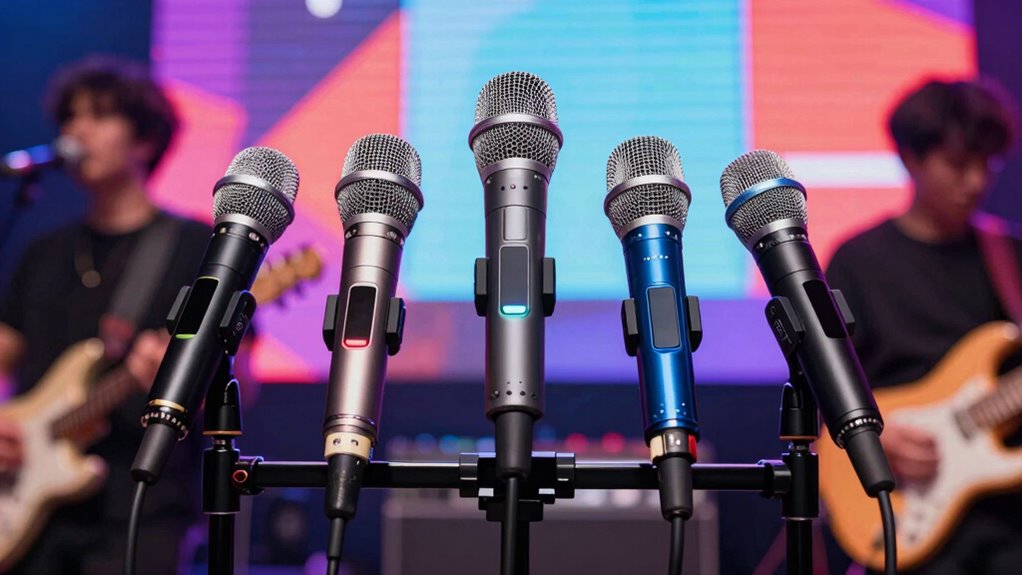
Choosing an on-camera microphone for concerts and high SPL means balancing loud-sound handling with the realities of recording from a camera position: distance, crowd noise, wind, and limited time to adjust settings. My strongest all-around choice is the RØDE VideoMic NTG, whose -20dB pad and variable gain offer useful control when a performance gets loud. The Sennheiser MKE 400 is a compelling alternative for focused capture and headphone monitoring, while the RØDE VideoMic Pro+ suits shooters who value power flexibility and camera-ready controls.

Get audio and creator gear delivered free with Prime
- Fast, free delivery on millions of items
- Prime Video, Amazon Music and more included
- Member-only deals all year
The key tradeoff is not simply which microphone sounds best. A directional shotgun can emphasize the stage when aimed carefully, but it cannot replace a close position or a dedicated recorder, and audience noise remains part of the recording. I rank these picks by their practical fit for loud live music: useful level control and connection options matter more than a long feature list, while portability and ease of setup separate the simpler choices from the more configurable ones.
Complete the kit

Key Takeaways
- The RØDE VideoMic NTG ranks first for concerts because its -20dB pad and variable gain give the recording chain more control around loud sources.
- The Sennheiser MKE 400 is the clearest fit when directional pickup and headphone monitoring are priorities, but careful aiming still matters.
- The VideoMic Pro+ offers flexible power and automatic power functions; its digital controls may take more setup than the simpler VideoMic GO II.
- The VideoMic GO II is the lightest, battery-free option here, but advanced processing adjustments require RØDE Central software.
- The COMICA CVM-V30 LITE keeps the setup straightforward for compatible 3.5mm devices, though its listed features do not include the NTG’s dedicated -20dB pad.
| Rode VideoMic NTG Camera-mount Shotgun Microphone, Black |  | Best Overall for Concert Level Control | Type: Shotgun microphone | Connectivity: 3.5mm jack and USB | Level control: -20dB pad and variable gain | VIEW ON AMAZON | See Our Full Breakdown |
| Sennheiser MKE 400 Professional Directional Shotgun Microphone for Camera and Mobile |  | Best for Focused Capture and Monitoring | Type: Directional shotgun microphone | Connectivity: 3.5mm TRS and TRRS | Compatibility: DSLR, mirrorless cameras, and mobile devices | VIEW ON AMAZON | See Our Full Breakdown |
| RØDE VideoMic Pro+ Premium On-Camera Shotgun Microphone with High-Pass Filter |  | Best for Flexible Camera Power | Type: On-camera shotgun microphone | Polar pattern: Unidirectional | Connector: 3.5mm jack | VIEW ON AMAZON | See Our Full Breakdown |
| RØDE VideoMic GO II Helix Ultra-Compact On-Camera Shotgun Microphone |  | Best Compact and Battery-Free Pick | Type: On-camera shotgun microphone | Polar pattern: Supercardioid | Connectivity: 3.5mm TRS and USB-C | VIEW ON AMAZON | See Our Full Breakdown |
| COMICA CVM-V30 LITE Video Microphone, Super-Cardioid Condenser On-Camera Shotgun Microphone for DSLR Cameras, Smartphones, and Camcorders |  | Best Simple 3.5mm Option | Type: On-camera shotgun microphone | Polar pattern: Supercardioid | Connectivity: 3.5mm jack | VIEW ON AMAZON | See Our Full Breakdown |
| on camera microphone for concerts high spl | Type | Connectivity | Polar pattern | Power |
|---|---|---|---|---|
| Rode VideoMic NTG Camera-mount | Shotgun microphone | 3.5mm jack and USB | — | — |
| Sennheiser MKE 400 Professiona | Directional shotgun microphone | 3.5mm TRS and TRRS | — | — |
| RØDE VideoMic Pro+ Premium On- | On-camera shotgun microphone | — | Unidirectional | Rechargeable, battery, or USB power |
| RØDE VideoMic GO II Helix Ultr | On-camera shotgun microphone | 3.5mm TRS and USB-C | Supercardioid | No battery required |
| COMICA CVM-V30 LITE Video Micr | On-camera shotgun microphone | 3.5mm jack | Supercardioid | Powered through the connected device, per product description |
More Details on Our Top Picks
Rode VideoMic NTG Camera-mount Shotgun Microphone, Black
I put the RØDE VideoMic NTG first because its stated controls address the central challenge of loud concert recording better than the other picks. The -20dB pad gives the user a way to reduce the signal entering the recording chain, and variable gain provides further adjustment. Those controls do not establish a maximum SPL rating or prevent every kind of distortion, but they give this model a useful advantage over options whose supplied details list no pad.
Its high-pass filter, safety channel, and high-frequency boost add choices for different recording situations. Compared with the MKE 400, which offers a headphone output and low-cut filter, the NTG emphasizes broader signal management and also works as a USB microphone. That makes it the more adaptable pick if the same microphone will move between a camera, computer, and compatible mobile setup.
The compromise is setup complexity. Digital switching and gain options may be more than a first-time concert videographer wants to manage, and iOS connection needs additional accessories according to the supplied details. I would choose it when level control and future device flexibility outrank a quick, minimal setup; for a lighter plug-in-and-go rig, the VideoMic GO II is easier to carry and simpler to power.
Pros:- The -20dB pad offers a stated way to lower the signal level for loud sources.
- Variable gain, a safety channel, and a high-pass filter provide recording adjustments.
- 3.5mm and USB connectivity support more than a camera-only workflow.
- Natural, uncolored sound is the product’s stated audio aim.
Cons:- Digital switching and multiple controls can complicate setup for beginners.
- Additional accessories are required for iOS device connection.
- The supplied specifications do not state a maximum SPL rating.
Best for: Camera operators who want a dedicated pad and variable gain for managing loud live music, plus the option to use the microphone with USB devices.
Not ideal for: Beginners seeking the simplest setup, or iOS users who want to connect without sourcing additional accessories.
- Type:Shotgun microphone
- Connectivity:3.5mm jack and USB
- Level control:-20dB pad and variable gain
- Filters and processing:High-pass filter, high-frequency boost, safety channel
- Output behavior:Automatic device sensing
- Color:Black
Our verdict“I rank the VideoMic NTG first for concert camera work because its pad and variable gain give it the most clearly specified level-management tools in this group.”
Sennheiser MKE 400 Professional Directional Shotgun Microphone for Camera and Mobile
The Sennheiser MKE 400 earns second place for a concert shooter who wants a directional on-camera mic with direct headphone monitoring. Its internal suspension mount helps isolate handling noise, while built-in wind protection and a low-cut filter support outdoor or moving-camera use. A sensitivity switch adds another adjustment, though the supplied details do not identify a dedicated pad or specify its maximum SPL handling.
Compared with the VideoMic NTG, the MKE 400 offers a more direct monitoring story: a headphone output is explicitly included, which can help an operator catch connection or sound issues before the recording ends. The NTG has a more extensive set of listed level-management tools, so I favor that RØDE for high-volume situations where gain adjustment is the priority. The MKE 400 makes more sense when focused pickup and checking the signal on-camera matter just as much.
Its main limitation is that performance depends on positioning. Directionality can help favor the stage over sound arriving from other angles, but it is not a substitute for suitable placement, and it cannot isolate a distant performer from the venue. The MKE 400 is also described as limited to on-camera use, unlike the NTG or VideoMic GO II, which offer USB workflows. I would skip it if you need one mic to serve cameras and computers interchangeably.
Pros:- Directional shotgun design favors the sound aimed at the camera.
- Headphone output allows monitoring from the microphone.
- Internal suspension and wind protection help address handling and wind noise.
- 3.5mm TRS and TRRS connectors support camera and mobile-device setups.
Cons:- Careful aiming is needed for the best focused capture.
- The supplied details do not list a dedicated pad or maximum SPL figure.
- Its described use is limited to on-camera recording.
Best for: Concert videographers who want a directional camera microphone with headphone monitoring, wind protection, and a low-cut filter.
Not ideal for: Buyers who need USB recording, broad non-camera use, or a specifically documented high-SPL pad.
- Type:Directional shotgun microphone
- Connectivity:3.5mm TRS and TRRS
- Compatibility:DSLR, mirrorless cameras, and mobile devices
- Noise and wind features:Wind protection and internal suspension
- Filter:Low-cut filter
- Additional controls:Sensitivity switch
- Monitoring:Integrated headphone output
Our verdict“I recommend the MKE 400 when headphone monitoring and directional camera capture matter more than the NTG’s broader level-control and USB feature set.”
The RØDE VideoMic Pro+ is my choice for users who value a camera-focused setup with several power options. Its automatic power function can make run-and-gun shooting less fiddly, while rechargeable, battery, and USB power options give the operator ways to keep the microphone supplied through different shoots. At a concert, that power flexibility may matter during a long event, although it does not itself control loud input levels.
That distinction keeps it behind the VideoMic NTG for this particular roundup. The NTG explicitly lists a -20dB pad and variable gain; the Pro+ description lists digital switching and a high-pass filter but does not provide the same stated pad specification. I would favor the NTG when the main concern is adjusting the recording chain around loud music. The Pro+ is more appealing when a camera-only workflow and power choices are the deciding factors.
The unidirectional pattern supports focused capture, and the supplied specifications include a 20Hz–20kHz frequency response. Still, the listed 74dB signal-to-noise ratio should not be mistaken for a maximum SPL rating. Digital switching can also take time to configure, so this is not the easiest pick for a user who wants few controls. Compared with the battery-free VideoMic GO II, the Pro+ offers more power flexibility but adds more to manage.
Pros:- Automatic power function can simplify run-and-gun camera use.
- Rechargeable, battery, and USB power options provide flexibility.
- Unidirectional pickup supports aiming toward the stage.
- A built-in battery door supports battery replacement.
Cons:- The supplied details do not list a dedicated -20dB pad or maximum SPL figure.
- Digital switching may take time to configure.
- Its described compatibility is narrower than the USB-capable NTG and GO II.
Best for: Camera operators who want automatic power functions and multiple power choices in a dedicated camera-microphone workflow.
Not ideal for: Buyers whose first priority is a specifically documented high-SPL pad, USB flexibility, or the lightest, simplest setup.
- Type:On-camera shotgun microphone
- Polar pattern:Unidirectional
- Connector:3.5mm jack
- Power:Rechargeable, battery, or USB power
- Filter:High-pass filter
- Frequency response:20Hz–20kHz
- Signal-to-noise ratio:74dB
- Weight:4.32 ounces
Our verdict“I would choose the VideoMic Pro+ over the simpler GO II when flexible power and automatic camera operation matter more than minimal setup or a clearly listed input pad.”
RØDE VideoMic GO II Helix Ultra-Compact On-Camera Shotgun Microphone
The RØDE VideoMic GO II is the easiest model here to justify for a lightweight, multi-device kit. At 60g, it adds little weight to a camera, and it needs no battery. A 3.5mm TRS output serves cameras while USB-C connects compatible phones, tablets, and computers. For a concert shooter who wants a microphone that can also move into a simple desk or mobile setup, that mix is more convenient than the camera-focused Pro+.
Its supercardioid pattern, HELIX isolation mount, and included windshield address aiming, handling, and wind. These features can help keep camera movement and outdoor conditions from overwhelming the recording, but they do not amount to a stated high-SPL pad. Compared with the VideoMic NTG, the GO II is the portability pick rather than the more adjustable loud-source pick: its advanced audio processing settings require RØDE Central software, while the NTG lists a dedicated -20dB pad and variable gain.
I would choose it for a compact rig, travel, or users who prefer to avoid charging another device. I would not treat the no-battery design as proof that loud inputs cannot clip, and I would check the recording device’s input settings before a show. Its plastic enclosure may feel less robust than metal alternatives, and software-dependent adjustments add a step that may frustrate anyone who expects to make every change directly on the microphone.
Pros:- Very light at 60g, keeping camera rigs easier to carry.
- 3.5mm TRS and USB-C support cameras and compatible smart devices.
- No battery is required.
- HELIX isolation mount and included windshield help with handling and wind.
Cons:- Advanced processing settings require RØDE Central software.
- Plastic enclosure may feel less durable than metal alternatives.
- The supplied details do not list a dedicated pad or maximum SPL rating.
Best for: Traveling concert videographers who want a 60g microphone, no battery requirement, and both camera and USB-C connectivity.
Not ideal for: Users who need onboard advanced processing controls or want a stated pad for managing loud input levels.
- Type:On-camera shotgun microphone
- Polar pattern:Supercardioid
- Connectivity:3.5mm TRS and USB-C
- Weight:60g
- Power:No battery required
- Frequency range:20Hz–20kHz
- Signal-to-noise ratio:79dB
- Included accessories:HELIX isolation mount, windshield, and SC14 cable
Our verdict“I recommend the GO II when compact weight and battery-free USB-capable use beat the NTG’s more explicit level-control features.”
COMICA CVM-V30 LITE Video Microphone, Super-Cardioid Condenser On-Camera Shotgun Microphone for DSLR Cameras, Smartphones, and Camcorders
The COMICA CVM-V30 LITE fills the straightforward, 3.5mm-input role in this group. Its supercardioid pattern is intended to reject some off-axis sound, and a shock mount helps reduce handling noise. It runs from the connected device according to the product description, avoiding a separate battery routine. For a compatible camera or phone, that makes it a simple starting point compared with the more feature-rich VideoMic NTG.
Concert use exposes the difference between basic directionality and explicit level management. The COMICA’s supplied specifications list no dedicated pad, variable gain, headphone output, or maximum SPL figure. By contrast, the NTG states a -20dB pad and variable gain, and the MKE 400 provides headphone monitoring. I would pick the CVM-V30 LITE for a modest, compatible rig where ease and a simple connection lead the decision, not as my first choice for an unpredictable, high-volume set.
Compatibility deserves a check before buying: the device needs a 3.5mm microphone input, and some cameras may lack one or may not enable external mic input as expected. The plastic enclosure and 150g weight also make it less compelling than the 60g GO II for travel, while the GO II adds USB-C. The COMICA remains useful for a basic setup, but I would test the camera’s input and recording levels before the concert rather than assume its directional pattern alone will control a loud signal.
Pros:- Supercardioid pickup is designed to reduce off-axis sound.
- Shock mount helps reduce handling noise.
- Device-powered operation avoids a separate battery requirement.
- 3.5mm connection suits compatible cameras and smartphones.
Cons:- Requires a device with an enabled 3.5mm microphone input.
- The supplied details do not list a dedicated pad, gain control, or maximum SPL rating.
- Plastic construction and 150g weight make it less appealing than the lighter GO II for travel.
Best for: Buyers with a confirmed 3.5mm microphone input who want a simple, device-powered shotgun microphone for a basic camera setup.
Not ideal for: Concert recordists who need a stated pad, gain controls, headphone monitoring, USB-C, or confirmed connection support on their camera.
- Type:On-camera shotgun microphone
- Polar pattern:Supercardioid
- Connectivity:3.5mm jack
- Power:Powered through the connected device, per product description
- Special features:Mute function and voice-activated recording
- Signal-to-noise ratio:78dB
- Frequency response:20kHz listed
- Weight:150g
Our verdict“I would choose the CVM-V30 LITE for a compatible, uncomplicated rig, but the NTG is a safer feature match when concert-level adjustment tools are the priority.”

How We Picked
I ranked these microphones for camera-mounted recording at concerts, not for general vlogging or studio voice work. Loud music puts extra demands on the signal path: a microphone may pick up the performance clearly yet still feed a level that is difficult to manage. I gave particular weight to documented controls that help a user set levels, such as the NTG’s -20dB pad and variable gain, while avoiding claims about maximum SPL that the supplied product details do not state.
I also compared directionality, wind and handling-noise provisions, monitoring, connectivity, power, and the effort needed to operate each model. These traits affect whether a camera operator can aim at the stage, connect to the intended camera or mobile device, and make adjustments without losing the moment. A microphone’s directional pattern can reduce some off-axis sound, but no on-camera shotgun removes a nearby crowd or guarantees clean audio when placed far from the speakers.
My order reflects those differences. The VideoMic NTG leads for its combination of level controls and flexible outputs. The MKE 400 follows for focused capture and headphone monitoring; the Pro+ is a more power-flexible camera option, while the GO II wins on low weight and uncomplicated battery-free operation. The COMICA is a practical entry-level-style choice for compatible inputs, but offers fewer stated tools for handling changing concert levels. I treat absent specifications as unknown rather than assuming capabilities.
| on camera microphone for concerts high spl | Type | Polar pattern | Power |
|---|---|---|---|
| Rode VideoMic NTG Camera-mount | Shotgun microphone | — | — |
| Sennheiser MKE 400 Professiona | Directional shotgun microphone | — | — |
| RØDE VideoMic Pro+ Premium On- | On-camera shotgun microphone | Unidirectional | Rechargeable, battery, or USB power |
| RØDE VideoMic GO II Helix Ultr | On-camera shotgun microphone | Supercardioid | No battery required |
| COMICA CVM-V30 LITE Video Micr | On-camera shotgun microphone | Supercardioid | Powered through the connected device, per product description |
Factors to Consider When Choosing On Camera Microphone For Concerts High Spl
For concert audio, I start with the whole recording chain rather than assuming a microphone can fix every loud-sound problem. The microphone’s position and direction, its output level, the camera’s input settings, and the distance from the speakers all shape the result. These checks help distinguish useful features from claims that do not answer the specific question of high-SPL recording.Check level controls, not just the microphone type
A shotgun pattern helps favor sound from the direction the microphone points; it does not by itself prove that the capsule or camera input can handle any sound pressure level. In this lineup, the VideoMic NTG is the clearest option for stated level management because it lists a -20dB pad and variable gain. The VideoMic Pro+ lists digital switching and a high-pass filter, while the supplied MKE 400, GO II, and COMICA details do not specify a dedicated pad. If a maximum SPL figure is important to your setup, look for it in the manufacturer’s full technical documentation rather than inferring it from a signal-to-noise ratio or polar pattern.
Aim for the stage and mind the crowd
Directional microphones work best when aimed at the source you want to emphasize. At a concert, the camera may be far from the stage or surrounded by people, so a shotgun cannot remove cheering, nearby conversation, room reflections, or PA sound coming from other directions. The MKE 400, GO II, and COMICA list directional patterns; the NTG and Pro+ are also described as shotgun microphones. Test the intended camera position and keep the microphone pointed toward the performance instead of expecting the pattern alone to isolate a singer from the venue.
Match the connection to the camera you own
Check that your camera has an external microphone input and that the cable or connector fits it. The MKE 400 lists 3.5mm TRS and TRRS options, the GO II offers 3.5mm TRS and USB-C, and the NTG lists 3.5mm and USB. The COMICA needs a compatible 3.5mm microphone input; its product details warn that some cameras may not provide or enable one. The Pro+ is presented as camera-focused with a 3.5mm jack. For phones, confirm the required adapter before the event; the NTG’s supplied details specifically note additional accessories for iOS.
Decide whether monitoring and filters matter
A headphone output can reveal connection problems or a poor camera feed while there is still time to correct them. Of these five, the MKE 400 explicitly includes headphone monitoring, and the NTG lists a safety channel alongside its controls. Low-cut or high-pass filters can reduce some low-frequency rumble, but they do not solve clipping from an overloaded input. If monitoring is unavailable through the microphone, check what your camera can monitor and whether its settings let you watch recording levels.
Balance portability, power, and adjustment effort
The GO II is the lightest listed option at 60g and requires no battery, making it an appealing travel choice. The Pro+ trades a simpler battery-free arrangement for rechargeable, battery, and USB power options and automatic power functions. The NTG adds substantial control but asks the user to learn its switches, while the MKE 400 combines camera-oriented features with monitoring. The COMICA aims at a simpler 3.5mm setup. I would choose based on how much adjustment you can handle during a show, not merely how many features appear on the spec sheet.
Run a rehearsal-level check before the event
Before recording a concert, confirm the camera recognizes the external mic, use the correct input mode, and check levels with sound as close as possible to the expected performance volume. Leave headroom rather than setting the input so high that loud peaks reach the top of the meter. A mic-side pad, where available, and camera input gain work together; neither should be treated as a promise against every source or setup. Also check the cable, wind protection, mounting, and monitoring route. For important shows, a separate recorder or feed from the venue can complement on-camera audio rather than relying on one camera-mounted microphone alone.
Frequently Asked Questions
What makes a camera microphone suitable for loud concerts?
I look for useful input-level controls, a way to aim pickup toward the stage, and a connection that matches the camera. A pad such as the VideoMic NTG’s stated -20dB option can reduce the signal level reaching the next stage in the chain, while a directional pattern may favor sound from the front. Neither feature alone guarantees distortion-free recording: the microphone, camera input, placement, and actual concert level all matter.
Which of these microphones has a stated -20dB pad?
The RØDE VideoMic NTG is the only microphone in this supplied lineup whose listed features explicitly include a -20dB pad. It also lists variable gain, a high-pass filter, and a safety channel. The other product descriptions may include filters, sensitivity controls, or digital switching, but their supplied information does not identify a -20dB pad.
Can an on-camera shotgun microphone eliminate crowd noise?
No. A directional shotgun can emphasize sound arriving from the direction it faces, but it cannot remove nearby audience noise, reflections, or venue sound that enters from other angles. Distance and camera position remain major factors. For a cleaner result, point the mic toward the performance, choose a position with fewer nearby obstructions, and check the camera’s recorded level before the show.
Which option is easiest to carry and power?
The RØDE VideoMic GO II is the lightest listed microphone at 60g and does not require a battery. It also offers 3.5mm TRS and USB-C connections, which can suit a compact camera and mobile-device kit. Its tradeoffs are that advanced processing adjustments require RØDE Central software and the supplied details do not list the NTG’s dedicated pad.
Should I connect one of these microphones directly to my phone?
Only after confirming the phone’s connection and adapter needs. The GO II lists USB-C as an output, and the MKE 400 lists 3.5mm TRS and TRRS connectors; the NTG also supports USB, though its supplied details say iOS connection requires additional accessories. A microphone’s connector does not guarantee every phone will recognize it, so check compatibility and test the recording app before relying on it at a concert.
Conclusion
My recommendation depends on the recording problem you need to solve. For the strongest stated mix of concert-focused level controls and connection flexibility, I would choose the RØDE VideoMic NTG. If headphone monitoring and directional camera use lead your priorities, pick the Sennheiser MKE 400. The VideoMic Pro+ is better suited to camera operators who value automatic power functions and flexible power options, while the VideoMic GO II is my compact, battery-free choice for travel and mixed camera/USB use. Choose the COMICA CVM-V30 LITE only if its straightforward 3.5mm setup matches your device and you do not need the NTG’s explicitly listed pad and gain controls. For any of them, verify camera compatibility and record a level check before the performance begins.
Halloween Picks
halloween
As an affiliate, we earn on qualifying purchases.