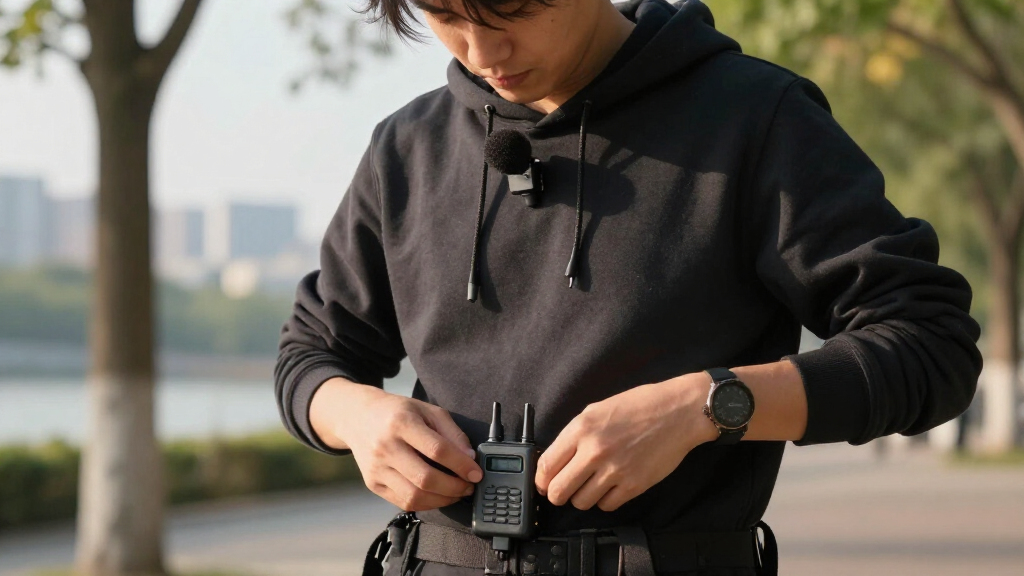

Wireless microphone systems for creators have never been cheaper or better, but that abundance creates a real decision problem: you can spend $30 or $400 and still end up with a small clip-on transmitter. After comparing 15 of the most popular options, the DJI Mic Mini (2 TX + 1 RX + Charging Case) stands out as the best overall pick for most creators, thanks to a rare balance of ultralight transmitters, reliable wireless range, onboard noise cancelling, and a genuinely useful charging case. If budget is the priority, the Hollyland Lark A1 delivers magnetic mounting and clean audio at a lower price, while the RØDE Wireless GO Gen 3 is the premium choice for anyone who wants 32-bit float recording as insurance against clipped audio. The main tradeoff in this category is between cheap single-purpose lavs that work fine for casual phone videos and full ecosystems with charging cases, internal recording, and camera support that professional workflows demand. Keep reading for the full breakdown of all 15 systems.

Get audio and creator gear delivered free with Prime
- Fast, free delivery on millions of items
- Prime Video, Amazon Music and more included
- Member-only deals all year
Complete the kit
![Pop Filter,PEMOTech [Upgraded Three Layers] Metal Mesh &...](https://m.media-amazon.com/images/I/813pCv3Q-nL._AC_SL480_.jpg)
Key Takeaways
- The sub-$50 category (Occiam, NPTCL, MAYBESTA, Mini Mic Pro) is better than it used to be, but every option here makes the same compromise: no internal recording, no charging case, and weaker noise handling in busy environments.
- The charging case is the real dividing line in the mid-range — the DJI Mic Mini with case and the Hollyland Lark A1 with case cost only slightly more than their bare versions but solve battery anxiety entirely, which is why both rank above similar kits without cases.
- 32-bit float recording (RØDE Wireless GO Gen 3) and 32-bit internal backup tracks (DJI Mic 3) are the features that justify premium pricing, because they rescue audio that would otherwise be ruined by unexpected volume spikes.
- The MicrocKing 4-channel handheld system is the odd one out — it is the only pick suited to interviews, panels, and events rather than solo content, so buyers should match format to their actual output before choosing it.
- Magnetic and clip mounting quality varied more than audio quality in this lineup; the Hollyland Lark M2 and Lark A1 magnetic mounts are noticeably more discreet on camera than traditional lav clips at any price.
| Wireless Lavalier Microphone for iPhone, iPad, Android, and Computers |  | Best Budget Two-Mic Starter Kit | Transmission Technology: 2.4GHz digital | Range: 20 meters | Battery Life: 6 hours per microphone | VIEW LATEST PRICE | See Our Full Breakdown |
| Hollyland Lark M2 Wireless Microphone for iPhone, Camera, Android, PC | 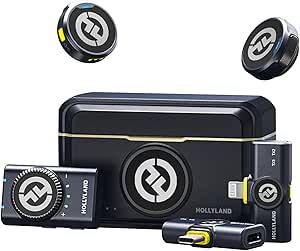 | Best for Filmmakers and Hybrid Shooters | Connectivity: 2.4GHz wireless | Connectors: 3.5mm jack, Lightning, USB Type-C | Transmission Range: Up to 300 meters | VIEW LATEST PRICE | See Our Full Breakdown |
| BOYA Mini 2 Wireless Lavalier Microphone for iPhone 15/16/17 & Android |  | Best Battery Life and App Control | Connector: USB Type-C | Battery Life: Up to 30 hours | Transmitter Weight: 5 grams | VIEW LATEST PRICE | See Our Full Breakdown |
| Mini Mic Pro – Wireless Lavalier Microphone for iPhone & Android |  | Best Ultra-Portable Plug-and-Play Pick | Connectors: Lightning, USB Type-C | Battery Life: Up to 6 hours | Channels: 1 | VIEW LATEST PRICE | See Our Full Breakdown |
| DJI Mic Mini (2 TX + 1 RX), Ultralight, Detail-Rich Audio |  | Best Overall | Transmitter Weight: 10 g each | Transmission Range: 400 meters | Battery Life: 10 hours | VIEW LATEST PRICE | See Our Full Breakdown |
| DJI Mic Mini (2 TX + 1 RX + Charging Case), Ultralight, Detail-Rich Audio |  | Best Overall | Weight: 10 g per transmitter | Transmission Range: 400 m | Sampling Rate: 48 kHz | VIEW LATEST PRICE | See Our Full Breakdown |
| Hollyland Lark A1 (2TX+USB-C RX+Charging Case) Wireless Magnetic Microphone |  | Best Premium Compact | Audio Quality: 48kHz/24-bit | Noise Cancellation: 3 levels | Wireless Range: 200 m (650 ft) | VIEW LATEST PRICE | See Our Full Breakdown |
| DJI Mic Mini (2 Transmitters + 1 Mobile Receiver), Ultralight with Noise Cancelling |  | Best for Phone-Only Creators | Weight: 10 g per transmitter | Transmission Range: 300 m | Operating Time: 11.5 hours | VIEW LATEST PRICE | See Our Full Breakdown |
| Occiam Mini Lavalier Microphone for iPhone & Android Wireless Microphone |  | Best Value | Noise Reduction: -21dB to -40dB | Wireless Range: 328 ft (100 m) obstacle-free | Battery Life: 10 hrs per mic, 54 hrs with case | VIEW LATEST PRICE | See Our Full Breakdown |
| NPTCL Wireless Lavalier Microphone for iPhone, iPad, Android, USB-C |  | Best for Beginners | Battery Life: 6 hours per mic, 24 hours with case | Wireless Range: Up to 70 feet | Compatibility: iPhone, iPad, Android, USB-C | VIEW LATEST PRICE | See Our Full Breakdown |
| MAYBESTA Wireless Mini Microphone for iPhone and Android – 2 Pack Lavalier Lapel Mic |  | Best Budget Dual Pack | Connectivity: Wireless 2.4 GHz | Connector Types: Lightning, USB-C | Range: Up to 70 feet | VIEW LATEST PRICE | See Our Full Breakdown |
| MicrocKing 4 Channel UHF Wireless Microphone System with 4 Handheld Microphones |  | Best for Multi-Speaker Events | Microphones: 4 handheld | Channels: 4 independent | Range: 400 ft | VIEW LATEST PRICE | See Our Full Breakdown |
| DJI Mic 3 Wireless Microphone (2 TX + 1 RX + Charging Case) | 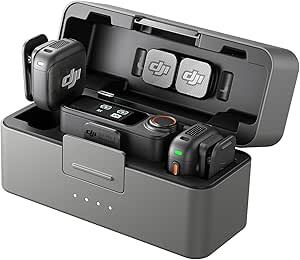 | Best Premium Pick | Transmitters / Receiver: 2 TX + 1 RX | Charging Case: Yes | Battery Life: Up to 28 hours | VIEW LATEST PRICE | See Our Full Breakdown |
| RØDE Wireless GO (Gen 3) (2 TX + 1 RX + Charging Case) |  | Best for Professional Camera Work | Transmitters / Receiver: 2 TX + 1 RX + charging case | Transmission: 2.4 GHz digital, 128-bit encrypted | Recording Format: 32-bit float onboard | VIEW LATEST PRICE | See Our Full Breakdown |
| DJI Mic 2 (2 TX + 1 RX + Charging Case), All-in-one Wireless Microphone |  | Best Sweet Spot for Serious Creators | Transmitters / Receiver: 2 TX + 1 RX | Charging Case: Yes | Battery Life: Up to 18 hours | VIEW LATEST PRICE | See Our Full Breakdown |
| wireless microphone systems for creator | Battery Life |
|---|---|
| Wireless Lavalier Microphone f | 6 hours per microphone |
| Hollyland Lark M2 Wireless Mic | — |
| BOYA Mini 2 Wireless Lavalier | Up to 30 hours |
| Mini Mic Pro | Up to 6 hours |
| DJI Mic Mini | 10 hours |
| DJI Mic Mini | 48 hours with charging case |
| Hollyland Lark A1 | Up to 54 hours |
| DJI Mic Mini | — |
| Occiam Mini Lavalier Microphon | 10 hrs per mic, 54 hrs with case |
| NPTCL Wireless Lavalier Microp | 6 hours per mic, 24 hours with case |
| MAYBESTA Wireless Mini Microph | — |
| MicrocKing 4 Channel UHF Wirel | — |
| DJI Mic 3 Wireless Microphone | Up to 28 hours |
| RØDE Wireless GO | Over 40 hours |
| DJI Mic 2 | Up to 18 hours |
More Details on Our Top Picks
Wireless Lavalier Microphone for iPhone, iPad, Android, and Computers
For creators who want two microphones for the price most brands charge for one, this kit is the obvious entry point. The 20-meter range is modest compared with the Hollyland Lark M2’s 300 meters, but that difference only matters for run-and-gun filmmaking — if you film interviews, product reviews, or talking-head content at a desk or within a room, the connection holds up fine. The broad device compatibility, spanning iPhone, Android, Windows, and Mac via included adapters, beats plug-and-play rivals like the Mini Mic Pro, which locks you into phone-focused connectors. Noise reduction here is serviceable rather than impressive.
The real tradeoff is polish. Pairing takes patience, and the 6-hour battery per mic falls short of the BOYA Mini 2’s 30-hour endurance, so all-day shoots mean mid-session charging. For a first wireless setup, though, the value is hard to argue with.
Pros:- Two microphones included at a budget price for interview-style content
- Works with iPhone, Android, Windows, and Mac through included adapters
- Stable 2.4GHz connection suitable for indoor and short-range outdoor work
- 6 hours of battery per mic covers most single-session shoots
Cons:- Setup and pairing process is less intuitive than pre-paired systems
- 20-meter range is far shorter than the Hollyland Lark M2 or DJI Mic Mini
- Noise reduction is basic compared with AI-driven alternatives
Best for: New creators and budget-conscious interviewers who need two mics and multi-device flexibility without spending on a premium brand
Not ideal for: Filmmakers shooting long takes or moving subjects at distance — the short range and mid-shoot battery anxiety will frustrate them
- Transmission Technology:2.4GHz digital
- Range:20 meters
- Battery Life:6 hours per microphone
- Compatibility:iPhone, iPad, Android, Windows, Mac
- Included Accessories:2 microphones, receiver, USB-C and Lightning cables, adapters, windscreens, user manual
Our verdict“A sensible first wireless kit for two-person content on a tight budget, as long as you shoot close to your camera and don’t expect premium sound refinement.”
Hollyland Lark M2 Wireless Microphone for iPhone, Camera, Android, PC
The Hollyland Lark M2 earns its spot by refusing to pick a side in the phone-versus-camera debate. With 3.5mm, Lightning, and USB-C connectors in the box, it plugs into a mirrorless rig as easily as an iPhone — something the BOYA Mini 2, with its USB-C-only design, cannot claim. The 300-meter transmission range is genuinely useful for documentary work, wide establishing shots, and subjects who roam, dwarfing the budget two-mic kit’s 20 meters. Pre-paired transmitters mean recording starts the moment you power on, a workflow advantage over fussier generic systems.
Audio at 48kHz/24-bit is clean and broadcast-credible, though the 2-channel limit means podcasters recording three or more speakers should look elsewhere. And while 10 hours of battery handles most shoots, it trails the BOYA’s 30-hour figure, so multi-day events without charging access demand planning.
Pros:- Camera, iPhone, Android, and PC compatibility via 3.5mm, Lightning, and USB-C
- 300-meter range supports wide shots and roaming subjects
- Pre-paired transmitters record instantly with one touch
- 48kHz/24-bit capture delivers professional-grade audio
Cons:- Only 2 channels, limiting multi-speaker productions
- 10-hour battery requires charging planning on long shoot days
- Premium price over generic two-mic budget kits
Best for: Vloggers and filmmakers who switch between cameras and phones and need long-range reliability for mobile subjects
Not ideal for: Creators who live entirely on a single USB-C phone and want maximum battery life — the BOYA Mini 2 covers that cheaper and longer
- Connectivity:2.4GHz wireless
- Connectors:3.5mm jack, Lightning, USB Type-C
- Transmission Range:Up to 300 meters
- Audio Quality:48kHz / 24-bit
- Channels:2
- Polar Pattern:Omnidirectional
- Weight:6.08 ounces
Our verdict“The most versatile connector-and-range combo in this lineup, best for hybrid shooters who refuse to be tied to one device or one spot.”
BOYA Mini 2 Wireless Lavalier Microphone for iPhone 15/16/17 & Android
If your recording day is unpredictable, the BOYA Mini 2’s 30-hour battery changes how you work — no charging case math, no dead-mic panic halfway through an event. That endurance alone separates it from the DJI Mic Mini’s 10 hours and everything else in this price tier. At 5 grams, the transmitter is lighter than most competitors, disappearing on a shirt where the chunkier budget two-mic kits stay visible. The companion app adds genuinely useful control: 6-level gain, EQ presets, a limiter, and a safety track that mirrors your recording at lower volume as insurance against clipping — features usually reserved for the RØDE Wireless GO tier.
The catches are real, though. USB-C-only connectivity means no Lightning iPhones, no cameras, and explicitly no GoPro or Insta360 support, making it far less flexible than the Hollyland Lark M2. And the app is required to reach those advanced settings, which annoys creators who prefer hardware-first workflows.
Pros:- 30-hour battery life eliminates mid-shoot charging for most users
- 5-gram transmitter is barely visible on camera
- App control with gain, EQ, limiter, and safety track recording
- AI noise cancellation cleans up busy environments
Cons:- No Lightning, camera, GoPro, or Insta360 compatibility
- Full feature set requires the companion app
- No Bluetooth support for direct wireless monitoring or pairing
Best for: Phone-first creators covering long events — conferences, weddings, travel vlogs — where battery life and in-app gain control matter most
Not ideal for: Camera-based shooters and Lightning iPhone owners — the USB-C-only design and lack of camera support rule it out
- Connector:USB Type-C
- Battery Life:Up to 30 hours
- Transmitter Weight:5 grams
- Range:Up to 328 feet
- Audio Quality:48kHz / 24-bit
- Signal-to-Noise Ratio:80 dB
- Polar Pattern:Omnidirectional
Our verdict“The endurance champion for USB-C phone creators who want set-and-forget recording with app-level control over every detail.”
Mini Mic Pro – Wireless Lavalier Microphone for iPhone & Android
Simplicity is the whole pitch here. The Mini Mic Pro plugs in, powers on, and records — no app, no pairing ritual, no menu diving. Compared with the BOYA Mini 2, which requires its companion app to unlock gain and EQ settings, this is the pick for creators who want to start filming in under ten seconds. Its 3 x 0.5 x 0.25-inch footprint plus included wind protection makes it a genuine pocket carry for travel and street content, and the dual Lightning/USB-C receiver coverage handles both older and current iPhones.
What you give up is depth. There’s no charging case, no safety track, and single-channel recording means no two-person interviews — the budget two-mic kit at similar money includes a second transmitter. Battery life of 6 hours also trails the BOYA’s 30 hours by a wide margin, so it suits short daily uploads rather than event coverage.
Pros:- True plug-and-play setup with no app or pairing required
- Both Lightning and USB-C receivers cover old and new iPhones
- Included wind protection handles outdoor recording
- Extremely small footprint for pocket or bag carry
Cons:- Single channel only — no two-person recording
- 6-hour battery with no charging case limits long sessions
- Omnidirectional pickup catches ambient noise in loud spaces
Best for: Solo creators and travelers who value grab-and-go simplicity and shoot short-form content on phones
Not ideal for: Interviewers and event shooters — one channel, 6-hour battery, and no charging case make long multi-speaker days impractical
- Connectors:Lightning, USB Type-C
- Battery Life:Up to 6 hours
- Channels:1
- Polar Pattern:Omnidirectional
- Dimensions:3 x 0.5 x 0.25 inches
- Special Features:1-touch recording, battery indicator, clip, noise reduction, wind protection
Our verdict“The fastest path from pocket to recording for solo phone creators, provided your shoots stay short and your subjects stay single.”
DJI Mic Mini (2 TX + 1 RX), Ultralight, Detail-Rich Audio
This is the pick I’d point most creators toward first. The DJI Mic Mini combines the lineup’s longest range at 400 meters with two 10-gram transmitters, giving you two-person recording capability that the Mini Mic Pro and BOYA Mini 2 (both single-channel) simply don’t offer. Compared with the Hollyland Lark M2, the Mic Mini’s transmitters weigh less than half as much, which matters more than it sounds — talent forgets they’re wearing it, and fabric rustle drops noticeably. Noise cancellation and automatic volume limiting are handled well enough that run-and-gun street interviews come out usable without post-production rescue.
The tradeoff is ecosystem gravity. Deep features and convenience tilt toward DJI’s own Osmo devices, so if your kit is built around other brands, some of what you’re paying for goes unused. Note this version ships without a charging case — the pricier case edition tops up transmitters on the go, and multi-day event shooters may want that upgrade.
Pros:- 400-meter range — the longest in this lineup
- Two included transmitters for interviews and two-person content
- 10-gram ultralight transmitters stay invisible and comfortable
- Noise cancellation and auto volume limiting reduce post-production work
Cons:- Some features depend on DJI Osmo device integration
- No charging case included in this configuration
- No stated water or weather resistance for outdoor exposure
Best for: Serious creators doing interviews, livestreams, and two-person content who want polished audio with minimal fuss
Not ideal for: Creators outside the DJI ecosystem who’d pay for integration features they can’t use, or multi-day event shooters who need the charging-case version
- Transmitter Weight:10 g each
- Transmission Range:400 meters
- Battery Life:10 hours
- Configuration:2 transmitters + 1 receiver
- Special Features:Noise cancellation, automatic volume limiting
Our verdict“The most complete package here — dual transmitters, top-tier range, and refined processing make it the default recommendation for creators doing interviews or two-person shows.”
DJI Mic Mini (2 TX + 1 RX + Charging Case), Ultralight, Detail-Rich Audio
Among every compact system in this roundup, the DJI Mic Mini with charging case hits the strongest balance of range, battery, and portability. Its 400 m transmission range comfortably outpaces the Hollyland Lark A1’s 200 meters, and the case pushes total battery life to 48 hours, which means a full week of shooting without hunting for a cable. Compared with the mobile-receiver variant of the Mic Mini below, this version is the one to get if you shoot on cameras or DJI Osmo gear rather than just a phone.
The tradeoff is ecosystem gravity: you give up the app-based gain control and 24-bit recording that the Lark A1 offers, and the magnets in the transmitters demand care around credit cards and hard drives.
Pros:- 400 m transmission range, the longest in this batch
- 48 hours of total battery life with the charging case
- 10 g transmitters stay invisible on camera
- Strong noise cancellation for outdoor and busy environments
Cons:- No app-based gain adjustment like the Hollyland Lark A1
- Magnets can interfere with cards and electronics if tossed in a pocket
Best for: Camera-first creators and DJI Osmo shooters who want one system for interviews, run-and-gun vlogs, and livestreams
Not ideal for: Buyers who want manual gain control or 32-bit float recording — the full-size DJI Mic 2 or RØDE Wireless GO III serve them better
- Weight:10 g per transmitter
- Transmission Range:400 m
- Sampling Rate:48 kHz
- Maximum SPL:120 dB
- Battery Life:48 hours with charging case
- Includes:2 transmitters, 1 receiver, charging case
Our verdict“If you want one do-everything wireless kit and shoot beyond just a phone, this is the safest pick in the lineup.”
Hollyland Lark A1 (2TX+USB-C RX+Charging Case) Wireless Magnetic Microphone
The Hollyland Lark A1 stands out for its 48kHz/24-bit recording, a step above the DJI Mic Mini’s 16-bit-class capture, which matters most when you’re editing audio with headroom or boosting quiet voices in post. Its 54-hour total battery life edges out even the DJI Mic Mini’s 48 hours, and 8 g / 9 mm transmitters are the thinnest here. The magnetic mounting and app-based 6-level gain control give it a polish the Occiam and NPTCL budget kits simply don’t have.
The catch: the 200 m wireless range is half what the DJI Mic Mini manages, and gain adjustments force you into the app rather than a hardware dial.
Pros:- 48kHz/24-bit audio, higher resolution than most compact rivals
- 54 hours of total battery life
- 3-level noise cancellation adapts to environment
- Ultra-thin 8 g magnetic transmitters
Cons:- 200 m range is half the DJI Mic Mini’s 400 m
- Gain control requires the companion app
- USB-C receiver limits direct camera compatibility
Best for: Smartphone-centric creators and livestreamers who prioritize audio fidelity and fine control over raw range
Not ideal for: Camera shooters needing a 3.5 mm receiver, or anyone working at long distances — its range trails the DJI Mic Mini considerably
- Audio Quality:48kHz/24-bit
- Noise Cancellation:3 levels
- Wireless Range:200 m (650 ft)
- Battery Life:Up to 54 hours
- Mic Weight:8 g
- Mic Thickness:9 mm
- Gain Control:6 levels via app
Our verdict“The best-sounding compact kit here for phone-based creators willing to trade range for fidelity.”
DJI Mic Mini (2 Transmitters + 1 Mobile Receiver), Ultralight with Noise Cancelling
This mobile-receiver configuration of the DJI Mic Mini makes sense for creators whose entire workflow lives on a smartphone — TikTok, Reels, mobile livestreams. You save money versus the full charging-case version and still get the same 10 g transmitters and 2-level active noise cancelling. Compared with the NPTCL two-pack, the 300 m range is in a different league, and setup is genuinely plug-and-play.
The sacrifices are real, though: 11.5 hours of operating time means no multi-day endurance without recharging, and the mobile receiver ties you to phones — unlike the case-equipped DJI Mic Mini above, there’s no camera receiver in the box.
Pros:- 300 m range despite the lower price point
- Same 10 g ultralight transmitters as the flagship kit
- 2-level active noise cancelling
- Plug-and-play with broad phone compatibility
Cons:- 11.5-hour battery life without a charging case
- Mobile receiver only — no direct camera output
Best for: Short-form video creators who record exclusively on a phone and want DJI reliability at a lower price
Not ideal for: Hybrid shooters using cameras or laptops — the dedicated receiver version or Hollyland Lark M2 is the better fit
- Weight:10 g per transmitter
- Transmission Range:300 m
- Operating Time:11.5 hours
- Noise Cancellation Levels:2
- Includes:2 transmitters, 1 mobile receiver
Our verdict“The smart way into the DJI ecosystem if your camera roll is your editing suite.”
Occiam Mini Lavalier Microphone for iPhone & Android Wireless Microphone
The Occiam Mini delivers the headline features of pricier kits — 48kHz/24-bit audio, a charging case, 54 hours of total battery — at a budget price, which is why it earns the value slot over the similarly positioned NPTCL. Its -21dB to -40dB adjustable noise reduction is a genuinely useful feature at this price, and one-button operation with LED indicators makes it the easiest system here for a first-time creator to deploy.
Where it falls behind the DJI and Hollyland options is range and refinement: 328 feet versus 400 meters, and there’s no ecosystem integration or app control. It’s also picky about hosts, skipping Instagram, GoPro, and OnePlus devices.
Pros:- 48kHz/24-bit audio at a budget price
- 54 hours of battery life with the charging case
- Adjustable noise reduction down to -40dB
- Simple one-button operation with LED feedback
Cons:- 100 m range is a fraction of the DJI Mic Mini’s
- No support for Instagram, GoPro, or OnePlus devices
Best for: Budget-conscious educators, course creators, and new vloggers who want two mics and a case without DJI pricing
Not ideal for: Run-and-gun or long-range shooters — the 100 m range and wired receiver design can’t match the DJI Mic Mini
- Noise Reduction:-21dB to -40dB
- Wireless Range:328 ft (100 m) obstacle-free
- Battery Life:10 hrs per mic, 54 hrs with case
- Charging:USB-C fast charge
- Weight:7 grams
- Compatibility:USB-C and Lightning devices
- Audio Resolution:48kHz/24-bit
Our verdict“The most capability per dollar in this batch, as long as you record close to your device.”
NPTCL Wireless Lavalier Microphone for iPhone, iPad, Android, USB-C
If your priority is zero-friction setup, the NPTCL two-pack is the friendliest entry point in this roundup: plug in the receiver, and the mics auto-pair with no app, no menus, no gain settings to learn. The included windscreen cover is a thoughtful touch that the Occiam omits, and 24 hours of total runtime with the case covers a weekend of shooting.
Its limits are obvious next to everything else here — a 70-foot range is barely a tenth of the Occiam’s, and 6 hours per mic means mid-day recharges on long shoots. Fine for talking-head content at a desk; not fine for roving camera work.
Pros:- True plug-and-play with automatic pairing
- Windscreen included for outdoor use
- 24 hours total battery with the charging case
- Works across iPhone, iPad, and USB-C Android
Cons:- 70-foot wireless range, the shortest in this roundup
- Only 6 hours per mic per charge
- May need adapters on some newer iPhone models
Best for: First-time creators, remote presenters, and interviewers recording at close range who want instant setup
Not ideal for: Anyone recording beyond a small room or outdoors on the move — the 70 ft range and per-mic battery are too tight
- Battery Life:6 hours per mic, 24 hours with case
- Wireless Range:Up to 70 feet
- Compatibility:iPhone, iPad, Android, USB-C
- Connection:Plug and play, auto-pairing
- Microphones:2-pack
Our verdict“A low-risk starter kit for stationary, close-range recording — upgrade once your shoots start moving.”
MAYBESTA Wireless Mini Microphone for iPhone and Android – 2 Pack Lavalier Lapel Mic
For creators who need two microphones for the price of one premium transmitter, this MAYBESTA set fills the gap that single-mic budget options like the Occiam can’t. The automatic plug-and-play pairing means no apps, no adapters, and no fiddling — a real advantage over the DJI Mic Mini, which asks beginners to learn a charging case and pairing workflow. The 70-foot range covers typical indoor filming setups, and 16 hours of claimed recording time outlasts most shoots.
The tradeoff is audio refinement: the omnidirectional pickup pulls in room noise that a noise-cancelling system like the Hollyland Lark M2 actively suppresses. Compared with the MicrocKing’s UHF stability, the 2.4 GHz signal is more susceptible to Wi-Fi congestion in busy environments. This is a starter tool, not a finishing tool — but at this price, that’s the point.
Pros:- Two microphones included at a budget price point
- Works across iPhone, Android, tablets, and laptops without adapters
- True plug-and-play with automatic pairing
- Long 16-hour recording capability for all-day shoots
Cons:- Omnidirectional pickup captures unwanted background noise in busy spaces
- 2.4 GHz transmission can struggle in Wi-Fi-congested locations
- Battery life varies in real-world use
Best for: Beginner creators and casual vloggers who interview two people on a smartphone and want a plug-and-play setup under a tight budget
Not ideal for: Anyone recording in noisy or crowded environments — the omnidirectional capsules will capture background sound with no meaningful way to filter it
- Connectivity:Wireless 2.4 GHz
- Connector Types:Lightning, USB-C
- Range:Up to 70 feet
- Recording Time:Up to 16 hours
- Polar Pattern:Omnidirectional
- Special Features:Mute function, noise reduction, plug & play
- Weight:50 g
Our verdict“Buy this if you need two working mics for smartphone interviews at minimal cost; skip it if clean audio in noisy spaces is a priority.”
MicrocKing 4 Channel UHF Wireless Microphone System with 4 Handheld Microphones
Everything else in this roundup is a lavalier system for solo creators — the MicrocKing is the outlier built for groups. Four handheld microphones on independent UHF channels make it the only pick here suited to panels, weddings, and Q&A sessions where clipping mics onto four people isn’t practical. The 400-foot range dwarfs the MAYBESTA’s 70 feet, and UHF’s resistance to Wi-Fi interference gives it an edge over 2.4 GHz systems like the RØDE Wireless GO in crowded venues full of phones.
The compromises are structural: this is a receiver-and-mics rig, not a pocket kit. There’s no onboard recording, no 32-bit float safety net, and no smartphone-first workflow — features solo creators get from the DJI Mic 2. You’ll also need to budget for eight AA batteries, which aren’t in the box. It solves a different problem, and for multi-speaker events, it solves it well.
Pros:- Four independent channels with individual volume controls
- UHF transmission resists Wi-Fi interference better than 2.4 GHz kits
- 400-foot range for large venues
- LCD display simplifies setup and monitoring
Cons:- Requires eight AA batteries that aren’t included
- Bulky receiver-based setup with no onboard recording or smartphone integration
Best for: Event videographers, wedding DJs, and conference organizers who need to mic four speakers simultaneously with independent volume control
Not ideal for: Solo vloggers and run-and-gun creators — the receiver rig has no onboard recording and none of the smartphone-first features of compact lavalier kits
- Microphones:4 handheld
- Channels:4 independent
- Range:400 ft
- Frequency Response:Up to 16,000 Hz
- Signal-to-Noise Ratio:85 dB
- Outputs:XLR, 1/4-inch
- Power:8 AA batteries (not included)
Our verdict“If your work involves miking multiple live speakers at once, nothing else in this lineup does the job — but solo creators should stay with lavalier systems.”
DJI Mic 3 Wireless Microphone (2 TX + 1 RX + Charging Case)
The Mic 3 sits at the top of DJI’s lineup, and the differences from the DJI Mic 2 are real rather than cosmetic: dual-file 32-bit float recording means each transmitter captures a backup file locally, so a clipped take or a dropout never costs you the audio. Compared with the DJI Mic Mini, you also get four-channel output, adaptive gain control, and dual-band anti-interference — the Mini is lighter and cheaper, but it doesn’t safeguard your recording the way this does.
Against the RØDE Wireless GO Gen 3, the choice gets closer: RØDE wins on raw onboard recording hours and camera-native workflows, while the Mic 3 leans into DJI Osmo ecosystem integration and smarter automatic audio processing. The tradeoffs are the same on both sides of that comparison — premium price, and a feature set deep enough that beginners may feel lost in the menus. For professionals, that depth is the appeal.
Pros:- Dual-file 32-bit float recording protects against clipping and dropouts
- 28-hour total battery life with charging case
- Dual-band interference protection for congested environments
- Four-channel output supports multi-transmitter group recordings
Cons:- Full feature set is gated behind familiarity with the DJI ecosystem
- Setup complexity exceeds what beginners need
- Premium price point well above compact alternatives
Best for: Professional videographers and interview-focused creators who already shoot on DJI gear and need bulletproof audio with float-format safety recordings
Not ideal for: First-time creators and casual TikTok posters — the price buys features they’ll never touch, and the setup curve isn’t worth it for occasional clips
- Transmitters / Receiver:2 TX + 1 RX
- Charging Case:Yes
- Battery Life:Up to 28 hours
- Recording Format:Dual-file 32-bit float
- Audio Features:Adaptive gain, noise cancellation, dual-band anti-interference
- Output Channels:Four
- Compatibility:DJI Osmo ecosystem, USB-C mobile phones
Our verdict“The most future-proofed kit here for serious interview and vlog work — if you’re paid to capture audio, this is the one that won’t let you down.”
RØDE Wireless GO (Gen 3) (2 TX + 1 RX + Charging Case)
Where the DJI Mic 3 is built around the Osmo ecosystem, the Wireless GO Gen 3 is camera-first by design. The 3.5mm locking output plugs straight into professional camera bodies — the connection standard podcast rigs and broadcast crews rely on — while USB-C covers phones and computers. That makes it the more flexible choice for hybrid shooters who split time between a mirrorless rig and a phone, rather than creators locked to one platform.
The headline spec is over 40 hours of 32-bit float onboard recording, which outlasts the DJI Mic 3’s 28 hours and eliminates the fear of audio that’s unrecoverably clipped. GainAssist quietly handles level management the way DJI’s adaptive gain does. The costs are real, though: this is one of the most expensive kits in the roundup, and like the Mic 3, the menu depth will overwhelm newcomers who just want to clip on a mic and hit record. You’re paying for reliability, not simplicity.
Pros:- Over 40 hours of 32-bit float onboard recording, the longest in this lineup
- Universal compatibility via USB-C and locking 3.5mm outputs
- 128-bit encrypted transmission for secure, stable audio
- Complete accessory kit included out of the box
Cons:- One of the highest price points in the roundup
- Feature and menu complexity exceeds what beginners need
- Lacks the deep DJI Osmo integration of the Mic 3
Best for: Professional videographers and documentary shooters working across cameras, phones, and computers who need maximum recording headroom and platform flexibility
Not ideal for: Beginners and smartphone-only creators — the price and setup complexity buy capabilities a phone-based workflow will never use
- Transmitters / Receiver:2 TX + 1 RX + charging case
- Transmission:2.4 GHz digital, 128-bit encrypted
- Recording Format:32-bit float onboard
- Battery Life:Over 40 hours
- Outputs:USB-C, 3.5mm locking
- Compatibility:Cameras, smartphones, computers
Our verdict“The strongest pick for working professionals who shoot on real cameras and can’t afford lost audio — everyone else can save money elsewhere.”
DJI Mic 2 (2 TX + 1 RX + Charging Case), All-in-one Wireless Microphone
The Mic 2 occupies the middle ground between the affordable DJI Mic Mini and the flagship Mic 3 — and for many creators, it’s the smarter buy than either. You get the core professional features (noise cancellation, dual transmitters, charging case) without paying for the Mic 3’s 32-bit float safety net, yet with noticeably more range and connectivity flexibility than the Mini offers. The 250-meter range is the longest among the lavalier kits here, and the inclusion of USB-C, Lightning, and Bluetooth means it talks to nearly any device without hunting for adapters.
Its 18-hour battery life is respectable but trails both the Mic 3’s 28 hours and the RØDE Wireless GO’s 40+, so marathon multi-day shoots favor those pricier options. And like all DJI kits, full functionality leans on the DJI ecosystem — a friction point for creators whose primary device isn’t supported. As a balanced price-to-capability pick, though, it’s hard to beat.
Pros:- 250-meter wireless range, the longest among lavalier kits in this roundup
- Triple connectivity via USB-C, Lightning, and Bluetooth
- Noise cancellation and dual transmitters for interviews
- 18-hour battery life with charging case
Cons:- Trails the Mic 3 and RØDE on battery life and lacks 32-bit float recording
- Full feature set depends on compatibility with DJI ecosystem devices
- Operation can frustrate first-time wireless mic users
Best for: Working vloggers and interview creators who want professional-range audio and broad device compatibility without paying flagship prices
Not ideal for: Budget-first beginners who’d be better served by the DJI Mic Mini, and professionals who need the float-format recording of the Mic 3 or RØDE
- Transmitters / Receiver:2 TX + 1 RX
- Charging Case:Yes
- Battery Life:Up to 18 hours
- Range:250 meters
- Connectivity:USB-C, Lightning, Bluetooth
- Audio Features:Noise cancellation
Our verdict“The best balance of price, range, and flexibility in the roundup — ideal for serious creators who don’t need flagship-level insurance on their audio.”
How We Picked
I evaluated these 15 systems through the lens of a working creator: someone filming talking-head videos, run-and-gun vlogs, interviews, and social clips, usually alone and often without a sound engineer to fix mistakes later. The criteria that separated the ranking were audio reliability under real conditions (noise cancellation, range stability, and whether a stray gust or passing car ruins the take), workflow convenience (charging cases, onboard recording, automatic pairing), and device flexibility — whether a kit works with a phone, a camera, and a computer or locks you into one connector.
Price-to-performance mattered more than raw specs. A $250 kit that prevents one lost interview earns its cost; a $35 lav that forces reshoots does not. That logic is why the DJI Mic Mini with charging case outranks both the cheaper bare version and the older DJI Mic 2, and why the RØDE Wireless GO Gen 3 earns the premium slot on the strength of 32-bit float alone. Budget picks were ranked on whether their compromises (no case, no recording, plastic clips) are acceptable for their price tier, not against flagship features they were never meant to have.
Factors to Consider When Choosing Wireless Microphone Systems For Creators
The right wireless microphone system depends less on specs and more on how you actually work: what you film, with what device, and how much a failed recording would cost you. These are the factors that moved the needle most in this comparison.Connector Reality: Match the Mic to Your Primary Device
The most common buying mistake in this category is ordering a mic with the wrong connector for the phone or camera you use most. Lightning-based kits are effectively dead-end purchases now that iPhone has moved to USB-C, and several picks in this roundup exist in multiple connector variants that are easy to mix up at checkout. If you shoot on both a phone and a camera, look for kits that include or support multiple receivers, like the DJI Mic 3 or RØDE Wireless GO Gen 3, rather than buying twice. Creators who plan to upgrade devices within a year or two should weight this even more heavily — a USB-C receiver plus a 3.5mm camera input covers nearly every device you will own this decade.
Internal Recording: Your Safety Net When Wireless Fails
Wireless dropout is rare in 2026, but it is never zero — crowded venues, elevator shafts, and long distances between transmitter and receiver can all interrupt a signal. Systems with onboard recording in the transmitter (the DJI Mic 2, Mic 3, and RØDE options here) capture a backup track even if the wireless link stutters, which is why they dominate the top of this ranking. If you record interviews, client work, or anything that cannot be reshot, this feature is worth more than any audio-quality difference between mid-tier kits. Solo TikTok creators filming at a desk can safely skip it; documentarians cannot.
32-Bit Float vs. 16-Bit: When It Actually Matters
Most buyers overthink bitrate and underthink gain discipline. In practice, 16-bit audio from any of these mics sounds excellent if you set levels correctly — the problem is that unexpected loud moments (laughter, a guest leaning into the mic) cause permanent digital clipping. 32-bit float recording, offered by the RØDE Wireless GO Gen 3 and partially by the DJI Mic 3, makes clipping nearly impossible because levels can be adjusted after recording. This is the single biggest technical justification for paying premium prices, but only if your editing software and workflow support float files. If you film controlled talking-head content at consistent distances, save the money.
Charging Cases and Battery Math
Two transmitters plus a receiver means three batteries to keep alive, and nothing kills a shoot day faster than a dead transmitter discovered mid-interview. Charging cases, included with several picks here, consolidate that into a single USB-C charge and typically extend total runtime past 15 hours — enough for multiple shoot days. The pricing gap between case and non-case versions of the same mic (see the two DJI Mic Mini listings) is usually small enough that the case version is the better long-term buy. If you choose a budget kit without a case, build a habit of charging all units the night before, because these small batteries drain in storage.
Mounting Style: Visibility and Comfort on Camera
How a mic attaches to your subject affects both comfort and how the shot looks. Traditional lav clips work on almost any fabric but are visible and can sag on silk or loose knits; magnetic mounts (the Hollyland Lark M2 and A1) disappear under a shirt and stay put during movement, making them the better pick for fashion or fitness content. Handheld systems like the MicrocKing make no sense for solo work but give guests something natural to hold during interviews. Think about wardrobe and subject movement before choosing, because a mic that your subject fidgets with will ruin more takes than any spec difference.
The Upgrade Path Problem
Cheap wireless lavs are tempting, and several in this roundup are legitimately fine for starting out — but they have no ecosystem. Flagship systems from DJI, RØDE, and Hollyland support firmware updates, extra transmitters, expanded channel counts, and accessories that carry forward when you upgrade receivers. If content creation is a hobby you are testing, buy the $35 mic. If it is a business or you feel that trajectory coming, buying a $150–250 ecosystem kit once is cheaper than replacing budget gear twice. The wasted-money pattern I see most is creators buying three cheap mics in a year before finally buying the kit they should have started with.
Frequently Asked Questions
Do I need two transmitters, or is one enough?
One transmitter covers solo talking-head and vlog content completely, which is why single-TX budget kits dominate the entry level. Two transmitters become valuable the moment you film conversations — interviews, podcasts, couple vlogs, or any two-person format — because a shared mic on a table always sounds worse than two properly placed lavs. Even solo creators sometimes use a second transmitter as a room mic for ambient sound or backup. If two versions of the same system differ by $40–60, and you see any two-person content in your future, the dual version is almost always the smarter buy. The one exception is desk-based creators who will never film anyone else.
Is a budget wireless lav under $50 actually good enough for YouTube or TikTok?
For controlled indoor filming at close range, yes — options like the Occiam and NPTCL produce audio that most viewers cannot distinguish from flagship kits, and algorithm-driven platforms do not reward studio-grade sound. The gaps appear in demanding conditions: wind, busy streets, large rooms, and distance, where cheaper mics introduce hiss or fail to isolate the voice. Budget kits also skip internal recording, so any wireless dropout becomes permanent. A reasonable rule: if a failed take costs you five minutes of reshooting, budget gear is fine; if it costs you a guest’s time or an unrepeatable moment, it is not.
Should I buy the DJI Mic Mini, Mic 2, or Mic 3?
The Mic Mini is the value play — ultralight, good noise cancellation, and enough range for typical creator distances, making it the sensible default for phone-first content. The Mic 2 adds onboard transmitter recording and a more robust feature set, which matters if you film interviews or anything unrepeatable. The Mic 3 pushes further with improved range and 32-bit internal tracks, positioning it closer to the RØDE as a pro insurance policy. My guidance: phone-focused beginners should take the Mini and spend the savings on lighting; camera-based creators filming others should take the Mic 2 or 3.
Can I use these wireless systems with both my phone and my camera?
Most kits support it in some form, but the implementation differs enough to change which version you should buy. DJI and RØDE sell receiver variants — a mobile version optimized for phones and a standard version for cameras — and mixing them up is a common ordering mistake. The Hollyland Lark A1’s USB-C receiver approach plugs directly into phones and modern cameras alike, which is the simplest single-receiver solution in this lineup. If you regularly switch between phone and camera capture, prioritize kits where one receiver serves both, or budget for a second receiver. Creators who only ever film on one device can ignore this entirely and save money.
What is 32-bit float recording, and is it worth paying extra for?
It is a recording format that captures so much dynamic range that audio can be rescued in editing even when levels were set badly — the digital clipping that ruins loud moments simply does not occur. For creators recording unpredictable subjects, live events, or anything with sudden volume spikes, it functions as insurance that saves takes you would otherwise scrap. The RØDE Wireless GO Gen 3 offers it end-to-end, and the DJI Mic 3 captures 32-bit backup tracks in the transmitters. The catch is that it only helps if your editing workflow supports float files, and it does nothing for background noise or room echo — those still depend on mic placement. If you set levels carefully and film consistent content, the feature is nice-to-have rather than necessary.
Conclusion
For most creators, the DJI Mic Mini (2 TX + 1 RX + Charging Case) is the best overall choice — it hits the sweet spot of price, weight, reliability, and battery convenience, and the case version solves the one problem that plagues the cheaper variant. If you want the best value, the Hollyland Lark A1 brings magnetic mounting and a charging case to a lower price tier, while true budget buyers filming solo indoor content will be well served by the Occiam or NPTCL kits without overspending. The RØDE Wireless GO Gen 3 is the best premium pick for professionals whose audio cannot fail, with the DJI Mic 3 as the closest rival if you prefer its ecosystem. Beginners should start with the DJI Mic Mini mobile version or the MAYBESTA two-pack — cheap enough to learn on, good enough to keep. For specific needs: Hollyland Lark M2 for on-camera discretion, BOYA Mini 2 for USB-C iPhone users on a budget, and the MicrocKing 4-channel handheld system for interviews, panels, and event formats that clip-on lavs simply cannot cover.
Columbus Day / Indigenous Peoples' Day Picks
long weekend sales
As an affiliate, we earn on qualifying purchases.