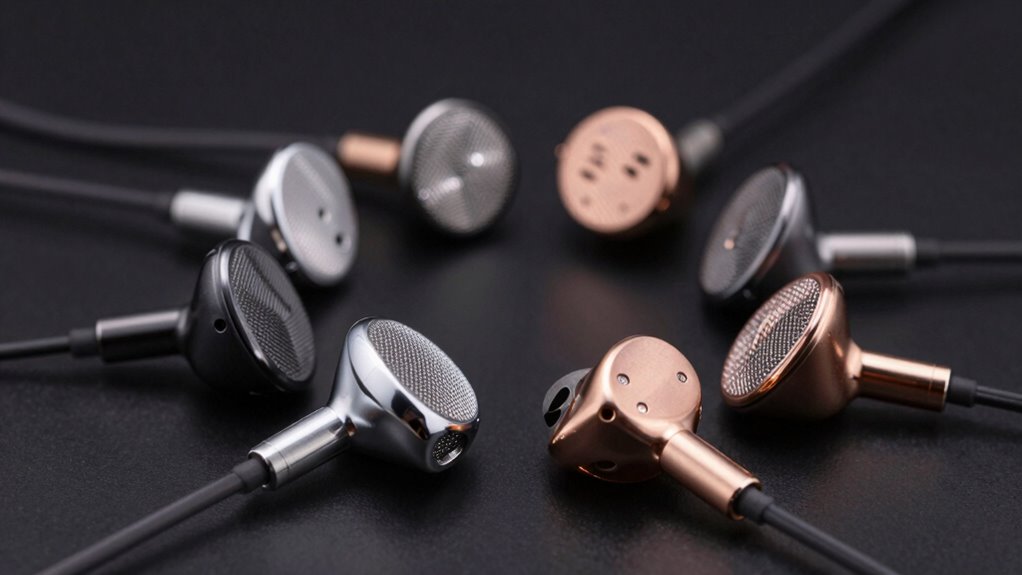

For soundstage and imaging, I’d put the ZiiGaat Horizon first for its varied driver design and potential to balance space with precise placement; the Letshuoer Astralis stands out for listeners drawn to planar detail, while the Fosi Audio IM4 offers an open-back approach. The tradeoff is that a broad presentation does not always mean sharply defined positions, and fit, recording quality, and tuning can matter as much as driver count. Some picks favor separation and detail, while others make more sense for straightforward monitoring or an accessible entry point. Read on for how the ten options differ and which one best matches your listening priorities.

Get audio and creator gear delivered free with Prime
- Fast, free delivery on millions of items
- Prime Video, Amazon Music and more included
- Member-only deals all year
Complete the kit


Key Takeaways
- ZiiGaat Horizon is the most balanced spatial pick: its hybrid driver mix makes it the strongest all-round candidate for buyers who want both a sense of space and distinct instrument placement.
- Letshuoer Astralis emphasizes planar detail: it is the standout for listeners who prioritize fast, finely separated presentation, though that focus may be less forgiving of busy or harsh recordings.
- Fosi Audio IM4 takes a different route: its open-back design is the lineup’s clearest fit for listeners seeking an airy presentation, but open construction can reduce isolation.
- More drivers do not guarantee better imaging: the five-driver Essonio and six-driver KZ ZS12 Pro should be judged by tuning, fit, and coherence rather than driver counts alone.
- Monitoring priorities differ from spacious listening: the Sennheiser IE 100 PRO and Tipsy M3 make more sense for stage use, while the Moondrop CHU II is a simpler starting point.
| Essonio ES-C19 In-Ear Monitors, 5 Knowles BA Drivers |  | Best for Studio Separation | Driver configuration: 5 Knowles balanced armature drivers | Frequency range: 5Hz–50kHz | Cable: 8-strand, 192-core silver-plated cable | VIEW ON AMAZON | See Our Full Breakdown |
| SENNHEISER IE 100 PRO Dynamic In-Ear Monitoring Headphones |  | Best for Straightforward Stage Monitoring | Driver type: Dynamic | Driver size: 10mm | Fit: Ergonomic, secure fit | VIEW ON AMAZON | See Our Full Breakdown |
| Linsoul KZ ZS10 Pro 4BA+1DD Hybrid In-Ear Monitor Earbuds |  | Best Hybrid Value | Driver configuration: 4 balanced armature drivers + 1 dynamic driver | Frequency response: Extended beyond 40kHz | Noise isolation: Up to 26dB | VIEW ON AMAZON | See Our Full Breakdown |
| Kiwi Ears Astral 1DD+6BA Hybrid In-Ear Monitor (Blue) | 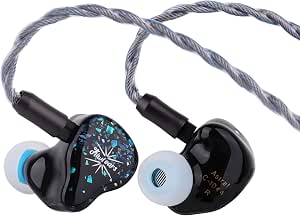 | Best for Tonal Balance and Layered Imaging | Driver configuration: 1 dynamic driver + 6 balanced armature drivers | Dynamic driver: 10mm bioceramic diaphragm | Frequency-response features: 9dB sub-bass shelf; rolling cutoff at 300Hz; peak at 2.8kHz | VIEW ON AMAZON | See Our Full Breakdown |
| Moondrop CHU II High Performance Dynamic Driver In-Ear Monitors |  | Best Simple Dynamic-Driver Pick | Driver type: Dynamic | Driver size: 10mm | Frequency range: 20Hz–20kHz | VIEW ON AMAZON | See Our Full Breakdown |
| Linsoul ZiiGaat Horizon 1DD+2BA+2 Planar HiFi Wired Earbuds In-Ear Monitor |  | Best for Treble Detail and Layer Separation | Driver configuration: 1 biodynamic + 2 balanced armature + 2 planar drivers | Frequency range: 10Hz–35kHz | Shell material: Medical-grade resin | VIEW ON AMAZON | See Our Full Breakdown |
| Tipsy M3 Professional IEM for Musicians, 2BA + 1DD Drivers, IPX5, Acoustic-Runway™ Technology, Skin-Friendly Resin, Detachable 0.78mm 2-pin Cable (No Mic, Green) |  | Best for Stage Monitoring and Layered Cues | Drivers: 2 balanced armature + 1 dynamic | Technology: Acoustic-Runway | Cable: Detachable 0.78mm 2-pin | VIEW ON AMAZON | See Our Full Breakdown |
| Letshuoer Astralis 15.5mm 5th-Generation Planar Diaphragm In-Ear Monitors |  | Best for Planar Transients | Driver type: 15.5mm 5th-generation ring-type planar diaphragm | Housing material: Aluminum | Cable: 216-strand SPC | VIEW ON AMAZON | See Our Full Breakdown |
| Fosi Audio IM4 Open-Back In-Ear Monitor Earphones, Wired Earbuds with 10mm Dynamic Driver, Detachable Cables, for Audiophiles, Gaming, and Studio |  | Best for an Airier Presentation | Driver: 10mm single dynamic driver | Design: Open-back | Cable: Detachable 2-pin, 0.78mm | VIEW ON AMAZON | See Our Full Breakdown |
| KZ ZS12 Pro 2 In-Ear Monitor Headphones – 5 Balanced Armature + 1 Dynamic Hybrid Driver, Wired Earbuds for Gaming, Musician, Audiophile (Black) |  | Best for Positional Detail | Drivers: 5 balanced armature + 1 dynamic | Balanced armature models: 4 × 31736, 1 × 30019 | Dynamic driver size: 10mm | VIEW ON AMAZON | See Our Full Breakdown |
| iems for soundstage and imaging | Cable |
|---|---|
| Essonio ES-C19 In-Ear Monitors | 8-strand, 192-core silver-plated cable |
| SENNHEISER IE 100 PRO Dynamic | Stage-proof design with internal cable duct |
| Linsoul KZ ZS10 Pro 4BA+1DD Hy | Detachable, gold-plated ODC |
| Kiwi Ears Astral 1DD+6BA Hybri | — |
| Moondrop CHU II High Performan | Detachable |
| Linsoul ZiiGaat Horizon 1DD+2B | Interchangeable silver-plated copper |
| Tipsy M3 Professional IEM for | Detachable 0.78mm 2-pin |
| Letshuoer Astralis 15.5mm 5th- | 216-strand SPC |
| Fosi Audio IM4 Open-Back In-Ea | Detachable 2-pin, 0.78mm |
| KZ ZS12 Pro 2 In-Ear Monitor H | — |
More Details on Our Top Picks
Essonio ES-C19 In-Ear Monitors, 5 Knowles BA Drivers
The five Knowles balanced armatures make the ES-C19 the most studio-oriented choice in this group: its multi-driver design is suited to pulling apart layered parts and placing details distinctly, rather than relying on a single dynamic driver’s presentation. Compared with the Sennheiser IE 100 PRO, it offers a more elaborate driver setup and a balanced 4.4mm cable, while the Sennheiser is the simpler, more straightforward monitoring option. The detachable 2-pin connection and included foam tips give listeners room to adjust fit and isolation, both of which affect how confidently positional cues come through. The tradeoff is that driver count alone cannot guarantee a wide or precise image, and the product data warns that gain and volume need care to avoid distortion. Its premium construction and specialized setup may be more than casual listeners need.
Pros:- Five Knowles BA drivers are designed to resolve layered material with clear separation.
- Detachable 2-pin cable supports replacement or upgrades.
- Silicone and memory foam tips offer options for fit and isolation.
- Hand-painted resin shells and included leather case provide distinctive construction and storage.
Cons:- Careful gain and volume control may be needed to avoid distortion.
- The 4.4mm balanced connection may require an adapter or compatible source.
- Multi-driver design and premium accessories may be unnecessary for casual listening.
Best for: Studio listeners and stage performers who prioritize separation, isolation, and a detachable balanced cable.
Not ideal for: Casual listeners seeking a simple, forgiving setup or buyers who do not have a compatible 4.4mm output or adapter.
- Driver configuration:5 Knowles balanced armature drivers
- Frequency range:5Hz–50kHz
- Cable:8-strand, 192-core silver-plated cable
- Cable connector:4.4mm balanced
- Earphone connector:Detachable 2-pin
- Shell:3D-printed resin with hand-painted faceplate
- Included tips:Silicone and memory foam
- Included case:Genuine leather
Our verdict“Choose the ES-C19 if you want a multi-BA monitor setup and strong isolation, and prefer it over the simpler IE 100 PRO only if you can accommodate its balanced connection and careful gain needs.”
SENNHEISER IE 100 PRO Dynamic In-Ear Monitoring Headphones
The IE 100 PRO’s single 10mm dynamic driver and secure ergonomic fit make it the uncomplicated monitoring pick here. For soundstage and imaging, that simplicity can suit performers who want a stable, direct presentation without the more complex multi-driver designs of the Essonio ES-C19 or Kiwi Ears Astral. Its stage-proof cable and reported isolation support use in noisy performance settings, where a dependable fit can matter as much as an expansive spatial presentation. The tradeoff is that the supplied information does not point to a detachable cable or offer a frequency response figure, so there is less scope to judge or tailor the setup from specs alone. Fit also depends on choosing the right tip and may need adjustment. Buyers seeking the most ambitious separation or an explicitly balanced connection should look elsewhere in this lineup.
Pros:- 10mm broadband dynamic transducer provides a straightforward driver arrangement.
- Secure ergonomic fit is suited to extended monitoring sessions.
- Silicone and foam tips provide fit options.
- Stage-proof cable design is intended for demanding monitoring use.
Cons:- Correct tip selection is necessary for the intended fit and sound.
- The provided specifications do not identify a detachable cable.
- Less driver complexity than the ES-C19 and Astral may not appeal to listeners seeking layered separation.
Best for: Performers who want a secure, isolated wired monitor with a simple dynamic-driver setup for rehearsals and stage use.
Not ideal for: Listeners prioritizing a multi-driver design, a balanced cable connection, or extensive documented tuning specifications.
- Driver type:Dynamic
- Driver size:10mm
- Fit:Ergonomic, secure fit
- Cable:Stage-proof design with internal cable duct
- Included tip materials:Silicone and foam
- Intended use:Professional in-ear monitoring
Our verdict“Pick the IE 100 PRO for secure, no-fuss stage monitoring, but choose the ES-C19 or Astral if a more elaborate multi-driver design is your priority.”
Linsoul KZ ZS10 Pro 4BA+1DD Hybrid In-Ear Monitor Earbuds
The ZS10 Pro’s four balanced armatures and one dynamic driver offer a hybrid route into detailed listening, with a bright, dynamic character rather than the neutral midrange emphasis described for the Kiwi Ears Astral. That contrast matters for imaging: listeners who enjoy prominent detail may find individual elements easier to follow, while those sensitive to brighter tuning may prefer a more even presentation. Its stainless-steel faceplate, resin cavity, detachable cable, and stated 26dB noise isolation make it a versatile option for music and gaming. Against the more elaborate five-BA ES-C19, the ZS10 Pro uses fewer armatures and a hybrid configuration, making it a less specialized choice. The drawbacks are practical as well as tonal: cable versions may vary, there is no built-in microphone, and the supplied information does not establish a specific soundstage width.
Pros:- Hybrid 4BA+1DD configuration combines balanced armatures and a dynamic driver.
- Stated noise isolation of up to 26dB can help reduce outside distractions.
- Detachable cable allows replacement or upgrades.
- Stainless-steel faceplate and resin cavity combine distinct materials.
Cons:- Bright tuning may not suit listeners sensitive to prominent treble or detail.
- Cable delivery may vary, limiting control over the included version.
- No built-in microphone is included.
Best for: Listeners and gamers who want a detailed, bright-leaning hybrid IEM with isolation and a replaceable cable.
Not ideal for: Buyers who need a built-in microphone, a predictable cable selection, or a gentler tuning than the described bright presentation.
- Driver configuration:4 balanced armature drivers + 1 dynamic driver
- Frequency response:Extended beyond 40kHz
- Noise isolation:Up to 26dB
- Faceplate material:Stainless steel
- Cavity material:Imported resin
- Cable:Detachable, gold-plated ODC
Our verdict“Choose the ZS10 Pro for a bright, detailed hybrid presentation and isolation, but favor the Astral if you want the more explicitly neutral midrange tuning.”
Kiwi Ears Astral 1DD+6BA Hybrid In-Ear Monitor (Blue)
The Astral’s one bioceramic dynamic driver and six balanced armatures give it the most explicitly described tuning in this group: a sub-bass shelf, a neutral midrange, and smooth treble extension. That balance makes it a strong pick for listeners who want spatial cues and instrument placement without a strongly bright character like the KZ ZS10 Pro. Its accurate pinna compensation and smooth upper range are relevant to perceived positioning, while the 3D-printed resin shell is intended for comfortable longer sessions. Compared with the Essonio ES-C19, the Astral adds one more BA and specifies more about its tonal profile, but it remains wired and its tuning may feel too specialized for casual, bass-forward listening. The listed frequency-response details describe tuning, not a guaranteed soundstage size, so buyers should not treat driver count as proof of width.
Pros:- Six balanced armatures plus a 10mm bioceramic dynamic driver form an elaborate hybrid configuration.
- Neutral midrange is specified for accurate vocal and instrument reproduction.
- Described sub-bass shelf and smooth treble extension provide a defined tonal profile.
- 3D-printed resin shell is designed for comfortable extended wear.
Cons:- Wired connection limits freedom of movement.
- Specialized tuning may not suit listeners seeking a casual or bass-forward sound.
- Driver count and tuning specifications do not guarantee a particular soundstage width.
Best for: Audio-focused listeners who want a wired hybrid monitor with a neutral midrange and smooth treble for following placement and detail.
Not ideal for: Casual listeners seeking a wireless option or a clearly bass-forward, broadly accessible tuning.
- Driver configuration:1 dynamic driver + 6 balanced armature drivers
- Dynamic driver:10mm bioceramic diaphragm
- Frequency-response features:9dB sub-bass shelf; rolling cutoff at 300Hz; peak at 2.8kHz
- Shell material:3D-printed resin
- Color:Blue
- Connection:Wired
Our verdict“Choose the Astral if you want a carefully described, neutral-midrange hybrid for following musical layers; skip it if you need wireless convenience or a more casual tuning.”
Moondrop CHU II High Performance Dynamic Driver In-Ear Monitors
The CHU II’s single 10mm dynamic driver makes it the most straightforward design here, a useful contrast to the multi-driver ZS10 Pro and Astral. Its aluminum-magnesium alloy diaphragm and brass nozzle are intended to support detailed reproduction, while the replaceable acoustic filters give buyers a way to adjust the sound without changing to a different IEM. For soundstage and imaging, this is a simpler starting point: it avoids the complexity of several drivers, but the supplied product information does not claim an especially wide stage or specify imaging performance. The detachable cable is a practical advantage over setups where cable replacement is not documented. By comparison, the Sennheiser IE 100 PRO is also a single-dynamic option, but the CHU II adds replaceable filters and lists its impedance and sensitivity. It is not water resistant, so it is a poor match for wet-weather or workout use.
Pros:- 10mm aluminum-magnesium alloy diaphragm is designed for detailed sound with reduced distortion.
- Replaceable acoustic filters allow sound customization.
- Detachable cable supports replacement.
- Alloy-cast cavity and precision brass nozzle provide durable material choices.
Cons:- Not water resistant, limiting use around sweat or rain.
- Single-driver design may be less appealing than the multi-driver Astral or ZS10 Pro for listeners seeking complex separation.
- The supplied details do not establish a particular soundstage or imaging performance.
Best for: Listeners who want a straightforward wired IEM with a single dynamic driver, replaceable filters, and a detachable cable.
Not ideal for: Commuters or exercisers who need water resistance, and buyers specifically seeking documented wide-stage or multi-driver imaging features.
- Driver type:Dynamic
- Driver size:10mm
- Frequency range:20Hz–20kHz
- Impedance:18 ohms
- Sensitivity:119dB
- Diaphragm material:Aluminum-magnesium alloy
- Cable:Detachable
- Water resistance:Not water resistant
Our verdict“Pick the CHU II for a customizable, simple wired dynamic IEM, but choose a multi-driver alternative if your priority is a more elaborate separation-focused setup.”
Linsoul ZiiGaat Horizon 1DD+2BA+2 Planar HiFi Wired Earbuds In-Ear Monitor
The Horizon’s five-driver hybrid layout pairs a biodynamic driver with two balanced armatures and two planar drivers, a combination suited to revealing fine treble detail and separating overlapping musical lines. That makes it a strong choice for listeners who want to track distinct instrument positions rather than simply hear a broad, diffuse presentation. Its stated response reaches 35kHz, though that figure alone does not establish soundstage width or imaging accuracy. Compared with the Fosi Audio IM4, which emphasizes open-back spaciousness, the Horizon’s driver mix points more toward layered detail and treble extension than an airy, open presentation. The interchangeable cable is practical for replacement or setup changes, but its handcrafted resin build calls for careful handling, and the fit may not suit every listener. I’d choose it for detail-focused listening, not for a guaranteed wider stage.
Pros:- Five-driver hybrid configuration is designed to present complex material with distinct layers.
- Wide stated frequency range and balanced midrange support detailed listening.
- Interchangeable 2-pin cable can be replaced or customized.
- Medical-grade resin shell is handcrafted.
Cons:- Driver count and frequency range do not guarantee a wide soundstage or precise imaging.
- Handcrafted construction calls for careful handling.
- Adult in-ear fit may not work for every ear shape.
Best for: Listeners who prioritize fine treble information and separation among layered instruments in a multi-driver IEM.
Not ideal for: Buyers seeking a low-maintenance, inexpensive everyday earphone or those who need a universally easy in-ear fit.
- Driver configuration:1 biodynamic + 2 balanced armature + 2 planar drivers
- Frequency range:10Hz–35kHz
- Shell material:Medical-grade resin
- Cable:Interchangeable silver-plated copper
- Connector:2-pin
- Warranty:1 year
Our verdict“Choose the Horizon if layered detail and a replaceable cable matter more to you than a clearly established open-back presentation.”
Tipsy M3 Professional IEM for Musicians, 2BA + 1DD Drivers, IPX5, Acoustic-Runway™ Technology, Skin-Friendly Resin, Detachable 0.78mm 2-pin Cable (No Mic, Green)
The M3 is aimed at listeners who want clear, layered sound in a secure-fit monitor, with its two balanced armatures and dynamic driver handling different parts of the presentation. Acoustic-Runway technology is described as supporting precise layering, which suits musicians following individual parts and gamers listening for directional cues; the supplied information does not quantify its imaging performance, though. Against the KZ ZS12 Pro 2, the M3 uses fewer drivers and gives a more straightforward hybrid proposition, while the KZ specifies an electronic crossover board for frequency separation. The M3’s IPX5 water resistance and detachable cable are practical for active sessions, but there is no microphone for calls and its warranty coverage is comparatively short. I’d favor it for a secure monitoring fit, not for buyers who need call control or extensive support coverage.
Pros:- Two balanced armatures and one dynamic driver form a hybrid configuration for detailed playback.
- Acoustic-Runway technology is described as supporting precise, layered sound.
- IPX5 water resistance suits active listening and monitoring sessions.
- Detachable 0.78mm 2-pin cable allows replacement.
Cons:- No built-in microphone for calls.
- Warranty coverage is limited to six months for the earbuds and three months for the cable.
- The product information does not specify a measured soundstage or imaging performance.
Best for: Musicians and gamers who want a secure-fitting hybrid monitor for following layers and directional audio during long sessions.
Not ideal for: Call-heavy users who need an onboard microphone, or buyers who prioritize a longer warranty.
- Drivers:2 balanced armature + 1 dynamic
- Technology:Acoustic-Runway
- Cable:Detachable 0.78mm 2-pin
- Water resistance:IPX5
- Shell material:Skin-friendly resin
- Microphone:None
- Warranty:6 months for earbuds; 3 months for cable
Our verdict“Pick the M3 for secure, water-resistant monitoring and layered playback, provided you can do without a microphone and longer warranty.”
Letshuoer Astralis 15.5mm 5th-Generation Planar Diaphragm In-Ear Monitors
The Astralis takes a focused approach: its 15.5mm ring-type planar diaphragm is intended to deliver quick transient response and extended low-frequency reach. For soundstage and imaging, that may appeal to listeners who value crisp attacks and clear separation between notes, though the listing does not provide measurements that confirm a particular stage size or positional accuracy. Unlike the Linsoul ZiiGaat Horizon, which combines planar, balanced-armature, and biodynamic drivers, the Astralis uses one planar driver type; that simpler setup gives it a distinct planar character rather than a multi-driver blend. Its aluminum housing and interchangeable 3.5mm/4.4mm plugs support a more adaptable wired setup. The tradeoff is that the detachable 2-pin connection needs care, and a single-driver design may not suit listeners seeking the Horizon’s specified multi-driver arrangement.
Pros:- 15.5mm ring-type planar diaphragm is designed for transient response and low-frequency extension.
- Aluminum housing offers a durable construction.
- Interchangeable 3.5mm and 4.4mm plugs suit different wired sources.
- Detachable 2-pin cable can be replaced.
Cons:- Single planar driver type offers a different approach from multi-driver hybrids such as the Horizon.
- Delicate connectors require careful handling.
- No soundstage or imaging measurements are provided in the product information.
Best for: Audiophiles and musicians interested in planar transient response who switch between 3.5mm and 4.4mm sources.
Not ideal for: Listeners who want a multi-driver hybrid design or need verified soundstage and imaging measurements before choosing.
- Driver type:15.5mm 5th-generation ring-type planar diaphragm
- Housing material:Aluminum
- Cable:216-strand SPC
- Interchangeable plugs:3.5mm and 4.4mm
- Connector:2-pin
- Color:Lunar Silver Grey
Our verdict“Choose the Astralis if planar transients and dual-plug flexibility are your priorities, rather than a hybrid driver layout.”
Fosi Audio IM4 Open-Back In-Ear Monitor Earphones, Wired Earbuds with 10mm Dynamic Driver, Detachable Cables, for Audiophiles, Gaming, and Studio
The IM4’s open-back design makes it the clearest choice here for listeners seeking a spacious, natural presentation rather than a sealed-in feel. Its single 10mm dynamic driver keeps the setup simpler than the KZ ZS12 Pro 2 hybrid, which uses five balanced armatures and a dynamic driver to target frequency separation and detailed imaging. The IM4 instead adds practical sound tuning through interchangeable tips and nozzles, letting buyers adjust the balance without changing earphones. At 7g per earbud, its lightweight aluminum construction is suited to long listening sessions. The central compromise is inherent to the open design: sound can leak out, and outside noise can intrude, making it a poor pick for noisy commutes or private listening. I’d shortlist it for home use where spatial openness matters more than isolation or strong bass emphasis.
Pros:- Open-back design is intended to create a spacious, natural presentation.
- Interchangeable tips and nozzles offer sound customization.
- Lightweight build at 7g per earbud suits extended wear.
- Detachable 0.78mm 2-pin cable supports replacement.
Cons:- Open-back construction leaks sound and provides less isolation.
- Some listeners may want stronger bass emphasis.
- Requires a compatible 3.5mm source device.
Best for: Home listeners and gamers who value an airy presentation and want to adjust sound with included tips and nozzles.
Not ideal for: Commuters, shared-office listeners, or anyone who needs strong isolation and minimal sound leakage.
- Driver:10mm single dynamic driver
- Design:Open-back
- Cable:Detachable 2-pin, 0.78mm
- Weight:7g per earbud
- Material:Full aluminum alloy
- Included tips:Three sets: balanced, bass, and deep-bass
- Additional features:Dual magnets and dual-chamber structure
Our verdict“Pick the IM4 for a more open-feeling home-listening experience, but skip it when isolation or privacy matters.”
KZ ZS12 Pro 2 In-Ear Monitor Headphones – 5 Balanced Armature + 1 Dynamic Hybrid Driver, Wired Earbuds for Gaming, Musician, Audiophile (Black)
The ZS12 Pro 2 is the most explicitly imaging-focused option in this group: its electronic crossover board is specified to separate frequencies, while five balanced armatures and a 10mm dynamic driver cover a broad range of sound. That setup makes it a natural fit for listeners who want to pick apart layered tracks or follow directional cues in games. Compared with the Tipsy M3, it adds more balanced armatures and a stated crossover board, while the M3 highlights water resistance and a detachable cable. Here, the over-ear cable is listed as a design feature, but the cable is not detachable, limiting replacement options if it fails. The supplied details also do not quantify soundstage width, so buyers should distinguish its imaging-focused design from a promise of a large stage. I’d choose it for wired positional listening, not cable flexibility.
Pros:- Five balanced armatures and a 10mm dynamic driver provide a multi-driver hybrid layout.
- Electronic crossover board is designed for frequency separation and clear imaging.
- Dynamic driver is specified for impactful bass.
- Over-ear cable routing and lightweight metal faceplate support a secure-wearing design.
Cons:- Cable is not detachable, limiting repair and replacement options.
- The product information does not provide soundstage-width measurements.
- A wired 3.5mm connection may not suit devices without a compatible output.
Best for: Gamers and detail-focused listeners who want a hybrid IEM with an explicitly specified crossover for frequency separation.
Not ideal for: Buyers who need a detachable, replaceable cable or who want stated measurements of soundstage width.
- Drivers:5 balanced armature + 1 dynamic
- Balanced armature models:4 × 31736, 1 × 30019
- Dynamic driver size:10mm
- Crossover:Electronic crossover board
- Microphone:Omnidirectional HD microphone
- Connector:3.5mm wired
- Cable design:Over-ear; non-detachable
- Colors:Black, Tech Silver
Our verdict“Choose the ZS12 Pro 2 for its imaging-oriented hybrid design, as long as you accept a fixed cable and a wired 3.5mm connection.”

How We Picked
I ranked these IEMs around the qualities that matter most for soundstage and imaging: perceived width and depth, separation between instruments, positional clarity, and whether those qualities are likely to remain useful across different recordings. I also weighed fit and isolation, driver configuration, build practicality, and intended use. Driver count or a planar label alone did not earn a higher position; neither guarantees a coherent presentation or accurate placement.
The ZiiGaat Horizon leads as the most versatile spatial choice, with the Astralis and IM4 offering more specific routes to detail or openness. The rankings then account for tradeoffs: stage-oriented monitors can favor secure use over a roomy presentation, while simpler or more affordable designs may be sensible entry points without matching the most ambitious spatial options. Where a product’s tuning or stage characteristics are not established by its listed specifications, I avoid treating them as proven advantages.
Factors to Consider When Choosing Iems For Soundstage And Imaging
Soundstage is how spacious a recording feels; imaging is how clearly you can place sounds within that space. They overlap, but they are not interchangeable. I’d choose based on the listening environment and the kind of spatial information you want—not on driver count, marketing language, or a claim of unusually wide sound alone.
Separate Width From Positional Accuracy
A wide presentation can make music feel expansive, but it may still blur the location of individual instruments. If you listen to live recordings, games, or layered arrangements, prioritize stable left-to-right placement and separation rather than width alone. Depth is another dimension: it affects whether sounds seem forward, distant, or stacked on one plane. Use familiar tracks with clearly placed vocals and percussion when comparing options. A dramatic spatial effect can sound exciting at first yet prove less useful if positions shift or the center image feels vague. Choose the quality you notice and value most, not the one that sounds flashiest in a short demonstration.
Treat Fit and Seal as Part of the Sound
The eartip seal affects bass response and can change the perceived balance between low frequencies, vocals, and treble. That balance influences how distinct instruments seem, so a poor fit can make an otherwise promising IEM sound congested or uneven. Try more than one tip size and check that both ears seal consistently before judging imaging. Do not assume a larger shell will fit securely just because it has a custom-like shape. A comfortable, repeatable fit also matters for longer listening and stage use. If you cannot maintain a seal, a model with appealing specifications may not deliver its intended presentation for you.
Match Isolation to Your Listening Environment
Isolation helps keep outside noise from masking quiet spatial cues, which can make it useful on commutes or noisy stages. Open-back designs offer a different tradeoff: they may feel less enclosed, but they also let more sound pass through in both directions. That can be a poor match for public listening, recording beside a microphone, or situations where you need to hear less ambient noise. Consider whether you need a private, sealed listening experience or a more open-feeling presentation. Do not mistake an airy impression for a wider image in every recording. The best choice depends on the room and how much external sound you can accept.
Read Driver Types as Clues, Not Guarantees
Dynamic, balanced-armature, and planar drivers describe different design approaches, not a ranking of spatial performance. Hybrid models combine driver types, but a larger count does not by itself prove better separation, tonal balance, or coherence. Fit, crossover design, and tuning all influence how smoothly the sound comes together. Consider driver configuration alongside the product’s intended use and the listening traits you can verify. If a listing makes broad claims about precision without useful supporting detail, do not treat the claim as a substitute for comparison. Paying extra for a more complex arrangement makes sense only if its presentation suits your priorities.
Prioritize Use Case Before Accessories
Stage monitors often put secure fit and isolation ahead of an expansive presentation, while gaming and critical listening can place more value on locating sounds reliably. Cable connectors and included cable types matter for replacement or source compatibility, but they do not tell you how well an IEM images. Check whether your playback device supports the connector you plan to use; a balanced plug may require a compatible output or adapter. For beginners, an easy-to-fit model with a standard connection can be a better first choice than a complex setup. For musicians, cable retention and comfort during movement may matter more than a small gain in perceived width. Spend on the qualities that solve your actual listening problem.
Use Familiar Recordings, Not One Demo Track
Spatial cues vary with recording and mixing, so a single track can give a misleading impression of an IEM’s strengths. Compare a centered vocal, a live or acoustic recording, and a dense mix with several overlapping parts. Keep volume similar between options, since louder playback can seem clearer and more impressive. Listen for whether positions remain stable as the music gets busy and whether the center image stays anchored. A design that flatters one recording may expose harshness or crowding in another. Making a short, repeatable listening checklist can help prevent a striking first impression from driving the whole decision.
Frequently Asked Questions
Does a higher driver count mean an IEM will have better imaging?
No. Driver count describes part of the hardware, not how accurately sounds appear positioned. Tuning, crossover behavior, fit, and recording quality all affect separation and placement. The Essonio ES-C19 and KZ ZS12 Pro have multiple balanced-armature drivers, but that fact alone does not establish that either will outperform a simpler design. Compare the actual presentation and comfort rather than selecting by the largest number on the box.
Should I choose the Fosi Audio IM4 if I want the widest soundstage?
The IM4’s open-back construction makes it the lineup’s clearest option for buyers interested in a less enclosed presentation. Open-back does not guarantee that every recording will sound wider or more precisely imaged, though. It also allows more outside sound in, which can weaken quiet details in noisy settings and make private listening less practical. If isolation matters more than openness, compare it with sealed options such as the ZiiGaat Horizon before deciding.
Are the ZiiGaat Horizon or Letshuoer Astralis better for gaming?
For gaming, prioritize consistent left-right placement and comfort over claims about width or driver technology. The Horizon is the more general-purpose spatial candidate in this group, while the Astralis is aimed at listeners attracted to a planar presentation and fine detail. Neither should be treated as a guaranteed advantage in every game, since audio mixing and your own fit affect positional cues. If you play for long sessions, comfort and a stable seal may matter more than a small difference in perceived space.
Which of these IEMs makes the least demanding first purchase for a beginner?
The Moondrop CHU II is the most straightforward entry point among these picks, with a simpler single-dynamic-driver design than the hybrid and planar alternatives. That simplicity can make it easier to choose without weighing several driver types or specialized use cases. It is not the roundup’s strongest choice for buyers seeking the most ambitious spatial presentation. Beginners should also check fit and cable needs, since a comfortable, usable IEM is more valuable than a complicated design that does not suit their routine.
Will a balanced cable or 4.4mm connector improve soundstage and imaging?
A 4.4mm connector does not inherently make an IEM sound wider or improve positional accuracy. It is useful only if your source has a compatible balanced output or you have the right adapter, and an adapter does not convert every source into a balanced one. The Essonio ES-C19 listing includes a 4.4mm cable, so check compatibility before choosing it. For spatial performance, put more weight on fit, tuning, and the IEM’s presentation than on the connector alone.
Conclusion
My best overall pick is the ZiiGaat Horizon for buyers seeking a versatile balance of space and placement. Choose the Letshuoer Astralis as the premium-minded detail option if planar presentation is your priority, and the Fosi Audio IM4 for a more open-back approach when isolation is not essential. The Moondrop CHU II is my beginner pick for a simpler starting point, while the Sennheiser IE 100 PRO or Tipsy M3 better suit musicians who value monitoring use. For value-oriented buyers, compare the KZ ZS10 Pro and CHU II by fit and intended use rather than assuming extra drivers deliver better imaging. The right choice is the one that matches your listening environment and keeps positions clear in the recordings you actually play.
Halloween Picks
halloween
As an affiliate, we earn on qualifying purchases.