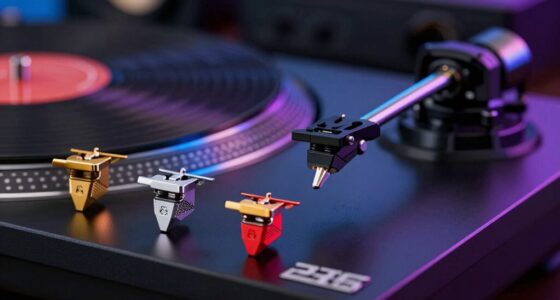
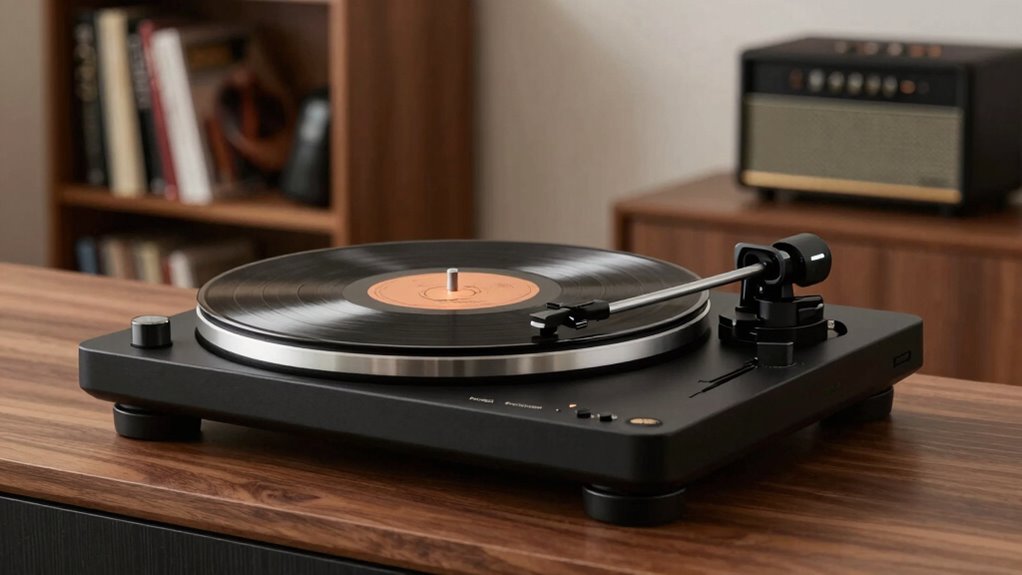
For a manual turntable for beginners with premium features, my best overall pick is the Audio-Technica AT-LP120XUSB: its direct drive, built-in preamp, and USB output make it versatile without requiring a complex system. The Audio-Technica AT-LP5X is a strong choice for a more focused home-listening setup, while the Marantz TT-15S1 is the premium step-up for buyers willing to handle a more involved setup. The main tradeoff is between easy connections and flexible features versus a simpler, more traditional record-player experience. Belt drive and direct drive also suit different priorities, from quiet playback to steady speed and hands-on control. Read on for the full comparison and a pick matched to your listening plans.

Get audio and creator gear delivered free with Prime
- Fast, free delivery on millions of items
- Prime Video, Amazon Music and more included
- Member-only deals all year
Complete the kit


Key Takeaways
- The AT-LP120XUSB is the most adaptable starting point: its built-in preamp and USB output make it easier to connect to different systems and digitize records than the more stripped-back models.
- The AT-LP120XBT-USB adds wireless convenience, not a simpler operating style: it remains fully manual, so buyers still cue and return the tonearm themselves.
- The AT-LP5X favors focused home listening over DJ-style control: its appeal is a more straightforward direct-drive setup, while the AT-LP140XP-BK is aimed at buyers who want high torque and DJ-oriented handling.
- The Marantz TT-15S1 is the premium outlier: its cartridge-included package and belt drive set it apart, but it asks more of a beginner than the feature-rich Audio-Technica options.
- The AT-LPW50BT-RW makes a different compromise: belt drive and wireless connectivity favor a living-room setup, while direct-drive models offer a better fit for buyers prioritizing speed stability or hands-on control.


| manual turntable for beginners premium | Speeds | Cartridge | Drive system | Platter |
|---|---|---|---|---|
| Audio-Technica AT-LP140XP-BK D | 33, 45, and 78 RPM | AT-XP3 | Direct drive | Die-cast aluminum |
| Audio-Technica AT-LP120XUSB-BK | 33, 45, and 78 RPM | AT-VM95E dual-magnet phono cartridge | Direct drive | — |
| Audio-Technica AT-LP5X Fully M | 33⅓, 45, and 78 RPM | AT-VM95E dual moving magnet | Direct drive, low-noise motor | Die-cast aluminum |
| Marantz TT-15S1 Manual Belt-Dr | 33⅓ and 45 RPM | ClearAudio Virtuoso MM | Belt drive | Heavy, precision-machined |
| Audio-Technica AT-LP120XBT-USB | 33, 45, and 78 RPM | AT-VM95E dual magnet | Direct drive | Die-cast aluminum |
| Audio-Technica AT-LPW50BT-RW M | 33-1/3 and 45 RPM | AT-VM95E Dual Moving Magnet with elliptical stylus | — | Die-cast aluminum with rubber mat |
More Details on Our Top Picks
Audio-Technica AT-LP140XP-BK Direct-Drive Professional DJ Turntable, 3-Speed, High Torque
The AT-LP140XP-BK is the most hands-on pick here, aimed at beginners who want to learn DJ-style control rather than simply start a record and listen. Its high-torque direct-drive motor, pitch control, reverse play, and quartz speed lock give it tools the AT-LP120XUSB-BK does not emphasize as strongly for performance. The 33, 45, and 78 RPM settings also suit varied collections. That flexibility comes with a learning curve: operation is fully manual, and its size and weight are less convenient for a compact listening setup. Unlike the AT-LP5X, this model puts DJ functions ahead of a quieter, more understated home-audio presentation. It also lacks built-in speakers and digital connectivity, so I’d pair it with a separate sound system.
Pros:- High-torque direct-drive motor supports responsive, stable playback.
- Pitch control, reverse play, and quartz speed lock suit DJ-style practice.
- 33, 45, and 78 RPM support accommodates varied records.
- Includes an AT-XP3 cartridge and die-cast aluminum platter.
Cons:- Fully manual operation asks beginners to handle cueing and playback themselves.
- No USB, Bluetooth, or built-in speakers; a separate audio system is needed.
- Larger and heavier than more home-focused options such as the AT-LP5X.
Best for: New vinyl owners who specifically want a sturdy direct-drive deck for learning cueing, pitch control, and other DJ-style techniques.
Not ideal for: Beginners seeking a simple living-room setup, automatic operation, Bluetooth, or USB recording; this deck requires more hands-on control and external audio equipment.
- Drive system:Direct drive
- Speeds:33, 45, and 78 RPM
- Motor:High torque
- Platter:Die-cast aluminum
- Cartridge:AT-XP3
- Outputs:Dual RCA
- Additional features:Variable pitch control, reverse play, quartz speed lock, stroboscopic platter, stylus target light
Our verdict“Choose the AT-LP140XP-BK if learning DJ controls matters more than easy setup or digital connectivity.”
Audio-Technica AT-LP120XUSB-BK Direct-Drive Turntable (Analog & USB), Fully Manual, 3-Speed, Converts Vinyl to Digital, Black
I’d point most beginners wanting a premium-feeling manual deck toward the AT-LP120XUSB-BK because it balances familiar vinyl playback with practical ways to connect and archive records. Its selectable phono preamp can simplify connection to compatible audio gear, while USB output allows vinyl transfers to a computer. Compared with the AT-LP120XBT-USB-BK, it skips Bluetooth, making it the more straightforward fit for buyers who plan to use RCA or USB rather than wireless speakers. It still plays 78 RPM records and offers adjustable anti-skate and pitch control, but the fully manual design means there’s no automatic cueing or stopping. The AT-LP5X has a more home-audio-focused build and switchable MM/MC preamp; this model makes a stronger case when accessible connectivity and versatility lead the brief.
Pros:- USB output supports transferring records to digital files.
- Selectable built-in phono preamp broadens wired connection options.
- Plays 33, 45, and 78 RPM records.
- Adjustable anti-skate and pitch control offer room to learn setup and playback adjustment.
Cons:- Fully manual operation requires hands-on cueing and stopping.
- No Bluetooth connection for wireless speakers or headphones.
- Listed warranty is one year.
Best for: First-time manual-turntable buyers who want wired system flexibility and the option to digitize records without adding a separate preamp.
Not ideal for: Listeners who want Bluetooth playback or automatic operation, or buyers seeking the AT-LP5X’s switchable MM/MC preamp.
- Drive system:Direct drive
- Speeds:33, 45, and 78 RPM
- Connectivity:USB and RCA
- Cartridge:AT-VM95E dual-magnet phono cartridge
- Built-in phono preamp:Selectable
- Power supply:100–240 V, 50/60 Hz
- Warranty:1 year
Our verdict“Choose the AT-LP120XUSB-BK for a versatile first manual deck with USB recording and wired connection flexibility.”
Audio-Technica AT-LP5X Fully Manual Direct-Drive Turntable
The AT-LP5X is the more home-listening-oriented choice among these direct-drive Audio-Technica models. Its heavy-mass, anti-vibration construction and low-noise motor are intended to keep playback steady, while the J-shaped tonearm gives the design a distinct vintage character. For a beginner who expects to grow into different cartridges or audio components, the switchable MM/MC preamp offers more flexibility than the selectable phono preamp listed for the AT-LP120XUSB-BK. Both provide USB output and three speeds, so the LP5X’s appeal is less about adding more connections and more about its build and preamp options. The tradeoff is a fully manual workflow without automatic cueing or stopping, plus a one-year limited warranty. I’d choose the AT-LP120XUSB-BK instead if straightforward utility matters more than this more considered home-audio approach.
Pros:- Heavy-mass chassis and anti-vibration materials are designed for stable playback.
- Switchable MM/MC preamp supports a broader range of cartridge setups.
- USB output and RCA connectivity accommodate digital archiving and wired audio systems.
- Includes an AT-VM95E cartridge and lightweight AT-HS6 headshell.
Cons:- Fully manual operation has no automatic cueing or stopping.
- One-year limited warranty is shorter than the warranty listed for the AT-LP140XP-BK.
- Its home-audio focus offers fewer DJ-specific functions than the AT-LP140XP-BK.
Best for: Beginners building a dedicated home listening system who value a stable chassis and the option to use MM or MC cartridges.
Not ideal for: Casual listeners who want automatic playback, or buyers who prioritize DJ-style controls such as the AT-LP140XP-BK’s reverse play and pitch features.
- Drive system:Direct drive, low-noise motor
- Speeds:33⅓, 45, and 78 RPM
- Cartridge:AT-VM95E dual moving magnet
- Headshell:Lightweight AT-HS6
- Platter:Die-cast aluminum
- Preamp:Switchable MM/MC
- Connectivity:USB output and dual RCA
- Warranty:1 year limited
Our verdict“Pick the AT-LP5X if stable home playback and MM/MC flexibility matter more than automation or DJ controls.”
Marantz TT-15S1 Manual Belt-Drive Premium Turntable with Cartridge Included
The Marantz TT-15S1 is the lineup’s dedicated premium belt-drive option, for buyers who care more about a carefully composed listening setup than USB, wireless connections, or DJ controls. Its floating motor mount is designed to limit motor vibration reaching the platter, while the heavy, precision-machined platter and included ClearAudio Virtuoso MM cartridge give the package a more audiophile-focused identity than the AT-LP120XUSB-BK. It plays 33⅓ and 45 RPM records, but unlike the Audio-Technica options here, it does not support 78 RPM or offer USB output. Setup also asks more of the owner, and the supplied cartridge’s stylus is described as non-replaceable, which can complicate long-term maintenance. I’d reserve this for a committed home listener rather than a beginner who wants the easiest route into digital or multi-speed playback.
Pros:- Floating motor mount is designed to reduce vibration reaching the platter.
- Includes a ClearAudio Virtuoso MM cartridge.
- Heavy, precision-machined platter supports a stable playback platform.
- Three adjustable aluminum feet help level the deck on uneven surfaces.
Cons:- Supports only 33⅓ and 45 RPM, unlike the three-speed Audio-Technica models.
- No USB or Bluetooth connectivity for digital recording or wireless listening.
- Setup requires more effort, and the supplied stylus is described as non-replaceable.
Best for: Vinyl enthusiasts starting a dedicated home system who prioritize a belt-drive design, vibration control, and an included premium cartridge.
Not ideal for: Beginners who want USB recording, Bluetooth, 78 RPM support, straightforward setup, or a replaceable stylus.
- Drive system:Belt drive
- Speeds:33⅓ and 45 RPM
- Motor:AC asynchronous with floating mount
- Platter:Heavy, precision-machined
- Cartridge:ClearAudio Virtuoso MM
- Tonearm:Straight anodized aluminum
- Feet:Three height-adjustable aluminum feet
- Warranty:3 years
Our verdict“Choose the TT-15S1 for a premium, vibration-conscious home setup if its limited speeds and extra setup work suit your needs.”
Audio-Technica AT-LP120XBT-USB-BK Wireless Direct-Drive Turntable (Analog, Wireless & USB), Fully Manual, 3 Speed, Convert Vinyl to Digital, Built-in Pre-Amp, Black
The AT-LP120XBT-USB-BK suits a beginner whose listening setup needs more than a conventional RCA connection. Its Bluetooth and USB outputs let it serve wireless playback and computer-based record transfers, while RCA keeps a wired system available. Compared with the AT-LP120XUSB-BK, the main difference is Bluetooth: useful when a speaker or headphone setup is wireless, but unnecessary complexity if you already plan to listen through RCA. It retains the same broad three-speed appeal, including 78 RPM, and the supplied AT-VM95E cartridge supports analog playback. The tradeoff is not ease of operation: this is still fully manual, so it won’t cue or stop itself. The external AC adapter also adds another setup item, and Bluetooth performance can depend on the surrounding environment.
Pros:- Bluetooth supports wireless playback with compatible audio equipment.
- USB output allows vinyl-to-digital transfers.
- RCA provides a wired connection option alongside wireless and USB.
- Three speeds and an AT-VM95E cartridge suit a broad record collection.
Cons:- Fully manual operation still requires hands-on cueing and stopping.
- Bluetooth connection quality can vary with the environment.
- External AC adapter adds another item to position and connect.
Best for: Beginners who want one manual turntable to connect to a Bluetooth speaker, a wired audio system, and a computer for record transfers.
Not ideal for: Buyers who only need USB and RCA connections, or anyone who wants automatic playback and fewer setup steps.
- Drive system:Direct drive
- Speeds:33, 45, and 78 RPM
- Connectivity:Bluetooth, USB, and RCA
- Cartridge:AT-VM95E dual magnet
- Platter:Die-cast aluminum
- Power supply:External AC adapter
- Warranty:1 year
Our verdict“Choose the AT-LP120XBT-USB-BK if Bluetooth is a real part of your setup; otherwise, the AT-LP120XUSB-BK covers the core wired and USB needs.”
Audio-Technica AT-LPW50BT-RW Manual Belt-Drive Turntable, Rosewood
The AT-LPW50BT-RW suits beginners who want a more considered, hands-on record player without giving up wireless listening. Its carbon-fiber tonearm, adjustable tracking force and AT-VM95E cartridge offer a more setup-focused experience than the plug-and-play appeal of the Audio-Technica AT-LP120XBT-USB-BK. Bluetooth and a built-in preamp make it easier to connect to speakers or other audio gear, while RCA output keeps a wired system available. The rosewood-veneer plinth and die-cast aluminum platter give it a more furniture-like look than the black, DJ-inspired AT-LP140XP-BK. The tradeoff is real: this is fully manual, with no automatic operation, and it lacks the third speed found on some alternatives. Choose it for its blend of finish, adjustable setup and wireless flexibility, not for minimal effort.
Pros:- Bluetooth and built-in preamp allow wireless or straightforward wired connections.
- Adjustable tracking force and anti-skate support careful cartridge setup.
- AT-VM95E cartridge with elliptical stylus is included.
- Die-cast aluminum platter and rosewood-veneer plinth give the deck a substantial, furniture-oriented appearance.
Cons:- Fully manual operation requires placing and returning the tonearm by hand.
- Supports only 33-1/3 and 45 RPM, unlike three-speed alternatives in the roundup.
- The rosewood styling may not suit buyers seeking a minimalist or all-black setup.
Best for: New vinyl listeners who want a polished rosewood finish, Bluetooth speaker compatibility and room to learn manual setup.
Not ideal for: Listeners who want one-touch automatic operation, 78 RPM playback, or a DJ-style direct-drive deck with pitch controls.
- Brand:Audio-Technica
- Model:AT-LPW50BT-RW
- Drive type:Manual belt-drive
- Speeds:33-1/3 and 45 RPM
- Platter:Die-cast aluminum with rubber mat
- Tonearm:Straight carbon-fiber with adjustable tracking force
- Cartridge:AT-VM95E Dual Moving Magnet with elliptical stylus
- Connectivity:Bluetooth wireless, built-in preamp and RCA output
- Plinth:MDF with rosewood veneer
Our verdict“Choose this turntable if you want a refined-looking manual deck with Bluetooth and adjustable setup, but skip it if automatic playback or three-speed support matters more.”

How We Picked
I ranked these turntables for a buyer who is new to manual playback but wants a capable, well-equipped deck rather than a bare-bones starter. The main criteria were setup demands, connection options, operating controls, drive type, and room to grow. A built-in preamp can reduce the number of extra components a beginner needs, USB can support archiving, and wireless output can simplify placement—but those conveniences do not make a fully manual turntable automatic to operate.
The AT-LP120XUSB ranks first because it balances accessible connections with direct-drive versatility. The AT-LP5X follows for buyers who want a more focused home deck, while the AT-LP120XBT-USB and AT-LPW50BT-RW serve distinct wireless priorities. The AT-LP140XP-BK ranks lower for general beginners because its DJ-oriented controls may be unnecessary for casual listening. The Marantz TT-15S1 is the premium pick, not the easiest first purchase: its more involved setup makes it best for a buyer ready to prioritize a higher-end listening system over plug-in convenience.
| manual turntable for beginners premium | Drive system | Platter | Cartridge | Connectivity |
|---|---|---|---|---|
| Audio-Technica AT-LP140XP-BK D | Direct drive | Die-cast aluminum | AT-XP3 | — |
| Audio-Technica AT-LP120XUSB-BK | Direct drive | — | AT-VM95E dual-magnet phono cartridge | USB and RCA |
| Audio-Technica AT-LP5X Fully M | Direct drive, low-noise motor | Die-cast aluminum | AT-VM95E dual moving magnet | USB output and dual RCA |
| Marantz TT-15S1 Manual Belt-Dr | Belt drive | Heavy, precision-machined | ClearAudio Virtuoso MM | — |
| Audio-Technica AT-LP120XBT-USB | Direct drive | Die-cast aluminum | AT-VM95E dual magnet | Bluetooth, USB, and RCA |
| Audio-Technica AT-LPW50BT-RW M | — | Die-cast aluminum with rubber mat | AT-VM95E Dual Moving Magnet with elliptical stylus | Bluetooth wireless, built-in preamp and RCA output |
Factors to Consider When Choosing Manual Turntable For Beginners Premium
Choosing a premium manual turntable is less about collecting the most features and more about matching the deck to your room, audio gear, and willingness to set it up. I would decide on your signal path and daily habits before comparing extras: those choices can prevent compatibility surprises and help you avoid paying for functions you will not use.
Check Your Amplifier Before Choosing a Turntable
Start by checking whether your receiver or powered speakers have a phono input. A turntable’s cartridge produces a signal that usually needs phono preamplification, and a phono input also applies the required equalization. If your system lacks that input, a turntable with a built-in preamp can reduce extra hardware and setup steps. A separate phono stage gives you another component to select and connect, but it also gives you more choice as your system changes. Do not assume that USB, Bluetooth, or a familiar brand means the turntable will connect directly to every audio setup. Map the connections you already own before choosing which convenience features are worth having.
Decide How Much Manual Control You Actually Want
A fully manual deck means you place the tonearm on the record and lift it off at the end; it does not automatically become a beginner-friendly player just because it has extra controls. That hands-on routine is simple once familiar, but it may not suit someone who wants playback to stop without attention. Think about where the turntable will sit and whether you can reach it comfortably while listening. Avoid paying extra for DJ-oriented controls if your records will only be played at home. On the other hand, tactile pitch and speed controls make sense for mixing or experimenting with playback. Choose the operating style you will enjoy using repeatedly, not just the one that looks most advanced.
Match Drive Type to Your Listening Priorities
Direct-drive and belt-drive designs reflect different priorities rather than a simple quality ladder. Direct drive connects the platter to the motor, which can support steady speed and makes these models a natural fit for frequent handling or DJ-style use. Belt drive separates the motor from the platter with a belt and often appeals to home listeners seeking a more traditional setup. Motor design alone cannot tell you how a turntable will sound in your room; isolation, cartridge setup, records, and speakers also matter. A common mistake is choosing drive type by reputation without considering use. For an everyday beginner, focus on the complete setup and the way the deck will be operated.
Treat USB and Wireless as Convenience Features, Not Sound Guarantees
USB output is useful if you want to transfer records to a computer, but it adds little value if you plan to listen only through speakers. Think through the full recording process too: you may need software, time to capture each side, and space to store the files. Wireless playback can make speaker placement more flexible and reduce visible cables, though it depends on compatible receiving equipment and may not suit every listener’s preferred signal path. Neither feature makes a manual turntable automatic; you still handle the tonearm. Avoid choosing a deck for a feature you might use once and then ignore. Prioritize the connection that solves a real problem in your listening space.
Budget for the Whole Vinyl Setup
The turntable is only one part of a working system. Speakers or headphones, amplification, a suitable phono stage when needed, and record care can all affect how satisfying vinyl is to use. A model that includes a cartridge or preamp may reduce the number of immediate purchases, but check what your existing equipment can already do before treating included features as extra value. Reserve room in your plan for a stable surface and basic maintenance supplies as well. Beginners sometimes spend their entire budget on the deck and then discover they cannot connect it to their speakers. Compare the total cost and setup effort, not only the turntable’s feature list.
Know When a Premium Step-Up Makes Sense
Paying more makes sense when a specific improvement matches a real need: a more substantial system, a cartridge package that suits your plans, or a build and setup you intend to keep for years. It is less compelling when the extra spend mainly buys controls or connections you will not use. Beginners can gain more from a compatible phono stage, well-placed speakers, and careful cartridge alignment than from choosing a more elaborate deck before the rest of the system is ready. Also consider whether you are comfortable following setup instructions, particularly for a premium model that may demand more care. Buy for the listening system you can support now, while leaving a clear path for upgrades later.
Frequently Asked Questions
Is a fully manual turntable a sensible first turntable?
Yes, if you are comfortable placing and lifting the tonearm by hand and paying attention when a record finishes. Manual operation gives you direct control, but it does not offer the convenience of automatic tonearm return. Keep the deck somewhere you can reach without bumping it, and learn the cueing process before playing valuable records. If unattended stopping is a priority, check for that feature specifically rather than assuming every turntable includes it. In this roundup, every listed model is manual, so the choice is about setup and features, not automatic operation.
Which connection should I prioritize if I own powered speakers?
First check whether your powered speakers accept a phono-level signal or require a line-level input. If they lack a phono stage, a turntable with a built-in preamp can simplify the connection; if they already have a suitable phono input, you may not need that feature. Wireless models can help when cable placement is awkward, but confirm that your speakers support the relevant wireless connection. USB matters only if you plan to record vinyl to a computer. Choosing connections around your actual speakers can prevent buying adapters or extra components later.
Should I choose the AT-LP120XUSB or the AT-LP120XBT-USB?
Choose the AT-LP120XUSB if a direct wired connection and USB digitizing cover your needs. The AT-LP120XBT-USB is the more suitable match when wireless listening is a genuine part of your setup, alongside analog and USB options. Both are fully manual, so wireless connectivity does not remove the need to operate the tonearm. Check the receiving equipment before paying for wireless capability, since it has no benefit without a compatible device. If you are unsure, favor the connection you will use most often rather than collecting options.
Is the Marantz TT-15S1 too complicated for a beginner?
Not necessarily, but it is a better fit for a beginner who is willing to follow setup instructions and build a more considered listening system. Its cartridge-included package distinguishes it from a simple entry-level approach, while the belt-drive design signals a home-listening focus rather than DJ-style use. A first-time owner who wants fewer decisions and straightforward connections may find an Audio-Technica option easier to work into an existing system. Check your amplifier and available setup space before choosing the Marantz. The premium choice makes more sense when you value the overall deck and are prepared for its setup demands.
Do I need the AT-LP140XP-BK if I only listen to records at home?
Probably not unless you specifically want its high-torque, DJ-oriented controls or plan to use the turntable for mixing and frequent hands-on manipulation. For ordinary home listening, those strengths may go unused, so a more home-focused model can be a better match. The AT-LP120XUSB offers broader connection flexibility, while the AT-LP5X is a more focused direct-drive alternative in this lineup. Consider how you will use the pitch and handling features before making them a deciding factor. Paying for a specialist capability is worthwhile only when it supports the way you play records.
Conclusion
For most first-time buyers who want premium flexibility without making the system harder to connect, I recommend the Audio-Technica AT-LP120XUSB as best overall. The AT-LP5X is my best value choice for a buyer who wants a focused direct-drive home setup and does not need USB or wireless to guide the decision. If you want the easiest path into a feature-rich manual deck, start with the AT-LP120XUSB and confirm it matches your speakers. The Marantz TT-15S1 is best premium for someone ready to put more effort into setup and build a higher-end listening system. Choose the AT-LP120XBT-USB for wireless plus USB, the AT-LPW50BT-RW for a belt-drive, wireless living-room setup, or the AT-LP140XP-BK for DJ-style handling. The right pick is the one whose connections and controls fit your actual listening habits.