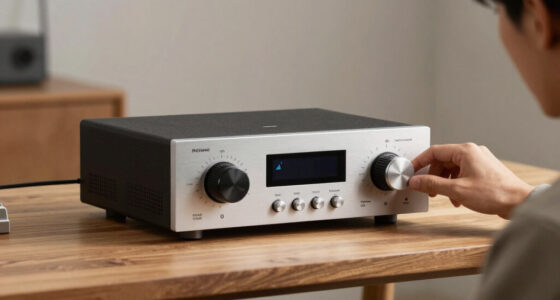
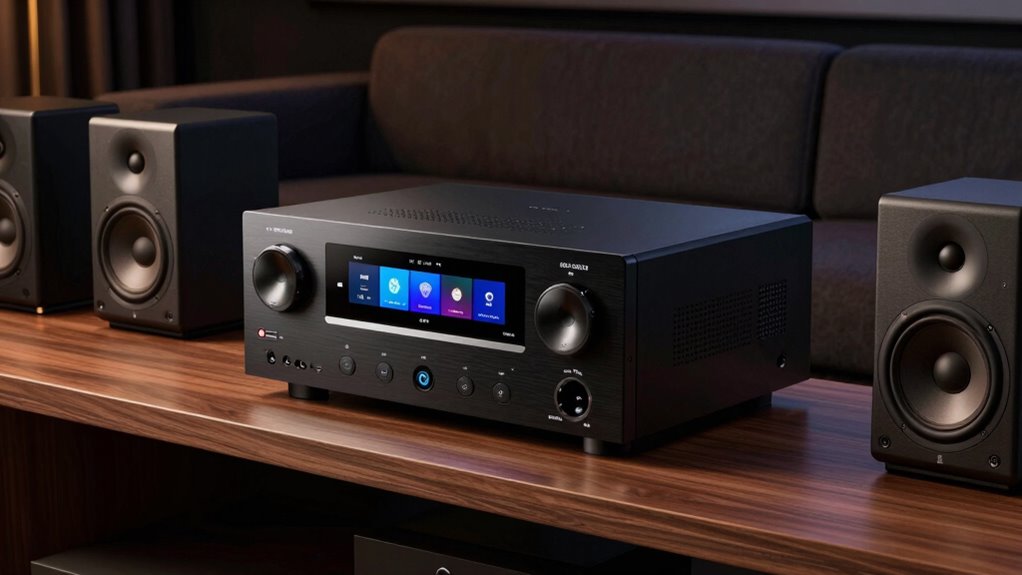

A home theater receiver with room correction can tune speaker levels and sound for your room, but the calibration system, channel capacity, and setup demands vary widely. My best overall pick is the Onkyo TX-RZ70, whose Dirac Live support and 11.2-channel layout suit complex systems and larger upgrades. The Onkyo TX-NR7100 is a more approachable route to Dirac Live, while the Denon AVR-X1700H makes a practical choice for a conventional 7.2 setup. The main tradeoff is whether to prioritize powerful, flexible calibration or keep setup and system needs simple. Read on for the full breakdown and guidance on matching room correction to your speakers, room, and plans.

Get audio and creator gear delivered free with Prime
- Fast, free delivery on millions of items
- Prime Video, Amazon Music and more included
- Member-only deals all year
Complete the kit


Key Takeaways
- Room correction is not one feature with one result: the Onkyo TX-RZ70 and TX-NR7100 offer Dirac Live, while other models in this lineup differ in calibration approach and system scope.
- Channel count separates upgrade paths: the five-channel Denon AVR-S670H and Sony STRDH590 suit simpler systems, while the TX-RZ70 supports a much larger setup.
- The TX-NR7100 and its Renewed listing are separate buying options: compare condition, included accessories, and seller terms rather than assuming the listings are identical.
- A complete system can simplify a first setup: the Yamaha YHT-4950U packages a receiver with speakers, but a receiver-only pick gives more freedom to choose speakers.
- More capability is not automatically better calibration: a receiver needs enough channels and the right correction tools for your room and intended speaker layout to justify its added complexity.


| home theater receiver with room correction | Channels | HDMI ports | Connectivity | Video support |
|---|---|---|---|---|
| Denon AVR-S670H 5.2 Channel Ho | 5.2 | 8 | Bluetooth, Wi-Fi, HDMI | — |
| Yamaha RX300A 5.2-Channel Home | 5.2 | 5 | — | 4K/120Hz, 8K/60Hz, Dolby Vision, HDR10+ |
| Onkyo TX-RZ70 11.2-Channel AV | 11.2 | — | eARC, streaming apps, smart home integration | — |
| Onkyo TX-NR6100 7.2 Channel TH | 7.2 | 8 | Bluetooth, Wi-Fi | 8K at 60Hz, 4K at 120Hz with HDR |
| Marantz Cinema 60 7.2-Ch Home | 7.2 | 8 (6 in, 2 out) | Wi-Fi, Bluetooth, AirPlay 2, USB | — |
| Yamaha YHT-4950U 4K Ultra HD 5 | — | 4 | — | 4K Ultra HD |
| Onkyo TX-NR7100 9.2-Channel TH | 9.2 | 8 | Bluetooth, HDMI, USB | 8K |
| Onkyo TX-RZ30 170W 9.2-Channel | 9.2 | — | Wi-Fi, Bluetooth | 8K/4K |
| Denon AVR-X1700H 7.2 Channel A | 7.2 | — | — | — |
| TX-NR7100 9.2-Channel THX Cert | 9.2 | — | — | 8K |
| Sony STRDH590 5.2 Channel Surr | 5.2 | 4 inputs / 1 output | Bluetooth, HDMI, coaxial, optical, RCA | 4K HDR, HDCP 2.2 |
More Details on Our Top Picks
Denon AVR-S670H 5.2 Channel Home Theater Receiver, 8K UHD HDMI, 75W x 5
The Denon AVR-S670H suits a compact theater where 8K pass-through, streaming, and basic surround sound matter more than adding height speakers. Its 5.2-channel layout keeps the system simpler than the Onkyo TX-NR6100, which offers 7.2 channels and Dolby Atmos/DTS:X support. The key room-correction caveat: the supplied product details do not identify a calibration system, so I would not choose this model if verified automatic room tuning is your main requirement. Eight HDMI ports and HEOS, Wi-Fi, and Bluetooth support give it flexibility for sources and music zones, while Alexa compatibility adds voice control. Its main tradeoff is limited expansion: buyers planning immersive height channels should step up to a 7.2-channel option with room correction clearly specified.
Pros:- Eight HDMI ports provide room for multiple source devices.
- 8K pass-through and several HDR formats support a modern display setup.
- HEOS, Wi-Fi, and Bluetooth cover network and wireless audio.
- Alexa compatibility allows voice control.
Cons:- Room-correction technology is not specified in the supplied product details.
- Five amplified channels limit expansion compared with 7.2-channel options.
- The listed setup complexity may frustrate first-time receiver owners.
Best for: Buyers building a 5.2-channel living-room system who want 8K video support, multiple HDMI connections, and network music features.
Not ideal for: Buyers who require documented automatic room correction or plan to add Dolby Atmos height speakers.
- Channels:5.2
- Power:75W per channel
- HDMI ports:8
- 8K pass-through:Yes
- Video formats:HDR10+, HLG, Dolby Vision, Dynamic HDR
- Connectivity:Bluetooth, Wi-Fi, HDMI
- Streaming:HEOS
- Voice control:Alexa
Our verdict“Choose the AVR-S670H for a connected 5.2 system, but pick a model with documented room correction if calibration is your priority.”
Yamaha RX300A 5.2-Channel Home Theater AV Receiver with Dolby Atmos, 4K120/8K HDMI, Bluetooth Multipoint
The Yamaha RX300A is the clearest fit here for buyers who want automatic room correction in a smaller 5.2-channel receiver. That makes it a more direct match for this roundup than the Denon AVR-S670H, whose supplied details do not name a calibration system. Yamaha also adds Dolby Atmos and DTS Virtual:X processing, offering a more spacious presentation than a basic surround setup, though its five channels still limit a conventional height-speaker layout. Bluetooth Multipoint is useful when more than one listener connects a phone, and scene presets can simplify switching between common activities. The compromise is connectivity: five HDMI ports give less source flexibility than the Denon’s eight. Buyers who need many wired devices or more channels should look at the Onkyo TX-NR6100 instead.
Pros:- Automatic room correction is explicitly listed.
- Dolby Atmos and DTS Virtual:X provide immersive audio processing.
- 4K/120Hz and 8K/60Hz support suit newer video sources and displays.
- Bluetooth Multipoint supports connections from more than one device.
Cons:- Five HDMI ports offer less connection capacity than the Denon AVR-S670H.
- The 5.2-channel layout limits expansion for discrete height speakers.
- The supplied details do not specify a room-correction system name or software update support.
Best for: First-time receiver buyers with a modest 5.2 setup who want automatic room correction, virtual height effects, and simple scene selection.
Not ideal for: Owners with many HDMI sources or buyers planning a larger, discrete height-speaker system.
- Channels:5.2
- Power:70 watts
- HDMI ports:5
- Video support:4K/120Hz, 8K/60Hz, Dolby Vision, HDR10+
- Audio technologies:Dolby Atmos, DTS Virtual:X
- Room correction:Automatic room correction
- Bluetooth:Multipoint
- Control method:Remote
Our verdict“Pick the RX300A if automatic room correction is central to a compact system and five HDMI inputs are enough.”
Onkyo TX-RZ70 11.2-Channel AV Receiver – 140 Watts per Channel, Dirac Live, THX Certified, Works with Sonos
For a system where room tuning and expansion take priority, the Onkyo TX-RZ70 is the standout premium choice. Its built-in Dirac Live gives it a much more clearly defined room-correction advantage than the Yamaha RX300A’s unspecified automatic system, while 11 channels make it suited to larger immersive speaker layouts. The 140-watt-per-channel rating, THX certification, and IMAX Enhanced support round out a receiver designed for ambitious installations rather than a simple family-room upgrade. That capability comes with real demands: setup is more involved, the chassis needs space, and the extra channels may go unused in a small room. Compared with the Marantz Cinema 60, the RZ70 emphasizes higher channel capacity and Dirac rather than a listed Audyssey MultEQ XT32 calibration system.
Pros:- Built-in Dirac Live provides a named, advanced room-calibration system.
- Eleven channels support substantially larger speaker layouts than the 5.2- and 7.2-channel picks.
- 140 watts per channel is suited to demanding home theater systems.
- THX certification and IMAX Enhanced support add cinema-focused format credentials.
Cons:- Complex setup may call for more technical knowledge than the Yamaha RX300A.
- The large, high-capacity design can be excessive for a compact room.
- Its premium positioning may not make sense for systems that will not use the extra channels.
Best for: Dedicated-theater builders with a large speaker layout who want Dirac Live and room to expand beyond seven channels.
Not ideal for: Small-room buyers who want a simple setup, or anyone whose speaker plan does not need more than five or seven channels.
- Channels:11.2
- Power:140 watts per channel
- Room correction:Dirac Live built-in
- Certification:THX Certified
- IMAX Enhanced:Yes
- Connectivity:eARC, streaming apps, smart home integration
- Speaker compatibility:Klipsch Reference and Reference Premiere
Our verdict“Choose the TX-RZ70 when Dirac Live and extensive channel expansion justify a more demanding installation.”
Onkyo TX-NR6100 7.2 Channel THX Certified Network AV Receiver – Black
The Onkyo TX-NR6100 makes sense for buyers who want to move beyond 5.2 channels and connect a gaming-focused system. Its 7.2 layout, HDMI 2.1 support, and listed VRR and ALLM features offer more expansion and gaming flexibility than the Yamaha RX300A. THX certification and Dolby Atmos/DTS:X support suit a cinema-oriented setup, while Wi-Fi and Bluetooth add everyday streaming options. But this roundup is about room correction, and the supplied TX-NR6100 details do not name an automatic calibration system. That leaves the Yamaha as the safer choice for buyers who specifically want documented automatic room tuning, and the Onkyo TX-RZ70 as the stronger step-up for Dirac Live. Its large listed dimensions also call for a suitably spacious equipment area.
Pros:- Seven-channel layout supports more expansion than the Yamaha RX300A.
- HDMI 2.1 and 4K/120Hz support fit current gaming sources.
- VRR and ALLM are useful gaming features.
- Dolby Atmos, DTS:X, and THX certification support a cinema-focused setup.
Cons:- Room-correction technology is not identified in the supplied product details.
- The listed dimensions require substantial shelf or cabinet space.
- Its feature set may take more setup effort than a simpler 5.2-channel receiver.
Best for: Console and PC gamers building a 7.2-channel theater who value HDMI 2.1 features and want room to expand beyond a 5.2 system.
Not ideal for: Buyers whose first requirement is a documented room-correction system, or those with a shallow equipment cabinet.
- Channels:7.2
- Power:210 watts per channel
- HDMI ports:8
- HDMI version:HDMI 2.1
- Video support:8K at 60Hz, 4K at 120Hz with HDR
- Audio formats:DTS:X, Dolby Atmos
- Connectivity:Bluetooth, Wi-Fi
- Dimensions:21″D x 18.64″W x 10.64″H
Our verdict“Pick the TX-NR6100 for gaming and 7.2-channel flexibility, but favor the Yamaha RX300A if specified automatic room correction matters more.”
Marantz Cinema 60 7.2-Ch Home Theater Receiver with 8K/4K Support, Dolby Atmos & DTS:X
The Marantz Cinema 60 combines a 7.2-channel layout with a clearly specified Audyssey MultEQ XT32 room-calibration system, making it a strong middle ground between the compact Yamaha RX300A and the 11-channel Onkyo TX-RZ70. It suits buyers who want named, automatic room tuning and immersive formats such as Dolby Atmos and DTS:X without building around an 11-channel receiver. Eight HDMI ports, including three inputs with 8K pass-through, plus HEOS, Wi-Fi, Bluetooth, and AirPlay 2 support make it a capable hub for mixed sources and multi-room listening. Its tradeoffs are a feature set that may take time to configure and less expansion headroom than the RZ70. For a smaller 5.2 setup, the Yamaha is simpler; for a broader 7.2 system, the Marantz brings the more fully specified calibration package.
Pros:- Audyssey MultEQ XT32 is explicitly listed for room calibration.
- Seven-channel surround support provides more expansion than a 5.2 receiver.
- Eight HDMI ports include three inputs with 8K pass-through.
- HEOS, Wi-Fi, Bluetooth, and AirPlay 2 offer varied streaming choices.
Cons:- Its broad feature set may take time to configure for first-time receiver owners.
- Seven channels offer less expansion than the Onkyo TX-RZ70.
- The listed power consumption is a drawback for buyers prioritizing a lower-draw setup.
Best for: Home theater owners planning a 7.2-channel setup who want Audyssey MultEQ XT32, current video support, and integrated multi-room streaming.
Not ideal for: Buyers seeking a basic 5.2 receiver or an 11-channel platform for a large immersive speaker layout.
- Channels:7.2
- Power output:100W per channel
- HDMI ports:8 (6 in, 2 out)
- 8K/4K support:8K/60Hz, 4K/120Hz
- Room calibration:Audyssey MultEQ XT32
- Surround formats:Dolby Atmos, DTS:X, Dolby Height Virtualization, DTS Virtual:X
- Connectivity:Wi-Fi, Bluetooth, AirPlay 2, USB
- Streaming and voice:HEOS, Alexa, Siri compatibility
Our verdict“Choose the Cinema 60 for a 7.2-channel system where Audyssey MultEQ XT32 and broad streaming support matter more than 11-channel expansion.”
Yamaha YHT-4950U 4K Ultra HD 5.1-Channel Home Theater System with Bluetooth
The YHT-4950U is the straightforward choice for someone who wants room optimization and speakers in one package, rather than selecting a receiver and matching speakers separately. Its included Yamaha YPAO room optimization helps adapt the system to the listening space, while the 5.1 layout provides a complete surround setup out of the box. Compared with the standalone Denon AVR-X1700H, this Yamaha is easier to buy as a coordinated bundle, but the Denon offers more advanced connectivity and immersive-format flexibility. The tradeoff is limited room to grow: this is a 5.1 system, it streams over Bluetooth rather than Wi-Fi, and the supplied speaker power details are limited. I’d choose it for a first theater in a modest room, not for a system built around extensive streaming or future expansion.
Pros:- Includes receiver, five speakers, subwoofer, and speaker wires for a complete 5.1 setup
- Yamaha YPAO room optimization helps tailor playback to the room
- Four HDMI ports and 4K Ultra HD video support
- Bluetooth makes phone-based music playback simple
Cons:- Limited to a 5.1-channel package, with less expansion flexibility than the Onkyo TX-NR7100
- Bluetooth is the only listed wireless functionality; Wi-Fi streaming is not included
- Speaker power output details are not provided
Best for: First-time home theater buyers who want a matched 5.1 speaker system and basic room optimization without shopping for separate speakers
Not ideal for: Buyers planning Dolby Atmos expansion, Wi-Fi streaming, or detailed control over a larger multi-speaker system
- System configuration:5.1 channels
- Room optimization:Yamaha YPAO
- HDMI ports:4
- Video support:4K Ultra HD
- Wireless functionality:Bluetooth
- AV receiver dimensions:17 × 6 × 12 in
- Subwoofer dimensions:11 × 11 × 13 in
Our verdict“Choose the YHT-4950U if you want an all-in-one 5.1 system with basic room optimization, and skip it if you expect to expand or rely on Wi-Fi streaming.”
Onkyo TX-NR7100 9.2-Channel THX Certified AV Receiver (Renewed)
This renewed TX-NR7100 brings Dirac Live room correction and 9.2-channel processing to buyers willing to accept a shorter warranty for advanced calibration. Dirac gives it a clear room-correction advantage over the bundled Yamaha YHT-4950U, which is simpler and includes speakers but offers a more basic optimization approach. The Onkyo also has 8K HDMI support, HDMI 2.1 gaming features, and streaming options including Spotify, TIDAL, and AirPlay 2, making it a stronger hub for a component-based system. The catch is the renewed condition and listed 90-day limited warranty; that matters more here than on a new receiver because the model is a complex centerpiece. Setup can also take patience, particularly during microphone and app calibration. I’d pick it over the newer TX-RZ30 only when the renewed status and warranty tradeoff suit the buyer.
Pros:- Dirac Live room correction offers detailed calibration capability
- 9.2-channel processing supports larger and more immersive systems
- 8K HDMI support and HDMI 2.1 gaming enhancements
- Streaming services and multi-zone features add flexibility
Cons:- Renewed condition comes with a listed 90-day limited warranty
- Calibration and setup can be demanding for less experienced owners
- Requires separate speakers and subwoofer, unlike the Yamaha YHT-4950U package
Best for: Experienced home theater buyers seeking Dirac Live, 9.2-channel capability, and gaming-oriented HDMI features who are comfortable buying a renewed receiver
Not ideal for: Buyers who want a new unit with a longer warranty, or beginners seeking a simple setup and included speakers
- Channels:9.2
- Room correction:Dirac Live
- HDMI ports:8
- Video support:8K
- Output wattage:220 watts (as listed)
- Connectivity:Bluetooth, HDMI, USB
- Warranty:90-day limited warranty
Our verdict“Choose this renewed TX-NR7100 for advanced Dirac Live and 9.2-channel features if you accept the shorter warranty and setup effort.”
Onkyo TX-RZ30 170W 9.2-Channel 8K/4K Network AV Receiver
The TX-RZ30 suits a buyer building a capable theater around Dirac Live room correction, network connectivity, and 9.2-channel processing. Its Wi-Fi and Bluetooth make it more flexible for connected listening than the renewed TX-NR7100, while THX certification and listed 170W-per-channel power position it for a substantial speaker setup. Bass Control is another useful distinction for listeners who want closer control over low-frequency integration, though the product details do not spell out its full implementation. Compared with the Denon AVR-X1700H, the RZ30 offers more channels and Dirac Live, but the Denon’s stated features include a guided setup experience and a clearer list of video and audio formats. The Onkyo’s main cost is complexity: room correction and bass settings require careful configuration, and buyers should confirm feature details against their system needs.
Pros:- Dirac Live room correction helps tailor sound to the listening room
- 9.2-channel processing provides room for an expanded theater system
- Wi-Fi and Bluetooth support networked and wireless listening
- THX certification and Bass Control target theater-focused playback
Cons:- Room correction and bass configuration may take time and technical attention
- The supplied product details do not specify HDMI port count or supported streaming services
- More capability than a simple 5.1 setup may need, such as the Yamaha YHT-4950U
Best for: Home theater builders who want a 9.2-channel network receiver with Dirac Live, Wi-Fi, and bass-control features
Not ideal for: Casual users who want a guided, minimal-setup receiver or buyers who do not need more than a basic surround configuration
- Channels:9.2
- Power:170W per channel
- Room correction:Dirac Live
- Video support:8K/4K
- Connectivity:Wi-Fi, Bluetooth
- Certification:THX Certified
- Additional features:Bass Control, Volume Pass-Through
Our verdict“Choose the TX-RZ30 if you want a networked 9.2-channel receiver centered on Dirac Live and bass control, and can manage its setup.”
Denon AVR-X1700H 7.2 Channel AV Receiver – 80W/Channel, Advanced 8K HDMI Video w/eARC, Dolby Atmos, DTS:X, Built-in HEOS, Amazon Alexa Voice Control
The AVR-X1700H is a practical fit for buyers who want guided setup and flexible 7.2-channel sound more than advanced Dirac calibration. Its on-screen instructions and color-coded connections lower the barrier to getting a system connected, while its listed audio support includes Dolby Atmos and DTS:X. That makes it a more approachable step up from the Yamaha YHT-4950U bundle, especially for someone choosing separate speakers, though the Yamaha remains the simpler complete package. The Denon also supports Wi-Fi, AirPlay 2, Bluetooth, HEOS, and voice control, plus 8K-capable HDMI features. One tradeoff for room-correction shoppers is that the supplied product information does not identify a named calibration system or provide detailed correction specifications. It is a strong everyday receiver, but buyers specifically prioritizing Dirac Live should compare it with either Onkyo TX-NR7100.
Pros:- On-screen quick setup and color-coded connections ease installation
- 7.2-channel configuration supports a flexible surround system
- Dolby Atmos, DTS:X, and virtual height effects provide immersive audio options
- Wi-Fi, AirPlay 2, Bluetooth, HEOS, and voice-control support offer broad connectivity
Cons:- The supplied details do not specify a named room-correction system or its capabilities
- Seven-channel processing is less expandable than the 9.2-channel Onkyo TX-NR7100
- Requires separate speakers and subwoofer, unlike the Yamaha YHT-4950U bundle
Best for: Home theater buyers who want an approachable 7.2-channel receiver with guided setup, streaming options, and Dolby Atmos support
Not ideal for: Buyers whose main requirement is a specifically named advanced room-correction system such as Dirac Live
- Channels:7.2
- Amplifier power:80W per channel
- HDMI inputs and output:6 inputs, 1 output
- 8K HDMI inputs:3 dedicated inputs
- Audio formats:Dolby Atmos, DTS:X, DTS Virtual:X
- Wireless connectivity:Wi-Fi, AirPlay 2, Bluetooth
- Multi-room platform:Built-in HEOS
Our verdict“Choose the AVR-X1700H for guided setup and a versatile 7.2-channel system, but look to the Onkyo models if Dirac Live is your priority.”
TX-NR7100 9.2-Channel THX Certified AV Receiver
For a buyer who puts room correction at the center of the decision, the TX-NR7100 earns the strongest overall position with built-in Dirac Live and 9.2-channel processing. Compared with the Denon AVR-X1700H, it offers a more explicit advanced-calibration feature and more channel capacity; compared with the TX-RZ30, its listed connectivity includes multiple HDMI outputs and a defined set of streaming services. THX certification, Dolby Atmos, DTS:X, and 8K support round out a flexible theater hub, while Bluetooth codecs and DTS Play-Fi broaden music options. The tradeoff is a more involved setup than the Denon’s guided approach, and some multi-room functions may call for additional apps or devices. I’d choose this model for a system that needs room to grow, not for someone seeking a simple receiver-and-speaker starter kit.
Pros:- Built-in Dirac Live provides advanced room correction
- 9.2-channel processing supports an expandable immersive-audio setup
- Three HDMI outputs and HDMI 2.1 support offer installation flexibility
- THX certification, 8K support, and several streaming options suit theater and music use
Cons:- Setup and Dirac calibration can be complex for first-time receiver owners
- Some features may require additional apps or devices
- More receiver capability than buyers need for a basic 5.1 package such as the Yamaha YHT-4950U
Best for: Home theater enthusiasts who want Dirac Live calibration, 9.2-channel expansion, and broad HDMI and streaming connectivity in a new receiver
Not ideal for: Beginners who prefer the Denon AVR-X1700H’s guided setup, or buyers who do not need advanced calibration and extra channels
- Channels:9.2
- Room correction:Dirac Live
- THX certification:Yes
- HDMI outputs:3
- HDMI version:2.1
- Video support:8K
- Wireless and network audio:Bluetooth, DTS Play-Fi, Spotify, TIDAL, Deezer, TuneIn, Pandora
Our verdict“Choose the TX-NR7100 if Dirac Live and 9.2-channel expansion matter more than beginner-friendly setup.”
Sony STRDH590 5.2 Channel Surround Sound Home Theater Receiver
The Sony STRDH590 suits buyers who want a straightforward receiver with basic room-filling sound, rather than advanced room correction. Its S-Force PRO virtual surround can create a wider effect with fewer speakers, but it is simulated processing—not a substitute for a properly placed 5.1 speaker system or the more capable calibration and network features found on models such as the Denon AVR-S670H. The Sony supports 4K HDR pass-through and has Bluetooth for casual wireless playback, making it a practical match for a TV-centered system with a small number of sources. The tradeoff is a relatively basic feature set: four HDMI inputs may feel restrictive as devices accumulate, and there is no built-in Wi-Fi. Choose it for simple connectivity and virtual surround, not detailed room correction or a system you plan to expand substantially.
Pros:- S-Force PRO offers a virtual surround effect for setups with fewer speakers.
- 4K HDR pass-through with HDCP 2.2 supports compatible modern video sources.
- Bluetooth enables wireless playback from compatible devices.
- Four HDMI inputs accommodate several common home theater sources.
Cons:- Does not offer advanced room-correction features, limiting its appeal for tuning sound to a difficult room.
- Four HDMI inputs can be limiting for households with multiple consoles and media players.
- No built-in Wi-Fi or advanced network streaming services.
Best for: TV-first buyers building a compact 5.1 system who want Bluetooth streaming and a virtual-surround option without advanced calibration features.
Not ideal for: Buyers seeking room-correction controls, built-in Wi-Fi streaming, extensive HDMI connectivity, or a path to larger Atmos and DTS:X speaker layouts.
- Channels:5.2
- Total power:725W
- Output power per channel:145W
- Video support:4K HDR, HDCP 2.2
- HDMI ports:4 inputs / 1 output
- Connectivity:Bluetooth, HDMI, coaxial, optical, RCA
- Impedance:6 ohm
- Dimensions:17 in W x 11.75 in D x 5.25 in H
Our verdict“Choose the STRDH590 for a simple 5.1 setup with Bluetooth and virtual surround, but skip it if room correction is your main priority.”

How We Picked
I ranked these receivers by how well their room-correction capability fits the systems they can support, then weighed channel capacity, format and HDMI support, setup demands, and room to upgrade. Calibration usefulness mattered more than feature count alone: Dirac Live models earned attention for buyers seeking more control, while simpler receivers made sense where an uncomplicated layout is the goal. I also considered whether the product is a receiver on its own or a bundled speaker system, since that changes the buyer’s starting point.
The ranking favors models that combine capable room correction with flexible system growth, but that does not make the largest receiver the right choice for everyone. A smaller 5.2 or 7.2 receiver can rank well for a modest theater if its limits match the buyer’s plans. The Renewed TX-NR7100 is assessed as a distinct purchase from the standard listing, with condition and included items as part of the decision. Product names alone do not establish that every model has the same calibration features, so buyers should confirm the exact correction system and supported speaker layout for their specific unit.
Factors to Consider When Choosing Home Theater Receiver With Room Correction
Room correction can help a receiver adapt playback to a room, but the result depends on the calibration system, microphone setup, speakers, and listening area. I’d choose the receiver around the system you intend to build, not the largest specification on the box. These factors help separate useful calibration from features you may never use.
Match Calibration Sophistication to Your Room
A basic calibration routine can be enough to set speaker distances, levels, and tonal balance in a familiar living room. More advanced systems such as Dirac Live appeal to buyers who want greater control over how the receiver responds to the room, but that flexibility can add setup work. Room correction cannot repair every acoustic problem, particularly strong reflections, rattling surfaces, or a poorly placed subwoofer. Run calibration with the microphone positioned around the seats you actually use, not near a wall or directly on a cushion. If you only listen from one main seat, a simple approach may be easier to live with than a system designed for extensive tuning. Choose the receiver only after checking which correction tools its exact model and software support.
Plan Channels Around the Speakers You Will Install
Channel count describes how many speaker channels a receiver can support, not how many speakers you must connect on day one. A 5.2 receiver may suit a compact surround setup, while a 7.2 or 9.2 model leaves more room for additional surrounds or height speakers, subject to the receiver’s layout options. Buyers often pay for unused channels without planning where those speakers will go. Sketch the room and note seating, speaker positions, and possible future additions before choosing. Also check whether the receiver can use its channels in the arrangement you want; headline counts alone do not explain every supported configuration. This planning keeps room correction useful across the whole system rather than just the initial setup.
Check HDMI Needs Before Choosing a Receiver
Room correction affects sound, but the receiver also sits between your sources and display. Count the devices you expect to connect, such as a game console, streaming box, disc player, and television, then check the model’s HDMI inputs and the formats it supports. A mismatch can leave you switching cables or routing video around the receiver. Features such as eARC and support for newer video formats matter only if your display and sources use them. Avoid assuming that a 4K, 8K, or high-refresh label means every input supports the same capabilities. Confirm the exact port specifications against the devices in your setup before buying.
Treat Subwoofer Placement as Part of Calibration
Room correction can help integrate a subwoofer, yet its position has a major effect on bass before calibration begins. A single convenient corner can produce uneven bass across seats, and receiver software cannot make every listening position sound identical. If bass consistency matters, consider whether your chosen receiver supports the number of subwoofer outputs your system needs and whether those outputs provide independent adjustment. Do not assume that two subwoofer connections always mean two independently calibrated subwoofers. Start with placement and a sensible crossover, then run the receiver’s setup routine. This approach can deliver a better result than choosing a more elaborate receiver while leaving the subwoofer in a poor spot.
Decide Whether You Want a Bundle or a Receiver-Only System
A bundled system such as the Yamaha YHT-4950U gives a beginner a receiver and speakers in one package, which can reduce compatibility questions. The tradeoff is less freedom to select speakers independently or upgrade one part at a time. Receiver-only options make it easier to choose speakers for room size, placement limits, and listening preferences, but the buyer must check impedance, sensitivity, and connection needs. Think about whether you already own speakers before paying for a package that may duplicate them. If you plan gradual upgrades, confirm that the receiver supports the channel layout you expect to reach. A clear upgrade plan often matters more than adding features you will not use.
Pay for Calibration Control Only If You Will Use It
Advanced correction can be valuable when the room is difficult, the system has many channels, or you want to adjust the result beyond basic automatic setup. It may be wasted effort in a small, straightforward room where a quick calibration and modest speaker placement changes meet your needs. Extra capability can also bring more menus, setup choices, and time spent learning the system. Before paying for a more involved platform, check whether its software, microphone, and any optional tools are included or require separate purchases. Compare the receiver’s correction features with your own willingness to tune and maintain the system. If you prefer a simple install, prioritize a clear setup process and a layout that fits your room.
Frequently Asked Questions
Does every receiver in this roundup have room correction?
The product list does not specify the calibration system for every model, so I would not assume that all eleven offer equivalent room correction. The Onkyo TX-RZ70 and TX-NR7100 listings specifically identify Dirac Live, while other descriptions may require a model-specific feature check. Confirm the correction name, included microphone, supported speaker layout, and any software requirements before buying. A receiver can offer automatic speaker setup without providing the same level of adjustment as another model. If room correction is your main reason for upgrading, verify that feature before comparing secondary specifications.
Should I choose the TX-NR7100 or the Renewed TX-NR7100?
These are separate listings for the same named receiver, so the key difference may be the unit’s condition and what comes in the box rather than its basic model identity. Check whether the listing includes the calibration microphone, remote, antennas, and other setup accessories you need. Read the seller’s terms for returns and any included warranty, since those can differ for a renewed product. Do not assume that a lower-cost or renewed listing is equivalent without checking the details. If a complete, predictable setup matters most, choose the listing with the clearest condition and accessory information.
Is a 5.2-channel receiver enough for Dolby Atmos?
A 5.2 label alone does not tell you whether a receiver supports the speaker arrangement you mean by Atmos. Some systems use supported height channels or virtual processing, while a conventional five-channel layout has no dedicated height speakers. Check the exact receiver’s supported speaker configurations and whether it can power the layout you plan to install. If you want physical height speakers or expect to expand beyond a basic surround system, a higher-channel model may be a better fit. If your room and budget point to a simple layout, prioritize a receiver that handles that setup well instead of buying channels without a plan.
Will room correction make my existing speakers sound good in any room?
Room correction can adjust aspects of playback, but it cannot make every speaker and room combination perform equally well. It will not fix damaged speakers, blocked drivers, severe reflections, or all bass problems caused by placement. Start by arranging speakers with clear paths to the listening area, then run the calibration microphone at the main seats. If the result sounds uneven, adjust speaker or subwoofer placement before assuming the receiver needs replacement. A better receiver can offer more tools, but good setup remains part of the result.
How many receiver channels should I buy if I may add speakers later?
Choose a channel count based on a realistic upgrade plan, not a general preference for a larger number. Decide whether you expect to add rear surrounds, height speakers, or another supported arrangement, then confirm that the receiver can use its channels that way. A five-channel model may be a sensible fit if your room cannot accommodate more speakers, while a 7.2, 9.2, or 11.2 model offers more growth potential. Keep in mind that added channels can bring extra wiring, placement, and calibration work. Spending on unused capacity makes little sense unless you have a clear path to using it.
Conclusion
For the strongest mix of advanced correction and system headroom, I’d start with the Onkyo TX-RZ70 as my best overall pick and best premium option for a larger theater. Buyers seeking Dirac Live in a less expansive setup should compare the Onkyo TX-NR7100 listings, checking included accessories and condition before choosing between standard and Renewed. For a conventional 7.2 system, the Denon AVR-X1700H is a practical value-oriented choice; beginners who want speakers included can look to the Yamaha YHT-4950U. For a compact or simpler setup, the Denon AVR-S670H or Sony STRDH590 may be a better match than paying for unused channels. My final advice is to verify the exact room-correction system, speaker layout, and HDMI support before committing, since those details decide whether a receiver fits your actual room.
Columbus Day / Indigenous Peoples' Day Picks
long weekend sales
As an affiliate, we earn on qualifying purchases.