For studio reference headphones for mixing and mastering, I’d put the beyerdynamic DT 1990 Pro MKII first for its open-back design and premium critical-listening focus. The Audio-Technica ATH-R50X is a compelling lighter open-back alternative, while the beyerdynamic DT 700 PRO X suits people who need closed-back isolation without committing to a high-impedance model. The main choice is between open-back spaciousness and closed-back sound containment, with comfort, amplification needs, and intended use also shaping the decision. Some picks are better for tracking or checking mixes than for making final tonal decisions. Read on for how these 12 models differ and which one fits your studio workflow.

Get audio and creator gear delivered free with Prime
- Fast, free delivery on millions of items
- Prime Video, Amazon Music and more included
- Member-only deals all year
Complete the kit


Key Takeaways
- Open-back models lead for extended critical listening: the DT 1990 Pro MKII and ATH-R50X stand apart from the closed-back options when isolation is not required.
- The DT 700 PRO X is the more flexible closed-back pick: its 48-ohm design is easier to pair with common interfaces and portable sources than the 250-ohm DT 770 Pro.
- The DT 1770 Pro MKII occupies a distinct premium niche: it pairs a closed-back format with a high-end brief, where isolation matters more than an open presentation.
- Classic models remain useful but make narrower compromises: the Sony MDR7506 and DT 770 Pro are familiar monitoring choices, while newer options offer different comfort, impedance, or driver approaches.
- Entry-level models are best treated as secondary references: the ATH-M20x and ATH-M30x can support basic monitoring, but buyers seeking one primary tool for nuanced mix decisions may prefer a more capable model.
| Sony MDR7506 Professional Large Diaphragm Headphones | 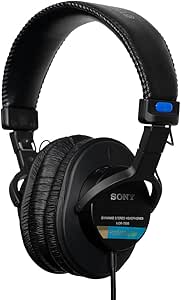 | Best for Tracking and Everyday Studio Monitoring | Driver size: 40 mm | Frequency response: 10 Hz–20 kHz | Design: Closed-ear | VIEW ON AMAZON | See Our Full Breakdown |
| beyerdynamic DT 700 PRO X Closed-Back Studio Headphones with Stellar.45 Driver for Recording and Monitoring |  | Best Closed-Back All-Rounder | Impedance: 48 ohms | Driver size: 45 mm Stellar.45 | Frequency response: 5–40,000 Hz | VIEW ON AMAZON | See Our Full Breakdown |
| beyerdynamic DT 770 Pro Studio Headphones (80 Ohm, Black) |  | Best for Long-Cable Studio Sessions | Impedance: 80 ohms | Design: Closed-back over-ear | Cable length: 3 m (9.8 ft) | VIEW ON AMAZON | See Our Full Breakdown |
| Audio-Technica ATH-M30x Professional Studio Monitor Headphones, Black |  | Best Compact Studio Pick | Driver size: 40 mm | Impedance: 38 ohms | Frequency response: 20 Hz–20,000 Hz | VIEW ON AMAZON | See Our Full Breakdown |
| beyerdynamic DT 1990 Pro MKII (30 Ohm), Open-Back Studio Headphones |  | Best Premium Open-Back Reference | Impedance: 30 ohms | Driver type: Tesla.45 | Frequency-response entry: 5 Hz (range not specified in supplied data) | VIEW ON AMAZON | See Our Full Breakdown |
| Audio-Technica ATH-R50X Open-Back Headphones |  | Best Lightweight Open-Back Pick | Design: Open-back | Driver size: 45 mm | Weight: 7.36 ounces | VIEW ON AMAZON | See Our Full Breakdown |
| Audio-Technica ATH-M50X Professional Studio Monitor Headphones, Black | 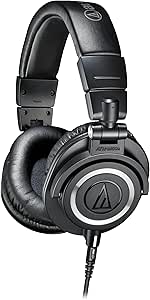 | Best Closed-Back All-Rounder | Model: ATH-M50X | Design: Over-ear professional monitor headphones | Impedance: 38 ohms | VIEW ON AMAZON | See Our Full Breakdown |
| beyerdynamic DT 990 Pro (250 Ohm), Open-Back Studio Headphones, Black |  | Best for Interface-Based Mixing | Design: Open-back, over-ear | Impedance: 250 ohms | Frequency response: 5 Hz–35,000 Hz | VIEW ON AMAZON | See Our Full Breakdown |
| beyerdynamic DT 990 Pro X (48 Ohm) Open-Back Studio Headphones, Black | 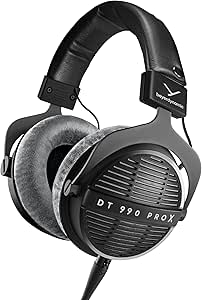 | Best Easier-to-Drive Open-Back | Design: Open-back, over-ear | Impedance: 48 ohms | Driver size: 45 mm | VIEW ON AMAZON | See Our Full Breakdown |
| beyerdynamic DT 1770 Pro MKII (30 Ohm) Closed-Back Studio Headphones |  | Best for Isolated Studio Monitoring | Design: Closed-back, over-ear | Impedance: 30 ohms | Driver size: 45 mm | VIEW ON AMAZON | See Our Full Breakdown |
| beyerdynamic DT 770 Pro (250 Ohm) Closed-Back Studio Headphones, Black |  | Best for Isolated Studio Monitoring | Design: Closed-back, over-ear | Impedance: 250 ohm | Frequency response: 5–35,000 Hz | VIEW ON AMAZON | See Our Full Breakdown |
| Audio-Technica ATH-M20x Professional Studio Monitor Headphones, Black |  | Best Entry-Level Studio Pick | Design: Closed-back, over-ear | Driver size: 40 mm | Impedance: 47 ohm | VIEW ON AMAZON | See Our Full Breakdown |
| studio reference headphones for mixing and mastering | Design | Impedance | Frequency response | Sensitivity |
|---|---|---|---|---|
| Sony MDR7506 Professional Larg | Closed-ear | — | 10 Hz–20 kHz | — |
| beyerdynamic DT 700 PRO X Clos | — | 48 ohms | 5–40,000 Hz | 100 dB |
| beyerdynamic DT 770 Pro Studio | Closed-back over-ear | 80 ohms | — | — |
| Audio-Technica ATH-M30x Profes | — | 38 ohms | 20 Hz–20,000 Hz | 100 dB |
| beyerdynamic DT 1990 Pro MKII | Open-back | 30 ohms | — | 94 dB |
| Audio-Technica ATH-R50X Open-B | Open-back | — | — | — |
| Audio-Technica ATH-M50X Profes | Over-ear professional monitor headphones | 38 ohms | 20 Hz–28,000 Hz | 99 dB |
| beyerdynamic DT 990 Pro | Open-back, over-ear | 250 ohms | 5 Hz–35,000 Hz | 96 dB |
| beyerdynamic DT 990 Pro X | Open-back, over-ear | 48 ohms | 5 Hz (lower figure supplied) | 97 dB |
| beyerdynamic DT 1770 Pro MKII | Closed-back, over-ear | 30 ohms | 5 Hz (lower figure supplied) | 95 dB |
| beyerdynamic DT 770 Pro | Closed-back, over-ear | 250 ohm | 5–35,000 Hz | 96 dB |
| Audio-Technica ATH-M20x Profes | Closed-back, over-ear | 47 ohm | 15–20,000 Hz | 96 dB |
More Details on Our Top Picks
Sony MDR7506 Professional Large Diaphragm Headphones
The Sony MDR7506 makes the most sense when closed-back isolation, portability, and straightforward monitoring matter more than replaceable cables or premium construction. Its folding design and included case suit engineers who move between recording spaces, while the 9.8-foot cord leaves room to work at a console. Compared with the beyerdynamic DT 700 PRO X, the MDR7506 is lighter and simpler, but it lacks detachable cables and the wider stated frequency range of that model. Its closed-ear fit helps limit sound spill during recording, though isolation alone does not make it a substitute for open-back headphones when judging stereo space. I’d pick it as a practical tracking pair, not as the most adaptable long-term choice for a mastering setup.
Pros:- Closed-ear design helps reduce sound leakage during recording
- Foldable build and included soft case make it easy to carry
- Long 9.8-foot cord provides working room at a studio desk
- Light 8-ounce weight is suited to extended monitoring
Cons:- Non-detachable cord is harder to replace if damaged
- Closed-back presentation is less suited to judging spacious imaging than open-back alternatives
- Wired-only design offers no cable-free listening option
Best for: Home-studio musicians and recording engineers who need a lightweight, foldable wired headphone for tracking and routine monitoring.
Not ideal for: Mixers who want a detachable cable or a dedicated open-back reference pair for evaluating stereo imaging and room-like presentation.
- Driver size:40 mm
- Frequency response:10 Hz–20 kHz
- Design:Closed-ear
- Cord length:9.8 feet
- Connector:Gold-plated stereo plug
- Included accessories:1/4-inch adapter and soft case
- Weight:8 ounces
Our verdict“Choose the MDR7506 for portable, isolated tracking and everyday monitoring; pick the DT 700 PRO X if detachable cables matter more.”
beyerdynamic DT 700 PRO X Closed-Back Studio Headphones with Stellar.45 Driver for Recording and Monitoring
The DT 700 PRO X is my strongest closed-back pick here for buyers who want one pair to cover recording and detailed monitoring. Its 48-ohm impedance and supplied 3.5 mm connection with a 1/4-inch adapter make it easier to pair with varied studio sources than the 80-ohm DT 770 Pro, while two detachable cables offer a practical repair and setup advantage over the Sony MDR7506. Passive isolation and an over-ear fit help contain playback in recording spaces; the stated 5–40,000 Hz response gives a broad published range, though a spec range alone cannot establish mix neutrality. The tradeoff is weight: at 12.3 ounces, it is heavier than the Sony and Audio-Technica ATH-M30x. I’d favor it for a flexible, modern closed-back workflow, not for buyers prioritizing the lightest fit.
Pros:- Two detachable cables simplify replacement and suit different studio setups
- Passive isolation helps limit headphone spill during recording
- 48-ohm impedance supports use with a range of wired studio sources
- Over-ear fit and adjustable headband support extended sessions
Cons:- At 12.3 ounces, it is heavier than the MDR7506 and ATH-M30x
- Closed-back design is less appropriate than open-back models for spaciousness checks
- Wired-only operation may not suit buyers who also want wireless listening
Best for: Studio musicians and engineers who need a closed-back pair for tracking and monitoring across interfaces, mixers, and portable wired sources.
Not ideal for: Listeners seeking the lightest headphones for long sessions or an open-back pair for judging spaciousness and stereo depth.
- Impedance:48 ohms
- Driver size:45 mm Stellar.45
- Frequency response:5–40,000 Hz
- Sensitivity:100 dB
- Cable lengths:1.8 m and 3 m
- Connector:1/8-inch plug with 1/4-inch adapter
- Weight:12.3 ounces
- Design and materials:Foldable over-ear; plastic, spring steel, and velour
Our verdict“Choose the DT 700 PRO X for a versatile, isolating studio pair with replaceable cables, unless low weight is your main priority.”
beyerdynamic DT 770 Pro Studio Headphones (80 Ohm, Black)
The DT 770 Pro suits engineers who want a closed-back monitoring workhorse and room to move around a fixed studio setup. Its 3 m cable is longer than the supplied leads for the DT 700 PRO X, which can be useful at a console or tracking station but less convenient when packing up. Velour pads and a 9.5-ounce weight make it a more comfortable long-session choice than the heavier DT 700 PRO X, while the closed-back construction helps limit leakage around microphones. The cost of that established, simple setup is flexibility: the cable is not listed as detachable, and its 80-ohm impedance may call for a capable headphone output. Compared with the lighter, lower-impedance ATH-M30x, this is better suited to a dedicated studio than casual portable use.
Pros:- Closed-back over-ear design helps control leakage during recording
- Velour pads and 9.5-ounce weight suit extended studio sessions
- Three-meter cable allows movement around a workstation
- Replaceable parts support maintenance over time
Cons:- 80-ohm impedance can be a poor match for weak headphone outputs
- Long cable and bulkier design are less convenient for portable use
- Non-detachable cable limits quick replacement compared with the DT 700 PRO X
Best for: Studio engineers with an interface or headphone amp who want a comfortable closed-back pair and a long lead for tracking or desk work.
Not ideal for: Mobile producers who need a compact carry setup, a detachable cable, or easy drive from sources with limited headphone output.
- Impedance:80 ohms
- Design:Closed-back over-ear
- Cable length:3 m (9.8 ft)
- Connector:3.5 mm with gold-plated 1/4-inch adapter
- Weight:9.5 ounces
- Ear pads:Velour
- Warranty:2 years
Our verdict“Pick the DT 770 Pro for comfortable, stationary closed-back monitoring when your source can drive its 80-ohm load.”
Audio-Technica ATH-M30x Professional Studio Monitor Headphones, Black
The ATH-M30x is a sensible choice for producers who want compact closed-back monitoring without the weight of the DT 700 PRO X. Its foldable construction, single-side cable exit, and included case make it easier to stow between sessions, while the circumaural fit provides isolation for tracking. The product description highlights mid-range clarity, a useful emphasis for hearing vocal and instrument detail, though the supplied data does not establish how neutral its full response is for final mastering decisions. At 38 ohms, it is less demanding on a source than the 80-ohm DT 770 Pro. Its stated frequency range ends at 20 kHz, and the description notes limited bass response, so I’d treat it as a practical tracking and editing tool rather than the only reference for low-end balance.
Pros:- Foldable design and included case make storage and transport straightforward
- Circumaural closed-back build provides isolation for tracking
- 38-ohm impedance is accessible to many wired studio sources
- Single-side cable exit keeps the lead away from both earcups
Cons:- Product data notes limited bass response, which can complicate low-end judgments
- Wired-only design does not offer wireless use
- Closed-back presentation is less suited to spaciousness checks than open-back options
Best for: Bedroom producers, students, and mobile recording musicians who need a foldable closed-back pair for tracking, editing, and general monitoring.
Not ideal for: Mixers who need a single headphone to judge deep bass balance or who prefer an open-back presentation for stereo and spatial decisions.
- Driver size:40 mm
- Impedance:38 ohms
- Frequency response:20 Hz–20,000 Hz
- Sensitivity:100 dB
- Enclosure:Circumaural, closed-back; aluminum
- Cable exit:Single side
- Included accessories:Cable, protective case, user manual, and screw-on adapter
- Warranty:2 years
Our verdict“Choose the ATH-M30x for portable tracking and mid-focused editing, but cross-check bass-heavy mixes on another reference.”
beyerdynamic DT 1990 Pro MKII (30 Ohm), Open-Back Studio Headphones
For mixing and mastering where imaging and open presentation matter more than isolation, the DT 1990 Pro MKII is the specialist choice in this group. Its open-back design separates it from the Sony MDR7506 and DT 700 PRO X, both of which are better suited to recording near microphones because they contain more sound. The 30-ohm impedance and detachable cable offer more setup flexibility than the 80-ohm DT 770 Pro, while the supplied description positions the Tesla.45 driver for detailed reference listening. Open construction also means playback leaks and outside noise remains audible, so this is not the pair I’d choose for tracking or noisy rooms. The listed frequency-response entry is only 5 Hz, not a full range, so it does not provide enough information to compare its extension on paper.
Pros:- Open-back design is suited to evaluating stereo imaging and spatial detail
- Detachable cable simplifies replacement
- 30-ohm impedance offers a less demanding nominal load than the DT 770 Pro 80-ohm model
- Velour pads and lightweight-design positioning suit long studio sessions
Cons:- Open-back construction leaks playback and provides little isolation
- Not suited to tracking near microphones or use in noisy rooms
- Provided frequency-response data is incomplete, listing only 5 Hz
Best for: Mix and mastering engineers working in a quiet room who want an open-back headphone for examining stereo placement and detail.
Not ideal for: Recording musicians monitoring near live microphones, or engineers working in noisy spaces who need isolation and minimal sound spill.
- Impedance:30 ohms
- Driver type:Tesla.45
- Frequency-response entry:5 Hz (range not specified in supplied data)
- Sensitivity:94 dB
- Design:Open-back
- Weight:13.3 ounces
- Cable:Detachable
- Connectivity:Wired, 3.5 mm jack
Our verdict“Choose the DT 1990 Pro MKII for quiet-room mixing and mastering, not for isolated tracking or noisy environments.”
Audio-Technica ATH-R50X Open-Back Headphones
The ATH-R50X suits long mixing sessions where a spacious presentation and low weight matter more than isolation. Its open-back design and described natural, detailed sound give stereo material room to breathe, while extended bass can help with low-end judgments. At 7.36 ounces, it is lighter than the beyerdynamic DT 990 Pro, though the DT 990 Pro specifies a 250-ohm impedance and may need more capable amplification. The R50X includes both 3.0 m and 1.2 m detachable cables, making it easier to adapt between desk setups. The tradeoff is inherent to open backs: sound leaks in both directions, so it is a poor choice for shared rooms, tracking near a microphone, or travel. Its lightweight construction also calls for careful handling.
Pros:- Open-back presentation and natural, detailed sound suit stereo mixing and critical listening.
- Light 7.36-ounce build supports longer sessions.
- Two detachable cable lengths offer useful flexibility at a desk.
- Extended bass adds low-frequency detail for mix checks.
Cons:- Open-back cups leak sound and provide little isolation.
- Not a practical choice for portable listening or noisy spaces.
- Lightweight construction needs careful handling.
Best for: Mixers working in a quiet room who want a light open-back headphone for extended editing and critical listening.
Not ideal for: Producers recording beside live microphones, working around other people, or needing isolation for travel.
- Design:Open-back
- Driver size:45 mm
- Weight:7.36 ounces
- Cables:Detachable 3.0 m and 1.2 m cables with twist-lock connectors
- Warranty:2 years
- Use:Professional mixing and critical listening
Our verdict“Choose the ATH-R50X for comfortable, spacious mixing in a quiet room, not for isolation or portable use.”
Audio-Technica ATH-M50X Professional Studio Monitor Headphones, Black
The ATH-M50X is the most adaptable closed-back option in this group for listeners who need to move between focused monitoring and everyday studio work. Its sound isolation makes it more suitable for noisy rooms and tracking than open-back models such as the ATH-R50X or DT 990 Pro. Swiveling earcups help with one-ear monitoring, and the foldable build and detachable cable make storage and replacement easier. The stated deep bass and clear presentation can make detail easy to hear, but a bass-forward balance may lead some mixers to check low-end decisions on speakers or another reference. Unlike the open-back picks, it sacrifices the airy sense of space that can help judge stereo depth. It is wired, and its over-ear fit may feel bulky during extended use.
Pros:- Closed-back isolation is useful for tracking and noisy workspaces.
- Swiveling earcups support one-ear monitoring.
- Detachable cable is replaceable and practical for studio use.
- Foldable design makes storage and transport simpler.
Cons:- Closed-back presentation is less spacious than the ATH-R50X or DT 990 Pro.
- Deep bass can influence low-end judgments and merits cross-checking.
- Wired, over-ear construction may feel bulky.
Best for: Home-studio producers who need one closed-back headphone for tracking, monitoring in shared spaces, and general mix checks.
Not ideal for: Mixers whose main priority is an open, spacious presentation for judging stereo depth or who want a compact, untethered setup.
- Model:ATH-M50X
- Design:Over-ear professional monitor headphones
- Impedance:38 ohms
- Frequency response:20 Hz–28,000 Hz
- Sensitivity:99 dB
- Driver type:Dynamic
- Cable:Wired, detachable
- Features:Swiveling earcups; foldable
Our verdict“Pick the ATH-M50X if you need isolation and flexible studio monitoring more than an open-back soundstage.”
beyerdynamic DT 990 Pro (250 Ohm), Open-Back Studio Headphones, Black
The DT 990 Pro is the specialist choice here for a studio setup that already has a suitable headphone output or amp. Its 250-ohm impedance makes source matching more relevant than with the 48-ohm DT 990 Pro X or the 30-ohm DT 1770 Pro MKII; a weak output may not provide the volume or headroom a mixer wants. In return, its open-back design is described as giving a wide, natural stereo image, useful for assessing placement and ambience. Velour pads and a spring-steel headband support long sessions, while the coiled cable keeps slack manageable at a fixed desk. Compared with the ATH-M50X, it offers a more spacious presentation but gives up isolation. Sound leakage and limited suitability for phones or noisy rooms are real constraints.
Pros:- Open-back design provides a wide stereo image for spatial mix decisions.
- Velour ear pads and spring-steel headband suit extended sessions.
- Replaceable parts support long-term studio maintenance.
- Coiled 3 m cable is suited to a fixed workstation.
Cons:- 250-ohm impedance can require an interface or headphone amp for adequate output.
- Open-back design leaks sound and offers no meaningful isolation.
- Coiled cable is less convenient for portable or mobile setups.
Best for: Mixers with an audio interface or headphone amp who want an open-back reference for stereo placement and long desk sessions.
Not ideal for: Laptop- or phone-only users without a capable headphone output, and anyone monitoring in a noisy room or near a live microphone.
- Design:Open-back, over-ear
- Impedance:250 ohms
- Frequency response:5 Hz–35,000 Hz
- Sensitivity:96 dB
- Driver type:Dynamic
- Cable:3 m tangle-free coiled cable
- Connector:3.5 mm and 6.35 mm jack
- Weight:8.8 ounces
- Warranty:2 years
Our verdict“Choose the DT 990 Pro when your studio can drive 250-ohm headphones and you want an open stereo perspective.”
beyerdynamic DT 990 Pro X (48 Ohm) Open-Back Studio Headphones, Black
The DT 990 Pro X keeps the open-back, spacious-monitoring approach of the DT 990 Pro but uses a 48-ohm impedance, making it a more approachable match for a wider range of studio outputs than that model’s 250-ohm version. Its 45 mm dynamic drivers and velour pads are suited to detailed listening and longer editing sessions. Compared with the ATH-R50X, it shares the open design and detachable-cable convenience, while its listed impedance gives buyers a clearer source-matching reference. The tradeoff remains the same for any open-back headphone: sound escapes, and outside noise gets in, so it cannot replace the ATH-M50X or DT 1770 Pro MKII for tracking isolation. The supplied frequency-response data lists only a 5 Hz lower figure, not a full range, which limits spec-based comparison.
Pros:- Open-back design supports a spacious presentation for stereo work.
- 48-ohm impedance is less demanding on sources than the DT 990 Pro’s 250 ohms.
- 45 mm dynamic drivers are specified for detailed monitoring.
- Detachable cable and velour pads suit regular studio use.
Cons:- Open-back cups leak sound and provide no noise isolation.
- The provided frequency-response specification is incomplete.
- Listed impedance does not guarantee ideal volume from every device.
Best for: Studio users who want an open-back headphone for mixing and editing but prefer a lower listed impedance than the 250-ohm DT 990 Pro.
Not ideal for: Engineers recording in shared rooms, monitoring near microphones, or seeking closed-back isolation.
- Design:Open-back, over-ear
- Impedance:48 ohms
- Driver size:45 mm
- Driver type:Dynamic
- Frequency response:5 Hz (lower figure supplied)
- Sensitivity:97 dB
- Cable:Detachable
- Materials:Plastic, steel, and velour
Our verdict“Choose the DT 990 Pro X for open-back mixing when you want a less demanding listed impedance than the DT 990 Pro.”
beyerdynamic DT 1770 Pro MKII (30 Ohm) Closed-Back Studio Headphones
For mixing and monitoring where room noise or microphone spill is the bigger problem than an expansive soundstage, the DT 1770 Pro MKII is the clear specialist. Its closed-back isolation sets it apart from the ATH-R50X and both DT 990 models, which leak sound by design. The 30-ohm rating is also lower than the DT 990 Pro’s 250 ohms, easing one common source-matching concern, while the described Tesla driver aims for high-resolution playback with low distortion. Interchangeable velour and leatherette pads let users choose between materials, and detachable cables help with studio upkeep. Those benefits come with weight: at 13.3 ounces, it is substantially heavier than the ATH-R50X. For extended sessions, comfort may depend more on fit and breaks, and its isolation-focused presentation is less open than the open-back alternatives.
Pros:- Closed-back construction provides isolation for tracking and noisy environments.
- 30-ohm impedance is lower than the DT 990 Pro’s 250 ohms.
- Interchangeable velour and leatherette pads allow a choice of contact material.
- Detachable cables support replacement and studio maintenance.
Cons:- At 13.3 ounces, it is the heaviest option in this five-product group.
- Closed-back design presents less openness than the DT 990 Pro or ATH-R50X.
- The supplied frequency-response specification gives only a 5 Hz lower figure.
Best for: Recording and mixing engineers in noisy rooms who need closed-back isolation and a detachable-cable professional headphone.
Not ideal for: Listeners prioritizing a lightweight fit or the airy stereo presentation of an open-back headphone for long mastering sessions.
- Design:Closed-back, over-ear
- Impedance:30 ohms
- Driver size:45 mm
- Driver type:Dynamic Tesla driver
- Frequency response:5 Hz (lower figure supplied)
- Sensitivity:95 dB
- Weight:13.3 ounces
- Cable:Detachable
- Included ear pads:Velour and leatherette
Our verdict“Choose the DT 1770 Pro MKII when isolation for tracking and noisy mixing matters more than a lightweight fit or open-back space.”
beyerdynamic DT 770 Pro (250 Ohm) Closed-Back Studio Headphones, Black
The DT 770 Pro (250 Ohm) suits mixing and mastering rooms where closed-back isolation matters, especially when nearby playback or recording could leak into the headphones. Its velour ear pads and over-ear fit support long sessions, while the 3-meter coiled cable gives working room at a desk. Compared with the DT 770 Pro (80 Ohm), this version is more demanding to drive, so it makes better sense with a capable interface or headphone amp than with a phone or basic laptop output. That requirement is the main tradeoff: its isolation and studio-oriented build come with less flexibility for mobile work. I’d choose it for controlled monitoring, but favor a lower-impedance option for a simpler everyday setup.
Pros:- Closed-back design provides useful isolation for monitoring near other sound sources.
- Velour ear pads and adjustable over-ear fit suit extended studio sessions.
- Replaceable ear pads and durable materials support continued studio use.
- Three-meter coiled cable and included 1/4-inch adapter suit desk-based setups.
Cons:- 250-ohm impedance calls for a capable interface or headphone amp.
- Less convenient for phones and other portable sources than the 80-ohm DT 770 Pro.
- Closed-back listening provides less of an open presentation than open-back models in the roundup.
Best for: Mixing and mastering engineers who work at a fixed studio desk, need closed-back isolation, and already have a headphone amp or capable audio interface.
Not ideal for: Mobile listeners and engineers using low-powered headphone outputs, since the 250-ohm impedance may limit usable volume without suitable amplification.
- Design:Closed-back, over-ear
- Impedance:250 ohm
- Frequency response:5–35,000 Hz
- Sensitivity:96 dB
- Driver type:Dynamic
- Cable length:3 meters, coiled
- Weight:9.5 ounces
- Additional features:Replaceable velour ear pads; 1/4-inch adapter included
Our verdict“Choose the DT 770 Pro (250 Ohm) for isolated, stationary studio monitoring if your setup can drive it properly.”
Audio-Technica ATH-M20x Professional Studio Monitor Headphones, Black
The ATH-M20x is a straightforward entry point for tracking and mix checks: its closed-back, over-ear design helps contain playback, and the 47-ohm impedance is less demanding than the DT 770 Pro (250 Ohm). That makes it a more practical match for common studio interfaces without adding a separate headphone amp. Its 40 mm drivers and 15–20,000 Hz stated response provide a basic monitoring range, though the supplied specs give less extended frequency coverage than the DT 770 Pro. The M20x is best treated as a workhorse for tracking and early mix decisions, not a feature-rich or open-sounding reference alternative. It has a long, fixed cable and no wireless option, so it is less flexible than headphones with detachable cables for varied setups.
Pros:- 47-ohm impedance is easier to pair with typical interface headphone outputs than the 250-ohm DT 770 Pro.
- Closed-back over-ear construction helps limit sound leakage during tracking.
- 40 mm drivers and stated studio-monitoring design suit everyday recording and mix checks.
- Long 2.99-meter cable allows movement around a desk or tracking position.
Cons:- Frequency response is specified to 20,000 Hz, less extended on paper than the DT 770 Pro’s stated range.
- Wired-only design offers no wireless flexibility.
- Weight is not specified, making fit and long-session comfort harder to judge from the supplied data.
Best for: Newer home-studio engineers and tracking musicians who want affordable-feeling, wired monitoring that can run from a typical interface.
Not ideal for: Mastering engineers seeking an open-back presentation, detachable-cable flexibility, or more detailed published frequency extension than this model specifies.
- Design:Closed-back, over-ear
- Driver size:40 mm
- Impedance:47 ohm
- Frequency response:15–20,000 Hz
- Sensitivity:96 dB
- Cable length:2.99 m (9.8 ft)
- Connector:3.5 mm headphone jack
- Driver materials:Copper-clad aluminum and neodymium
Our verdict“Pick the ATH-M20x for uncomplicated tracking and entry-level mix checks when you want closed-back monitoring without the DT 770 Pro’s amplification demand.”

How We Picked
I ranked these headphones by how well their design and stated use align with mixing and mastering decisions, not by popularity or feature count. I weighed open- versus closed-back suitability, likely source compatibility, comfort for long sessions, build and serviceability considerations, and whether each model makes sense as a primary reference or a supporting check. I also separated headphones intended for isolation and monitoring from those designed for open-back listening, since those jobs involve different compromises.
The order favors versatile reference use first, then models with a clear advantage for a particular workflow, followed by more specialized or entry-level choices. The DT 1990 Pro MKII ranks highest for its premium open-back focus; the ATH-R50X offers a simpler open-back route, and the DT 700 PRO X stands out among closed-back options. Older and lower-tier models remain relevant for specific needs, but their narrower fit or more limited role keeps them lower. Headphone frequency response alone cannot guarantee accurate mixes, so I also considered how each choice fits into a broader monitoring setup.
| studio reference headphones for mixing and mastering | Design | Driver type |
|---|---|---|
| Sony MDR7506 Professional Larg | Closed-ear | — |
| beyerdynamic DT 700 PRO X Clos | — | — |
| beyerdynamic DT 770 Pro Studio | Closed-back over-ear | — |
| Audio-Technica ATH-M30x Profes | — | — |
| beyerdynamic DT 1990 Pro MKII | Open-back | Tesla.45 |
| Audio-Technica ATH-R50X Open-B | Open-back | — |
| Audio-Technica ATH-M50X Profes | Over-ear professional monitor headphones | Dynamic |
| beyerdynamic DT 990 Pro | Open-back, over-ear | Dynamic |
| beyerdynamic DT 990 Pro X | Open-back, over-ear | Dynamic |
| beyerdynamic DT 1770 Pro MKII | Closed-back, over-ear | Dynamic Tesla driver |
| beyerdynamic DT 770 Pro | Closed-back, over-ear | Dynamic |
| Audio-Technica ATH-M20x Profes | Closed-back, over-ear | — |
Factors to Consider When Choosing Studio Reference Headphones For Mixing And Mastering
The right reference headphone depends less on a single specification than on how and where you work. I’d start with your monitoring environment and source equipment, then decide whether these headphones will make final mix calls or provide a second perspective.
Choose Open-Back or Closed-Back Around Your Room
Open-back headphones let sound pass through the earcups, which can feel less enclosed during long listening sessions, but they also leak sound in both directions. That makes them a poor fit for recording near a live microphone or working around other people who need quiet. Closed-back models reduce leakage and help keep a cue mix out of a microphone, though their presentation can feel more contained. A common mistake is choosing open-back solely because it sounds like the more serious mixing format, then discovering the room or recording workflow requires isolation. If you can own only one pair, choose for the constraint you cannot work around: microphone bleed usually points to closed-back, while a quiet editing room gives open-back more room to shine.
Match Impedance to the Output You Actually Use
Impedance is not a quality score; it affects how a headphone interacts with its source. Higher-impedance versions, such as the 250-ohm DT 770 Pro, may need a headphone output with more voltage to reach comfortable levels cleanly. Lower-impedance choices like the DT 700 PRO X are generally easier to drive across a wider range of interfaces and devices. Check the output specifications of your interface, mixer, or headphone amp rather than assuming a laptop jack will handle every model equally well. If you monitor quietly, work from portable gear, or split one output among several listeners, this system match matters more than chasing a particular impedance figure.
Treat Headphones as One Reference, Not the Whole Studio
Headphones remove room reflections from the listening chain, but they also present stereo placement and low frequencies differently from speakers. A mix that sounds balanced on headphones may still behave differently on nearfields, consumer earbuds, or a car system. Instead of trying to make one headphone solve every translation problem, use a consistent reference track and check important decisions on more than one playback system. The mistake to avoid is making large tonal moves to compensate for a headphone’s character before learning how it relates to familiar music. If speakers are not practical, cross-check on ordinary earbuds or a small speaker and keep notes on recurring translation issues.
Prioritize Fit and Session Length
Comfort affects the quality of decisions because fatigue makes extended listening and repeated comparisons harder. Clamp force, ear-pad shape, heat, headband pressure, and glasses compatibility can matter as much as the nominal weight. Fit is personal, so specification sheets cannot tell you whether a particular cup will press on your ears or seal consistently. A weak seal can also change perceived bass, making fit a sonic concern rather than a luxury. If possible, check return terms before buying, and plan for replacement pads when comparing long-term ownership between models.
Decide Whether You Need a Primary Pair or a Cross-Check
A primary mixing headphone should support repeated tonal and balance decisions across long sessions; a secondary pair can be useful precisely because it presents music differently or resembles a common monitoring setup. The entry-level ATH-M20x and ATH-M30x can make sense for basic monitoring, spare-room use, or a secondary check, but a demanding mastering workflow may call for a stronger primary reference. Conversely, paying for a premium model does little if your main need is tracking isolation or a durable spare pair. Decide which job the headphones must do before comparing tiers, and avoid spending on a specialized design whose advantage your workflow cannot use.
Budget for Maintenance and the Rest of the Signal Chain
Headphones are a long-term tool, so removable cables, replaceable pads, and access to service parts can affect ownership beyond the initial setup. A worn pad can alter comfort and fit, while a damaged cable can interrupt work even if the drivers remain fine. Check what parts are replaceable and whether the connector and cable arrangement suit your desk. Also leave room in your setup for a capable headphone output if your chosen model needs more drive; a headphone that cannot reach a clean working level is not a useful reference. For many home studios, improving monitoring consistency and maintaining a second playback check offers more value than moving to a more expensive model without addressing the rest of the chain.
Frequently Asked Questions
Can I use one pair of headphones for both tracking and mastering?
Yes, but the best compromise depends on which task happens more often. Closed-back headphones are generally more practical for tracking because they limit sound leakage into microphones, while open-back designs are often chosen for mixing and longer critical-listening sessions in a quiet room. The DT 700 PRO X is a reasonable direction if isolation and broad source compatibility matter, while the DT 1990 Pro MKII is more specialized toward open-back reference listening. If you record vocals or acoustic instruments, prioritize isolation; if recording is rare, prioritize the listening format that supports your mix work. A second pair can fill the gap later without forcing one model into every job.
Do I need a headphone amplifier for the 250-ohm DT 770 Pro?
Not automatically, but you should check the headphone output rather than relying on the device name alone. A strong interface or dedicated headphone amp may drive the 250-ohm version to a suitable level, while some laptop and small-device outputs can feel limited. Low volume is the obvious warning, but distortion or reduced headroom can also make monitoring less dependable. If your source output is uncertain, a lower-impedance alternative such as the DT 700 PRO X is the less demanding pairing in this lineup. Match the headphone to the gear you already own unless you have a clear reason to add amplification.
Are open-back headphones better for mastering than closed-back headphones?
Open-back construction can be appealing for mastering because it avoids the sealed-cup feel and supports long listening in a quiet space, but it does not make a headphone inherently more accurate. Fit, frequency balance, familiar references, and the listener’s ability to interpret the model all affect decisions. Closed-back headphones can still serve for mastering, especially when isolation is necessary or room noise interrupts work. In this roundup, the DT 1990 Pro MKII and ATH-R50X are open-back choices, while the DT 1770 Pro MKII and DT 700 PRO X address closed-back needs. Choose by workflow and listening environment, then cross-check important decisions elsewhere.
Is the ATH-M20x enough for a first home studio?
The ATH-M20x can be a practical starting point for basic monitoring, editing, and learning how headphone checks fit into a workflow. It is not the strongest choice here for someone who expects one pair to carry nuanced mix and mastering decisions over the long term. The ATH-M30x offers another entry-level step, while the ATH-M50X sits higher in Audio-Technica’s closed-back lineup and may suit broader studio use. A beginner should also set aside time to compare familiar tracks and check mixes on other playback systems; that practice often matters more than buying an advanced model immediately. Move up when the limits of the starter pair become clear in your own work.
Should I choose the DT 1990 Pro MKII or the ATH-R50X for open-back mixing?
Choose based on whether you want a premium, more specialized reference option or a lighter alternative with a less demanding role in the lineup. The DT 1990 Pro MKII is positioned as the higher-end open-back choice for detailed critical listening, while the ATH-R50X provides another route for quiet-room mixing without moving into that premium tier. Neither removes the need to learn its presentation against familiar material, and neither is suited to recording near a live microphone. Comfort and fit may settle the choice because listening sessions can be long and headphone fit varies by person. If you also need isolation, compare closed-back models instead of forcing this decision.
Conclusion
Best overall: I’d choose the beyerdynamic DT 1990 Pro MKII for a quiet-room workflow centered on open-back critical listening. Best value: the Audio-Technica ATH-R50X is the open-back alternative for buyers who want a capable reference-focused role without stepping into the premium pick. Best premium closed-back: the beyerdynamic DT 1770 Pro MKII suits studios that need isolation alongside a higher-end design. Best for beginners: the ATH-M30x is a sensible basic-monitoring starting point, while the ATH-M20x is a simpler option when needs are limited. For tracking and easier pairing with varied sources, I’d look at the DT 700 PRO X; for a familiar, compact closed-back monitor, the Sony MDR7506 remains a distinct alternative. Choose the model that fits your room, source, and main job rather than expecting one pair to replace every monitoring check.