


A turntable humming is often caused by grounding issues or interference from poorly shielded cables. First, check that your ground wire is securely attached to the receiver or amplifier’s grounding screw. Then, verify your cables are intact, shielded, and kept away from power cords and electronics. Even small adjustments can reduce the hum. If you keep experiencing issues, there’s more to explore in troubleshooting to get the best sound quality.
Key Takeaways
- Grounding issues are a common cause; ensure the ground wire is securely attached to the amplifier or receiver.
- Interference from poorly shielded cables or running parallel to power cords can cause hum; replace or reposition cables.
- Loose or poorly connected RCA plugs or cartridge wiring can introduce hum; check and secure all connections.
- Using ungrounded or faulty power sources may increase electrical noise, so try different outlets or use a power conditioner.
- Persistent hum may indicate internal wiring or grounding problems inside the turntable, requiring professional inspection.
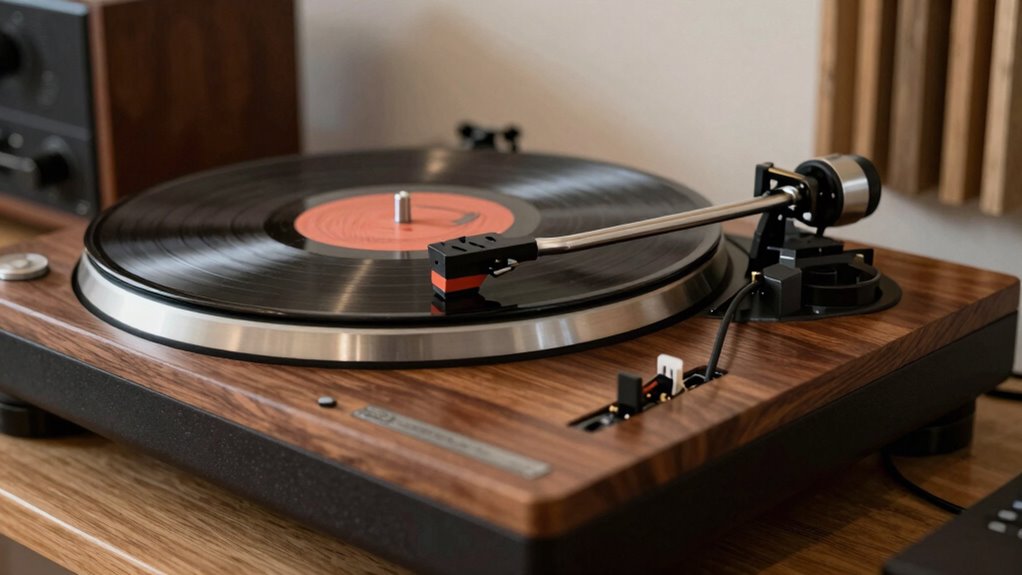
A humming turntable can be frustrating, but many common issues have straightforward fixes. One of the most frequent causes is grounding issues. If your turntable isn’t properly grounded, it can produce a persistent hum that drowns out your music. To fix this, start by unplugging your turntable and locating its ground wire—usually a thin, green or black wire attached to the back or side. Attach this wire securely to the grounding terminal on your amplifier or receiver, which often looks like a screw or a small terminal labeled “Ground.” Ensuring a solid connection here can eliminate a lot of hum caused by grounding problems. Sometimes, the hum persists even after grounding, which indicates another problem—cable interference.
Grounding issues are a common cause of turntable hum; ensure the ground wire is securely attached to eliminate noise.
Cable interference is another common culprit. Your turntable’s audio cables, especially if they’re poorly shielded or run parallel to power cords, can pick up electromagnetic interference, resulting in background humming. To combat this, first check your cables for damage or looseness. Replace any worn or frayed cables with shielded RCA cables designed to block interference. When setting up, keep your audio cables away from power cords, transformers, or other electronic devices that might emit electromagnetic fields. If your cables run close to a power strip or speaker wires, try repositioning them to see if the hum diminishes. Using a cable with better shielding can make a big difference in reducing interference-related noise.
Another quick check involves inspecting your connections and components. Sometimes, a loose RCA connection or a poorly seated plug causes hum. Make sure all your cables are firmly plugged in at both ends—at the turntable and your receiver or amplifier. Also, check your cartridge and tonearm connections; loose or dirty contacts here can introduce noise. If your turntable has a built-in grounding screw, try tightening or re-seating it. Additionally, verify your power source; plugging your turntable into a different outlet or using a power conditioner can help reduce electrical noise.
Furthermore, proper grounding techniques are essential for minimizing hum and ensuring the best audio quality. In some cases, the hum can originate from inside your turntable or the internal wiring. If you’ve tried all these steps and still hear a persistent hum, it might be worth consulting a professional technician. They can check for internal grounding issues or faulty components that are tricky to diagnose on your own. By systematically checking grounding, cable interference, and connections, you can often eliminate the hum and enjoy clean, clear sound from your turntable.
Frequently Asked Questions
Can Grounding Issues Cause Turntable Hum?
Yes, grounding problems can cause turntable hum. If your turntable isn’t properly grounded, electrical interference from your power supply can create a humming sound. Check your grounding wire and make sure it’s securely connected to your amplifier or receiver’s grounding terminal. A loose or faulty ground connection allows unwanted electrical noise to flow through your setup, resulting in that annoying hum. Fixing grounding issues usually clears up the problem quickly.
Does Cable Quality Affect Humming Noise?
Think of your cable as a delicate dance partner; if its shielding isn’t up to par, it invites unwanted noise into your performance. Poor-quality cables with inferior shielding or loose audio connectors can act like open windows, letting hum seep in. Upgrading to well-shielded cables and ensuring secure audio connectors can silence that persistent hum, transforming your listening experience into a pristine, harmonious symphony.
Is a Metal Platter More Prone to Hum?
A metal platter can be more prone to hum because it may pick up magnetic interference more easily, especially if it’s not properly grounded. The metal can act like an antenna, attracting electromagnetic signals that cause hum. To reduce this, make sure your turntable is well grounded, and consider shielding or repositioning it away from electronic devices and magnets. This minimizes magnetic interference and helps eliminate that unwanted hum.
Can Ambient Electrical Interference Create Hum?
Yes, ambient electrical interference can cause hum in your turntable. You might think it’s just static, but a ground loop or an unstable power source often introduces this noise. To fix it, make sure your turntable is properly grounded and plugged into a different power outlet. Reducing nearby electronic devices can also help minimize interference. Addressing these issues usually clears up the hum caused by environmental electrical interference.
How Does Cartridge Alignment Impact Hum?
Cartridge alignment directly impacts hum because improper setup causes electrical issues that can introduce noise. When your cartridge isn’t aligned with the tonearm’s pivot point, alignment precision suffers, leading to increased hum. You should carefully check and adjust your cartridge setup, ensuring the stylus is perfectly aligned according to the manufacturer’s specifications. Proper alignment minimizes electrical interference and reduces hum, resulting in cleaner, clearer sound from your turntable.
Conclusion
Now that you’ve got some quick fixes up your sleeve, tackling that pesky turntable hum is a breeze. Remember, just like tuning a vintage radio, patience and simple checks go a long way. Don’t forget to keep your setup clean and grounded—think of it like oiling up an old jukebox to keep the tunes flowing smoothly. With these tips, you’ll be spinning vinyl blissfully silent in no time, feeling like a true audio aficionado in your cozy living room.