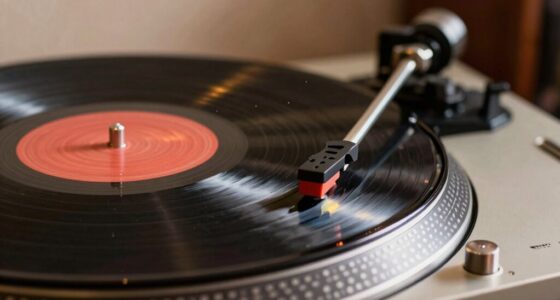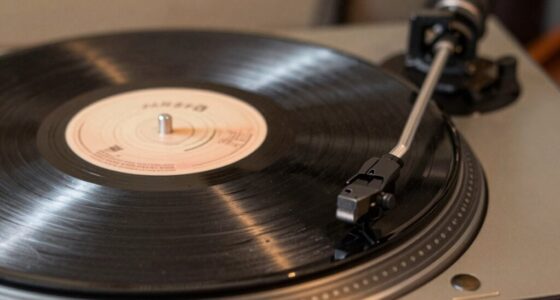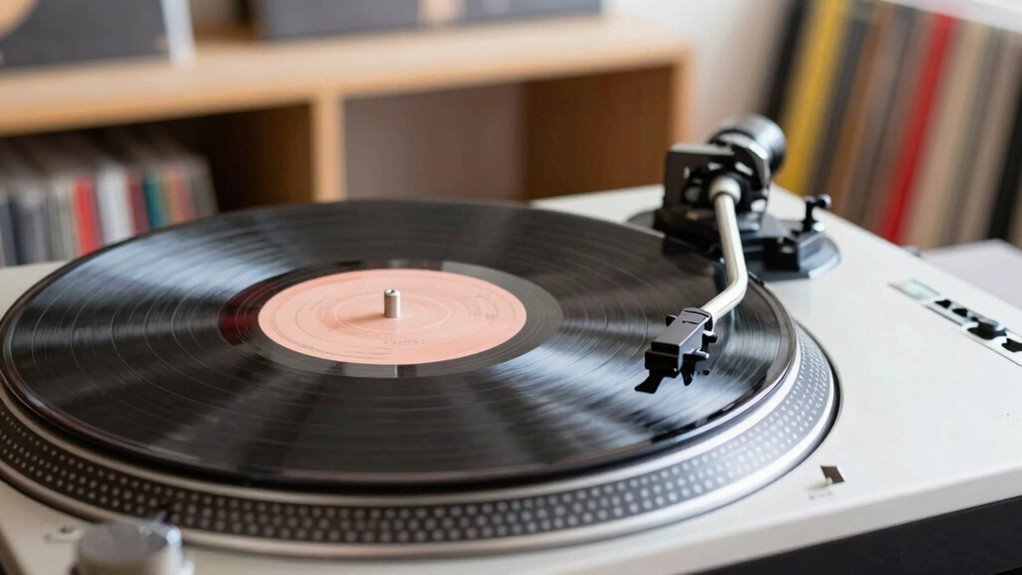

Proper setup basics are essential because they guarantee your turntable tracks grooves accurately, reducing distortion and boosting sound clarity. You might have fancy vinyl, but if your turntable isn’t level, the cartridge isn’t aligned, or the stylus force is off, you won’t experience true audio quality. Good calibration prevents damage and keeps your equipment performing well over time. Keep going to discover simple steps that make a big difference in your vinyl sound.

Get audio and creator gear delivered free with Prime
- Fast, free delivery on millions of items
- Prime Video, Amazon Music and more included
- Member-only deals all year
Key Takeaways
- Proper setup ensures accurate stylus tracking, leading to clearer sound regardless of vinyl quality.
- Correct calibration prevents damage to records and stylus, saving costs over fancy equipment.
- A well-maintained setup consistently delivers high-quality sound, making it more impactful than just expensive vinyl.
- Stable environmental conditions and proper alignment preserve both equipment and vinyl longevity.
- Focusing on setup basics maximizes sound potential, often outperforming the benefits of high-end vinyl alone.
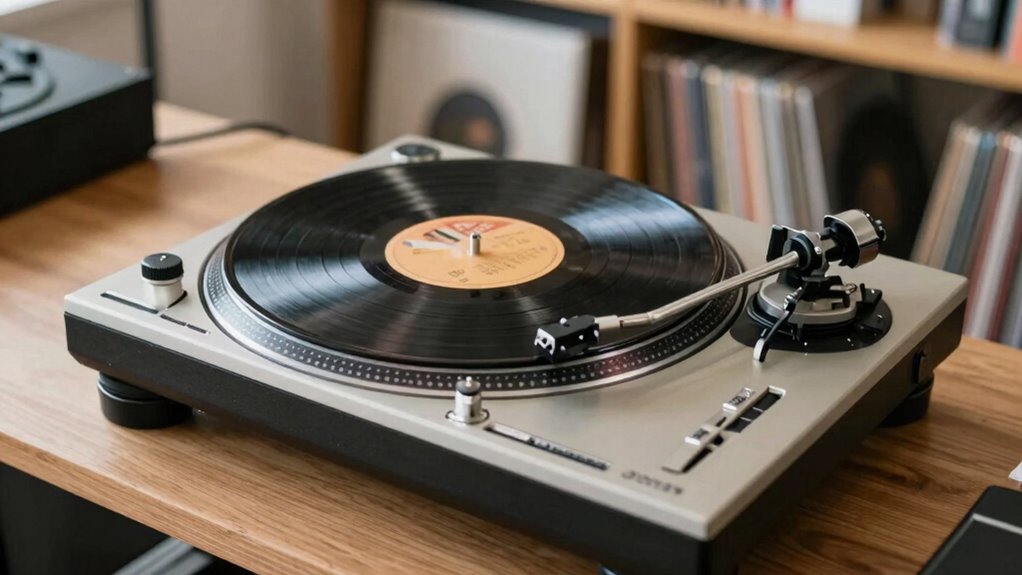
When it comes to enjoying high-quality sound from your vinyl collection, understanding the basics of setup is more important than debating the nuances of different vinyl brands. The foundation of good sound starts with how you set up your turntable, and that includes focusing on sound calibration and equipment durability. If your turntable isn’t properly calibrated, even the best vinyl records won’t sound their best. Proper sound calibration ensures that the stylus tracks the grooves accurately, which reduces distortion and enhances clarity. You’ll notice sharper vocals, richer bass, and a more immersive listening experience when your setup is dialed in correctly.
Proper turntable setup and calibration are key to unlocking your vinyl’s full sound potential.
Equally important is considering equipment durability. When you invest in gear that’s built to last, you avoid frequent replacements and maintain consistent sound quality over time. Choosing a well-constructed turntable with sturdy components means you won’t have to worry about vibrations, misalignments, or wear-and-tear affecting performance. Durable equipment also resists the effects of regular use, so your setup remains reliable for years to come. This stability allows you to focus on enjoying music rather than constantly troubleshooting equipment issues. Additionally, understanding the importance of sound calibration can help you troubleshoot and optimize your setup more effectively. Proper calibration can also prevent long-term damage to your records and stylus, ensuring longevity for your entire setup.
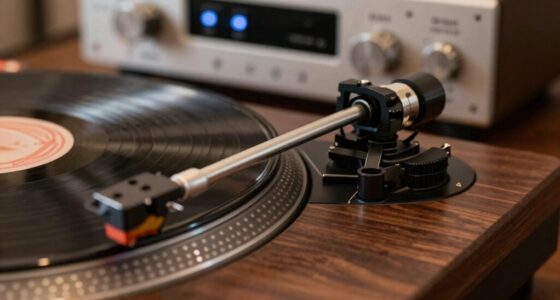
Getting your setup right isn’t complicated, but it does require attention to detail. Start by ensuring your turntable is level, as uneven surfaces can cause tracking issues and skew sound calibration. Next, pay attention to cartridge alignment; a misaligned cartridge can distort sound and damage records over time. Use a calibration protractor and a stylus force gauge to set the tracking force precisely, which improves sound accuracy and preserves your equipment’s longevity. Also, double-check the anti-skate setting, as it helps keep the stylus centered in the groove, preventing uneven wear and ensuring consistent sound quality. Additionally, selecting high-quality cables ensures minimal interference and noise in your audio signal.
Beyond calibration, consider the environment where you keep your turntable. Keep it away from sources of vibration like speakers or foot traffic, which can disturb the stylus and degrade sound quality. Invest in quality cables and connectors—cheap ones can introduce noise and interfere with sound calibration. Regular maintenance, like cleaning the stylus and keeping the turntable dust-free, also prolongs equipment durability and keeps your sound crisp. Furthermore, choosing a sturdy turntable enhances overall stability, ensuring that your setup remains consistent over time. Being mindful of your setup environment can also help preserve the sound quality, providing a better listening experience overall.
As an affiliate, we earn on qualifying purchases.
Frequently Asked Questions
How Often Should I Clean My Turntable Setup?
You should clean your turntable setup regularly, ideally every few months, depending on usage. Keep your records clean through record cleaning to prevent dust from settling on your turntable components. Also, check your turntable placement to verify it’s stable and free from vibrations. Regular maintenance helps maintain sound quality and prolongs the life of your gear. If you notice dust or dirt buildup, clean your setup sooner.
What Is the Ideal Cartridge Weight for Beginners?
You need about 1.8 to 2.2 grams of stylus pressure for a beginner cartridge—anything more, and you risk destroying your records faster than a tornado hits a trailer park! Proper cartridge alignment and accurate stylus pressure are essential. Start at the lower end of that range, then tweak as needed. This guarantees your turntable plays smoothly, protects your vinyl, and makes your listening experience unforgettable.
How Does Room Temperature Affect Vinyl Playback?
Room temperature directly impacts your vinyl playback because temperature stability is key. Fluctuations cause vinyl expansion and contraction, which can lead to warped records and tracking issues. Keep your listening space consistently warm or cool to avoid these problems. Preserving a steady environment ensures your records stay in good shape and sound their best, making your setup basics more effective and preventing unnecessary wear or distortion during playback.
Can Incorrect Setup Damage My Vinyl Records?
Incorrect setup is like a crooked mirror—distorting your view and risking damage. If you neglect proper record storage and forget to check cartridge alignment, your records can suffer scratches or warping. Poor alignment causes uneven wear, and improper storage exposes vinyl to humidity or dust, accelerating deterioration. Ensuring your turntable setup is precise protects your records, preserves sound quality, and keeps your collection in pristine condition for years to come.
What Tools Are Essential for Proper Turntable Setup?
You need essential tools like a stylus force gauge and an alignment protractor for proper turntable setup. These tools help you achieve advanced calibration, ensuring maximum sound quality and record safety. Stylish accessories, like sleek mats or custom tonearm weights, can enhance your setup’s look, but don’t overlook the basics. Proper calibration with these tools guarantees your turntable plays records correctly, preventing damage and delivering the best listening experience.
As an affiliate, we earn on qualifying purchases.
Conclusion
Remember, a solid foundation beats fancy tricks every time. If you focus on mastering the basics of your setup, you’ll enjoy better sound quality and fewer frustrations. Don’t get caught up in the latest vinyl opinions or gadgets—what truly matters is how well your system is configured. As the saying goes, “A chain is only as strong as its weakest link,” so take the time to get your setup right first. Your listening experience will thank you.
As an affiliate, we earn on qualifying purchases.
As an affiliate, we earn on qualifying purchases.
Halloween Picks
halloween
As an affiliate, we earn on qualifying purchases.