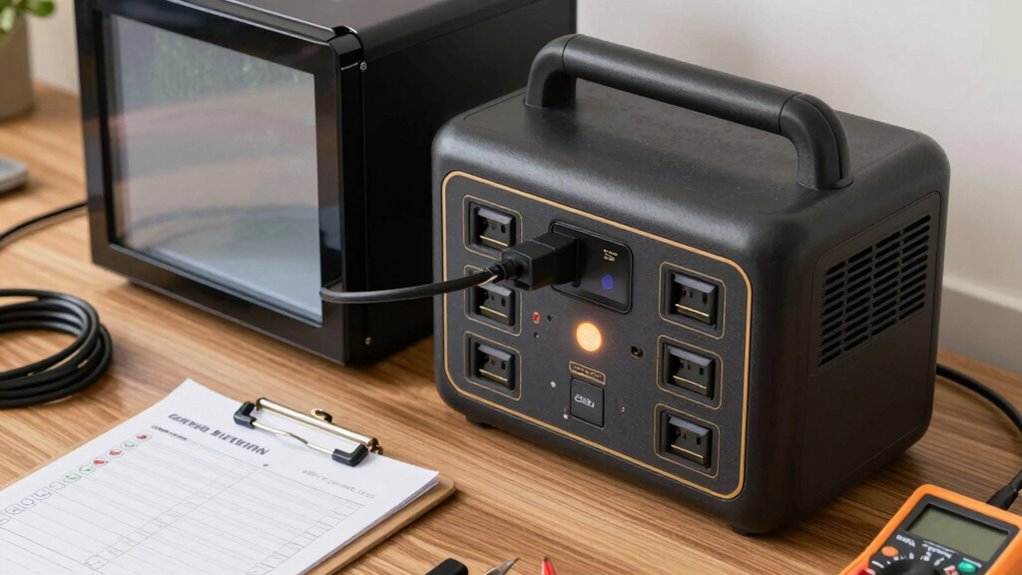

To set up your portable power station for a mini fridge, make certain the capacity is sufficient, typically around 500Wh or more, to avoid interruptions. Verify the inverter’s surge capacity can handle the fridge’s startup power, and double-check that all connections are secure and compatible. Place the station in a cool, dry spot, monitor operation closely, and avoid overloading outlets. For detailed tips on avoiding common mistakes, keep exploring the key setup points.
Key Takeaways
- Verify the power station’s watt-hour rating and inverter surge capacity to handle the fridge’s startup and running wattage safely.
- Ensure all connections are secure, output ports match the fridge’s plug, and avoid overloading the power station’s rated capacity.
- Choose a well-ventilated, stable setup location to prevent overheating and ensure safety during operation.
- Monitor the fridge’s operation closely for signs of stress or overheating, and adjust if any irregularities occur.
- Add a safety margin to battery capacity to account for efficiency losses and surges, preventing unexpected power shortages.
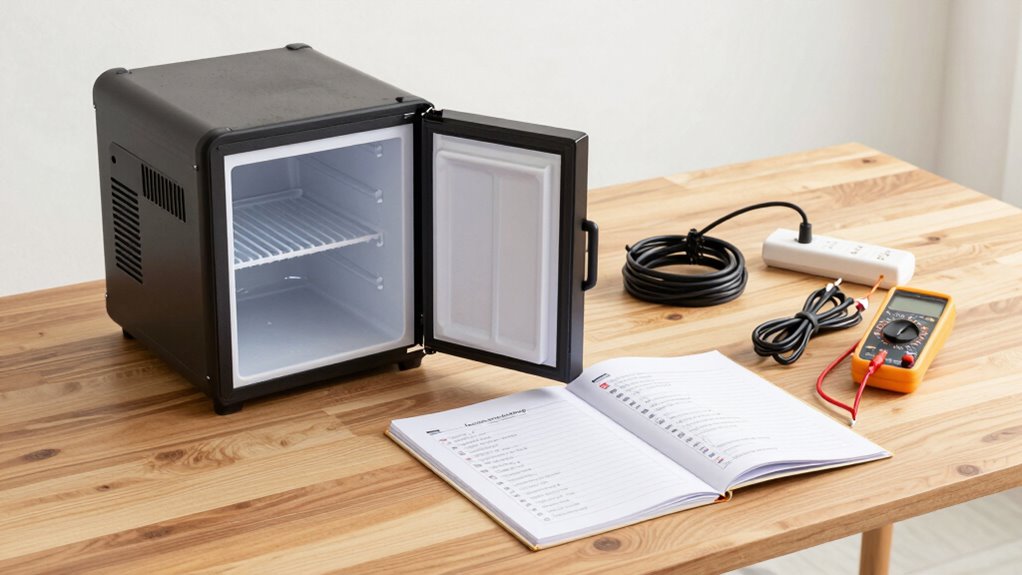
Setting up your portable power station efficiently begins with a clear checklist to guarantee you don’t overlook any essential steps. One of the first considerations is evaluating the battery capacity of your power station. You need enough stored energy to keep your mini fridge running without interruptions. Check the watt-hours (Wh) rating to determine how long your setup can operate, especially if you plan to use it for extended periods. If your mini fridge consumes about 50 watts, and your power station has a 500 Wh capacity, you can expect roughly 10 hours of operation, assuming no energy losses. Always add a safety margin to account for efficiency losses and unexpected power surges. Additionally, understanding the power requirements of your devices helps prevent overloads and ensures safe operation.
Evaluate your power station’s watt-hour capacity to ensure it can run your mini fridge reliably.
Another critical point is ensuring inverter compatibility. Your power station’s inverter must be capable of handling the start-up surge of your mini fridge. Many refrigerators require a higher initial current to start the compressor, often two to three times their running wattage. Double-check your mini fridge’s surge wattage and compare it with the inverter’s capacity. If your inverter isn’t compatible with the surge, your fridge might not start at all, or worse, you could damage your power station. It’s best to select an inverter with a continuous wattage rating comfortably above your fridge’s running wattage and a surge capacity that exceeds the startup power.
Once you’ve verified your battery capacity and inverter compatibility, you should prepare your setup location. Choose a cool, dry, and well-ventilated area to prevent overheating and ensure safety. Make sure your power station is placed on a stable surface and that all cables are in good condition, with no frays or damage. Before plugging in your mini fridge, confirm that all connections are secure and that your power station’s output ports match your appliance’s plug type. Many power stations come with multiple outlets, but not all are suitable for high-power devices like refrigerators.
Finally, before powering on, review your device’s specifications one more time. Avoid overloading the system by ensuring the total wattage of your connected devices doesn’t surpass the power station’s rated output. Once everything checks out, turn on the power station, then your mini fridge, and monitor its operation closely during the first few minutes. Watch for any signs of stress, such as unusual noises or overheating. By following these steps and paying close attention to battery capacity and inverter compatibility, you’ll set up your portable power station safely and efficiently, keeping your mini fridge running smoothly wherever you need it.
500Wh portable power station for mini fridge
As an affiliate, we earn on qualifying purchases.
As an affiliate, we earn on qualifying purchases.
Frequently Asked Questions
Can I Connect Multiple Devices to a Single Power Station Simultaneously?
Yes, you can connect multiple devices to a single power station simultaneously, but you need to take into account device compatibility and power distribution. Check the power station’s total wattage capacity and ensure your devices’ combined power draw doesn’t exceed it. Use appropriate outlets and avoid overloading, as this can cause shutdowns or damage. Always monitor power consumption closely to keep everything running smoothly and safely.
What Is the Maximum Wattage My Portable Power Station Can Handle?
Your portable power station’s maximum wattage depends on its power capacity, which is usually listed in watt-hours (Wh) or peak wattage. Check the device compatibility to guarantee your mini fridge’s wattage doesn’t exceed this limit. Overloading can damage the station or cause safety hazards. Always stay within the recommended wattage to keep your setup safe and efficient. If unsure, consult the user manual or manufacturer’s specifications.
How Long Can a Portable Power Station Run a Mini Fridge?
You can run a mini fridge on a portable power station for about 8 to 12 hours, depending on its battery capacity and power consumption. Check your mini fridge’s wattage and compare it to your power station’s output. Keep in mind, higher power consumption means shorter runtime. To maximize usage, choose a mini fridge with lower wattage and make certain your power station’s capacity matches your needs.
Are There Specific Brands of Mini Fridges Compatible With Portable Power Stations?
Yes, certain brands and models of mini fridges are more compatible with portable power stations. You should check the brand compatibility and model specifications before buying. Look for mini fridges with low starting wattage and energy-efficient features. Brands like Dometic, Whynter, and Edgestar often have models designed for portability and low power consumption. Always verify the fridge’s power needs against your power station’s capacity to avoid issues.
Do Portable Power Stations Require Special Maintenance or Storage?
Like tending a garden, your portable power station needs proper care. You don’t need special maintenance, but monitor the battery lifespan and avoid extreme temperatures. When storing, keep it in cool, dry conditions, away from direct sunlight, to preserve battery health. Regularly check connections and keep the unit clean. Proper storage guarantees your power station remains reliable, ready to energize your mini fridge whenever you need it.
inverter with surge capacity for refrigerator
As an affiliate, we earn on qualifying purchases.
As an affiliate, we earn on qualifying purchases.
Conclusion
By following this checklist, you’ll avoid common pitfalls and keep your mini fridge running smoothly with your portable power station. Imagine you’re camping and forget to check the power capacity—your fridge shuts off, spoiling your supplies. Don’t let that happen to you. Double-check your setup, monitor power usage, and stay prepared. With these tips, you’ll enjoy fresh snacks and drinks anytime, anywhere—no surprises, just reliable power.

DARAN Portable Power Station 89.6Wh LiFePO4 Battery 100W(200W Peak) Solar Power Bank, Portable Charger Small Generator with AC Outlets & PD Fast Charging for Home/Laptop/Camping(Solar Panel Optional)
- Compact and Lightweight: Fits in pocket, weighs 2.54 lbs
- Ergonomic Handle: Easy to carry on the go
- Multiple Output Ports: 7 ports including AC, USB-C, USB-A, DC
As an affiliate, we earn on qualifying purchases.
As an affiliate, we earn on qualifying purchases.
high capacity portable battery for camping
As an affiliate, we earn on qualifying purchases.
As an affiliate, we earn on qualifying purchases.