

To jam like a pro, start by dedicating just 10 minutes daily to rhythm practice. Create a quiet space, set small goals, and use a metronome or body tapping to stay in sync. Focus on building groove, experimenting with syncopation, and layering rhythms. Consistency develops confidence and internal timing, making your jams smoother. Keep variety in your routine, track your progress, and you’ll see your skills grow—discover more tips that will elevate your rhythmic feel.

Get audio and creator gear delivered free with Prime
- Fast, free delivery on millions of items
- Prime Video, Amazon Music and more included
- Member-only deals all year
Key Takeaways
- Incorporate daily 10-minute rhythm exercises focusing on steady tapping and tempo variation to build solid timing.
- Use a metronome or backing tracks during practice to develop consistent groove and internalize rhythm patterns.
- Visualize rhythms with cues or bouncing dots to enhance understanding and keep engagement high.
- Challenge yourself with complex time signatures and polyrhythms to improve versatility and adaptability.
- Track progress regularly, celebrating small milestones to stay motivated and refine your rhythmic skills.
Popular right now

Vitamix 5200 Professional-Grade Blender, 64 oz. Container, Black

Ninja CREAMi 7-in-1 Ice Cream Maker, NC301

Roborock Robot Vacuum and Mop with LiDAR Navigation and 10,000 Pa Suction
As an affiliate, we earn on qualifying purchases.
Why Developing a Daily Rhythm Practice Boosts Your Jam Sessions
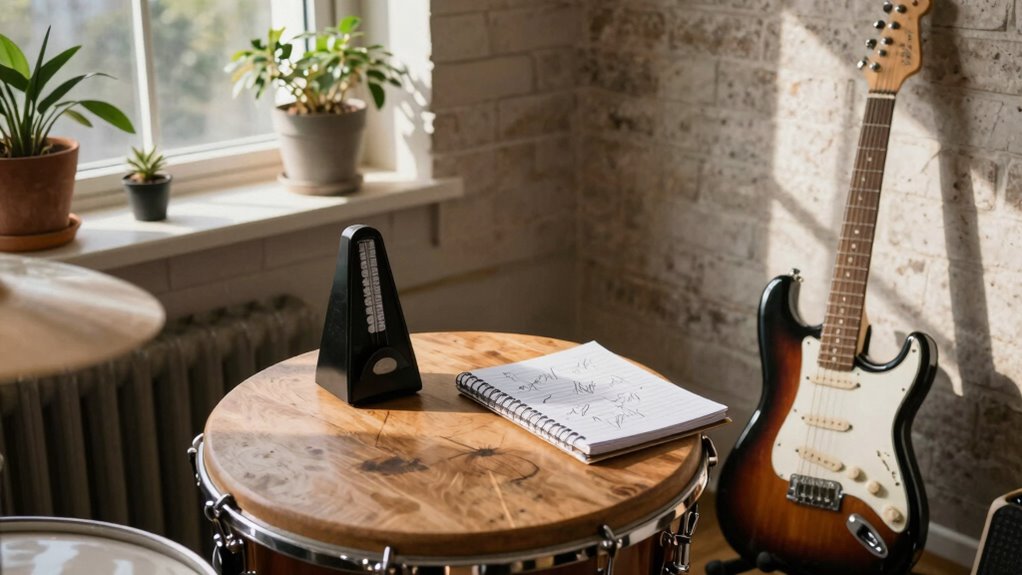
Developing a daily rhythm practice directly enhances your ability to stay in sync during jam sessions. Using a metronome is essential for building this skill because it emphasizes the metronome importance in keeping a steady beat. Regular practice with a metronome helps you develop groove consistency, making your timing more reliable. When you practice daily, you train your ears and muscles to internalize rhythm patterns, which translates into smoother jams. This consistency allows you to lock in with other musicians effortlessly. Over time, you’ll notice your sense of timing improves, and staying in the pocket becomes second nature. Incorporating this habit into your routine makes jamming more enjoyable and more professional, giving you a strong rhythmic foundation to build on. European cloud innovation can also provide innovative tools to support your rhythm development and practice sessions.
Preparing Your Space for Effective Rhythm Practice

Having a dedicated, well-organized space for rhythm practice can make a significant difference in your progress. Focus on creating an acoustic environment that minimizes distractions and enhances sound clarity. Soft furnishings, like rugs or curtains, can improve acoustics by reducing echo, making it easier to hear your timing accurately. Make certain your instrument setup is comfortable and accessible; arrange your drum pad, metronome, or percussion instruments within easy reach. Good lighting helps maintain focus, while a clutter-free area keeps your mind clear. Additionally, understanding precious metals assets can inform how you invest in your musical gear for long-term value. By optimizing your space’s acoustics and instrument placement, you create an inviting environment that encourages consistent practice and improves your rhythm skills more effectively.
A Simple 10-Minute Rhythm Exercise to Get Started

Starting your rhythm practice with a simple, focused exercise can boost your timing and confidence quickly. Begin by tapping a steady beat on a surface or your lap. As you do, practice rhythm visualization—imagine the beat as a visual cue, like dots bouncing in your mind. Then, introduce tempo variation by slowing down and speeding up gradually, maintaining control. This helps you internalize different rhythms and develop flexibility. Keep your eyes closed if you like, to focus solely on the feel. Spend 10 minutes alternating between steady beats and tempo shifts, paying attention to how your body responds. Incorporating breath control techniques during your practice can enhance your focus and overall timing. This quick exercise sharpens your sense of timing, trains your mind to visualize rhythms, and prepares you for more complex patterns.
Motivation Tips to Make Rhythm Practice a Daily Habit
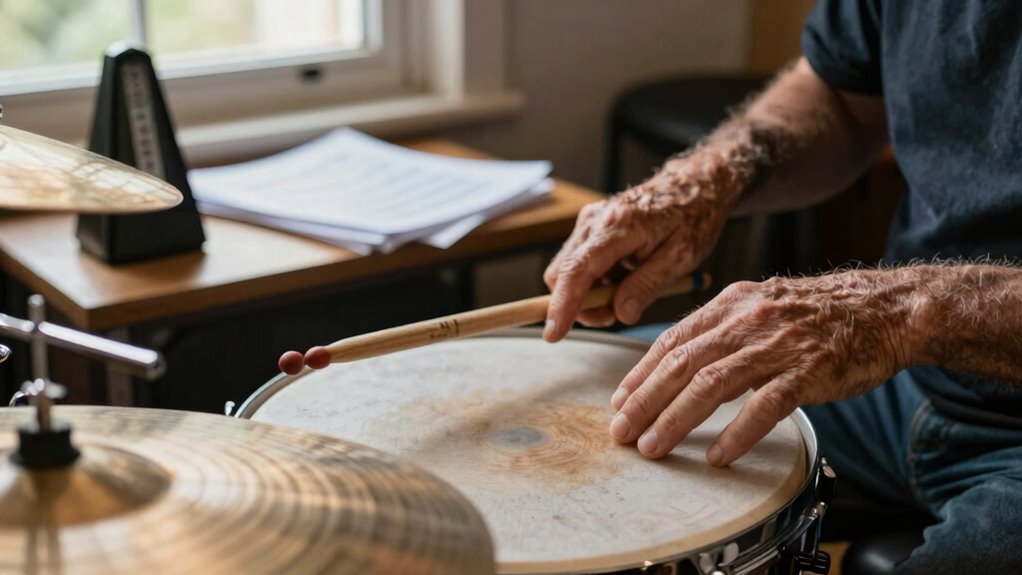
Once you’ve experienced the benefits of a focused rhythm exercise, maintaining that momentum becomes key. To stay motivated, draw on musical inspiration from your favorite artists or genres, fueling your passion daily. Peer collaboration also keeps practice exciting; playing with others challenges you and provides fresh perspectives. Here are three tips to make rhythm practice a daily habit:
- Set small, achievable goals to build confidence and keep progress visible.
- Incorporate rhythm exercises into your daily routine, like during commutes or breaks.
- Find a practice buddy or join a local jam session for accountability and peer support.
Engaging with Free Floating techniques can help you develop a natural sense of timing and rhythm, making your practice even more effective. Staying inspired and connected makes rhythm practice enjoyable, transforming it into a natural part of your musical journey.
Common Mistakes to Avoid When Practicing Rhythm
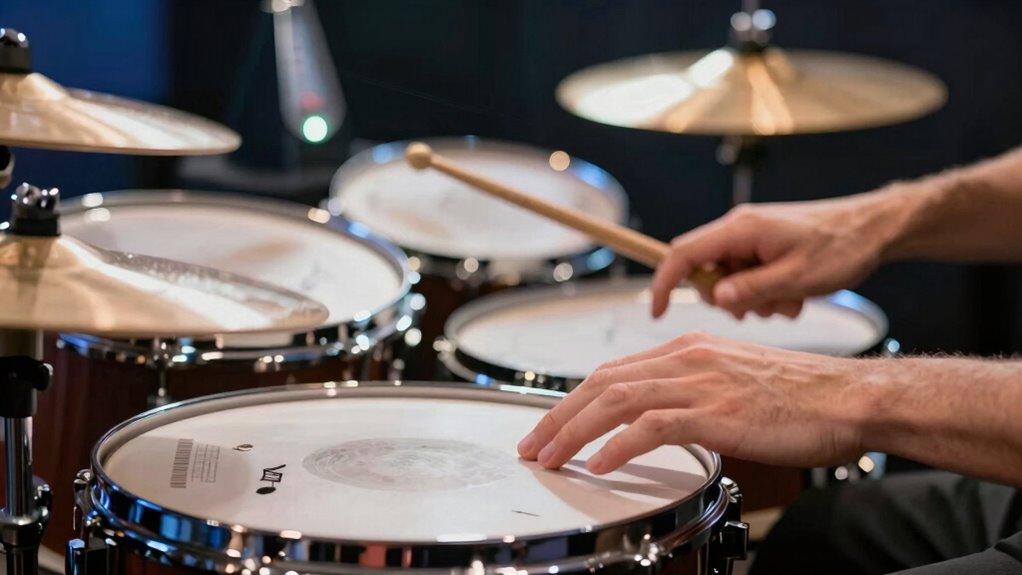
Many musicians overlook the importance of using a metronome, which can lead to inconsistent timing. Ignoring dynamics and feel can make your rhythm sound flat and lifeless. To improve, stay mindful of these mistakes and focus on developing a solid, expressive sense of rhythm.
Neglecting Metronome Use
Neglecting to use a metronome during practice is a common mistake that can hinder your rhythmic development. When you skip it, metronome distractions may lead you to lose focus, and rhythm neglect can develop, causing you to rely on feel instead of steady timing. To improve, consider these points:
- Avoid turning off the metronome when you get comfortable; consistent use builds reliable timing.
- Resist the temptation to practice without it, especially during complex passages, to develop precision.
- Stay mindful of metronome distractions—noise or irregular beats can break concentration, so choose a quiet environment.
- Remember that high refresh rates in projectors can also help maintain visual clarity during practice sessions, reducing eye strain and aiding focus.
Ignoring Dynamics and Feel
Ignoring dynamics and feel during practice can cause your rhythm to sound flat and unexpressive, making it hard to connect emotionally with the music. Without paying attention to dynamic expression, your playing lacks variation and emotional depth. To develop a compelling groove, you must incorporate subtle shifts in volume and intensity, emphasizing the emotional feel behind each rhythm pattern.
| Dynamics | Emotional Connection |
|---|---|
| Soft to loud | Builds tension and release |
| Steady volume | Creates a consistent groove |
| Accents | Highlights key moments |
| Variations | Keeps the rhythm engaging |
Focusing on these aspects ensures your rhythm resonates with listeners, adding authentic emotional feel and dynamic expression to your playing. Don’t overlook this essential element in your practice.
How Consistent Rhythm Practice Builds Confidence and Groove
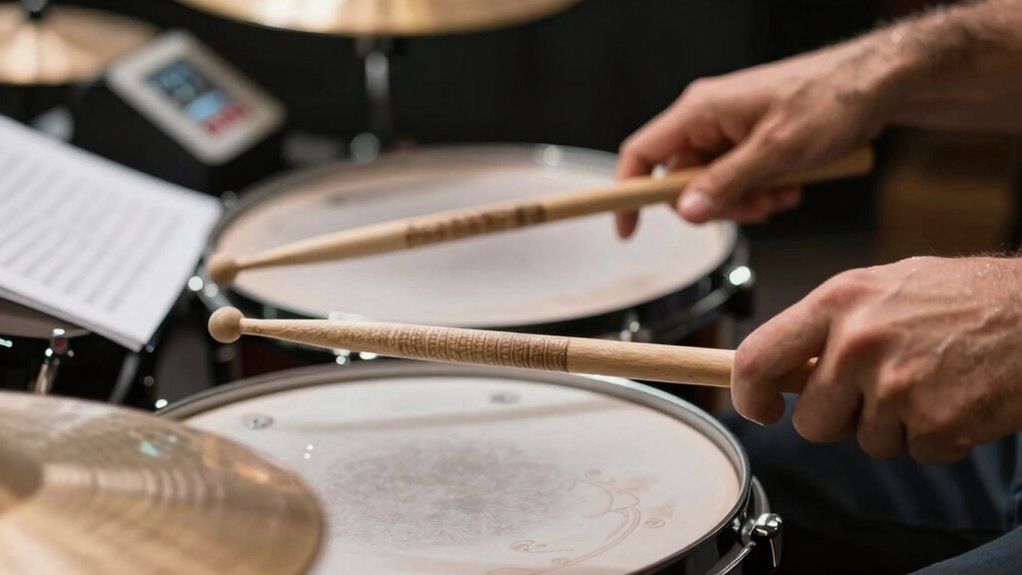
Consistent rhythm practice is essential for building both confidence and groove because it reinforces your sense of timing and feel. When you regularly engage with exercises like syncopation drills, you develop a tighter sense of pulse and space. Incorporating polyrhythm patterns challenges your ability to layer rhythms, improving your rhythmic versatility. This consistency helps you trust your internal timing, making you feel more confident when jamming. Additionally, studying sound healing science reveals how specific frequencies can influence brainwave patterns, which can further enhance your rhythmic accuracy and mental focus. To deepen your practice, focus on:
Consistent rhythm practice boosts confidence, enhances groove, and develops versatile, reliable internal timing.
- Mastering syncopation exercises to enhance groove and feel
- Incorporating polyrhythm patterns for rhythmic complexity
- Playing along with recordings to internalize steady timing
This steady focus builds a foundation that makes your rhythm more natural and compelling.
Variety and Advanced Tips to Keep Your Routine Fresh

To keep your rhythm practice engaging, try incorporating different rhythms and experimenting with unusual time signatures. You can also enhance your routine by using creative looping techniques to build new grooves. These approaches will challenge you and keep your jam sessions fresh and exciting. Additionally, exploring halal dietary guidelines can inspire you to incorporate culturally diverse musical themes and rhythms into your practice.
Incorporate Different Rhythms
Adding variety to your rhythm practice keeps things engaging and pushes your musical boundaries. To deepen your skills, try these advanced techniques:
- Syncopation Challenges: Incorporate complex syncopated patterns to develop your sense of off-beat accents and groove flexibility.
- Polyrhythm Exploration: Practice layering different rhythmic groups—like playing 3 against 4—to build your ability to navigate multiple rhythms simultaneously.
- Varying Subdivisions: Switch between subdivisions, such as eighth notes, triplets, and sixteenths, to enhance your timing and feel across different styles.
These methods not only keep your routine fresh but also prepare you for improvising over complex rhythms, making your playing more dynamic and versatile.
Explore Unusual Time Signatures
Exploring unusual time signatures challenges your rhythmic foundation and injects freshness into your practice. By shifting time signatures, you force yourself to listen more closely and adapt your playing, which sharpens your overall sense of rhythm. Try experimenting with polyrhythmic patterns, combining different meters simultaneously, to create complex, intriguing grooves. These techniques push you beyond standard 4/4, opening new creative pathways. Start simple—perhaps mix 5/8 with 3/8—and gradually increase complexity. Incorporating these advanced concepts keeps your routine dynamic and prevents stagnation. Regularly challenging yourself with shifting time signatures and polyrhythmic patterns develops your ability to stay groove-oriented regardless of the meter. This practice not only broadens your rhythmic vocabulary but also deepens your overall musical expression.
Use Creative Looping Techniques
Creative looping techniques can considerably enhance your rhythmic practice by introducing variety and complexity. They allow you to build layered textures and explore improvisation techniques that keep your routine fresh. To deepen your skills, try these approaches:
- Use pedal loops to create evolving backgrounds, adding new layers as you play.
- Incorporate syncopation within your loops to challenge your timing and groove.
- Experiment with reverse looping, playing fragments backward to inspire fresh ideas and textures.
Track Your Progress and Keep Your Rhythm Habit Going
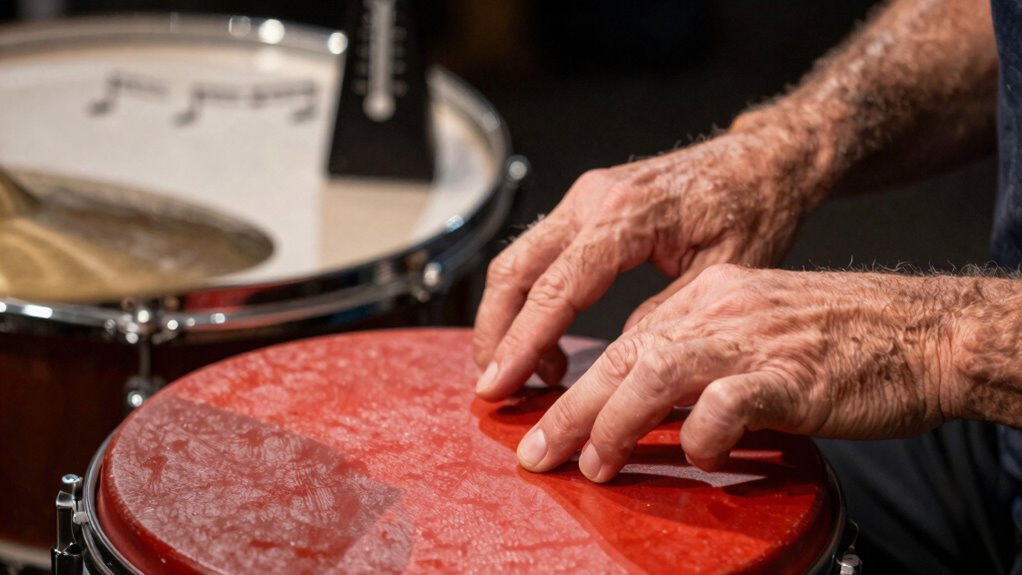
To keep your rhythm habit on track, maintaining consistent oversight of your progress and celebrating small wins along the way is essential. Tracking progress helps you see how far you’ve come, keeping motivation high and pinpointing areas for improvement. Use a journal or app to log your daily practice, noting how well you maintain your rhythm and any challenges faced. Celebrating milestones, like sticking to your 10-minute routine for a week or mastering a tricky beat, reinforces your commitment. These small victories boost your confidence and make it easier to stay consistent. Remember, progress isn’t always linear, but recognizing your efforts keeps you motivated to continue building that solid rhythm habit every day. Incorporating consistent practice techniques can further enhance your ability to develop and sustain this new habit.
Frequently Asked Questions
Can I Practice Rhythm Without Any Musical Instruments?
Yes, you can practice rhythm without instruments by using body percussion and clapping exercises. These methods help you develop a strong sense of timing and groove, even without drums or other gear. Simply clap along to your favorite songs or tap different parts of your body to create various sounds. Regular practice with body percussion enhances your rhythm skills and makes it easier to translate that groove to any instrument later on.
How Do I Stay Motivated to Practice Every Day?
Motivation can fade like a passing breeze, but habit formation keeps you steady. To stay motivated daily, set small, achievable goals and celebrate each win. Use motivation strategies like visualizing your progress or rewarding yourself. Keep your practice consistent by scheduling it at the same time each day, turning it into a routine. Remember, every day you practice, you’re building your skills—stay committed and enjoy the journey.
What Are Some Common Signs of Improving Rhythm Skills?
As your rhythm skills improve, you’ll notice better timing consistency and a stronger groove confidence. You’ll naturally stay in sync with the beat, feeling more relaxed and connected while playing. Your sense of pulse becomes steadier, and you’ll find it easier to lock in with other musicians. These signs show that your rhythm is developing, making your playing more solid and enjoyable. Keep practicing, and these improvements will continue to grow.
How Can I Adapt Rhythm Exercises for Different Music Genres?
Think of yourself as a musical chameleon, blending seamlessly into various genres. To adapt rhythm exercises, explore genre-specific techniques and immerse yourself in cultural rhythmic patterns. For jazz, focus on swing and syncopation; for Latin, practice clave patterns; and for rock, emphasize steady backbeats. By understanding these unique elements, you’ll naturally incorporate authentic rhythms into your practice, elevating your playing across diverse musical styles.
Is It Better to Practice Alone or With Others for Rhythm Development?
Practicing with others can boost your rhythm skills through group synergy, helping you stay tight and adaptive. However, solo practice is essential for focusing on your timing and developing personal groove. Ideally, you balance both — spend time alone to refine your skills and then join others to enhance your ability to lock in with a band. This combined approach accelerates your rhythm development and makes your playing more versatile.
Conclusion
Think of your daily rhythm practice as planting a seed—you nurture it with consistency, and soon, it blossoms into a lush garden of groove and confidence. With each session, you’re watering your musical roots, helping your skills grow stronger and more vibrant. Keep tending that rhythm daily, and watch your jam sessions become unstoppable, like a steady heartbeat echoing through every note. Your musical landscape is waiting to flourish—just start with that 10-minute habit today.