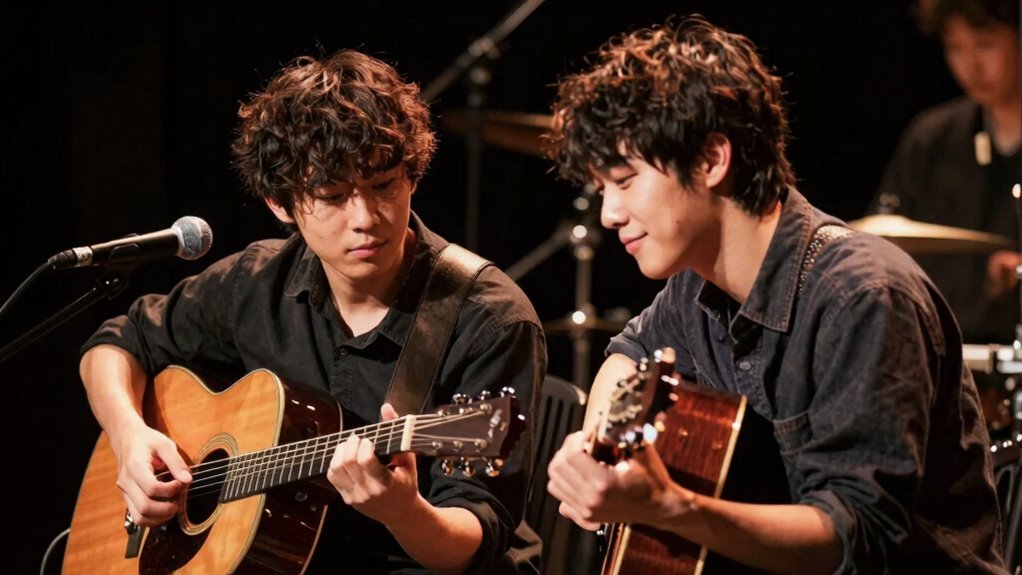

To listen more like a bandmate, focus on the group’s collective groove rather than your solo part. Pay close attention to eye contact, non-verbal cues, and dynamics to anticipate shifts in rhythm and harmony. Respond intuitively to your fellow musicians’ improvisations and cues. Develop your awareness of the pulse, and adjust your playing to support the group’s cohesion. Keep practicing these strategies, and you’ll strengthen your ability to connect deeply with your bandmates.

Get audio and creator gear delivered free with Prime
- Fast, free delivery on millions of items
- Prime Video, Amazon Music and more included
- Member-only deals all year
Key Takeaways
- Focus on non-verbal cues and eye contact to anticipate changes and stay in sync with your bandmates.
- Prioritize listening to the collective groove and rhythm rather than just your individual part.
- Develop active listening habits to analyze how your playing complements harmonic and rhythmic contexts.
- Respond intuitively to improvisations and cues, adjusting your volume and expression accordingly.
- Cultivate a deep awareness of the group’s pulse and dynamics to support cohesive musical conversations.
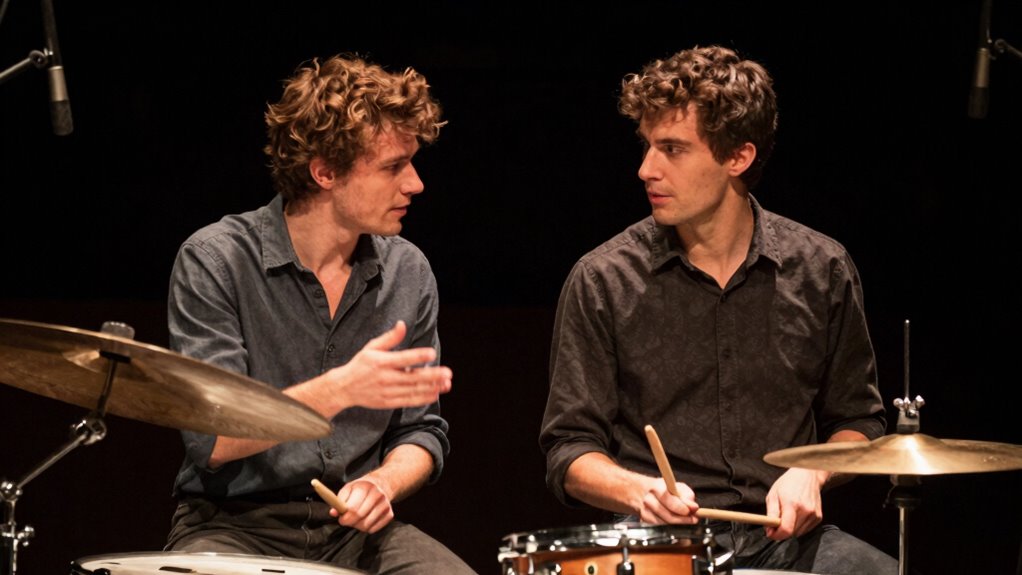
A critical element of this approach is rhythm collaboration. You stay attuned to the rhythmic feel your bandmates establish, adjusting your timing to sync perfectly with theirs. Instead of rigidly sticking to your part, you develop a flexible sense of timing that allows you to flow with the group. When someone improvises or changes their phrasing slightly, you adapt seamlessly, maintaining the groove. This responsiveness keeps the rhythm tight and guarantees the band moves as a cohesive unit rather than a collection of soloists. It’s about feeling the pulse of the music together, rather than just following a metronome or a written chart. Cultivating this kind of rhythm collaboration enhances your ability to listen deeply and respond intuitively to your fellow musicians. To improve this kind of listening, focus on eye contact and non-verbal communication during rehearsals and performances. These cues can reveal when someone is about to shift the groove or introduce a new idea. Pay attention to dynamics—when to play softly or boldly—so your volume and expression support the overall musical conversation. Practice active listening by occasionally pausing to analyze what’s happening around you. Ask yourself if your playing complements the harmonic progressions, if your timing aligns with the rhythm collaboration, and if your contribution enhances the collective sound. Developing musical sensitivity can also help you anticipate and respond to your bandmates’ improvisations more naturally. Engaging in listening exercises can further sharpen your awareness and responsiveness within the group. Additionally, understanding the fundamentals of rhythm can serve as a strong foundation for better listening and interaction during performances.
As an affiliate, we earn on qualifying purchases.
Frequently Asked Questions
How Can I Improve My Active Listening Skills in a Band Setting?
To improve your active listening skills in a band setting, focus on cultivating rhythmic awareness and providing harmonious feedback. Pay close attention to each member’s cues, timing, and dynamics, ensuring you’re fully present. Avoid distractions, and genuinely absorb what others play. By tuning into the group’s rhythm and offering constructive, harmonious responses, you foster better collaboration and create a more cohesive, dynamic performance.
What Are Common Listening Mistakes Bandmates Make?
You often make listening mistakes like interrupting, focusing only on your part, or ignoring cues from others. Lack of musical empathy can cause you to overlook emotional cues, and poor ear training may prevent you from catching subtle changes in the music. To improve, practice active listening, develop your ear training skills, and stay attentive to your bandmates’ dynamics. This helps you connect better and creates a more cohesive performance.
How Does Non-Verbal Communication Influence Band Dynamics?
Think of non-verbal communication as the rhythm beneath your band’s melody. Your body language and facial expressions act like a subtle drumbeat, guiding your bandmates without words. When you nod or maintain eye contact, you’re syncing your vibe with theirs, fostering trust and understanding. These silent cues help you anticipate changes, weave your parts seamlessly, and create a harmonious flow—making your band feel like a unified musical heartbeat.
How Can I Better Interpret My Bandmates’ Musical Cues?
You can better interpret your bandmates’ musical cues by developing musical empathy and honing cue recognition. Pay close attention to their body language, facial expressions, and subtle instrumental shifts. Practice active listening during rehearsals, focusing on how they respond to different sections. Engage in open communication about cues, ask clarifying questions, and stay present. This awareness helps you respond more intuitively, creating a seamless, collaborative musical experience.
What Exercises Help Develop Band-Focused Listening Habits?
You can develop band-focused listening habits by practicing rhythm synchronization exercises, like clapping or tapping along with a metronome or your bandmates’ playing. Incorporate harmonization techniques by actively listening for chord changes and vocal or instrumental harmonies. Try group improvisation sessions where you focus on blending with others’ rhythms and melodies, enhancing your ability to respond intuitively, strengthening your connection as a bandmate.
As an affiliate, we earn on qualifying purchases.
Conclusion
By truly listening like a bandmate, you foster better communication and stronger connections within your group. Remember, studies show that active listening can improve team collaboration by up to 60%. When you focus on understanding others’ perspectives instead of just waiting to speak, you create a more harmonious environment. So, next time you’re in a group, prioritize listening with intent—your band, and your relationships, will thank you for it.
As an affiliate, we earn on qualifying purchases.
As an affiliate, we earn on qualifying purchases.
Evergreen bestsellers Picks
bestsellers
As an affiliate, we earn on qualifying purchases.