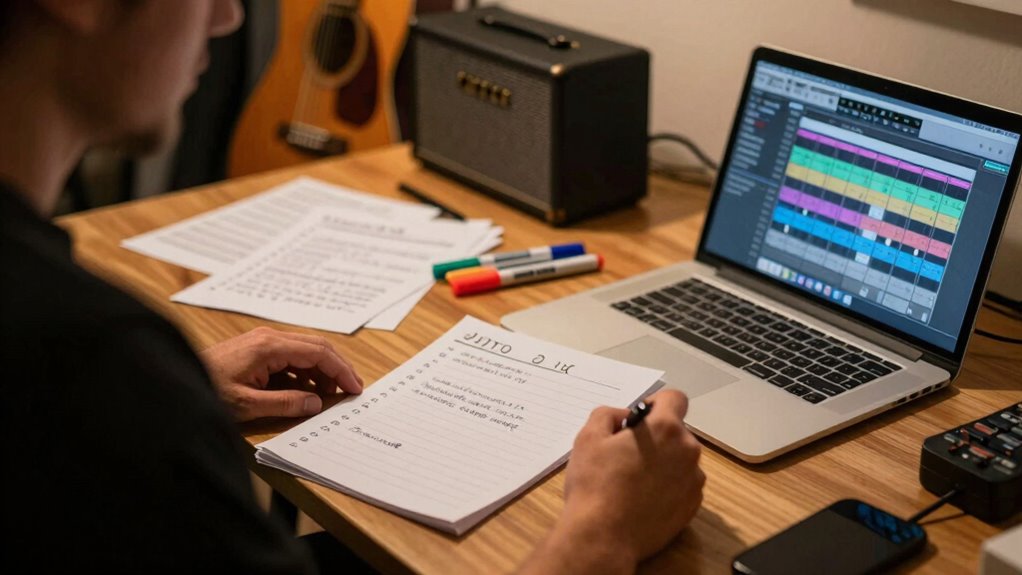

To build better setlists even for smaller shows, focus on choosing songs that truly engage your audience—familiar hits to get them excited and variety to keep things fresh. Pay attention to crowd responses and adjust your flow accordingly, creating a smooth emotional journey. Practice and refine your set, ensuring links are seamless. Connecting with your audience makes your performance memorable. Keep exploring these strategies to enhance every show you play.
Key Takeaways
- Focus on creating a balanced mix of familiar hits and unique tracks to keep small audiences engaged and excited.
- Structure your setlist to build an emotional journey, starting strong and ending on a memorable note.
- Incorporate variety in style and tempo to maintain interest and prevent fatigue during your performance.
- Practice your set thoroughly to ensure smooth transitions and confident delivery, enhancing audience connection.
- Pay attention to audience reactions and adapt your song choices and order to maximize engagement and enjoyment.
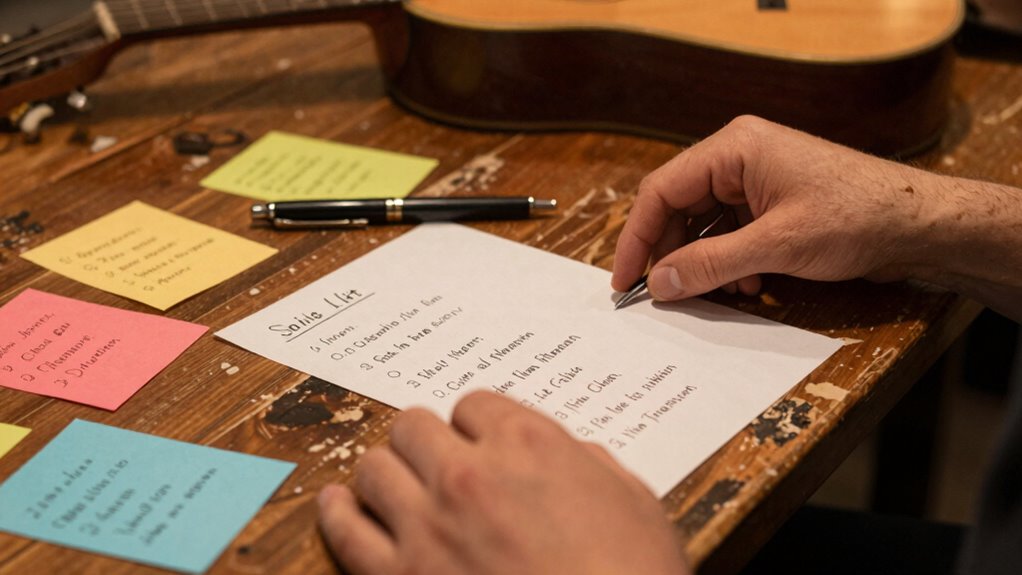
Creating a great setlist is essential for delivering a memorable live performance. Whether you’re playing small gigs or just starting out, a well-crafted setlist helps you connect with your audience and keeps the energy flowing. One key to doing this is focusing on audience engagement. When you plan your songs, think about what will resonate with your crowd. Choose tunes that evoke emotion, encourage sing-alongs, or get people dancing. The goal is to make your audience feel involved and enthusiastic for more. If you notice your crowd responding well to certain styles or tempos, lean into those. Incorporate familiar songs or hits that get people excited early on, and then gradually introduce tracks that showcase your unique style. This creates a rapport, making your audience feel seen and appreciated, even if you’re not performing on a big stage.
Equally important is song variety. Relying on just one style or tempo can cause your set to become monotonous, no matter how talented you are. Mix up your song choices to offer a dynamic experience. Include upbeat tracks to energize the room and slower, more introspective pieces to give your audience a breather. Changing the mood keeps people interested and prevents fatigue. It also shows your versatility as an artist. When selecting songs, consider not only your favorites but also what will complement the overall flow of your set. A good setlist has a clear narrative or emotional arc, guiding your audience through different feelings and keeping their attention from start to finish. Being mindful of the setlist structure can greatly impact how your performance is received. Additionally, paying attention to song placement ensures that each track contributes to the overall experience and emotional journey.
Even if you’re not playing large venues, you can still craft an impactful set by paying attention to the details. Think about how each song flows into the next; smooth transitions maintain momentum and avoid awkward silences. Practice your set so you can deliver it confidently, which boosts audience engagement even in intimate settings. Record your performances and listen back to identify moments where the energy dips or where your audience seems less engaged. Use this feedback to refine your song choices and order for future shows. Additionally, understanding the importance of audience engagement and how it impacts your performance can help you tailor your approach for greater success. Remember, the more you focus on connecting with your audience, the more memorable your performances will become.
As an affiliate, we earn on qualifying purchases.
Frequently Asked Questions
How Do I Choose the Right Opening Song?
Choose an opening song that immediately grabs your audience’s attention and sets the mood. Think about an energetic track that encourages audience engagement from the start. Consider how the song shifts into the next piece—smooth shifts keep energy flowing. A strong opener establishes connection, making your audience want to stay engaged throughout your set. Keep it lively and relevant, and your audience will be hooked right from the beginning.
Should I Include Cover Songs in My Setlist?
Including cover songs in your setlist is like adding spices to a dish; they can enhance audience engagement if chosen carefully. Select cover choices that resonate with your style and audience’s taste. Well-chosen covers can energize your performance and connect emotionally. Just make certain they flow seamlessly with your original songs. Don’t overdo it—use covers strategically to keep your set fresh, dynamic, and memorable.
How Do I Manage Setlist Length for Different Venues?
To manage setlist length for different venues, tailor your song choices to match the stage energy and venue size. Keep your setlist flexible, adding or cutting songs based on how the audience responds and the time available. Prioritize song diversity to keep everyone engaged, and plan for shifts to maintain momentum. This approach guarantees your performance stays dynamic, memorable, and perfectly suited to each unique venue.
When Is the Best Time to Introduce New Songs?
You should introduce new songs early in your set to boost audience engagement and gauge their reaction. Timing is key for maintaining song pacing; placing new material before high-energy moments keeps the crowd excited. Watch their response closely—if they connect with the new song, it can become a regular part of your set. Introducing new tunes thoughtfully guarantees the flow remains smooth and the audience stays engaged throughout.
How Can I Tailor My Setlist for Different Audiences?
You can tailor your setlist for different audiences by observing their reactions and preferences, as studies show audience engagement increases when performers adapt their songs. Incorporate setlist variation by mixing popular hits with lesser-known tracks to keep each crowd energized. Pay attention to age, genre, and vibe, then customize your song choices accordingly. This approach makes your performance feel personal, encouraging audience connection and ensuring everyone leaves satisfied.
audience engagement music accessories
As an affiliate, we earn on qualifying purchases.
As an affiliate, we earn on qualifying purchases.
Conclusion
Remember, crafting a memorable setlist isn’t about pulling a rabbit out of a hat; it’s about connecting with your audience and telling a story, even if you’re just a troubadour in a small town. Think of it as your own personal Woodstock, where every song builds a vibe and leaves an impression. Keep experimenting, trust your instincts, and don’t be afraid to break the rules—after all, even a bard needs a little magic to make history.
As an affiliate, we earn on qualifying purchases.
performance practice recording device
As an affiliate, we earn on qualifying purchases.
As an affiliate, we earn on qualifying purchases.