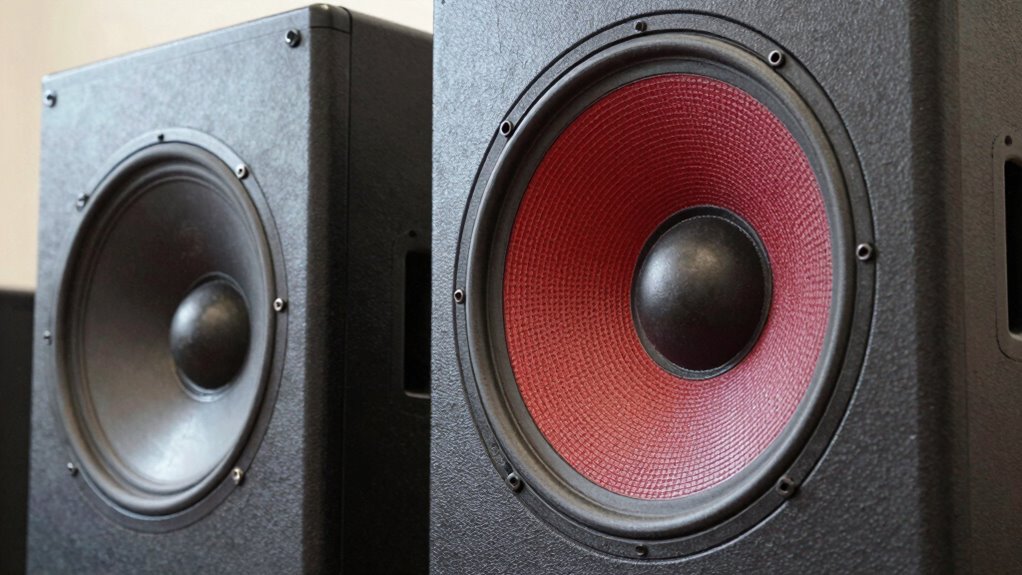

Choosing between 12-inch and 15-inch PA speakers depends on your needs. A 15-inch speaker delivers deeper bass, making it ideal for larger venues or outdoor events, while a 12-inch offers clearer mids and highs for smaller spaces or indoor use. The size also impacts weight, durability, and power handling. If you want to understand how these differences affect your sound setup, keep exploring what suits your specific environment and application.

Get audio and creator gear delivered free with Prime
- Fast, free delivery on millions of items
- Prime Video, Amazon Music and more included
- Member-only deals all year
Key Takeaways
- 15-inch speakers deliver deeper bass and are better for large venues or outdoor events, while 12-inch speakers offer clearer mids and highs for smaller spaces.
- 15-inch models are typically more durable and handle higher power, suited for extensive use; 12-inch speakers are lighter and easier to transport.
- Size influences environmental suitability, with 15-inch for outdoor/large venues and 12-inch for indoor/small events.
- 15-inch speakers generally support higher wattage, making them ideal for larger sound systems, while 12-inch speakers are better for lower-power setups.
- Overall, larger speakers emphasize bass and power handling, whereas smaller speakers prioritize clarity and portability.
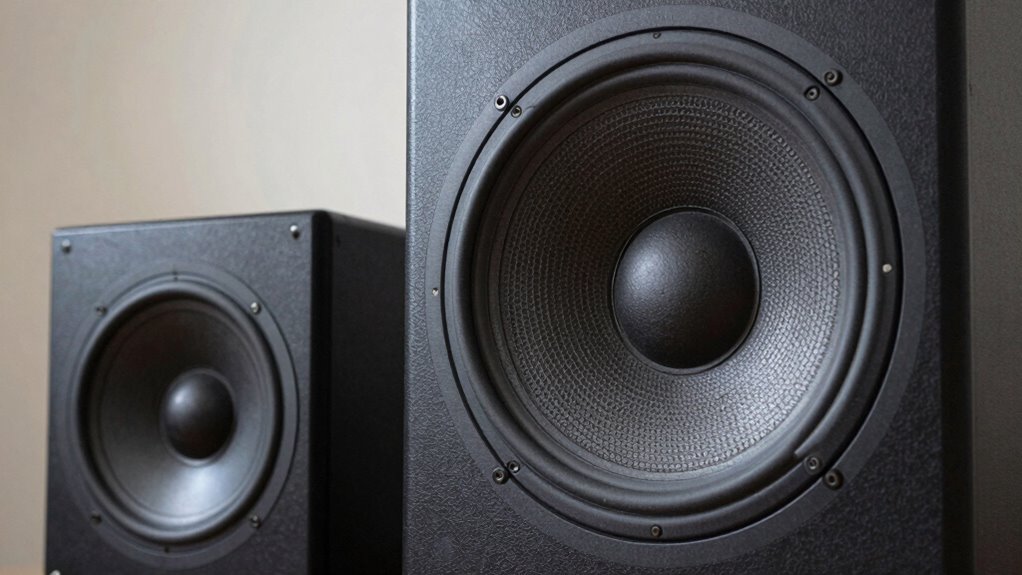
When choosing between 12-inch and 15-inch PA speakers, understanding their differences can considerably impact your sound setup. The size of the speaker influences more than just the bass response; it affects durability, power handling, and overall performance. Typically, 15-inch speakers are known for their ability to produce deeper, more resonant bass, making them ideal for larger venues or outdoor events where sound needs to reach farther. On the other hand, 12-inch speakers often deliver a more balanced sound with clearer mids and highs, which can be beneficial for smaller spaces or situations where sound clarity is essential.
One key factor to evaluate is speaker durability. Generally, larger speakers like 15-inch models are built with sturdier components to withstand higher power levels and prolonged use. This increased durability can be vital if you frequently perform in demanding environments or need equipment that lasts over time. While 12-inch speakers are often lighter and easier to transport, they may not always match the ruggedness of their bigger counterparts. However, many modern 12-inch speakers are designed to handle significant wear and tear, so your choice should also depend on the specific build quality and brand reputation. Additionally, speaker size plays a role in overall performance, influencing how well the speaker can handle different sound frequencies and environmental conditions. Selecting the right size also involves considering the application environment, as different settings require different audio characteristics.
Power handling is another major difference that influences your decision. 15-inch speakers typically have higher power handling capacities, meaning they can manage more wattage without distortion or damage. This makes them suitable for larger sound systems where higher volume levels are necessary. If you’re running a setup that demands substantial power, a 15-inch speaker could be the better choice. Conversely, 12-inch speakers usually handle less power, which can be sufficient for smaller gigs or indoor events. Using a speaker with inadequate power handling capacity can lead to distortion or even damage, so matching your speaker’s power ratings with your amplifier’s output is critical.
As an affiliate, we earn on qualifying purchases.
Frequently Asked Questions
How Does Speaker Size Affect Portability and Setup Time?
A smaller speaker, like a 12-inch, is more portable and easier to set up because it’s lighter and more compact. This makes transporting and positioning quicker, saving you time. While a 15-inch speaker might offer better sound clarity and a wider frequency range, it’s usually bulkier and heavier, requiring more effort to move and set up. So, if portability is your priority, a 12-inch is often the better choice.
Are 15-Inch Speakers More Durable Than 12-Inch Models?
Yes, 15-inch speakers are generally more durable than 12-inch models because their larger size allows for sturdier construction and better heat dissipation. You’ll find they handle equipment compatibility with higher power ratings better, making them suitable for more demanding applications. However, always check the build quality and manufacturer specifications, as durability varies across brands. Proper maintenance also plays an essential role in extending your speaker’s lifespan.
What Are the Best Use Cases for Each Speaker Size?
You’ll find 12-inch speakers perfect for small venues or intimate gatherings, where sound clarity and tighter bass matter most. Meanwhile, 15-inch speakers shine in larger spaces, delivering broader frequency response and powerful low-end that commands attention. Ironically, bigger isn’t always better for sound quality—use the 12-inch for crisp clarity, and save the 15-inch for those occasions demanding deep bass and volume that fills the room effortlessly.
How Does Speaker Size Impact Power Consumption?
Larger speakers generally consume more power because they require greater energy to produce louder sounds and handle higher output levels. Your choice impacts energy efficiency and power requirements, with 15-inch speakers typically needing more power than 12-inch ones. If you’re aiming for energy efficiency, smaller speakers might be better, but if you need higher volume and bass, larger speakers demand increased power, affecting your overall power consumption.
Can Smaller Speakers Handle High-Volume Environments Effectively?
You might think small speakers can’t handle high-volume environments, but they can surprise you! They often excel in speaker aesthetics, fitting seamlessly into sleek setups. Thanks to clever sound dispersion, these tiny powerhouses can fill large spaces without distortion. So, don’t assume size limits performance—your smaller speakers can deliver loud, clear sound, making them perfect for high-energy gigs or lively parties where space and style matter.
As an affiliate, we earn on qualifying purchases.
Conclusion
Choosing between 12-inch and 15-inch PA speakers ultimately depends on your specific needs. While some might think the larger 15-inch offers superior bass, the 12-inch can provide clearer sound and better portability. Don’t overlook the importance of venue size and application—what works for a small gig might not suit a large event. Consider your priorities carefully; the right speaker enhances your performance without unnecessary bulk or complexity.
As an affiliate, we earn on qualifying purchases.
As an affiliate, we earn on qualifying purchases.
Halloween Picks
halloween
As an affiliate, we earn on qualifying purchases.


![Iron Maiden Legend Nicko McBrain Turned Down Trump Golf Invite: “[He] Should Be Put In Jail”](https://deadsetlive.com/wp-content/uploads/2026/10/iron-maiden-legend-nicko-mcbrain-turned-down-trump-golf-invite-he-should-be-put-featured-260x140.jpg)