
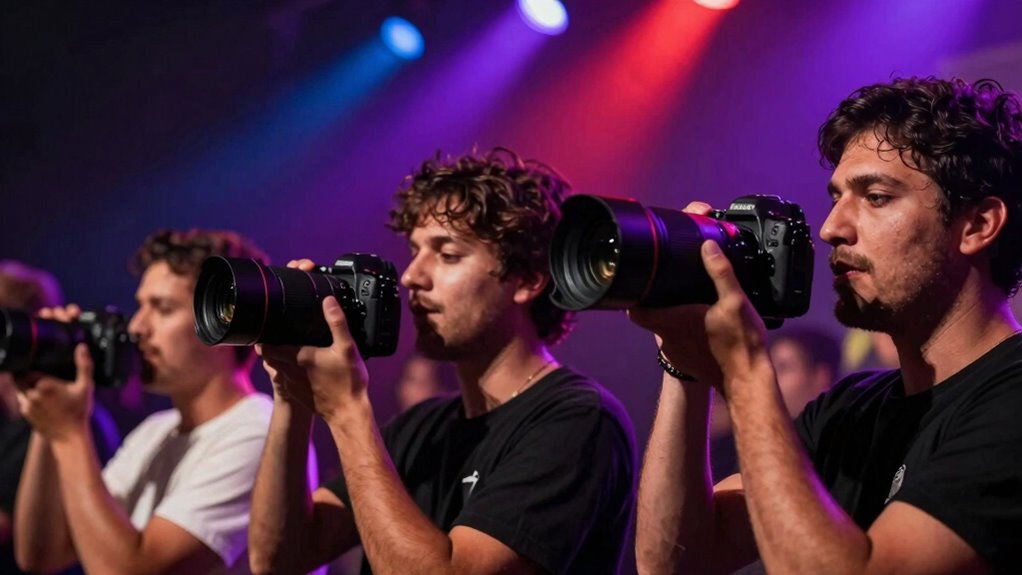

When choosing a concert camera for low-light photography, focus on models with strong high ISO capabilities and excellent noise reduction to guarantee sharp, vibrant images in dim environments. Look for fast autofocus and quick response times to capture fleeting moments, and opt for durable, weather-sealed bodies that can withstand lively venues. Balancing performance and robustness helps you get stunning photos that reflect the energy of the event—keep exploring to discover how to make the best choice for your needs.

Get audio and creator gear delivered free with Prime
- Fast, free delivery on millions of items
- Prime Video, Amazon Music and more included
- Member-only deals all year
Key Takeaways
- Prioritize cameras with high ISO performance and strong noise reduction for clear low-light images.
- Choose a camera with fast autofocus and high burst rate to capture fleeting concert moments.
- Ensure the camera has durable, weather-sealed construction for reliability in dynamic environments.
- Opt for models with excellent low-light sensitivity to maintain vibrant, sharp images in dim settings.
- Consider image quality features that enhance audience engagement, like vibrant colors and noise control.
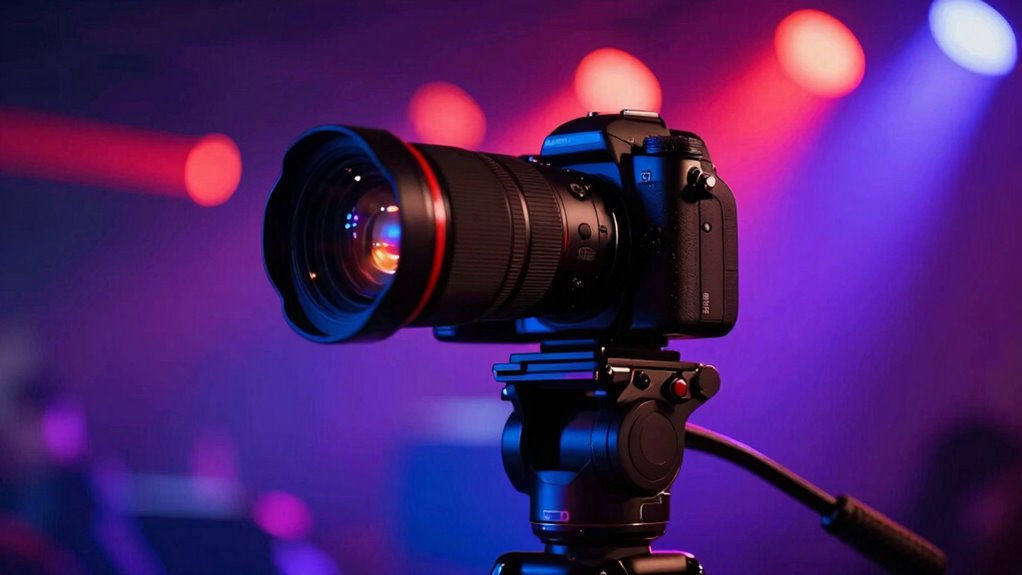
Attending concerts often means battling low light conditions, making it essential to choose a camera that excels in challenging environments. When you’re in the midst of a live show, capturing sharp, vibrant images requires more than just a good eye—you need equipment designed to handle the dim, unpredictable lighting. A camera with excellent low-light performance isn’t just about clarity; it’s about capturing the energy and emotion of the moment, which keeps your audience engaged and invested in your photos or videos. As you shop for a concert camera, pay close attention to how well it performs in low-light settings, especially in fast-paced environments where quick autofocus and high ISO capabilities are vital.
Choose a camera with strong low-light performance and fast autofocus to capture vibrant, emotional concert moments.
Audience engagement during a concert is often heightened by compelling images and videos that reflect the atmosphere. Your camera’s ability to deliver high-quality visuals under dim conditions can make a real difference in how your audience perceives your work. Whether you’re sharing content on social media or creating a portfolio, the clarity and vibrancy of your shots will keep viewers hooked. Look for cameras with strong noise reduction features at high ISO settings, as this will help you maintain sharpness without grainy results. The right camera allows you to focus on capturing those fleeting, emotional moments rather than worrying about technical limitations. Recognizing the camera performance in low-light environments can help you choose gear that truly meets your needs.
Durability of your equipment is equally important, particularly because concerts can be unpredictable environments. You might find yourself navigating through crowded venues, where bumps or accidental drops are likely. Choosing a camera built with rugged construction ensures it can withstand these conditions, so you won’t miss a shot due to equipment failure. Weather-sealed bodies are a plus, especially if the concert is outdoors or in a venue with fluctuating humidity and temperature. Investing in durable gear means you can concentrate on your craft without constantly worrying about damage or malfunctions. Moreover, selecting equipment with weather resistance features can provide added peace of mind in diverse concert environments. Plus, a sturdy camera encourages confidence, enabling you to move freely and adapt quickly to changing scenes and lighting conditions. Recognizing the importance of camera durability can help you select gear that withstands the rigors of live performance environments.
Additionally, understanding the importance of low-light camera features can significantly enhance your ability to perform well in concert settings. Recognizing the performance in low-light environments of your camera can help you make more informed choices and achieve better results. Ultimately, selecting the right concert camera comes down to balancing high performance in low-light environments with robust build quality. You want a device that elevates your ability to capture compelling moments while standing up to the rigors of lively, unpredictable settings. When you prioritize audience engagement through clear, vibrant images and ensure your equipment is durable enough to handle the concert environment, you set yourself up for success. With the right combination of features, your photos will not only reflect the energy of the event but also showcase your skill and dedication as a photographer.
As an affiliate, we earn on qualifying purchases.
Frequently Asked Questions
How Does Sensor Size Affect Low-Light Performance?
A larger sensor size offers significant advantages for low-light performance because it captures more light, resulting in clearer, less noisy images. With low light sensor technology, bigger sensors excel in challenging lighting conditions, giving you better detail and color accuracy. When choosing a concert camera, prioritize sensors that are larger to maximize low-light capabilities, ensuring your photos stay sharp and vibrant even in dim environments.
Are Mirrorless Cameras Better Than DSLRS for Concerts?
Mirrorless cameras are often better for concerts because they’re lighter and more compact, making them easier to handle in tight spaces. You can quickly adjust settings and use silent shutter modes, which won’t disturb the audience. When combined with good lighting equipment and strategic audience positioning, mirrorless cameras capture sharp, vibrant images even in low light. Their advanced autofocus and high ISO performance give you an edge in dynamic concert environments.
What Lens Focal Length Is Ideal for Concert Photography?
Think of your lens as a telescope, bringing distant details into sharp focus. For concert photography, a focal length of 24-70mm is ideal, offering versatility amid stage lighting and audience movement. It allows you to capture close-up shots of performers and wider shots of the crowd without constantly changing lenses. This range helps you stay flexible, ensuring you don’t miss moments caused by changing stage lighting or sudden audience shifts.
How Important Is Autofocus Speed in Low-Light Conditions?
Autofocus speed is vital in low-light concert photography because quick, accurate focusing guarantees you capture sharp images of fast-moving performers. Look for a camera with excellent autofocus accuracy and advanced focusing modes, like continuous or tracking autofocus, to keep subjects in focus even in dim conditions. Faster autofocus helps you react instantly, reducing missed shots and blurriness, so prioritize cameras with responsive autofocus systems for the best results in challenging lighting.
Can Smartphone Cameras Be Effective for Concert Low-Light Shots?
Smartphone cameras can be surprisingly effective for low-light concert shots, especially with good stage lighting that enhances their sensor performance. They often have advanced software that boosts exposure and reduces noise. However, your success also depends on your sound equipment’s influence on the environment, like minimizing vibrations. While they’re convenient, for professional results, a dedicated camera with better low-light capabilities still outperforms smartphones.
As an affiliate, we earn on qualifying purchases.
Conclusion
Remember, the right camera can turn your concert memories into lasting keepsakes, even in low light. Focus on a camera with good high ISO performance and fast lenses, and you’ll capture those magical moments without missing a beat. As they say, “A picture is worth a thousand words,” so invest wisely and let your photos tell your story. With the right gear, you’ll always be ready to seize the night and preserve its magic.
As an affiliate, we earn on qualifying purchases.
As an affiliate, we earn on qualifying purchases.
Halloween Picks
halloween
As an affiliate, we earn on qualifying purchases.



![Iron Maiden Legend Nicko McBrain Turned Down Trump Golf Invite: “[He] Should Be Put In Jail”](https://deadsetlive.com/wp-content/uploads/2026/10/iron-maiden-legend-nicko-mcbrain-turned-down-trump-golf-invite-he-should-be-put-featured-260x140.jpg)