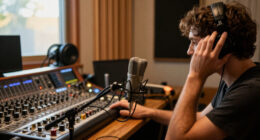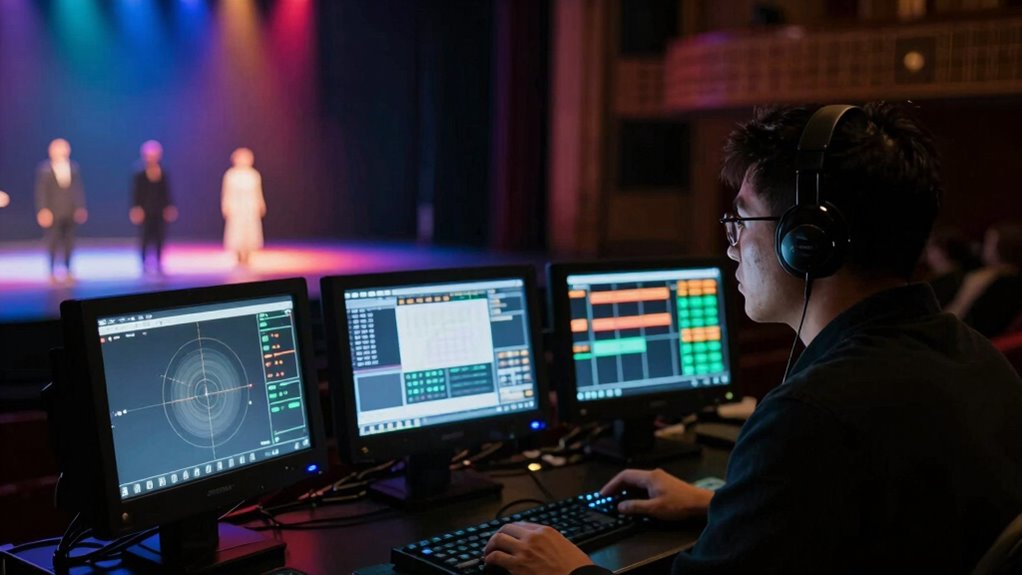

Your choice of stage monitoring greatly influences your performance more than you might think. Good monitors enhance sound clarity, help you stay focused, and boost your confidence on stage. They also allow quick adjustments, so you’re always in control of your sound. Poor monitoring can lead to missed cues, miscommunication, and less engaging shows. If you want to discover how advanced technology and smarter setups can elevate your performance even further, keep exploring this topic.

Get audio and creator gear delivered free with Prime
- Fast, free delivery on millions of items
- Prime Video, Amazon Music and more included
- Member-only deals all year
Key Takeaways
- Monitoring quality directly influences sound clarity, affecting performers’ ability to stay in sync and deliver a cohesive performance.
- Advanced monitoring systems enable precise control, allowing performers to customize their sound and enhance expressiveness.
- Wireless and in-ear monitors reduce stage noise, freeing performers to move naturally and interact more dynamically.
- Reliable, secure monitoring technology minimizes disruptions, ensuring consistent sound and maintaining performance flow.
- Improved monitoring boosts performer confidence and focus, leading to more energetic, engaging, and polished shows.
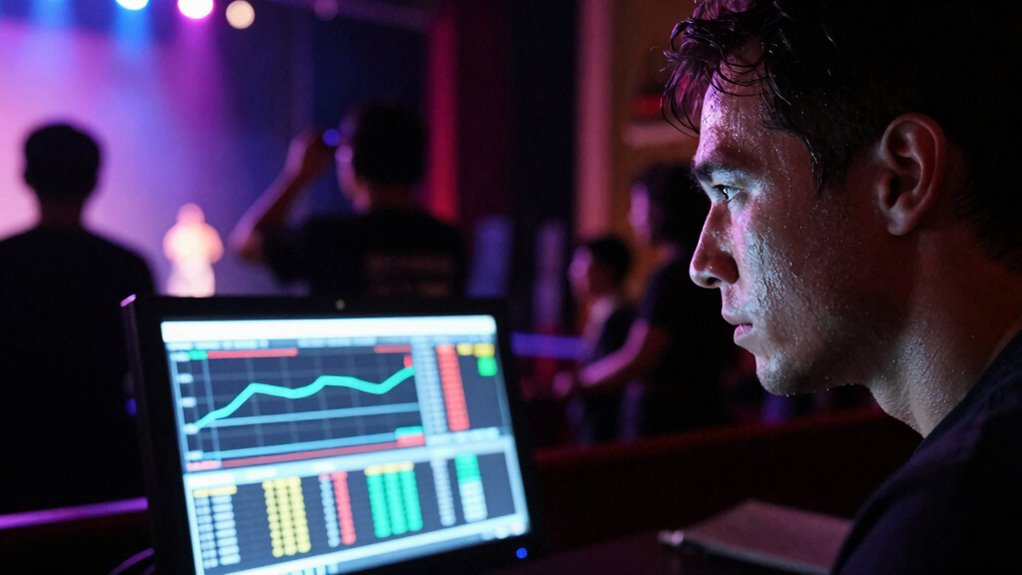
Have you ever wondered how performers and sound engineers guarantee the best possible live experience? It all comes down to stage monitoring choices. Your choice of monitors directly impacts not only sound clarity but also audience engagement. When performers hear themselves clearly, they can focus more on their performance, connect with the audience, and deliver a compelling show. Conversely, poor monitoring can lead to miscommunications, missed cues, and a less engaging experience for everyone involved. This is why selecting the right monitors is such a critical decision.
Choosing the right stage monitors is essential for clarity, connection, and an unforgettable live performance.
Technological advancements have transformed how stage monitoring is approached, making it more adaptable and effective than ever before. Traditional floor monitors, for example, gave performers limited control over their sound, often leading to feedback issues or inconsistent audio. Today, in-ear monitors (IEMs) and wireless systems offer much more precision. They allow performers to customize their mix, reduce stage noise, and move freely without losing audio fidelity. These innovations not only improve the performer’s experience but also enhance audience engagement because the focus remains on the act, rather than distracting sound issues. Additionally, understanding the role of encryption in safeguarding wireless audio signals highlights how technology can also improve the security and reliability of stage monitoring systems.
The advancements in monitoring technology also mean that performers and sound engineers can adapt quickly to different venues and performance styles. Wireless in-ear systems, for example, allow for quick setup, minimal stage clutter, and customized mixes for each performer. This flexibility ensures that the performance remains seamless and vibrant, regardless of the environment. When stage monitoring is optimized, it elevates the entire show, encouraging performers to be more expressive and audience members to stay thoroughly immersed. Moreover, the ability to adjust monitoring levels easily allows for even greater control over the overall sound environment, further enhancing the live experience. Recognizing the importance of monitoring setup is crucial because it can significantly influence the overall quality of a performance. Incorporating advanced audio technology can further improve how well performers hear themselves and others, ultimately making a difference in the energy and quality of the show. It’s this seamless integration of technology and performance that underscores how much stage monitoring choices can change the live experience—more than most people expect. Improving wireless security measures can also prevent potential disruptions during performances, adding to a smoother show.
in-ear monitor system for performers
As an affiliate, we earn on qualifying purchases.
As an affiliate, we earn on qualifying purchases.
Frequently Asked Questions
How Do Stage Monitoring Choices Affect Live Audience Perception?
Your stage monitoring choices directly influence how the audience perceives your performance. Clear audio and effective visual cues boost audience engagement by ensuring they understand and connect with your message. When monitors deliver crisp sound and visible signals, your energy comes across stronger, making the experience more immersive. Conversely, poor monitoring can cause distractions, reducing engagement and clarity. You control this perception through your monitoring setup, shaping how your audience experiences your act.
What Are the Cost Differences Between Various Monitoring Options?
You’ll find that cost differences between monitoring options vary considerably. Basic in-ear monitors tend to have lower equipment expenses, making them budget-friendly, but may lack advanced features. On the other hand, floor wedge monitors usually involve higher equipment expenses due to their size and complexity. A cost comparison shows that investing in high-end digital monitors increases expenses upfront but can improve sound quality and performance, ultimately offering better value for your stage setup.
How Quickly Can Performers Adapt to New Monitoring Setups?
You can adapt to a new monitoring setup fairly quickly, especially with consistent practice. Your performer adaptability depends on familiarity and comfort with the equipment. Initially, it might take a few rehearsals to feel confident, but most performers adjust within a short period. The key is to stay patient and proactive, giving yourself time to understand the monitoring setup and how it impacts your performance.
Are There Specific Genres That Benefit More From Certain Monitoring Choices?
You might find that genres like electronic or pop music benefit more from specific monitoring choices, as genre specificity influences what equipment compatibility is needed for ideal sound. While classical performers may prefer traditional setups, genres with high energy often demand personalized monitoring to keep performers in sync. Your choice depends on the genre’s unique sound and the equipment’s compatibility, ultimately enhancing performance by aligning technology with musical style.
How Do Monitoring Choices Impact Technical Troubleshooting During Performances?
Your monitoring choices directly impact troubleshooting by influencing audio clarity. Clear monitors help you quickly identify sound issues, while poor audio clarity can mask problems. Equipment placement matters too; strategic placement minimizes feedback and interference, making it easier to spot technical glitches. By choosing the right monitors and positioning them thoughtfully, you streamline troubleshooting, ensuring smoother performances and fewer technical disruptions.
As an affiliate, we earn on qualifying purchases.
Conclusion
So, next time you think your monitoring choices don’t matter, remember they might be quietly shaping your performance more than you realize. Ironically, it’s often the small, overlooked decisions—those unconscious choices—that have the biggest impact. Instead of underestimating your influence, embrace your power to steer your focus. After all, in the game of performance, it’s the subtle shifts in monitoring that truly make or break your success, even if you don’t see it coming.
As an affiliate, we earn on qualifying purchases.
professional stage monitoring system
As an affiliate, we earn on qualifying purchases.
As an affiliate, we earn on qualifying purchases.
Halloween Picks
halloween
As an affiliate, we earn on qualifying purchases.




![Iron Maiden Legend Nicko McBrain Turned Down Trump Golf Invite: “[He] Should Be Put In Jail”](https://deadsetlive.com/wp-content/uploads/2026/10/iron-maiden-legend-nicko-mcbrain-turned-down-trump-golf-invite-he-should-be-put-featured-260x140.jpg)