
To understand room problems before blaming your gear, start by evaluating your speaker placement. Make sure speakers form an equilateral triangle with your listening position and avoid placing them too close to walls or corners. Observe how surfaces like bare walls or glass reflect sound, causing echoes or muddiness. Experiment with furniture placement and consider adding acoustic treatments like panels or diffusers to reduce reflections. If you keep exploring these factors, you’ll gain the insights needed to improve your sound environment.

Get audio and creator gear delivered free with Prime
- Fast, free delivery on millions of items
- Prime Video, Amazon Music and more included
- Member-only deals all year
Key Takeaways
- Assess if reflections and echoes are caused by hard surfaces or room geometry before considering equipment issues.
- Check speaker placement and room layout for proper positioning and potential reflection problems.
- Use acoustic treatments like panels and bass traps to identify if sound issues persist despite gear changes.
- Observe how furniture and objects influence sound absorption and reflection within the space.
- Make incremental adjustments to room setup to determine if changes improve sound clarity before blaming equipment.
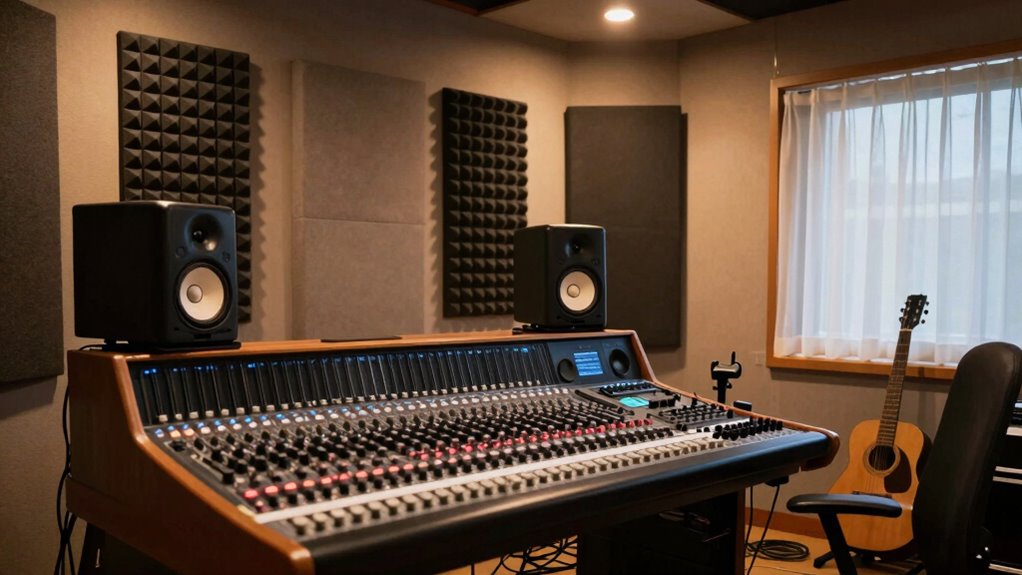
Have you ever walked into a room and immediately sensed something’s off? Maybe the sound feels muddy, your voice doesn’t seem to sit right, or music just doesn’t sound as clear as it should. Before jumping to conclusions about your gear, it’s essential to understand that many issues stem from the room itself. Your room’s acoustic treatment and layout play a significant role in shaping sound, often more than the equipment you use.
First, take a good look at your room layout. Are your speakers positioned properly? If they’re too close to walls or corners, you can create reflections and bass buildup that distort sound. The ideal setup usually involves placing speakers at an equal distance from walls, forming an equilateral triangle with your listening position. Moving your gear around might seem simple, but it can dramatically improve sound clarity. Also, consider the height and placement of furniture, as large objects can absorb or reflect sound waves unevenly. Paying attention to room geometry can help you understand how the space influences sound behavior.
Proper speaker placement and furniture arrangement can significantly improve sound clarity and reduce reflections.
Next, focus on the acoustic treatment. Many people overlook how much the room’s surfaces influence sound quality. Hard, reflective surfaces like bare walls, glass, or tile can cause unwanted echoes and flutter echoes, muddying your audio. Adding acoustic panels, bass traps, or diffusers can help tame these reflections. These treatments don’t need to be elaborate or expensive—sometimes, even a few well-placed panels can make a big difference. The goal is to absorb or scatter sound waves, reducing harsh reflections and creating a more balanced listening environment. Recognizing and addressing room acoustics is crucial for achieving the best sound quality. Additionally, understanding how sound waves interact with different surfaces can help you make more informed adjustments. It’s also beneficial to consider the room’s size and shape as these factors significantly impact sound behavior.
Understanding your room’s acoustics isn’t about perfection; it’s about recognizing how the space shapes sound. When you notice issues like muddiness, echo, or uneven frequency response, ask yourself whether it’s due to the room, not your gear. Adjusting your room layout, repositioning speakers, and adding acoustic treatment can often solve these problems without any new equipment. It’s also helpful to observe how different surfaces and objects in the room affect sound, as this knowledge allows you to make more informed adjustments. It’s easy to blame your gear, but more often than not, the room is the real cause. By paying attention to these details, you give yourself the best chance to enjoy clear, accurate sound without unnecessary frustration. Remember, a well-designed room can turn your listening space into a true sonic sanctuary.
acoustic panels for room soundproofing
As an affiliate, we earn on qualifying purchases.
As an affiliate, we earn on qualifying purchases.
Frequently Asked Questions
Can Room Issues Be Caused by External Environmental Factors?
Yes, room issues can definitely be caused by external influences and environmental factors. For example, outside noise, temperature fluctuations, or humidity changes can affect your setup’s performance. These environmental factors might lead to sound distortions, equipment malfunctions, or connectivity problems. When troubleshooting, consider external influences first, as they often have a significant impact on your room’s overall condition before you blame your gear.
How Do I Differentiate Between Equipment Failure and Room Acoustics?
To differentiate between equipment failure and room acoustics, start with equipment diagnostics to rule out hardware issues. If your gear functions correctly, focus on acoustic treatment, as poor room acoustics often cause sound problems. Adjust panels, bass traps, or diffusers, and listen for improvements. If issues persist despite equipment checks and acoustic adjustments, then you may have a gear failure needing repair or replacement.
Are There Specific Tools to Diagnose Room Problems Accurately?
Ever wonder if there are specific tools to diagnose room problems accurately? Spectral analysis is a powerful tool to identify frequency issues and resonances, helping you pinpoint problem areas. Acoustic treatment, meanwhile, can be tested with measurement microphones and software to see how it improves sound. Using these tools allows you to distinguish room issues from gear failures, ensuring you address the root cause effectively.
How Long Should I Test a Room Before Identifying Issues?
You should test your room for at least 15 to 30 minutes, guaranteeing you listen to various sound reflection scenarios. During this time, move around and analyze how sound behaves with your current acoustic treatment. This helps you identify persistent issues, like echo or dead spots. If problems remain, consider adjusting your acoustic treatment before making any conclusions about your gear’s performance. Patience ensures accurate room analysis.
Can Room Problems Impact Recording Quality Without Noticeable Sound?
Did you know that up to 60% of recording quality issues can stem from room acoustics? Room problems can definitely impact your sound without being immediately noticeable, especially through subtle frequency shifts or reverb. Proper room treatment and soundproofing solutions help control these hidden issues. Ignoring these factors might cause your recordings to sound off, even if everything seems fine on the surface. Addressing room acoustics is essential for professional-quality recordings.
As an affiliate, we earn on qualifying purchases.
Conclusion
Remember, before blaming your gear, take the time to analyze the room itself. Sometimes, room acoustics or placement issues are the real culprits behind sound problems. It’s easy to jump to gear as the cause, but a little patience and investigation can save you time and money. If you still struggle, consider consulting a professional — it’s not a sign of failure, just a smart step toward better sound. Trust the process, and you’ll find the root of the problem.
As an affiliate, we earn on qualifying purchases.
sound reflection diffuser panels
As an affiliate, we earn on qualifying purchases.
As an affiliate, we earn on qualifying purchases.
Fall Picks
fall essentials
As an affiliate, we earn on qualifying purchases.