
If you’re choosing between open-back and closed-back headphones for live recordings, open-backs offer a more natural soundstage and spatial cues, making you feel like you’re right there in the environment. They provide better realism and an immersive experience thanks to airflow and sound passage through perforations. However, they leak sound and don’t block noise well. Closed-backs deliver privacy and isolation, but with a less spacious sound. Keep exploring to discover which type suits your recording needs best.
Key Takeaways
- Open-back headphones create a natural, spacious soundstage that closely mimics live environments, enhancing realism in recordings.
- Closed-back headphones isolate sound more effectively, reducing external noise but offering a less spacious listening experience.
- Open-backs allow recordings’ spatial cues to breathe, making them ideal for critical listening and appreciating live recording nuances.
- Closed-backs prevent sound leakage, making them better suited for noisy environments or when privacy is important.
- The choice depends on environment and purpose: open-backs for immersive listening, closed-backs for focus and noise isolation.
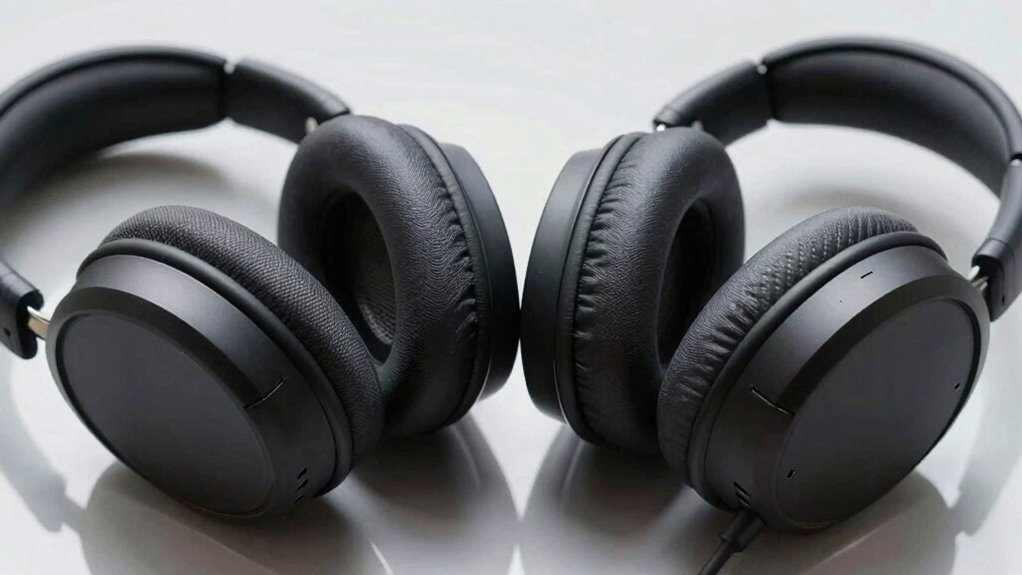
When choosing headphones, understanding the difference between open-back and closed-back designs is essential, as each offers distinct listening experiences. If you’re into live recordings or capturing the true essence of sound, this distinction can dramatically influence your listening. Open-back headphones feature ear cups with perforations or grills, allowing air and sound to flow freely between the driver and the environment. This design creates a more natural soundstage, offering exceptional soundstage clarity that makes recordings feel immersive and spacious. You’ll notice that instruments and vocals seem to breathe and expand, giving you a more authentic sense of the live environment. However, this openness comes at a cost: noise isolation is minimal. If you’re in a noisy setting, open-back headphones won’t block out background sounds effectively, and others nearby might hear what you’re listening to. This makes them ideal for quiet spaces where accurate sound reproduction matters most, such as at home or in a studio. Additionally, the soundstage quality of open-back headphones tends to be superior, creating a more engaging listening experience.
In contrast, closed-back headphones have solid ear cups that fully enclose your ears, providing superior noise isolation. This design prevents sound from leaking out and external noise from entering, so you stay focused on the details of the recording. For live recordings, this means you can listen without distractions, hearing every nuance without interference from your surroundings. The trade-off is that closed-back models often have a narrower soundstage, which can make the audio feel more confined and less natural compared to open-back designs. The sound may sound more direct and less airy, which can sometimes diminish the feeling of being ‘inside’ the recording. If you’re in a busy environment or need to monitor recordings on the go, closed-back headphones give you the privacy and clarity needed for critical listening.
Choosing between the two depends on your priorities. If your goal is to experience the depth and realism of live recordings, open-back headphones excel due to their superior soundstage clarity and natural sound. They allow you to appreciate the subtle spatial cues that make live music feel alive. Conversely, if you need to block out noise and focus intensely on detail, closed-back headphones provide that isolation, even if at the expense of some soundstage openness. For recording engineers or audiophiles who want to capture or experience the live atmosphere accurately, understanding these differences helps you select the right tool for the job. Ultimately, your environment and listening preferences will guide your choice, ensuring you get the best possible experience whether you prefer the airy openness of open-backs or the intimacy and isolation of closed-backs.

Audio-Technica ATH-R30X Open-Back Headphones
Ideal for mixing, mastering, and creating in a studio or other private space, open-back headphones provide a natural,…
As an affiliate, we earn on qualifying purchases.
As an affiliate, we earn on qualifying purchases.
Frequently Asked Questions
Do Open-Back Headphones Leak Sound Into Live Recordings?
Yes, open-back headphones can leak sound into live recordings. Their open-back sound design allows audio to escape, which may cause leakage concerns during recording sessions. You might notice sound from the headphones bleeding into your microphones, especially at higher volumes. If you’re recording in a live environment, consider using closed-back headphones to minimize leakage issues and guarantee cleaner audio capture.
Can Closed-Back Headphones Improve Mixing Accuracy During Live Sessions?
Like a steady lighthouse guiding ships, closed-back headphones sharpen your mixing accuracy during live sessions. Their design offers better sound isolation, reducing external noise and preventing sound leakage, which helps you focus on detail. Plus, with durable build quality, they withstand rigors of live use. Their soundstage enhancement guarantees you hear every nuance, empowering you to make precise adjustments, ultimately elevating your mix and delivering professional results every time.
Are Open-Back Headphones Suitable for Outdoor Live Recordings?
Open-back headphones aren’t ideal for outdoor live recordings because they lack sound isolation, letting in ambient noise that can interfere with your audio. They’re generally less durable than closed-back models, which are built to withstand tougher conditions. If you want clear, focused sound in outdoor environments, closed-back headphones are a better choice, providing better sound isolation and durability to handle the demands of live recording sessions outside.
How Do Headphone Impedance Levels Affect Live Recording Quality?
Think of headphone impedance as the gatekeeper to sound clarity. When you match impedance properly, your recordings flow smoothly like a well-tuned engine, ensuring clear, detailed audio. High-impedance headphones need more power but deliver richer sound, ideal for studio use. Low-impedance models work well with portable gear, providing quick, crisp responses. Proper impedance matching prevents distortion, helping your live recordings capture every nuance with precision.
Can Open-Back Headphones Cause Feedback Issues on Stage?
Yes, open-back headphones can cause feedback issues on stage because they let stage noise leak out, which might be picked up by microphones. This can lead to unwanted feedback, especially if you’re close to your amp or monitors. Additionally, while open-backs are often more comfortable and breathable, their openness can compromise your ability to isolate sound, making it harder to focus and potentially affecting your performance.

FIFINE Studio Monitor Headphones for Recording, Wired Headphones with 50mm Driver, Over Ear Headset with Detachable Cables 3.5mm or 6.35mm Jack, Black, on PC/Mixer/Amplifier-H8
[WELL-BALANCED SOUND] Large 50mm unit drivers featured on the wired headphones deliver dynamic bass, stable mids and accurate…
As an affiliate, we earn on qualifying purchases.
As an affiliate, we earn on qualifying purchases.
Conclusion
Ultimately, choosing between open-back and closed-back headphones boils down to your specific needs. If you want a natural, immersive sound and don’t mind some external noise, open-back is your best bet. For focused listening and better isolation, closed-back works wonders. Remember, it’s all about finding the right fit for your situation—sometimes, you have to face the music and go with what feels right. Trust your ears and make the call that hits the right note for you.

beyerdynamic DT 990 Pro X 48 ohm Wired Over-Ear, Open Back Professional Recording Studio Monitor Headphones for Mixing, Editing, Critical Listening, DJ Stereo Headsets, Made in Germany, Black w/Gray
Wide Open Sound: Open-back studio headphones for critical listening and professional editing deliver astoundingly precise audio clarity with…
As an affiliate, we earn on qualifying purchases.
As an affiliate, we earn on qualifying purchases.
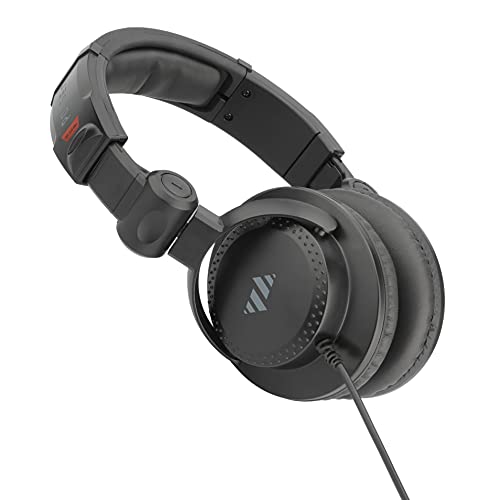
POLSEN HPC-A30-MK2 Closed-Back Studio Monitor Headphones
Over-Ear Design, For DJ Applications
As an affiliate, we earn on qualifying purchases.
As an affiliate, we earn on qualifying purchases.