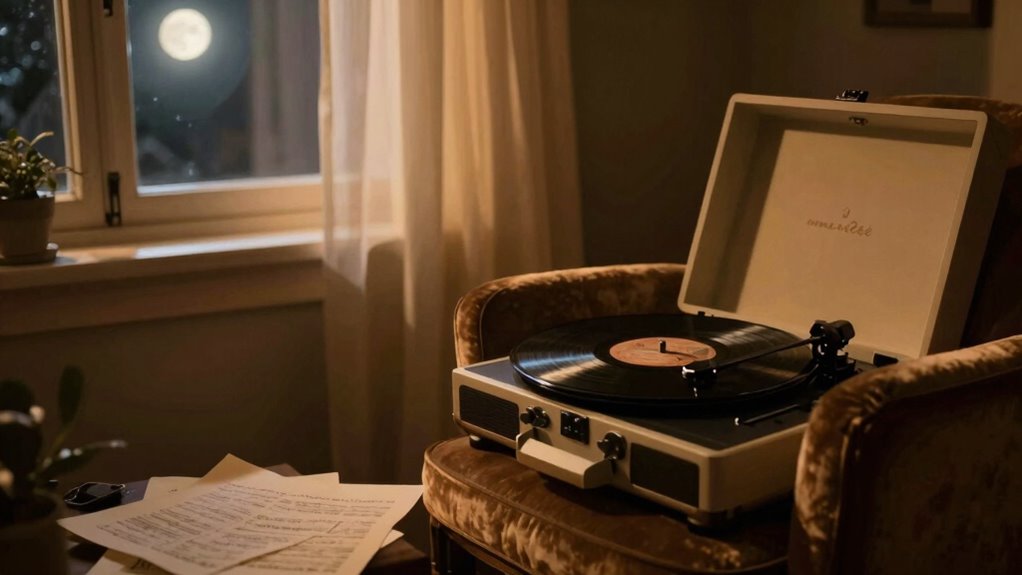

At night, your brain enters a relaxed and receptive state, making music sound more emotional and immersive. Quiet surroundings help you focus, while your brain synchronizes with certain frequencies, enhancing mood and feelings. Familiar songs can evoke stronger emotions, and melodies become richer. This connection boosts your overall experience, making music feel more powerful. If you’re curious about why this happens and how it deepens your listening, there’s more to explore below.

Get audio and creator gear delivered free with Prime
- Fast, free delivery on millions of items
- Prime Video, Amazon Music and more included
- Member-only deals all year
Key Takeaways
- The quiet, distraction-free environment at night enhances auditory perception and emotional engagement with music.
- Brainwave states like alpha or theta waves align with nighttime, amplifying music’s calming and immersive effects.
- Late-night listening deepens emotional connections, making familiar songs feel more meaningful and nostalgic.
- Reduced stress and heightened relaxation during night hours enhance the sensory and emotional impact of music.
- The brain-music harmony at night creates a powerful, memorable, and transformative listening experience.
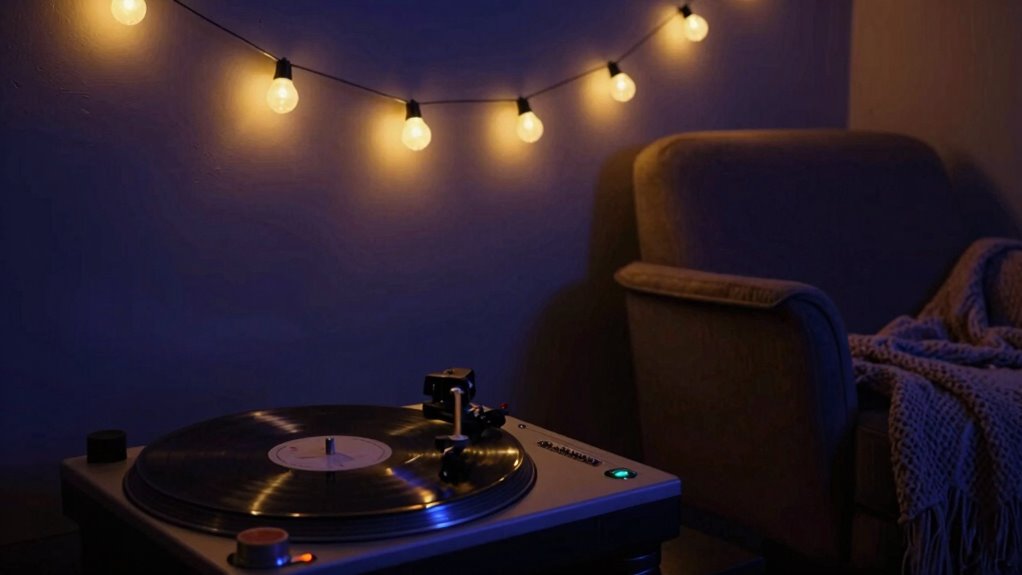
There’s something about late at night that makes certain music sound truly extraordinary, almost as if it’s meant to be heard then and only then. When the world quiets down, your mind shifts into a different state, and that’s when music can truly resonate on a deeper level. It’s not just the silence or the absence of distractions; it’s the way your brain naturally responds to the calm, creating a perfect environment for the music to deepen your experience. You might notice that melodies seem richer, rhythms more immersive, and emotions more intense during these late hours. That’s largely because of brainwave synchronization—your brain enters a unique pattern that aligns with the music you’re hearing, amplifying its effects. As you settle into the night, your brain’s electrical activity often shifts into alpha or theta waves, which are associated with relaxation and meditative states. When music matches these brainwave patterns, it enhances mood and promotes a sense of well-being, making the listening experience feel more profound and emotionally rewarding.
This synchronization isn’t accidental; it’s part of your brain’s natural rhythm, and it’s especially powerful late at night. The subtle shift in brainwaves makes you more receptive to the nuances of the music, allowing you to connect with it on a more visceral level. You might find that familiar songs take on new meanings or that instrumental pieces evoke stronger feelings of nostalgia or peace. The mood enhancement that comes with this process isn’t just psychological—it’s rooted in how your brain responds to auditory stimuli when it’s in this relaxed, receptive state. Interestingly, this state of heightened receptivity can also foster a deeper emotional connection with the music you listen to at these hours. Music that might seem ordinary during the day can become an emotional journey at night because your brain is primed for deeper connection. The calming properties of late-night listening also help reduce stress and anxiety, reinforcing the mood-boosting effects that make the experience so satisfying.
Understanding brainwave synchronization can help you better appreciate why music feels more powerful during these late hours. Ultimately, late-night music sounds amazing because your brain and the music are working in harmony, creating a powerful emotional response. This is the magic of brainwave synchronization and mood enhancement coming together, making your nighttime listening sessions uniquely immersive and memorable. When you tune in during these quiet hours, you’re not just hearing music—you’re experiencing it on a whole new level, one that feels both intimate and transformative.
noise cancelling headphones for relaxing music
As an affiliate, we earn on qualifying purchases.
As an affiliate, we earn on qualifying purchases.
Frequently Asked Questions
How Does Ambient Noise Influence Nighttime Music Enjoyment?
Ambient noise considerably influences your nighttime music enjoyment by creating immersive soundscapes that enhance the experience. When ambient soundscapes blend smoothly with your music, they amplify relaxation and emotional impact. However, noise interference can disrupt your focus, making details harder to hear and reducing overall enjoyment. You might find that a balanced level of ambient noise deepens your connection to the music, while excessive interference diminishes the serenity you seek late at night.
Do Personal Mood Changes Affect Music Perception Late at Night?
Like a painter’s brushstrokes shaping a masterpiece, your personal mood shifts how you perceive music late at night. When you’re relaxed or introspective, your musical perception deepens, making melodies feel more profound. Conversely, feeling restless or anxious may dull that experience. Nighttime’s quiet atmosphere amplifies these mood-driven changes, allowing your emotional state to transform simple tunes into immersive soundscapes, making your personal mood a powerful lens for your nighttime music journey.
Can Specific Genres Be More Soothing During Nighttime Hours?
Certain genres, like ambient, classical, or soft acoustic music, tend to be more soothing during nighttime hours. Your genre preferences and sleep associations influence this, making these styles feel more calming when you’re winding down. When you listen to music that aligns with your personal comfort and sleep routines, it helps create a peaceful atmosphere, easing you into rest and enhancing your overall nighttime experience.
Does the Time of Night Impact Music’s Emotional Impact?
At night, the quiet hush around you heightens music’s emotional impact, making every note feel more intimate. Your sleep environment, softer and darker, amplifies feelings of musical nostalgia, stirring deep memories. As the world slows down, melodies resonate more profoundly, creating a soothing escape. This peaceful ambiance allows music to touch your soul more deeply, turning late-night listening into a powerful, emotional experience that’s hard to replicate during the busy daytime.
Are There Physiological Reasons for Heightened Music Sensitivity at Night?
Yes, there are physiological reasons for your heightened music sensitivity at night. Neural responsiveness increases when you’re less distracted, making you more receptive to music’s emotional nuances. Hormonal fluctuations, like lower cortisol levels and changes in melatonin, also alter your mood and perception. These combined factors enhance your ability to connect deeply with music, making late-night listening a more intense and emotionally rich experience.
As an affiliate, we earn on qualifying purchases.
Conclusion
As the night deepens, your senses become a quiet garden where music blooms more vividly. The darkness acts as a mirror, reflecting your inner world and amplifying each note’s whisper. In this sacred hour, sound becomes a gentle thread weaving your dreams into reality. Embrace the night’s silence—it’s the canvas on which your soul paints melodies that only the moon understands, turning fleeting moments into eternal symphonies.
brainwave entrainment music for relaxation
As an affiliate, we earn on qualifying purchases.
As an affiliate, we earn on qualifying purchases.
high-quality Bluetooth speakers for night listening
As an affiliate, we earn on qualifying purchases.
As an affiliate, we earn on qualifying purchases.
Halloween Picks
halloween
As an affiliate, we earn on qualifying purchases.