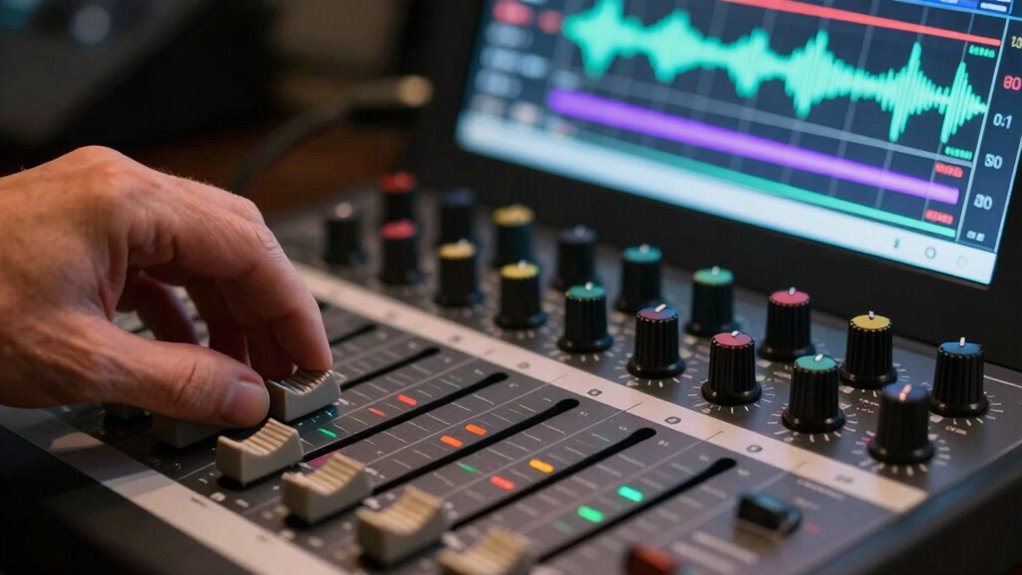

To understand bit depth and sample rate in real life, think of bit depth as how precisely your audio captures quiet and loud sounds, impacting dynamic range and clarity, while sample rate determines how often sound is sampled, affecting the high-frequency detail you hear. Higher settings offer better quality but require more storage. Getting familiar with these helps you choose better audio quality options, so if you keep exploring, you’ll discover how these choices shape your listening experience.

Get audio and creator gear delivered free with Prime
- Fast, free delivery on millions of items
- Prime Video, Amazon Music and more included
- Member-only deals all year
Key Takeaways
- Think of bit depth as the volume range, affecting how quiet or loud sounds can be captured or reproduced.
- Consider sample rate as how often the sound is measured per second, impacting audio detail and clarity.
- Higher bit depth and sample rate improve sound accuracy but also increase file size and processing power needed.
- For casual listening, standard settings like 16-bit, 44.1 kHz are sufficient; professional use benefits from higher settings.
- Understanding these helps you choose the right audio quality for your device, recording, or streaming needs.
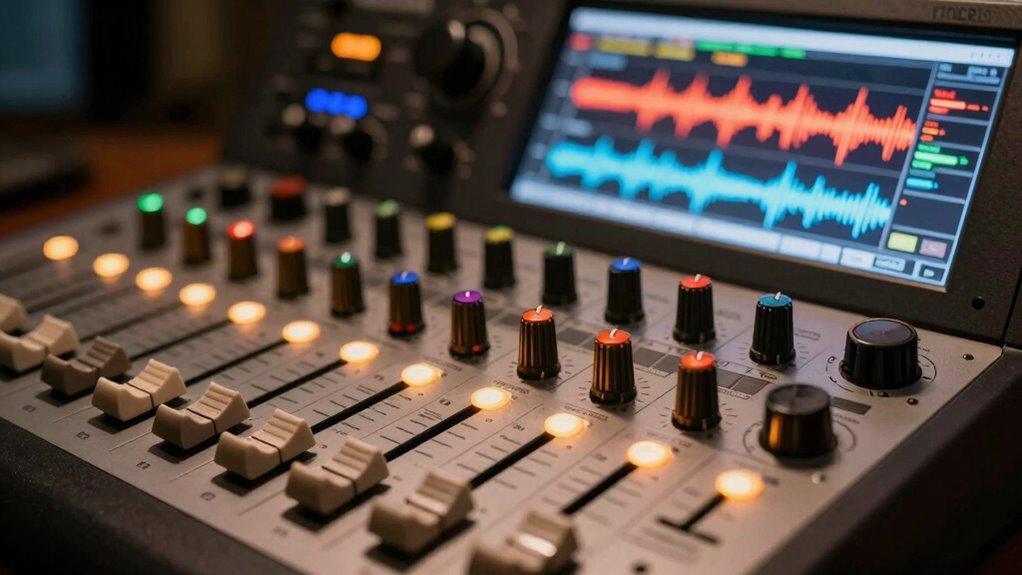
Understanding bit depth and sample rate might seem complex at first, but once you grasp their roles, it becomes easier to appreciate how digital audio preserves sound quality. These two concepts are fundamental to digital resolution, which directly impacts the clarity and detail of the audio you experience. When you listen to music or watch a movie, the quality of sound depends heavily on how accurately the digital system captures and reproduces the original sound waves. That’s where bit depth and sample rate come into play—they determine how much information is stored and how faithfully the digital version reflects real-world sounds.
Digital resolution is a key term that encompasses both of these parameters, showing how they work together to shape audio fidelity. Bit depth refers to the number of bits used to represent each audio sample. Think of it as the resolution of each snapshot in a high-speed camera; the more bits you have, the more detailed and nuanced the sound can be. Higher bit depth allows for a greater dynamic range, meaning you can hear quieter sounds without them getting lost and louder sounds without distortion. It reduces quantization noise, which can make audio sound fuzzy or grainy at lower bit depths. For example, CD quality audio uses a bit depth of 16 bits, providing enough detail for most listening situations, but professional recordings often use 24 bits for even better audio quality.
Sample rate, on the other hand, is about how often these snapshots are taken per second. It’s like taking a series of photographs to create a video; the more photos you take per second, the smoother and more accurate the motion appears. In digital audio, a higher sample rate means the sound wave is sampled more frequently, capturing more detail in the sound. Common sample rates include 44.1 kHz (used for CDs) and 48 kHz (standard for video production). When the sample rate is too low, high-frequency sounds can be lost or distorted, leading to a less accurate reproduction of the original sound. Additionally, selecting an appropriate sample rate is crucial because overly high rates can increase file size without noticeable benefit, especially for casual listening. It’s also important to recognize that excessive sampling rates may introduce aliasing, which can distort the audio signal.
Understanding how these two parameters affect digital resolution helps you make better choices when selecting audio equipment or formats. For instance, if you’re aiming for professional-grade audio, you’ll want higher bit depths and sample rates to ensure maximum fidelity. Conversely, for casual listening or streaming, standard settings often suffice, balancing quality and file size. By knowing how bit depth influences dynamic range and how sample rate affects frequency response, you become more aware of what goes into creating high-quality audio. This knowledge allows you to appreciate the technical aspects behind the sounds you enjoy daily, and it helps you understand why some formats sound better than others.
Furthermore, sampling precision plays a crucial role in how accurately digital audio can replicate real-world sounds, emphasizing the importance of choosing the right settings for different applications. Ultimately, grasping these concepts gives you a clearer perspective on how digital resolution shapes the richness and clarity of sound, helping you make informed decisions when working with or enjoying digital audio.
As an affiliate, we earn on qualifying purchases.
Frequently Asked Questions
How Does Bit Depth Affect Audio Loudness?
Bit depth directly impacts your audio’s loudness by determining its dynamic range—the difference between the quietest and loudest sounds. A higher bit depth increases the dynamic range, allowing you to capture softer sounds without noise interference. It also lowers the noise floor, meaning background noise becomes less noticeable. So, with higher bit depth, your recordings sound clearer and more detailed, especially in quiet sections, enhancing overall loudness and audio quality.
Can Higher Sample Rates Improve Speech Clarity?
Imagine speech so crystal clear it feels like the speaker’s right next to you—that’s what higher sample rates can do. Yes, they can improve speech clarity by capturing more detail, boosting audio fidelity, and expanding the dynamic range. This means every nuance of voice, from soft whispers to loud exclamations, comes through vividly. While not always noticeable, higher sample rates enhance overall clarity, making conversations sound more natural and lifelike.
What Is the Ideal Bit Depth for Live Recordings?
The ideal bit depth for live recordings is typically 24 bits. This depth provides a wider dynamic range, allowing you to capture both loud and quiet sounds accurately. It also keeps the noise floor low, ensuring clearer audio with minimal background noise. Using 24-bit recordings helps preserve audio quality during editing and playback, making your live recordings sound professional and true to life.
Do Higher Sample Rates Increase File Size Significantly?
Yes, higher sample rates can increase file size considerably, mainly because more data is recorded per second. This also impacts file compression efficiency, making files harder to compress without losing quality. Additionally, higher sample rates demand more from your hardware, affecting compatibility and processing performance. If you’re concerned about storage or hardware limitations, sticking to standard sample rates like 44.1kHz or 48kHz is usually best.
How Do Bit Depth and Sample Rate Impact Streaming Quality?
Bit depth and sample rate directly impact streaming quality by affecting audio clarity and detail. Higher bit depths provide richer sound, while higher sample rates capture more audio nuances, enhancing playback on high-quality devices. However, audio compression can reduce these benefits to save bandwidth, so your playback devices’ capabilities also matter. Balancing these factors ensures ideal streaming quality without unnecessary file size increases or degraded sound.
professional audio recording equipment
As an affiliate, we earn on qualifying purchases.
As an affiliate, we earn on qualifying purchases.
Conclusion
Think of bit depth and sample rate as the brushstrokes and canvas of your audio masterpiece. They shape the depth and clarity of your sound, much like a painter’s choices influence a painting’s vibrancy. When you grasp their true significance, you reveal the ability to craft audio that resonates deeply, much like a story that lingers in the mind. Master these elements, and your sound becomes a vessel carrying your creative spirit across every listener’s horizon.
As an affiliate, we earn on qualifying purchases.
As an affiliate, we earn on qualifying purchases.
Fall Picks
fall essentials
As an affiliate, we earn on qualifying purchases.