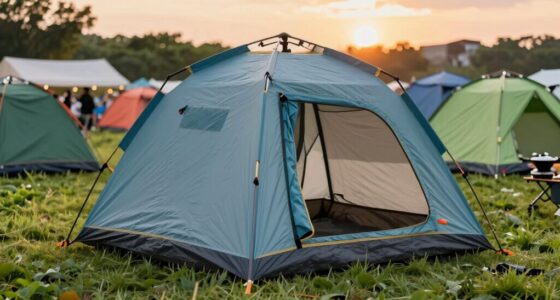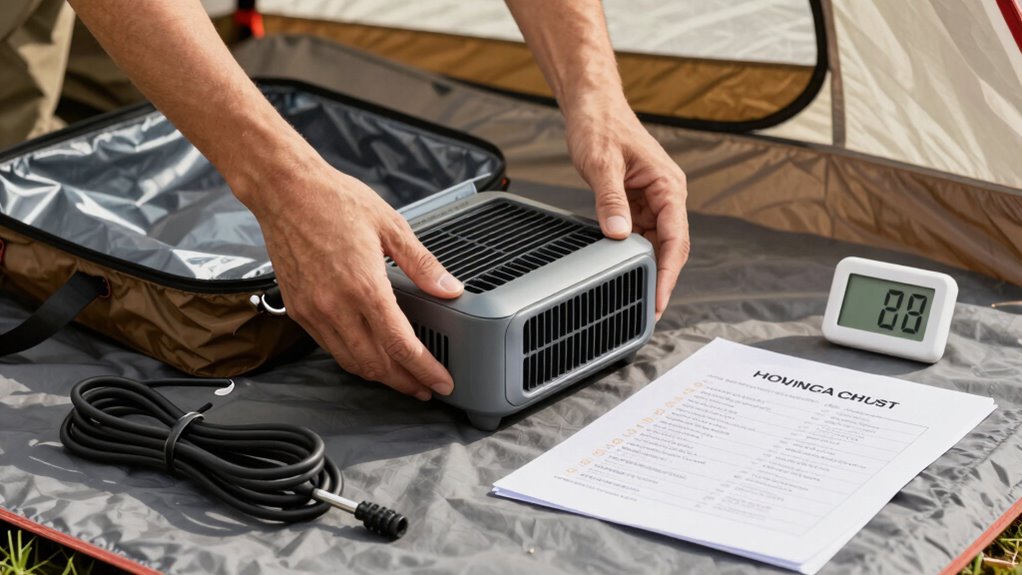

To set up your portable tent air conditioner for camping, guarantee your power source can handle its wattage—using a generator or heavy-duty extension cords if needed. Place the unit on a flat surface and vent the exhaust hose outside, sealing gaps to prevent warm air from entering. Keep vents unobstructed for proper airflow, and position the AC strategically for even cooling. Avoid common mistakes like inadequate power, blocked vents, and poor sealing—learn more to optimize your setup.
Key Takeaways
- Verify your power source can handle the air conditioner’s wattage to prevent performance issues or damage.
- Ensure exhaust hoses are vented outside through sealed windows or vents, avoiding direct sunlight and gaps.
- Place the unit on a stable, flat surface with unobstructed airflow intake and exhaust vents for optimal cooling.
- Use a fan to distribute cooled air evenly and position the AC for targeted cooling of main tent areas.
- Avoid blocking vents, restricting airflow, or neglecting proper sealing around hoses and gaps to maximize efficiency.
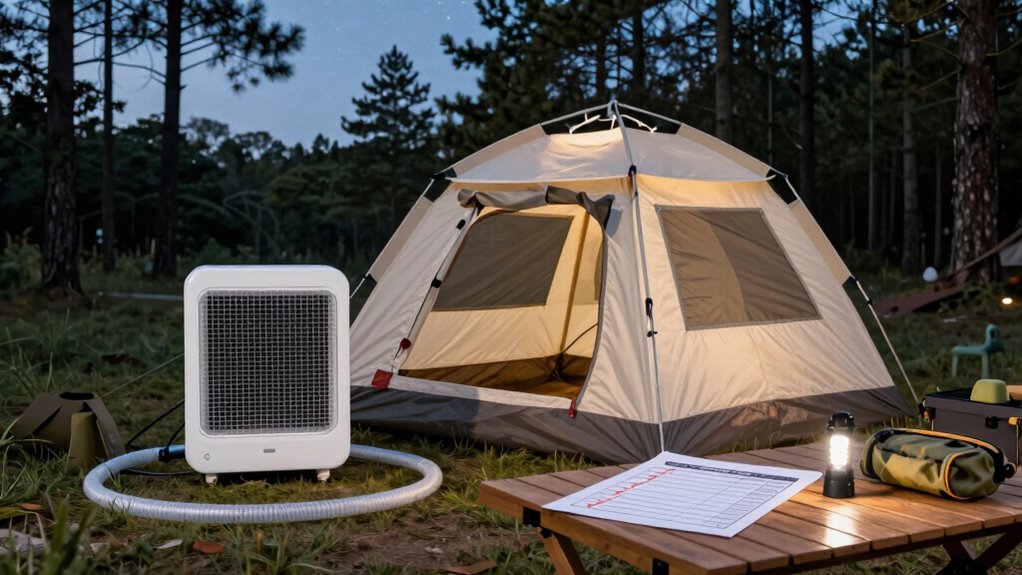
Camping in warm weather can be uncomfortable, but a portable tent air conditioner makes it much more enjoyable. To guarantee you get the most out of your unit, you need to set it up correctly from the start. One of the first things to consider is your power source. Many portable AC units require a reliable, high-capacity power supply, such as a generator or a compatible power bank. Using an inadequate power source can lead to poor performance or even damage your equipment. Before heading out, double-check that your power source can handle the air conditioner’s wattage requirements. This step is vital because a sudden power drop can cause the unit to shut off or operate inefficiently, defeating its purpose. Additionally, always keep extension cords in mind—use heavy-duty, outdoor-rated cords to prevent voltage drops and guarantee safety.
Next, focus on airflow optimization. Proper airflow is key to cooling your tent effectively. Many campers overlook the importance of positioning the air conditioner correctly. Ensure the unit is placed on a flat, stable surface to prevent vibrations that could disrupt airflow. Position the exhaust hose away from direct sunlight and ensure it vents outside the tent, ideally through a window or a dedicated vent. Sealing any gaps around the vent hose with foam or weatherstripping prevents warm air from seeping back inside, maximizing cooling efficiency. Don’t block the airflow intake or exhaust vents of the unit, as restricted airflow can lead to overheating and reduced cooling performance. Also, consider the tent’s layout—aim the airflow toward the sleeping area or the space where you spend most of your time, rather than just letting cooled air circulate randomly. Using a fan in conjunction with the AC can help distribute cooled air more evenly throughout the tent. Furthermore, understanding the importance of projector technology can help you choose the right equipment for a home theater setup, ensuring optimal image quality and viewing experience.
Another common mistake is neglecting to prepare your tent for the AC unit. Ensure your tent has adequate ventilation and enough space around the unit for proper airflow. Overcrowded or poorly ventilated tents can trap hot air, making cooling less effective. Also, check that your tent’s fabric isn’t blocking the vents or restricting airflow. Properly positioning and sealing the vents, along with a suitable power source, are simple yet often overlooked steps that can make a significant difference in your comfort. By paying attention to these details, you avoid common pitfalls that could leave you sweating through the night, despite having a portable AC. With careful setup, you’ll enjoy a cooler, more comfortable camping experience.
Frequently Asked Questions
Can I Use a Portable AC in Extreme Heat Conditions?
You can use a portable AC in extreme heat, but it’s important to consider alternative cooling options and the unit’s heat resistance. In very high temperatures, the AC may struggle or overheat, so make sure it’s designed for such conditions. Keep it well-ventilated and shaded, and supplement with fans or reflective tarps for better efficiency. Always check the manufacturer’s guidelines for maximum temperature limits to avoid damage.
How Do I Power the Portable AC Off-Grid?
Did you know that over 80% of campers rely on off-grid power sources? To power your portable AC off-grid, you should use solar power panels combined with a reliable battery backup. This setup guarantees continuous cooling without access to electrical outlets. Just connect your AC to the battery system, which stores solar energy during the day, providing you with efficient, eco-friendly cooling during your camping trip.
Is It Safe to Run the AC Overnight?
Yes, it’s generally safe to run your portable AC overnight if you follow proper electrical safety and ventilation tips. Make sure your electrical connections are secure and rated for outdoor use. Keep the tent well-ventilated to prevent humidity buildup and ensure proper airflow. Check that the AC is on a stable surface and avoid overloading circuits. Regularly inspect cords and vents to prevent overheating and maintain safe operation throughout the night.
How Do I Prevent Condensation Buildup Inside the Tent?
To prevent condensation buildup inside your tent, guarantee proper ventilation by opening vents or windows slightly, especially during the night. Use ventilation tips like placing the AC exhaust hose outside and avoiding excessive humidity inside the tent. Keep your tent well-ventilated to promote airflow, which helps with condensation prevention. Additionally, avoid bringing in wet gear or clothes, as moisture adds to condensation issues. Proper airflow is key to staying comfortable.
What’s the Best Way to Store the AC After Camping?
Storing your AC after camping is simple with these storage tips and winterizing methods. First, clean the unit thoroughly to prevent buildup. Next, dry all parts completely to avoid mold. Store it in a cool, dry place away from direct sunlight. Use a protective cover or bag for added protection. Follow these storage tips and winterizing methods to keep your portable AC in prime condition for next season.
Conclusion
Now that you have this setup checklist, you’re ready to enjoy cool, comfortable nights in your tent. Remember, improper installation can waste energy and cause discomfort, so avoid common mistakes. Did you know that portable air conditioners can reduce humidity levels by up to 50%, improving sleep quality? By following these tips, you’ll guarantee a safe, efficient setup, making your camping experience more enjoyable. Stay prepared, stay cool, and make the most of your outdoor adventure!