
For rehearsals and gigs, I’d choose the Fender Rumble 200 V3 as the best overall bass amp combo here because its 200-watt output gives it more room to compete with a band than the smaller practice models. The Peavey MAX 300 is a stronger fit for players who need more output headroom, while the Ampeg Rocket Bass RB112 offers a distinct gig-oriented option in a more compact 1×12 format. The main tradeoff is between enough volume for your drummer, a cabinet you can manage on the way to rehearsal, and useful features such as direct output or headphone practice. Small 20- to 50-watt combos can be handy at home but are not equivalent to higher-powered rehearsal rigs. Read on for the full breakdown, ranking logic, and advice on matching an amp to your playing situation.

Get audio and creator gear delivered free with Prime
- Fast, free delivery on millions of items
- Prime Video, Amazon Music and more included
- Member-only deals all year
Complete the kit


Key Takeaways
- The Fender Rumble 200 V3 leads for mixed rehearsal and gig use because its 200-watt rating gives it a more useful balance of band-level output and manageable size than the 25- and 40-watt practice-focused options.
- The Peavey MAX 300 prioritizes output headroom, making it the lineup’s stronger direction for louder rehearsals, while its greater power and cabinet demands may be more than a home player needs.
- The Ampeg Rocket Bass RB112 stands apart as a 100-watt 1×12 choice for players who want a gig-minded combo without moving to the largest-output models.
- Portability and practice features do not equal gig volume: the JOYO Vibe Cube BA-30 and the 20- to 30-watt combos suit personal practice and smaller settings better than loud full-band rehearsals.
- Several product names need extra scrutiny: the Rockville G-AMP 20W is a guitar amp, not a bass combo, and the Rumble 40 bundle adds accessories rather than a different amplifier.
| Peavey MAX 100 Bass Amplifier Combo |  | Best All-Rounder for Small Rehearsals | Amplifier type: Solid state | Output power: Up to 100 watts | Speaker: 10 inches | VIEW ON AMAZON | See Our Full Breakdown |
| Fender Rumble 25 V3 Bass Guitar Amplifier Combo |  | Best for Home Practice and First Rehearsals | Power output: 25 watts | Speaker: 8-inch Fender Special Design | EQ: 3-band | VIEW ON AMAZON | See Our Full Breakdown |
| Fender Rumble 200 V3 Bass Guitar Combo Amplifier, 200W, Black |  | Best Gig-Ready Balance | Amplifier type: Solid state | Power: 200 watts | Speaker: 15 inches | VIEW ON AMAZON | See Our Full Breakdown |
| TS112 30W Bass Guitar Combo Amplifier with Dual Tone Switching |  | Best Compact Two-Way Practice Combo | Amplifier type: Solid state | Power: 30 watts | Speaker configuration: 8-inch woofer and 2.5-inch tweeter | VIEW ON AMAZON | See Our Full Breakdown |
| Hartke HD508 500-Watt Bass Combo Amplifier |  | Best for High-Output Band Work | Amplifier type: Class D | Output power: 500 watts | Speakers: Four 8-inch Hydride paper/aluminum hybrid cone drivers | VIEW ON AMAZON | See Our Full Breakdown |
| Orange Crush Bass 50 Glenn Hughes Limited Edition Bass Combo Amplifier |  | Best for Gritty, Flexible Tone | Power output: 50 watts | Speaker: 12 inches | EQ: Three-band | VIEW ON AMAZON | See Our Full Breakdown |
| JOYO Vibe Cube BA-30 30W Portable Bass Amplifier with Bluetooth and OTG Recording |  | Best for Desktop Practice and Recording | Output power: 30 watts | Speaker: 4 inches | EQ: Three-band with 200–2000 Hz mid-frequency control | VIEW ON AMAZON | See Our Full Breakdown |
| Peavey MAX 300 Bass Combo Amplifier |  | Best for Loud Rehearsals and Gig Headroom | Output power: Up to 300 watts | Speakers: Two 10-inch speakers | EQ: Three-band | VIEW ON AMAZON | See Our Full Breakdown |
| Rockville G-AMP 20W Guitar Amplifier Combo with Bluetooth, Delay, Dual Inputs, EQ, and Portability |  | Best to Skip for Bass Rehearsals and Gigs | Amplifier type: Guitar amplifier combo | Power: 20W RMS | Speaker: 6.5 inches | VIEW ON AMAZON | See Our Full Breakdown |
| Fender Rumble 40 V3 Bass Amplifier – 40W with 10-Inch Fender Speaker, Overdrive, Contour Switch, XLR Out, Aux, Headphone |  | Best Compact Gig-Ready Pick | Power: 40 watts | Speaker: 10-inch Fender Special Design | Tone controls: Switchable overdrive and contour | VIEW ON AMAZON | See Our Full Breakdown |
| Peavey MAX 208 200-Watt Bass Amplifier Combo |  | Best for Player-Facing Rehearsal Power | Brand: Peavey | Model: MAX 208 | Amplifier type: Solid state | VIEW ON AMAZON | See Our Full Breakdown |
| GLARRY Electric Bass Combo Amp, Portable Amp with Headphone MP3 Input, 20W Practice Bass Guitar Amplifier Speaker Accessories with Bass, Volume, Treble, and Middle Controls |  | Best for Portable Practice | Amplifier type: Bass combo amplifier | Output power: 20 watts | Weight: 6.61 pounds | VIEW ON AMAZON | See Our Full Breakdown |
| Fender Rumble 40 Bass Combo Amplifier Bundle with Instrument Cable and Instructional DVD |  | Best Starter Gig Bundle | Power: 40 watts | Speaker: Fender special design speaker | Cabinet material: Plywood | VIEW ON AMAZON | See Our Full Breakdown |
| Ampeg Rocket Bass RB112 100W 1×12″ Bass Combo Amplifier |  | Best for Small Gigs and PA Support | Power: 100 watts | Speaker configuration: 1 × 12-inch | Inputs: 0dB and -15dB | VIEW ON AMAZON | See Our Full Breakdown |
| bass amp combo for rehearsals and gig | EQ | Amplifier type | Speaker | Weight |
|---|---|---|---|---|
| Peavey MAX 100 Bass Amplifier | 3-band | Solid state | 10 inches | 13.2 kg |
| Fender Rumble 25 V3 Bass Guita | 3-band | — | 8-inch Fender Special Design | — |
| Fender Rumble 200 V3 Bass Guit | 3-band | Solid state | 15 inches | 39.4 pounds |
| TS112 30W Bass Guitar Combo Am | — | Solid state | — | 9 kg |
| Hartke HD508 500-Watt Bass Com | 3-band bass, mid, and treble | Class D | — | 49 pounds |
| Orange Crush Bass 50 Glenn Hug | Three-band | Hybrid | 12 inches | — |
| JOYO Vibe Cube BA-30 30W Porta | Three-band with 200–2000 Hz mid-frequency control | — | 4 inches | 2.7 kg (5.95 lbs) |
| Peavey MAX 300 Bass Combo Ampl | Three-band | — | — | 57 pounds |
| Rockville G-AMP 20W Guitar Amp | Three-band: treble, mid, bass | Guitar amplifier combo | 6.5 inches | — |
| Fender Rumble 40 V3 Bass Ampli | — | — | 10-inch Fender Special Design | — |
| Peavey MAX 208 200-Watt Bass A | 3 bands | Solid state | — | — |
| GLARRY Electric Bass Combo Amp | — | Bass combo amplifier | — | 6.61 pounds |
| Fender Rumble 40 Bass Combo Am | — | — | Fender special design speaker | — |
| Ampeg Rocket Bass RB112 100W 1 | — | — | — | — |
More Details on Our Top Picks
Peavey MAX 100 Bass Amplifier Combo
The Peavey MAX 100 occupies a useful middle ground: its 100-watt output and 10-inch speaker offer more rehearsal headroom than the Fender Rumble 25 V3, without the size and weight of the Rumble 200. Its XLR direct output gives a gigging bassist a way to send a signal to a PA, while the built-in tuner, mute, and headphone jack cover practical rehearsal and home needs. Tone shaping is unusually flexible for this class, with three-band EQ plus contour, mid-shift, bright, and low-end controls. The angled baffle also directs sound toward the player, which can help with monitoring in a compact room. The tradeoff is that 100 watts and a 10-inch driver are better suited to modest-volume settings than loud stages; it is not a substitute for the Hartke HD508 when greater output and speaker area matter.
Pros:- 100 watts and a 10-inch speaker offer more rehearsal capability than small practice combos.
- XLR direct output supports connection to a PA at gigs.
- Built-in tuner with mute, auxiliary input, and headphone output cover common practice needs.
- Angled baffle and multiple tone controls help with monitoring and sound shaping.
Cons:- A single 10-inch speaker and 100 watts may fall short on loud stages without PA support.
- Single-channel design offers no separate channel switching.
- Listed dimensions appear inconsistent, making size estimates less dependable.
Best for: Bassists who need one manageable combo for home practice, rehearsals, and smaller gigs where a PA can carry the room.
Not ideal for: Players in loud bands who need strong unreinforced stage volume or deeper speaker coverage than a single 10-inch driver can provide.
- Amplifier type:Solid state
- Output power:Up to 100 watts
- Speaker:10 inches
- EQ:3-band
- Tuning:Built-in chromatic tuner with mute
- Outputs:1/8-inch headphone; XLR direct output with ground lift
- Additional input:1/8-inch auxiliary
- Weight:13.2 kg
Our verdict“Choose the MAX 100 for a flexible rehearsal combo with a useful direct output, but step up to a higher-powered model for loud, unreinforced gigs.”
Fender Rumble 25 V3 Bass Guitar Amplifier Combo
The Fender Rumble 25 V3 is the practice-first choice in this group. Its 25 watts and 8-inch speaker keep the combo compact, while the auxiliary input and headphone output make it easy to play along with tracks or practice quietly. Three-band EQ, contour controls, and switchable overdrive add useful ways to shape a sound without making the amp complicated. Compared with the TS112, the Rumble is a lower-output option from a familiar bass-amp line; compared with the Peavey MAX 100, it gives up substantial rehearsal headroom and a direct output. That difference matters once drums and guitars get loud. I would treat it as a home amp or a tool for quiet, early rehearsals, not as a dependable standalone gig combo.
Pros:- Compact format suits home practice and limited storage space.
- Auxiliary input and headphone output support track-based and silent practice.
- Three-band EQ and contour controls provide straightforward tone shaping.
- Switchable overdrive adds an alternate sound without extra equipment.
Cons:- 25 watts is limited for band rehearsals and most gig settings.
- The 8-inch speaker offers less low-end depth and projection than the MAX 100 or Rumble 200.
- No XLR direct output is listed for sending a signal to a venue PA.
Best for: New bassists and home players who want a compact practice amp with headphone and backing-track connections, and only occasional quiet rehearsal use.
Not ideal for: Players rehearsing with a loud drummer or looking for a combo that can cover a live room without PA reinforcement.
- Power output:25 watts
- Speaker:8-inch Fender Special Design
- EQ:3-band
- Tone features:Switchable contour controls and overdrive
- Auxiliary input:1/8-inch
- Headphone output:1/4-inch
- Warranty:2-year limited
Our verdict“Pick the Rumble 25 for home practice and quiet beginnings, not for regular rehearsals or gigs that demand substantial stage volume.”
Fender Rumble 200 V3 Bass Guitar Combo Amplifier, 200W, Black
For players who want a combo that can handle rehearsals and serve as a credible gig rig, the Fender Rumble 200 V3 is the most balanced step up here. Its 200-watt output and 15-inch speaker offer more stage presence and low-frequency reach than the MAX 100, while the XLR output makes PA connection straightforward. The effects loop, auxiliary input, headphone output, and additional speaker output give it room to fit changing setups. Three voicing controls and switchable overdrive also make quick tone adjustments easier than relying on EQ alone. It is not as powerful as the Hartke HD508, which brings 500 watts and four drivers, but the Rumble is a less imposing choice for players who do not need that much capacity. At 39.4 pounds, it is still a real carry, and corded power limits where it can be used.
Pros:- 200 watts and a 15-inch speaker provide more rehearsal and gig headroom than the smaller combos here.
- XLR output supports direct connection to a venue PA.
- Effects loop and additional speaker output allow more flexible rig setups.
- Voicing controls and switchable overdrive enable quick tonal changes.
Cons:- At 39.4 pounds, it is less convenient to carry than the MAX 100 or small practice amps.
- The 200-watt output is below the Hartke HD508’s stated 500 watts for players needing more power reserve.
- Requires corded electric power.
Best for: Gigging and rehearsal bassists who want a 15-inch combo with a PA output and enough power for many small-to-medium band settings.
Not ideal for: Players who need a very lightweight carry, battery operation, or maximum stage output for loud performances without PA support.
- Amplifier type:Solid state
- Power:200 watts
- Speaker:15 inches
- EQ:3-band
- Outputs:XLR, 1/8-inch headphone, additional 8-ohm speaker output
- Inputs:1/8-inch auxiliary
- Other features:Switchable overdrive, three-button voicing controls, effects loop, horn defeat
- Weight:39.4 pounds
Our verdict“Choose the Rumble 200 for a capable rehearsal-and-gig combo with practical PA connectivity, unless you need the Hartke HD508’s greater stated output.”
TS112 30W Bass Guitar Combo Amplifier with Dual Tone Switching
The TS112 adds a 2.5-inch tweeter alongside its 8-inch woofer, giving it a different speaker arrangement from the single-driver Fender Rumble 25 V3. Its 30-watt rating and clean/distortion switching make it a practical option for home playing and restrained rehearsals, while the auxiliary and headphone jacks keep practice setup simple. The metal enclosure and listed 9 kg weight make it less convenient to lift than its compact dimensions might suggest. For rehearsal and gig use, that distinction matters: this is a small-room tool, not a replacement for the Peavey MAX 100 or Rumble 200 when more volume and direct PA connectivity are needed. No XLR output or extra speaker connection is listed, so a gigging bassist should plan around its limited onstage reach.
Pros:- Separate 8-inch woofer and 2.5-inch tweeter provide a two-way speaker configuration.
- Switchable clean and distortion tones offer a quick change in character.
- Auxiliary input supports playing along with MP3 tracks.
- Headphone output mutes the speaker for private practice.
Cons:- 30 watts limits usefulness with a loud rehearsal band or onstage without PA support.
- At 9 kg, it is heavier than some small practice combos.
- No XLR direct output or additional speaker output is listed.
Best for: Home players and bassists who want a compact combo with clean and distortion options for practice, backing tracks, and quiet rehearsals.
Not ideal for: Gigging players who need an XLR feed, greater power, or enough stage volume to keep pace with a loud band.
- Amplifier type:Solid state
- Power:30 watts
- Speaker configuration:8-inch woofer and 2.5-inch tweeter
- Tone switching:Clean and distortion
- Auxiliary input:1/8-inch
- Headphone output:1/8-inch jack; mutes speaker
- Dimensions:9.44 × 14.9 × 14.1 inches
- Weight:9 kg
Our verdict“Choose the TS112 for compact practice with two-way speakers and simple tone switching, but choose a more powerful combo for regular gigs.”
Hartke HD508 500-Watt Bass Combo Amplifier
The Hartke HD508 is the high-output pick for bassists whose rehearsals and gigs demand more headroom than the other combos in this batch. Its 500-watt Class D amplifier drives four 8-inch hybrid-cone speakers, a substantially different approach from the single 15-inch driver in the Fender Rumble 200. That four-driver setup and the variable Shape filter give players useful options for shaping a sound that cuts through a band mix. XLR direct output, an effects loop, auxiliary input, and headphone connection cover stage and practice needs. The tradeoff is size and carrying effort: 49 pounds is not light, even if the enclosure is described as lightweight. It also needs mains power, and the provided enclosure dimensions appear unreliable. This is more amp than a home-only player needs, but a stronger fit for demanding band volume.
Pros:- 500-watt Class D output offers the highest stated power in this batch.
- Four 8-inch hybrid-cone drivers provide a multi-speaker arrangement for band use.
- XLR direct output and effects loop support gig and effects setups.
- Auxiliary input and headphone output add practice flexibility.
Cons:- At 49 pounds, it is a substantial carry for regular transport.
- Corded power restricts use to locations with mains electricity.
- Listed enclosure dimensions appear unreliable.
Best for: Gigging bassists and loud-rehearsal players who want substantial stated power, multiple drivers, and a direct PA connection in a combo format.
Not ideal for: Home-only players, frequent stair carriers, or anyone seeking a small, easy-to-transport practice amp.
- Amplifier type:Class D
- Output power:500 watts
- Speakers:Four 8-inch Hydride paper/aluminum hybrid cone drivers
- EQ:3-band bass, mid, and treble
- Tone control:Variable Shape filter
- Connections:XLR direct output, 1/8-inch stereo auxiliary input, 1/4-inch headphone output, effects loop
- Weight:49 pounds
- Warranty:2 years parts and labor
Our verdict“Pick the HD508 when your band needs the greatest stated output in this group and you can accommodate a 49-pound combo.”
Orange Crush Bass 50 Glenn Hughes Limited Edition Bass Combo Amplifier
The Orange Crush Bass 50 is the pick here for players who want a rehearsal amp that can shift from a clean foundation to pronounced distortion without relying on a separate pedal. Its blend control lets the clean bass remain present as you add grit, while the three-band EQ offers useful tone shaping. Compared with the Fender Rumble 40 V3, the Orange puts more emphasis on distortion and effects routing; the Fender is the simpler choice if you want a 10-inch speaker and XLR output for small-venue connections. The Orange’s 12-inch speaker and 50-watt output suit practice and modest rehearsals, but this isn’t the high-output choice for loud bands or larger gigs. A headphone output and effects loop add flexibility, though it needs mains power. The listed 16-ounce weight appears unreliable for a combo of this size.
Pros:- 12-inch speaker and 50-watt output suit personal practice and modest rehearsals.
- Gain and blend controls cover clean tones through heavier distortion.
- Three-band active EQ offers broad bass, mid, and treble adjustment.
- Transparent effects loop and cab-simulated headphone output support effects use and silent practice.
Cons:- Output may fall short when competing with a loud drummer or filling a larger venue.
- Requires a suitable mains outlet.
- The listed 16-ounce weight appears inaccurate and is not useful for judging portability.
Best for: Bassists who want a compact rehearsal combo with adjustable clean-to-distorted tones and a headphone option for quiet practice.
Not ideal for: Players in loud bands or larger venues who need substantial clean headroom, or anyone seeking a dependable carry weight from the listed specification.
- Power output:50 watts
- Speaker:12 inches
- EQ:Three-band
- Tone controls:Gain and clean/distortion blend
- Connections:Transparent effects loop; cab-simulated headphone output
- Amplifier type:Hybrid
- Finish:Deep purple vinyl with Glenn Hughes plaque
- Dimensions:10.83 × 16.93 × 19.09 inches (D × W × H)
- Warranty:1 year
Our verdict“Choose the Orange if adjustable distortion and effects routing matter more than the greater gig headroom offered by larger combos.”
JOYO Vibe Cube BA-30 30W Portable Bass Amplifier with Bluetooth and OTG Recording
The JOYO Vibe Cube BA-30 prioritizes convenience over room-filling bass: its small 4-inch speaker suits home practice, while Bluetooth playback and USB-C OTG recording make it useful for playing along with tracks or capturing ideas on a phone or computer. A mid-frequency control and built-in compression give it more tone-shaping options than its size might suggest. Compared with the Orange Crush Bass 50, the JOYO is easier to move and better equipped for direct practice and recording, but its small speaker is a clear limitation for band rehearsals and gigs. The “portable” label also needs a qualifier: it has no internal battery. Outdoor use requires a compatible 65W-or-higher PD power bank and cable, so it is not a grab-and-play battery amp.
Pros:- Bluetooth 5.1 supports wireless playback of backing tracks.
- USB-C OTG connection supports recording to a phone or computer.
- Three-band EQ, adjustable mid frequency, and compression offer useful tone control.
- Compact 5.95-pound design includes a carrying handle and headphone output.
Cons:- The 4-inch speaker limits low-frequency weight and usefulness in band settings.
- There is no internal battery; operation requires the included adapter or a compatible power bank.
- Portable power-bank use requires a 65W-or-higher PD unit and a suitable high-current USB-C cable.
Best for: Home-practice bassists and beginner creators who want Bluetooth backing tracks, headphone practice, and USB-C recording in a compact amp.
Not ideal for: Players needing a bass combo to keep up with a drummer or deliver substantial low end at rehearsals and gigs, or anyone expecting battery-powered operation without extra equipment.
- Output power:30 watts
- Speaker:4 inches
- EQ:Three-band with 200–2000 Hz mid-frequency control
- Tone shaping:Built-in compression
- Connectivity:Bluetooth 5.1, USB-C OTG, 3.5 mm jack, 6.35 mm jack
- Power:Adapter or compatible 65W-or-higher PD power bank; no internal battery
- Weight:2.7 kg (5.95 lbs)
- Dimensions:7.24 × 8.5 × 6.5 inches (D × W × H)
Our verdict“Pick the JOYO for compact practice and recording features, not as your main amp for rehearsals with a full band.”
Peavey MAX 300 Bass Combo Amplifier
For players whose rehearsal problem is being heard, the Peavey MAX 300 is the strongest fit in this group. Its 300-watt output and two 10-inch speakers give it a scale advantage over the Fender Rumble 40 V3 and Orange Crush Bass 50, both better suited to practice and smaller settings. The Peavey also helps on stage: its XLR direct output with ground lift can feed a PA, while the built-in mute tuner and DDT speaker protection add practical gig support. Tone controls include a three-band EQ, selectable voicings, and TransTube gain boost. The tradeoff is its 57-pound weight and large cabinet, which make regular transport harder than with smaller combos. It is a corded amp, too, and its auxiliary and headphone connections are 1/8-inch.
Pros:- 300-watt output and two 10-inch speakers provide greater rehearsal and gig headroom than the smaller combos here.
- XLR direct output with ground lift supports a direct connection to a PA.
- Built-in chromatic tuner includes a mute function for tuning between songs.
- Three-band EQ, selectable tone controls, and TransTube gain boost offer several voicing options.
Cons:- At 57 pounds, it is a demanding choice for frequent solo transport.
- The 19.8 × 21 × 27-inch cabinet takes considerably more vehicle and storage space than compact options.
- The headphone and auxiliary connections are 1/8-inch.
Best for: Gigging bassists and rehearsal players who need more speaker area and output, plus an XLR feed for a PA.
Not ideal for: Musicians who carry their amp up stairs, have limited vehicle space, or mainly need a small home-practice combo.
- Output power:Up to 300 watts
- Speakers:Two 10-inch speakers
- EQ:Three-band
- Tone controls:Selectable tone controls and TransTube gain boost
- Protection:DDT speaker protection
- Tuner:Built-in chromatic tuner with mute
- Outputs:1/8-inch headphone output; XLR direct output with ground lift
- Weight:57 pounds
- Dimensions:19.8 × 21 × 27 inches
Our verdict“Choose the Peavey when rehearsal volume and stage connectivity matter more than easy one-person transport.”
Rockville G-AMP 20W Guitar Amplifier Combo with Bluetooth, Delay, Dual Inputs, EQ, and Portability
The Rockville G-AMP is a guitar amplifier, not a bass combo, so I would not choose it as the main amp for bass rehearsals or gigs. Its 20-watt output and 6.5-inch speaker are aimed at guitar practice and small settings; the listing gives no bass-specific speaker or performance details to support using it for amplified bass. Compared with the bass-oriented JOYO Vibe Cube BA-30, the Rockville offers dual guitar inputs and built-in delay, but the JOYO is the more appropriate choice for bass and adds USB-C recording. Bluetooth and a headphone jack make the Rockville convenient for guitar practice, while clean and overdrive channels provide basic sound options. Those features do not resolve the central mismatch: bassists seeking a reliable rehearsal or gig rig should choose an actual bass combo.
Pros:- Bluetooth supports wireless playback of music or backing tracks.
- Dual guitar inputs can suit lessons or two-player practice.
- Clean and overdrive channels with three-band EQ offer basic guitar tone options.
- Headphone output supports quiet guitar practice.
Cons:- It is marketed as a guitar amplifier, not a bass combo.
- Its 20-watt output and 6.5-inch speaker make it a poor match for bass rehearsal or gig duties.
- Built-in delay is a basic effect rather than a substitute for a dedicated pedal or broader effects setup.
Best for: Guitarists who want a small practice amp with Bluetooth, delay, and two guitar inputs—not bassists shopping for a rehearsal combo.
Not ideal for: Bassists needing suitable low-frequency reproduction, dependable band rehearsal volume, or an amp specified for bass guitar.
- Amplifier type:Guitar amplifier combo
- Power:20W RMS
- Speaker:6.5 inches
- Channels:Clean and overdrive
- EQ:Three-band: treble, mid, bass
- Effects:Built-in delay
- Inputs:Dual guitar inputs
- Other connections:Bluetooth and headphone jack
Our verdict“Bassists should pass on the Rockville and choose a bass-specific combo such as the JOYO or Fender instead.”
Fender Rumble 40 V3 Bass Amplifier – 40W with 10-Inch Fender Speaker, Overdrive, Contour Switch, XLR Out, Aux, Headphone
The Fender Rumble 40 V3 is a sensible middle ground for players who need a bass-specific combo that stays manageable between home, rehearsal, and smaller gigs. Its 40-watt output and 10-inch speaker give it a more substantial foundation than the JOYO Vibe Cube BA-30’s 4-inch speaker, while keeping the amp smaller in ambition than the 300-watt Peavey MAX 300. Switchable overdrive and contour controls let players adjust the character without a complicated setup, and the listed XLR output gives it a useful route to a PA. The main limit is headroom: the Fender’s compact format is better suited to modest settings than a loud band or large room. It also lacks built-in effects beyond overdrive, so players wanting more processing will need pedals.
Pros:- 40-watt output and a 10-inch speaker offer a practical balance for practice and smaller performances.
- Switchable overdrive and contour controls provide quick tone changes.
- XLR output can connect the amp to a PA for additional room coverage.
- Two-year warranty is longer than the Orange Crush Bass 50’s listed one-year warranty.
Cons:- Limited output and cabinet scale make it a weaker choice for loud bands or large venues without PA support.
- No listed built-in effects beyond overdrive.
- The supplied specifications do not state the weight, making portability comparisons harder to quantify.
Best for: Bassists who want a straightforward, portable combo for home practice, rehearsals, and smaller gigs where a PA can carry the room.
Not ideal for: Players who need strong standalone volume for loud stages, extensive built-in effects, or deep low-end projection in larger venues.
- Power:40 watts
- Speaker:10-inch Fender Special Design
- Tone controls:Switchable overdrive and contour
- Outputs:XLR output and headphone output
- Auxiliary connection:Aux input
- Dimensions:20.25 × 20.25 × 16 inches
- Warranty:2 years
Our verdict“Pick the Fender for a practical small-gig bass combo with an XLR path to the PA, but choose the Peavey MAX 300 for more standalone headroom.”
Peavey MAX 208 200-Watt Bass Amplifier Combo
The Peavey MAX 208 is the strongest fit here for players who want substantial combo power without moving up to a larger single-speaker cabinet. Its two 8-inch speakers and angled baffle help project sound toward the player, while the three-band EQ and added tone controls offer more shaping options than the simpler Fender Rumble 40. The XLR direct output also gives it a practical route to a PA for gigs where the combo alone may not carry the room. TransTube gain boost adds grit, and DDT protection helps guard the speakers when levels rise. The tradeoff is that 200 watts and its larger listed dimensions make it less of a grab-and-go practice amp than the GLARRY 20W. It also needs mains power, and the supplied 16-ounce weight figure seems unreliable for a combo of this size.
Pros:- Two 8-inch speakers paired with up to 200 watts
- Angled baffle directs sound toward the player
- Three-band EQ plus several tone-shaping controls
- XLR direct output and DDT speaker protection
Cons:- Requires corded electric power
- Listed dimensions suggest a less compact package than small practice combos
- The listed 16-ounce weight is implausible and should not guide carrying decisions
Best for: Bassists who want a powerful rehearsal combo with player-directed sound, flexible tone controls, and an XLR feed for small-venue PA support.
Not ideal for: Players seeking a verified lightweight practice amp or a compact, battery-free setup for casual playing away from an outlet.
- Brand:Peavey
- Model:MAX 208
- Amplifier type:Solid state
- Output power:Up to 200 watts
- Speakers:Two 8-inch speakers
- EQ:3 bands
- Outputs:3.5 mm headphones; XLR direct output
- Dimensions:16 × 15 × 27 inches
- Power source:Corded electric
Our verdict“Choose the MAX 208 for rehearsal power and useful PA connectivity; choose a smaller combo if portability matters more.”
GLARRY Electric Bass Combo Amp, Portable Amp with Headphone MP3 Input, 20W Practice Bass Guitar Amplifier Speaker Accessories with Bass, Volume, Treble, and Middle Controls
The GLARRY 20W is the practice-first choice in this group: its stated 6.61-pound weight, headphone connection, and auxiliary input suit bedroom playing and quiet sessions far better than the gig-oriented Peavey MAX 208. Separate gain, volume, bass, middle, and treble controls give beginners room to learn basic tone shaping rather than relying on a single preset. Hard rubber edges are a useful touch for an amp that may get moved around often. The limit is clear, though: 20 watts is not a substitute for the 100-watt Ampeg RB112 or a higher-powered rehearsal combo when drums and guitars get loud. The provided product data does not specify speaker size, dimensions, or a direct output, so I would treat it as a personal practice amp rather than plan a gig setup around it.
Pros:- Listed weight of 6.61 pounds makes it easy to carry
- Headphone connection supports quiet practice
- Auxiliary input lets players practice alongside an MP3 source
- Gain, volume, bass, middle, and treble controls offer basic tone adjustment
Cons:- 20 watts is suited to practice, not loud band rehearsals or most gigs
- Product data does not identify speaker size or cabinet dimensions
- No direct output is listed for connecting to a PA
Best for: New bassists and apartment players who want a light practice amp with headphone and MP3 connections plus hands-on EQ controls.
Not ideal for: Bands rehearsing at drummer volume or players needing stage projection, an XLR feed, or documented speaker and output specifications.
- Amplifier type:Bass combo amplifier
- Output power:20 watts
- Weight:6.61 pounds
- Controls:Gain, volume, treble, bass, and middle
- Auxiliary input:1/8-inch
- Headphone connection:1/4-inch
- Portability feature:Belt clip
- Cabinet protection:Hard rubber edges
Our verdict“Pick the GLARRY for lightweight home practice and skip it if you need enough output for a band or a PA-ready gig rig.”
Fender Rumble 40 Bass Combo Amplifier Bundle with Instrument Cable and Instructional DVD
The Fender Rumble 40 bundle makes sense for a beginner who wants one purchase to cover lessons, home practice, and early small-room playing. Its 40-watt output sits between the GLARRY’s practice-focused 20 watts and the more rehearsal-ready Peavey MAX 208, giving it more headroom for a small performance without the bulk implied by the Peavey’s listed dimensions. The included 10-foot instrument cable and instructional DVD add practical starter value, while the ported plywood cabinet is designed for a fuller bass response than a bare practice speaker. Still, 40 watts is a boundary, not a promise of loud-band coverage: the 100-watt Ampeg RB112 is a more suitable step up for small gigs, and neither the listed features nor bundle details suggest extensive tone shaping. Skip it if your band needs high stage volume.
Pros:- 40-watt output offers more room than entry-level practice combos
- Compact, lightweight design is suited to moving between home and lessons
- Ported plywood cabinet is designed for bass response
- Bundle includes a 10-foot instrument cable and instructional DVD
Cons:- Limited headroom for loud rehearsals and larger venues
- Listed controls may feel basic to players wanting extensive tone shaping
- No direct output is specified in the supplied product details
Best for: Beginning bassists who need a single practice-and-small-room package, including a cable and instructional material to get started.
Not ideal for: Bassists playing with loud drummers or seeking a PA-ready output and more gig headroom than a 40-watt combo provides.
- Power:40 watts
- Speaker:Fender special design speaker
- Cabinet material:Plywood
- Cabinet design:Ported
- Included accessory:10-foot instrument cable
- Included learning material:Instructional DVD
- Style:Vintage-style radio control knobs
Our verdict“Choose this bundle for a beginner’s practice setup and small performances, but move to a higher-powered amp for loud band work.”
Ampeg Rocket Bass RB112 100W 1×12″ Bass Combo Amplifier
The Ampeg Rocket Bass RB112 is the balanced gig pick for players who want more authority than a 40-watt practice-and-small-room combo without jumping to the MAX 208’s 200-watt, dual-speaker format. Its 100 watts and single 12-inch speaker make it a plausible choice for rehearsals and smaller stages, while the XLR direct output lets a sound engineer send the bass to the PA when the combo cannot cover the whole room. Super Grit Technology provides built-in overdrive for a more driven sound without adding a separate pedal. Compared with the Fender Rumble 40 bundle, the Ampeg has more listed power and a clear direct-output feature, but the Fender includes starter accessories. The RB112 may still lack the low-end spread or volume for larger venues, and its single speaker is less expansive than the Peavey’s two-speaker setup.
Pros:- 100 watts suits rehearsals and smaller venue performances
- XLR direct output supports PA and recording connections
- Built-in Super Grit Technology provides overdrive
- 0dB and -15dB inputs accommodate different input levels
Cons:- May not provide enough output for larger venues without PA support
- Single 12-inch speaker may offer less low-end spread than larger or multi-speaker cabinets
- No included cable or instructional material is specified
Best for: Gigging bassists who play small venues and want a 100-watt combo with XLR connection to a PA or recording interface.
Not ideal for: Players who need high stage volume without PA support, or who prioritize a multi-speaker cabinet for broader low-frequency coverage.
- Power:100 watts
- Speaker configuration:1 × 12-inch
- Inputs:0dB and -15dB
- Direct output:XLR
- Overdrive feature:Super Grit Technology
- Styling:Vintage Ampeg styling
- Product type:Bass combo amplifier
Our verdict“Pick the RB112 for small gigs where XLR PA support and built-in overdrive matter more than maximum stage volume.”
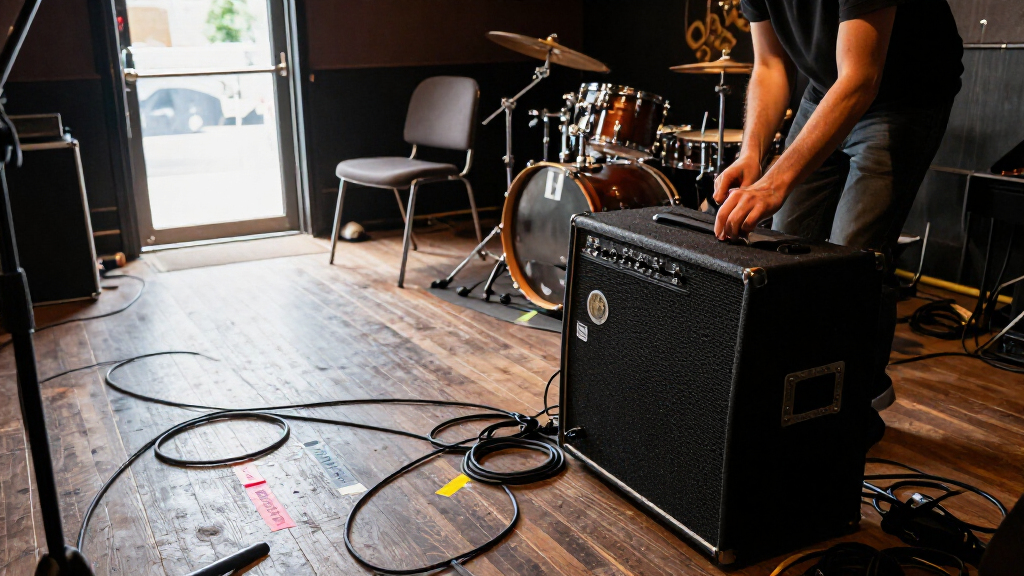
How We Picked
I ranked these combos for the specific job of rehearsing with other musicians and playing gigs, not simply for home practice or feature count. Output rating and speaker configuration mattered because a bass amp must keep low notes audible alongside drums and amplified guitars. I also weighed practical details that affect regular use: portability, connection options, tone controls, and whether the product is clearly intended for bass.
The ranking favors amps that appear better suited to band-level use while still offering a workable balance for transport and day-to-day playing. That puts the Fender Rumble 200 V3 and Peavey MAX 300 ahead of low-wattage practice combos, while the Ampeg Rocket Bass RB112 earns a distinct place for its 1×12 gig-oriented format. Models with limited output rank lower for this use case, and the Rockville G-AMP 20W ranks as a poor fit because it is identified as a guitar amplifier. Product names and stated specifications guide this comparison; they do not replace checking the manufacturer’s current documentation, especially for power ratings, speaker details, and outputs.
| bass amp combo for rehearsals and gig | Amplifier type |
|---|---|
| Peavey MAX 100 Bass Amplifier | Solid state |
| Fender Rumble 25 V3 Bass Guita | — |
| Fender Rumble 200 V3 Bass Guit | Solid state |
| TS112 30W Bass Guitar Combo Am | Solid state |
| Hartke HD508 500-Watt Bass Com | Class D |
| Orange Crush Bass 50 Glenn Hug | Hybrid |
| JOYO Vibe Cube BA-30 30W Porta | — |
| Peavey MAX 300 Bass Combo Ampl | — |
| Rockville G-AMP 20W Guitar Amp | Guitar amplifier combo |
| Fender Rumble 40 V3 Bass Ampli | — |
| Peavey MAX 208 200-Watt Bass A | Solid state |
| GLARRY Electric Bass Combo Amp | Bass combo amplifier |
| Fender Rumble 40 Bass Combo Am | — |
| Ampeg Rocket Bass RB112 100W 1 | — |
Factors to Consider When Choosing Bass Amp Combo For Rehearsals And Gigs
Before choosing a combo, I’d start with the band and venues it needs to handle. A home-friendly feature set can be useful, but it does not solve the main rehearsal problem: being heard clearly without pushing the amp beyond its comfortable range. These checks help separate a convenient practice amp from a rig that can serve reliably beyond the bedroom.
Match power to the loudest rehearsal you play
Think about your loudest regular band setting, not the quietest one. A drummer who plays hard can make a small combo feel inadequate even when its controls are turned high. More rated power can provide headroom, but wattage alone does not predict how loud or clear a rig will sound; speaker design, cabinet, room, and the band’s volume all matter. If you already send bass through a PA, a moderate combo may work well as a personal monitor rather than carrying the whole room. Ask whether the venue or rehearsal space has a suitable bass DI or PA before paying for power you may rarely use. A common mistake is buying only for today’s quiet practice and replacing the amp when the band gets louder.
Decide whether the combo must fill the room or feed a PA
A combo can serve as the main source of bass sound, a stage monitor, or both, and those jobs call for different priorities. For venues with a dependable PA, a direct output can make it easier to send a consistent signal to front of house while using the speaker for your own monitoring. If you play rooms without PA support, the combo’s output and speaker capacity matter more because the amp must carry more of the performance. Do not assume that an output jack automatically means every connection need is covered; check the type of output and how it fits the sound system you encounter. Also ask the venue what monitoring is available, since a loud amp on stage can make the overall mix harder to manage. Buying for the actual signal path is often more useful than choosing the largest number on the spec sheet.
Treat portability as a full-rig question
Portability is not just the amplifier’s weight: it includes the cabinet’s size, handles, stairs, vehicle space, and the rest of your gear. A compact 1×12 may be easier to move than a larger cabinet, but you still need to confirm its output suits your band and rooms. Higher-powered combos can reduce the need for a separate head and cabinet, yet they may be awkward for frequent public transport or narrow staircases. Consider how often you load in alone and whether the amp will live at home, in a practice space, or travel to each gig. A small practice combo is easy to carry but may force you to bring a second amp later. Choose the lightest setup that can handle your real loudest use, rather than the lightest amp that only works at home.
Prioritize control and connections you will actually use
Equalization helps you adapt to different rooms, but more controls are only useful if they solve a real playing problem. A contour or tone-shaping control can make quick adjustments simpler, while a more detailed EQ may help players who regularly change instruments or venues. Headphone and auxiliary inputs suit quiet practice, but they do not add rehearsal volume. Bluetooth and recording functions can be convenient for learning parts or capturing ideas, yet they should not outweigh bass-appropriate output and speaker performance for gig use. Check whether you need a direct output, effects loop, tuner connection, or an external speaker connection before choosing. The right connections can prevent extra boxes and cables, while unused extras can distract from the amp’s main job.
Check that the product is designed for bass
A product listing can be misleading when guitar and bass amplifiers share similar combo styling. Guitar speakers and circuits are designed for a different frequency range, so a guitar combo is not a safe substitute for a bass amp simply because it accepts an instrument cable. Verify the intended instrument, speaker details, and manufacturer documentation before buying, especially when a listing emphasizes Bluetooth or portability over bass specifications. Bundle listings also deserve a close read: a cable or learning material may be included without changing the amplifier itself. Confirm whether the amp model and generation match the description, since similarly named products can have different power and connection details. This check can prevent spending on features that do not address the low-frequency demands of bass.
Pay more for capability, not a longer feature list
Spending more makes sense when it buys a real improvement for your use: more clean headroom, a suitable speaker configuration, dependable connections, or a cabinet you can transport regularly. It makes less sense when the extra functions duplicate gear you already own or solve only a practice problem while leaving rehearsal volume unchanged. Beginners can often start with a modest bass combo if they play quietly, but players joining a full band should budget around the band’s volume from the outset. If you are unsure how loud your next rehearsal will be, check whether the amp can work as a monitor through a PA before choosing a larger unit. Also leave room in your decision for a stand, cable, or transport needs rather than comparing amplifier features alone. The best purchase is the one that avoids both an unnecessary oversized rig and an underpowered amp you quickly outgrow.
Frequently Asked Questions
Can a 40-watt bass combo keep up with a drummer at rehearsal?
It depends on the drummer, room, speaker, and whether the bass is supported by a PA, so wattage alone cannot settle the question. A 40-watt combo is generally easier to justify for personal practice, quiet rehearsals, or use as a monitor than as the sole source of bass in a loud band. If you regularly turn the amp near its limit and still cannot hear your notes clearly, that is a sign to move up in capability rather than keep pushing it. Ask whether the rehearsal room has a bass DI or PA, and try to match the amp to the loudest setting you expect. For uncertain or changing band volumes, a higher-powered option gives more room to adjust.
Do I need a direct output if the venue has a PA?
A direct output is useful when you want the bass sent to the PA without relying solely on the combo speaker to fill the venue. It can also let the amp serve as your stage monitor while the sound engineer manages the room mix. It is not a substitute for checking the venue’s PA, available inputs, and monitoring setup, since support varies from gig to gig. If you mostly play at home or in rooms without a PA, output power and speaker performance may matter more. Check the specific output type and connection requirements before assuming it will work with every sound system.
Is the Fender Rumble 40 bundle a more powerful amp than the regular Rumble 40?
The bundle description identifies the Rumble 40 amplifier and adds an instrument cable and instructional DVD; those additions do not indicate a different power rating. I would compare the amplifier’s model and specifications rather than treating bundled accessories as an amp upgrade. A cable may be useful if you need one, but it does not make the combo more suitable for loud rehearsals. Check the current listing carefully for the exact amp version and included items. If your priority is band volume, compare the Rumble 40 with higher-output models instead of choosing based on the bundle label.
Can I use a guitar combo for bass if I play quietly?
I would not treat a guitar amp as a bass-combo substitute, even for quieter playing. Guitar amplifiers and speakers are designed for guitar frequencies, and bass can place demands on them that they were not built to handle. The Rockville G-AMP 20W in this lineup is identified as a guitar amplifier, so it is not a recommended choice for this roundup’s bass use case. Choose an amp explicitly designed for bass, and check its manufacturer specifications if a listing is unclear. Headphones or an appropriate practice device are safer ways to keep bass volume low than relying on a guitar combo.
Should I choose a higher-wattage combo or a smaller amp with PA support?
Choose based on whether the amp must fill the room or only provide your own stage sound. With reliable PA support and a useful direct output, a smaller combo may work well as a monitor and be easier to transport. Without PA support, higher output and an appropriate speaker become more important, particularly in loud rehearsals or venues. Ask how consistent PA access is across your usual gigs before making the decision; an amp that depends on venue support can be limiting when that support disappears. If your schedule includes both kinds of settings, prioritize a combo that has enough headroom for the less-supported one.
Conclusion
For one combo to cover the widest range of rehearsal and gig situations in this lineup, I’d start with the Fender Rumble 200 V3 as the best overall pick. The Peavey MAX 300 is my choice for players who need greater output headroom, while the Ampeg Rocket Bass RB112 makes more sense for someone who wants a 1×12 format with gig use in mind. For beginners and home practice, the Fender Rumble 40 V3 is a more practical starting point than the 200- or 300-watt combos, though it may not cover a loud band by itself. The smaller JOYO Vibe Cube BA-30, GLARRY, TS112, and Fender Rumble 25 suit practice-first needs better than demanding rehearsals. I would skip the Rockville G-AMP 20W for bass because it is listed as a guitar amp, and I would not pay extra for the Rumble 40 bundle expecting more amplifier power. Match the amp to your loudest real setting, then weigh portability and connections against that need.