
To prevent mold in your record sleeves, keep the storage environment dry and well-ventilated. Aim for humidity levels between 40-50%, using dehumidifiers or silica gel packs to absorb excess moisture. Avoid damp areas like basements and attics, and store records in breathable, moisture-resistant sleeves and containers. Regularly inspect your collection for early mold signs. Taking these steps can help maintain your records’ condition—continue exploring for more effective humidity control tips.
Key Takeaways
- Maintain storage humidity levels between 40-50% using dehumidifiers and silica gel packs.
- Store records in breathable, moisture-resistant sleeves and containers to prevent excess moisture buildup.
- Keep records in a cool, dry environment away from direct sunlight and fluctuating humidity sources.
- Regularly inspect and clean records and sleeves to identify and remove early signs of mold.
- Avoid overcrowding shelves to ensure proper airflow and reduce moisture retention around records.
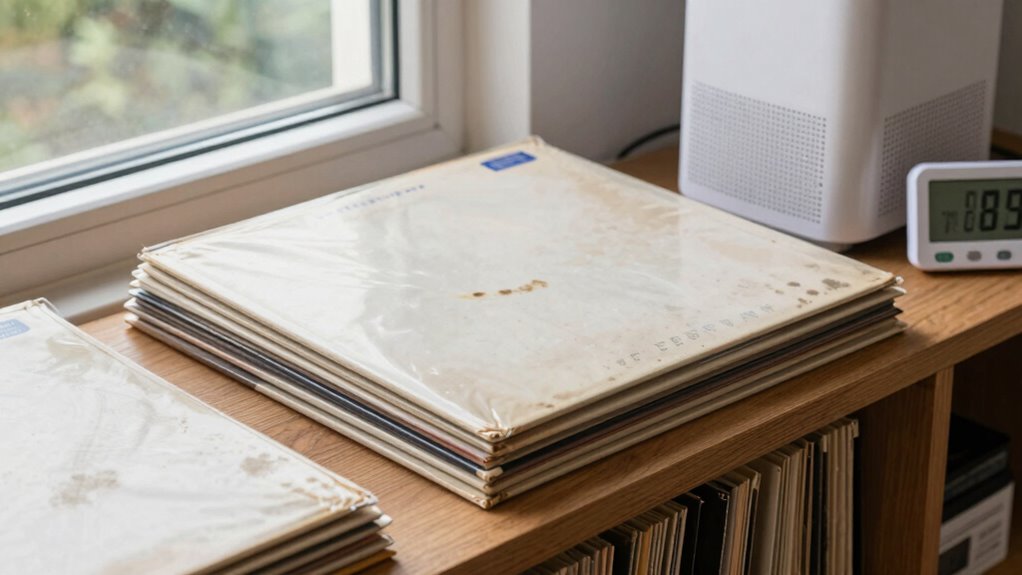
Mold can quickly develop on record sleeves if you don’t take proper precautions, posing a risk to both your records and your listening experience. Mold thrives in humid environments, so managing the humidity levels in your storage area is vital. Implementing effective storage tips is the first step to prevent mold growth. Keep your records in a cool, dry place away from direct sunlight, and avoid storing them in basements or attics where humidity fluctuates. Using airtight storage containers or sleeves that are breathable but resistant to moisture can also help maintain a stable environment. When stacking your records, guarantee they’re not packed too tightly, as poor airflow can promote mold development. Regularly inspecting your collection allows you to catch any early signs of mold or mildew, preventing larger issues down the line. Additionally, humidity control devices like dehumidifiers or silica gel packs are essential tools in maintaining optimal storage conditions. Cleaning methods play a vital role in maintaining your records and their sleeves. Before storing new records, give them a thorough cleaning to remove dust, fingerprints, and potential mold spores. Use a record cleaning solution or a mixture of distilled water and a few drops of rubbing alcohol, applied with a soft cloth or microfiber towel. Be gentle to avoid damaging the vinyl or the sleeve. For existing records with mold, you’ll need to clean both the vinyl and sleeves carefully. For vinyl, a dedicated record cleaning brush or machine can be effective. For sleeves, gently wipe with a damp cloth and mild detergent, then dry thoroughly before returning the record. If mold persists, consider replacing heavily affected sleeves to prevent spores from spreading to other records. Maintaining proper humidity levels is essential; ideally, keep your storage area between 40-50% humidity. Using a dehumidifier or silica gel packs can help absorb excess moisture. Avoid storing your records in damp environments or areas prone to leaks. Consistently monitoring humidity and temperature helps prevent mold from taking hold. You should also be cautious about handling your records with clean hands, as oils and dirt can accelerate mold growth. When storing, guarantee your records are completely dry and free of any mold before placing them in sleeves. This proactive approach, combined with good storage tips and diligent cleaning methods, will help you keep your record collection pristine and mold-free for years to come.

(100) 12 Inch Record Inner Sleeves – 3-Layers of Archival Quality, Anti-Static HDPE with Rice Paper Enclosed Insert for Extra Rigidity #12IM
Triple-Layer Protection – Each sleeve is constructed with three layers of high-density polyethylene (HDPE), including an enclosed rice…
As an affiliate, we earn on qualifying purchases.
As an affiliate, we earn on qualifying purchases.
Frequently Asked Questions
Can Mold Develop in Dry Environments?
Mold can develop even in dry environments if humidity levels are high enough during certain times or if there’s poor airflow. Mold’s lifecycle requires moisture, but spores can linger in low-humidity conditions until they find enough dampness to grow. You should monitor humidity levels regularly, ideally keeping them below 50%, to prevent mold from thriving. Proper ventilation and storage help break the mold lifecycle and keep your records safe.
How Often Should I Inspect My Record Sleeves?
Think of inspecting your record sleeves like tending a garden—you need to check regularly to catch issues early. You should inspect your sleeves every 3 to 6 months, especially if you notice any musty smell or discoloration. Use proper storage tips, like keeping records upright in a cool, dry place, and clean sleeves gently with a soft cloth when needed. Regular checks help prevent mold and preserve your collection’s quality.
Are There Specific Materials That Resist Mold Better?
You should look for record sleeves made from materials with high resistance to mold, like polyethylene or polypropylene. These plastics resist moisture and mold growth better than paper or cardboard. Using sleeves with smooth, sealed surfaces helps prevent mold spores from settling. By choosing materials with strong resistance to mold, you actively improve mold prevention, keeping your records cleaner and safer over time.
Can Mold Spores Spread Between Records?
Mold spores can indeed spread between records, especially when stored together in humid environments. You might think contamination stays isolated, but mold spore transmission is common through airborne particles. When one record develops mold, spores can settle on others, risking widespread contamination. To prevent this, store records in well-ventilated, low-humidity areas, and consider using anti-mold sleeves to minimize the risk of record contamination and keep your collection safe.
What Are Eco-Friendly Options for Mold Prevention?
You can use eco-friendly disinfectants and natural antifungal solutions to prevent mold on your record sleeves. Look for products made from plant-based ingredients that effectively inhibit mold growth without harmful chemicals. You might also try natural remedies like tea tree oil or vinegar diluted with water, applied lightly to sleeves. These options help keep your records mold-free while being gentle on the environment.

DocSafe Vinyl Record Storage Box with Lock,Fireproof&Water Resistant Record Organizer Storage for 100+ Single Records(12-inch),Collapsible Storage Crate with Lid&Handles for Valuable Album Collection
Fireproof and Water-resistant: The Upgraded fireproof vinyl record box is made of 3 layered non-itchy silicone coated fiberglass…
As an affiliate, we earn on qualifying purchases.
As an affiliate, we earn on qualifying purchases.
Conclusion
Just as a castle’s moat guards against invaders, maintaining proper humidity shields your records from mold’s silent siege. Keep your space dry, ventilate regularly, and use silica gel packs to create a fortress of protection. With these simple steps, you’ll preserve your collection’s clarity and charm, ensuring your vinyl treasures remain vibrant and mold-free—standing tall like ancient monuments, resilient against time’s inevitable decay. Guard them well, and they’ll reward you with years of timeless music.

15 Pcs 20 Gram Silica Gel Packs, Transparent Desiccant, Desiccant Packets for Storage, Moisture Packs for Spices Jewelry Shoes Boxes Electronics Storage
GOOD ADSORPTION CAPACITY: Silica gel desiccant is a highly active adsorption material, has good thermal properties and chemical…
As an affiliate, we earn on qualifying purchases.
As an affiliate, we earn on qualifying purchases.

Hudson Hi-Fi Anti-Static Vinyl Record Sleeves – Durable Clear Disc Sleeves- Protect Your LP Albums from Scratches, Dust & Dirt – Acid-Free Rice Paper Disc Covers, 50x Inner Sleeves
THE ULTIMATE ALBUM SLEEVES FOR YOUR PRECIOUS VINYL RECORDS ARE HERE! Now you can finally protect your valuable…
As an affiliate, we earn on qualifying purchases.
As an affiliate, we earn on qualifying purchases.