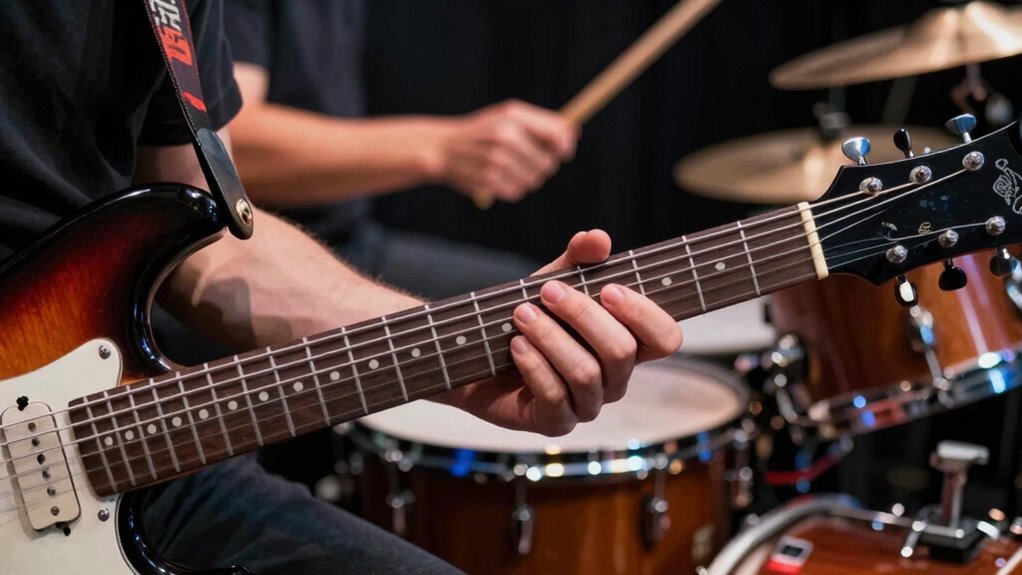
To lock with the drummer and develop a tight rhythm guitar pocket, focus on listening closely to the bass line and drum pattern. Pay attention to accents, groove, and space, adjusting your strumming or picking to sync perfectly with the rhythm section’s emphasis on the root notes. Practice with a metronome or drum loop to maintain timing, and stay flexible to rhythmic shifts. Keep building your feel, and you’ll discover how to create a solid groove that brings your band together seamlessly.
Key Takeaways
- Listen carefully to the drummer’s pattern and the bass line to identify groove cues.
- Lock your strumming or picking to the drummer’s accents and the bass’s root notes.
- Practice with a metronome or drum loop to develop precise timing and internalize the groove.
- Focus on downbeat and offbeat accents, matching your rhythm to the band’s rhythmic feel.
- Maintain flexibility and responsiveness, adjusting your playing to stay synchronized with band elements.
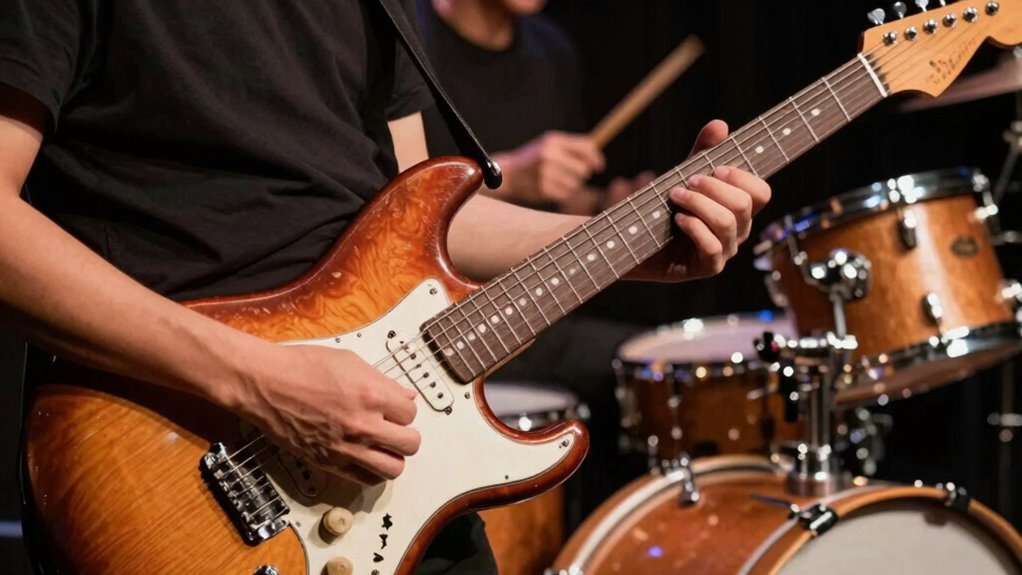
A rhythm guitar pocket is a crucial concept for any guitarist aiming to lock in a solid groove. It’s all about playing with a sense of tightness and musical awareness that makes your part feel integrated with the rest of the band. When you develop a good pocket, your rhythm becomes more than just hitting chords; it becomes a foundation that supports the entire song. You want to synchronize your timing with the drummer’s feel, emphasizing the groove rather than just the notes. This is especially important when you’re working with a bass line and chord progression. The bass line often provides the backbone of the groove, setting the rhythmic and harmonic foundation, so your rhythm guitar needs to complement it seamlessly.
Start by listening closely to the bass line and the drummer’s pattern. Notice how they interact—where they accentuate beats, how they lay down the groove, and where they leave space. Your goal is to lock your strumming or picking pattern into that groove. For example, if the bass line emphasizes the root notes on certain beats, you should accentuate those in your chord strumming. When the bass plays a walking bass line or a syncopated rhythm, adapt your chord progression to follow that rhythm, avoiding rushing ahead or lagging behind. It’s about being flexible and responsive, not rigid. Playing the same rhythm all the time can disconnect you from the groove, so listen and adjust accordingly.
Listen closely to the bass and drums, lock your rhythm with their groove, and stay flexible to maintain the pocket.
The key is to internalize the rhythm and feel of the bass line and drummer’s pattern, rather than just playing the chords mechanically. Focus on the downbeat and the offbeat, and emphasize those accents in your playing. If the chord progression involves syncopation, match your strumming or fingerpicking to those syncopated hits to reinforce the groove. Practice with a metronome or a drum loop to develop a strong internal sense of timing. As you become more comfortable, try to anticipate the accents and rhythmic shifts, so your playing becomes more intuitive. This coordination creates a pocket that feels natural and locked-in, making the groove more compelling. Additionally, understanding how sound vibrations influence the brainwave patterns can help you deepen your connection to the rhythm and improve your groove lock.
Ultimately, achieving a tight rhythm guitar pocket is about listening, adjusting, and playing with purpose. When your timing aligns perfectly with the bass line and drum pattern, you’ll feel the groove click into place. This synchronization enhances the overall feel of the song, making it more engaging for listeners. Keep practicing with different chord progressions and grooves, and over time, locking into that pocket will become second nature. The result is a rhythm guitar that not only supports the band but elevates the entire performance with a solid, cohesive groove.
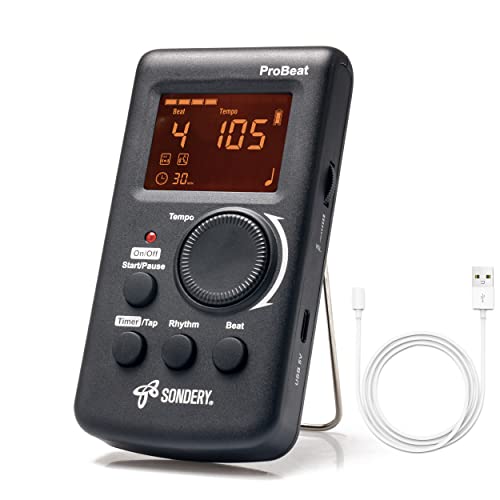
Sondery Digital Metronome Rechargeable English Vocal Counting with Timer Function for Piano Guitar Drum and All Instruments
Direct and fast setting of beat, tempo, rhythm by buttons and knobs. Easily reading color screen helps a…
As an affiliate, we earn on qualifying purchases.
As an affiliate, we earn on qualifying purchases.
Frequently Asked Questions
How Do I Choose the Right Rhythm Guitar Tone?
To choose the right rhythm guitar tone, start by considering your song’s mood and genre. Experiment with different sound selections on your amp or pedals, focusing on clarity, warmth, or punch. Listen closely to how your tone fits with the drums and bass, ensuring it supports the groove without overpowering. Trust your ears, and don’t be afraid to tweak settings until you find a guitar tone that complements the overall sound.
What Are Common Mistakes When Locking With the Drummer?
One common mistake is losing pocket consistency, making it hard for the drummer to stay in sync. You might also neglect muting techniques, causing unwanted noise or timing issues. To lock with the drummer effectively, focus on maintaining a steady rhythm and use proper muting to keep your playing tight. Practice with a metronome and listen carefully to stay locked in, ensuring your groove stays solid throughout the song.
How Can I Improve My Sense of Timing?
Think of your timing as a steady heartbeat that keeps the song alive. To sharpen it, immerse yourself in metronome practice regularly, syncing your strumming perfectly with each click. Incorporate groove exercises into your routine—play along with drum tracks or percussion loops to feel the groove deeply. Consistent practice builds your internal clock, making your rhythm lock seamlessly with the drummer and elevating your overall groove.
What Gear Helps Enhance Rhythm Guitar Coordination?
To enhance your rhythm guitar coordination, focus on gear like a reliable guitar pedal that offers consistent tone and effects, helping you stay in sync. Adjust your amp settings to boost clarity and sustain, making your rhythm tighter. Using a loop pedal can also help you practice timing and locking in with drums. These tools enable you to develop better groove and keep perfect rhythm with your band.
How Do Different Genres Influence Rhythm Guitar Techniques?
Think of genres as a colorful palette guiding your rhythm guitar style. You adapt your techniques to fit genre-specific nuances—swing in jazz, chugging in metal, or strumming in folk—each adding a unique flavor. These stylistic nuances shape your approach, helping you lock perfectly with the drummer’s groove. Embracing these differences makes your playing more expressive and authentic, ensuring your rhythm complements the genre’s soul.

Blues Jam Trax Collection for Guitar | Electric Guitar Sheet Music Book with TAB | 45 Blues Jam Tracks for Practice and Soloing | Play Along Backing Tracks for Students and Adult
Book/2-CD Pack
As an affiliate, we earn on qualifying purchases.
As an affiliate, we earn on qualifying purchases.
Conclusion
Mastering the rhythm guitar pocket with your drummer is like revealing the secret to musical magic. When you lock in perfectly, your groove becomes unstoppable—like a freight train barreling down the tracks. Keep listening, stay tight, and communicate with your drummer; soon, you’ll create a rhythm that’s so infectious, audiences won’t be able to sit still. Remember, the better you lock in, the more you’ll feel like the heartbeat of the band. Keep practicing, and let the rhythm lead the way!

Rhythm Guitar – The Complete Guide | Essential Concepts for Learning Techniques | Comprehensive Guitar Songbook with Chords, Strumming, Fingerstyle … (Essential Concepts / Musicians Institute)
Book/Online Audio
As an affiliate, we earn on qualifying purchases.
As an affiliate, we earn on qualifying purchases.

WINGO Guitar Capo for Acoustic and Electric Guitars – Rosewood Color with 5 Picks
Quick Release: easy to clip on guitar and quick to change; It can even change keys during a…
As an affiliate, we earn on qualifying purchases.
As an affiliate, we earn on qualifying purchases.