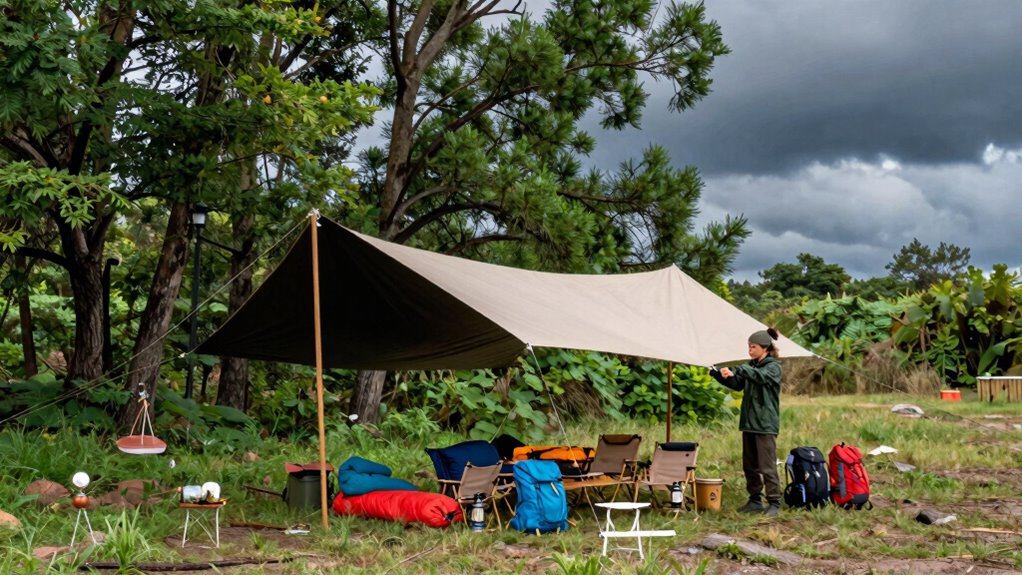

To set up a rain plan for your camp, start by securing a waterproof shelter using tarps or rain flies, and pitch your tent on higher ground to avoid flooding. Keep essential gear and dry clothes in waterproof containers, and have extra layers ready. Clear the area of loose branches and hazards that rain could worsen. Keep water and fire safety equipment nearby, and stay informed about weather updates. If you want to make sure your camp stays dry and safe, there’s more to take into account.

Get audio and creator gear delivered free with Prime
- Fast, free delivery on millions of items
- Prime Video, Amazon Music and more included
- Member-only deals all year
Key Takeaways
- Identify and secure a sturdy, elevated campsite location to prevent flooding and water damage.
- Prepare waterproof shelter options, like tarps or rain flies, and ensure tents are waterproofed.
- Pack essential dry gear, including waterproof clothing, ground mats, and waterproof containers for valuables.
- Plan for quick access to fire safety equipment and emergency communication tools.
- Clear the campsite of loose debris and hazards that rain could worsen or cause injury.
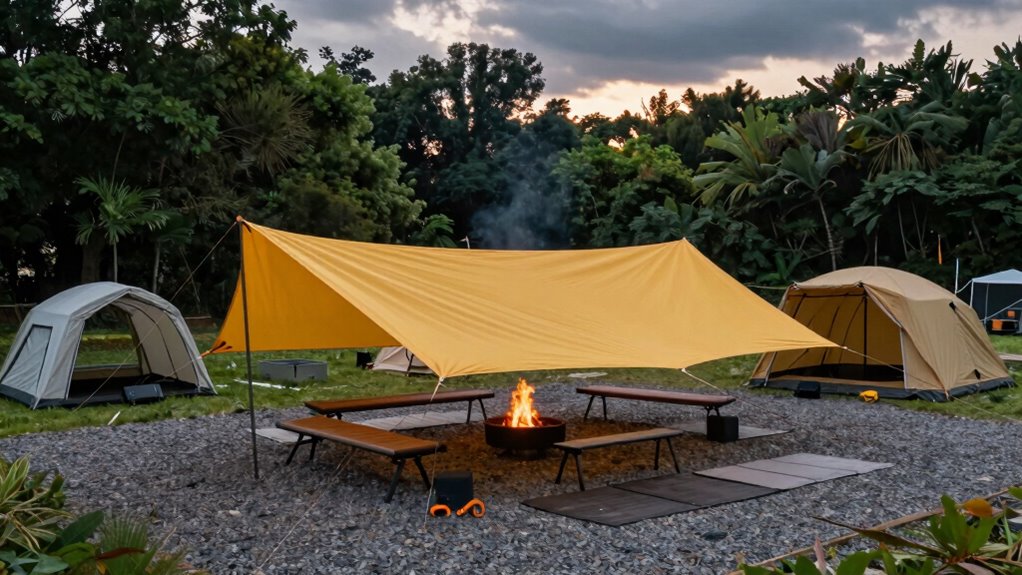
Have you ever planned a camping trip only to be caught in unexpected rain? If so, you know how quickly plans can shift, and it’s imperative to have a rain plan in place before the weather turns. Preparing for rain starts with understanding your environment and making thoughtful arrangements that keep everyone safe and comfortable. One of the most important aspects is guaranteeing campfire safety. If you plan to gather around a fire, double-check that your fire ring or designated area is sturdy and clear of dry leaves or overhanging branches that could ignite easily. Keep a bucket of water or a fire extinguisher nearby, and never leave the fire unattended. When rain is imminent, consider putting out the campfire completely to prevent accidental wildfires, especially in dry areas. Making your campfire area safe not only protects the environment but also confirms you’re prepared to start a new fire safely once the weather clears. Additionally, understanding fire safety protocols can help you respond effectively in emergency situations.
Another critical element is wildlife precautions. Rain can cause animals to become more active or seek shelter near campsite areas, so it’s essential to secure all food and scented items tightly. Use bear-proof containers or hang your food high in a tree, away from your tent and cooking area. Avoid leaving trash or food scraps out, as these attract wildlife and increase the risk of unwanted encounters. During rain, animals may be more desperate for food, so staying vigilant helps you avoid disturbing the natural balance or creating dangerous situations. Additionally, check your campsite for potential hazards that rain might exacerbate, such as loose branches or unstable ground, which can cause injuries or damage your gear. Implementing environmental awareness can further enhance your safety and minimize ecological impact. It’s also wise to have a communication plan in case of emergencies or sudden weather changes, ensuring everyone stays informed and safe.
Having a clear plan for shelter is indispensable. If your tent isn’t waterproof, consider bringing tarps or rain flies to create an additional barrier against the rain. Make sure your tent is pitched on higher ground, away from low-lying areas prone to flooding. Pack extra layers, waterproof clothing, and ground mats to stay dry and warm. Keep essential items like your flashlight, first aid kit, and dry clothes in waterproof bags or containers, so you can access them easily if the weather worsens unexpectedly. Remember, a good rain plan isn’t just about staying dry; it’s about safeguarding your environment and respecting wildlife. When you prepare thoroughly, you’ll be able to enjoy your camping experience regardless of the weather, knowing you’ve taken the necessary steps to stay safe, comfortable, and eco-conscious.
As an affiliate, we earn on qualifying purchases.
Frequently Asked Questions
What Emergency Supplies Should I Include in My Rain Plan?
You should include rain-resistant gear like waterproof jackets and boots, along with emergency supplies such as extra tarps, a first aid kit, and waterproof matches. Also, pack shelter options like portable tents or rain flies to stay dry. These items guarantee you’re prepared for sudden downpours, keeping you safe and comfortable. Make sure everything is easily accessible and well-packed to respond quickly when rain strikes.
How Do I Communicate the Rain Plan to All Campers?
You paint a clear path through the storm by gathering all campers and sharing your plan like a storyteller around the campfire. Use simple language, visuals, or hand signals to make sure everyone understands, especially about campfire safety and water filtration. Keep the message consistent, repeat key points, and encourage questions. This way, your campers stay connected, confident, and ready to weather the rain together as a team.
What Are the Signs of an Impending Heavy Rainstorm?
You can spot signs of an impending heavy rainstorm through rain prediction alerts, darkening skies, and sudden drops in temperature. Keep an eye on cloud formations like cumulonimbus clouds, which often signal storms. Listen for distant thunder and feel a shift in wind patterns. Being aware of these signs enhances storm preparedness, giving you enough time to alert campers, secure gear, and move everyone to safe, sheltered areas before the rain arrives.
How Can I Protect Outdoor Equipment From Rain Damage?
To protect your outdoor equipment from rain damage, use rainproof storage or waterproof covers. Store valuable gear in sealed containers or waterproof bins to keep moisture out. Cover larger items with durable waterproof covers, ensuring they’re tightly secured to prevent water from seeping in. Regularly check covers for tears or gaps, and replace them if needed. Taking these steps keeps your equipment dry, functional, and ready for use, rain or shine.
What Backup Plans Are Essential if the Rain Persists?
If the rain persists, you should have backup plans like using rain gear to stay dry and quickly relocating to shelter options such as tents or covered areas. Always keep rain gear accessible and make sure your shelter options are sturdy and ready for use. This way, you can stay protected, dry, and comfortable, minimizing disruptions and keeping your camp safe and enjoyable despite the weather.
As an affiliate, we earn on qualifying purchases.
Conclusion
Think of your rain plan as a sturdy shelter built before the storm hits. Just as a well-crafted shelter keeps you safe and dry amidst fierce winds, your preparedness guarantees your camping adventure remains joyful despite the rain. When you’ve laid your groundwork, you can dance in the rain, knowing you’re protected. So, build your plan now—turn the approaching storm into just another part of your memorable outdoor story.
As an affiliate, we earn on qualifying purchases.
As an affiliate, we earn on qualifying purchases.
Fall Picks
fall essentials
As an affiliate, we earn on qualifying purchases.