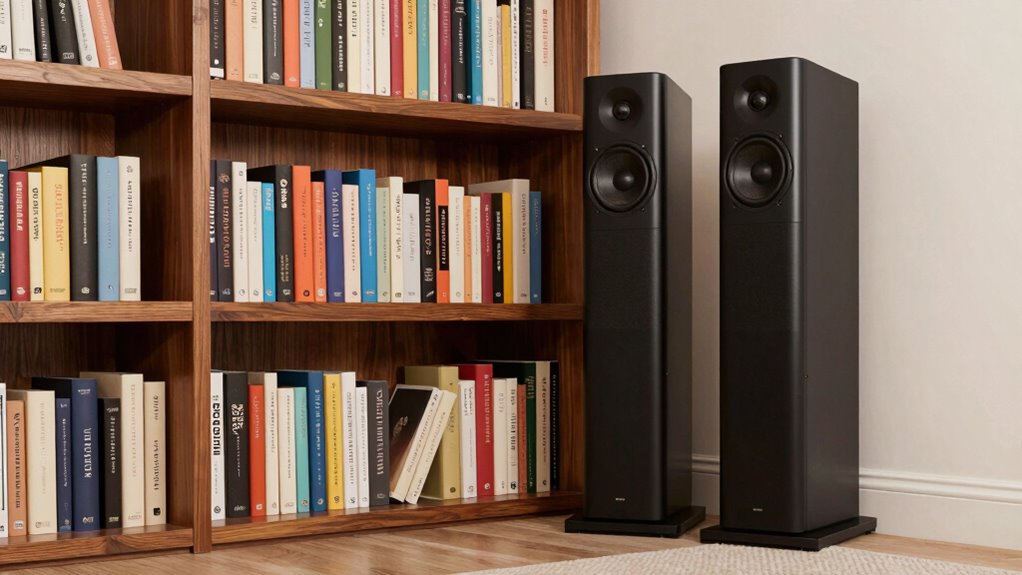

Choosing between bookshelf and floorstanding speakers depends on your room size, listening habits, and sound preferences. Bookshelf speakers are compact and fit smaller spaces, but they need proper placement at ear level to sound best. Floorstanding speakers offer more power and bass but require more room and space from walls. To get the most out of either, consider your environment and how you like to listen. Keep exploring to discover how to optimize your setup for rich, clear sound.

Get audio and creator gear delivered free with Prime
- Fast, free delivery on millions of items
- Prime Video, Amazon Music and more included
- Member-only deals all year
Key Takeaways
- Bookshelf speakers are ideal for small spaces and offer good sound quality at a compact size, while floorstanding speakers provide deeper bass and larger soundstage.
- Proper placement and acoustic treatment are crucial for both types to achieve optimal sound performance.
- Floorstanding speakers generally require more room and spacing from walls to prevent bass distortion.
- Listening habits and aesthetic preferences influence the choice between space-saving bookshelf or more immersive floorstanding speakers.
- Both options benefit from strategic positioning and room acoustics to deliver the best listening experience.
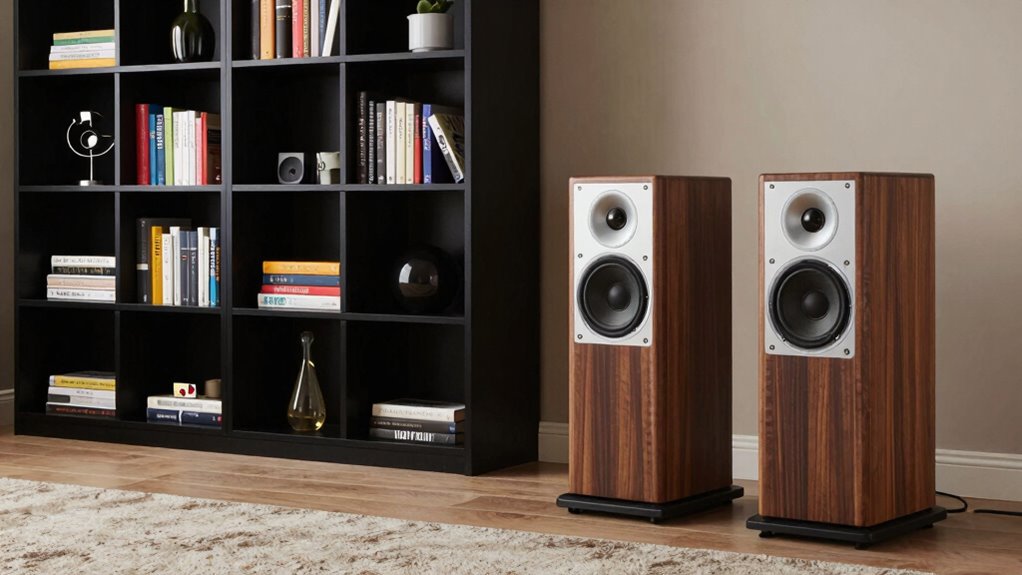
When choosing speakers for your music setup, understanding the differences between bookshelf and floorstanding models can make a significant impact on your listening experience. Your decision influences how you arrange your space, how sound fills the room, and how immersive your music feels. One of the key factors to contemplate is speaker placement. Bookshelf speakers are compact, making them versatile for smaller spaces or setups where you want to keep things tidy. You can place them on bookshelves, stands, or desks, but where you position them matters greatly. To optimize sound quality, you’ll want to experiment with their placement—aiming for ear level and avoiding corners or walls that can cause unwanted reflections. Floorstanding speakers, on the other hand, are larger and designed to sit directly on the floor, often requiring more room to breathe. They typically need some distance from walls to avoid bass boomy-ness and to achieve a balanced soundstage. Proper placement for these models involves positioning them at an appropriate distance apart—about the width of your shoulders—and slightly angling them toward your listening position. Both types benefit from thoughtful placement, but with floorstanders, you often have more flexibility to shape the sound by adjusting their position. Additionally, understanding the room acoustics and how they interact with your speakers can significantly influence your listening experience. Acoustic treatment plays an essential role regardless of your choice. If you’re using bookshelf speakers in a smaller or reflective space, adding acoustic panels or diffusers can help minimize echo and improve clarity. This is especially important because smaller rooms tend to amplify sound reflections, which can muddy the audio. Incorporating room treatment techniques can further enhance your listening environment by controlling sound reflections and ensuring a more accurate sound reproduction. Proper speaker placement combined with effective Acoustic treatment can make a substantial difference in how your music sounds, regardless of speaker type. In fact, the size of your room also plays a crucial role in how well your speakers perform, influencing what type of speaker might be best suited for your space. The room’s shape and furnishings can also affect sound diffusion and absorption, impacting overall sound quality. With floorstanding speakers, their size and power can sometimes compensate for less-than-ideal room acoustics, but you’ll still get a much better experience with proper treatment. Rugs, curtains, and furniture absorb excess sound, preventing reflections that could distort the music. When you combine the right speaker placement with effective acoustic treatment, you create an environment where your speakers can perform at their best, providing rich, detailed sound regardless of the model. Ultimately, your choice between bookshelf and floorstanding speakers hinges on your space, listening habits, and preference for how you want your room to sound. Both benefit from strategic placement and acoustic treatment, so understanding these factors helps you craft a listening environment that delivers the fullest, clearest music experience.
bookshelf speakers for small rooms
As an affiliate, we earn on qualifying purchases.
As an affiliate, we earn on qualifying purchases.
Frequently Asked Questions
Can Bookshelf Speakers Replace Floorstanding Speakers for All Music Genres?
Bookshelf speakers can sometimes replace floorstanding speakers, but it depends on your music preferences. They offer sleek speaker aesthetics and fit well in smaller spaces, but might lack the acoustic coverage needed for larger rooms or genres with deep bass, like electronic or rock. If you prioritize clarity and detail over bass depth, bookshelves could be a good choice. However, for full-range sound, floorstanding speakers often deliver a richer experience.
How Do Speaker Placement Differences Impact Sound Quality?
Speaker positioning greatly impacts sound quality, as it influences how sound waves disperse and interact with your acoustic environment. Proper placement guarantees balanced sound, clearer vocals, and better bass response. For ideal results, position speakers away from walls and corners to reduce reflections and muddiness. Adjusting their height and angle helps tailor the sound to your space, enhancing overall listening experience by making sure your acoustic environment complements your speaker setup.
Are There Specific Brands Better Suited for Each Type?
Yes, certain brands are better suited for each type based on brand compatibility and speaker durability. For bookshelf speakers, brands like KEF and ELAC excel because they offer compact designs with high-quality sound and sturdy construction. Floorstanding speakers from brands like Klipsch and Bowers & Wilkins provide powerful sound and durable build quality, making them ideal for long-term use. Always consider your space and sound preferences when choosing, and prioritize reputable brands for reliability.
What Maintenance Is Required for Bookshelf Versus Floorstanding Speakers?
You’ll want to regularly dust your bookshelf or floorstanding speakers to maintain speaker durability. Check for dust buildup on the speaker cones and cabinet surfaces. Make certain cables are well-managed to prevent damage and maintain sound quality. Periodically inspect connections, tighten loose wires, and avoid exposure to moisture or extreme temperatures. Proper maintenance keeps your speakers performing at their best, prolongs their lifespan, and ensures continuous high-quality music experiences.
How Do Price Ranges Compare Between the Two Options?
Like comparing apples to oranges, the price comparison between bookshelf and floorstanding speakers varies widely. Generally, bookshelf speakers are more affordable, fitting into a lower-budget affordability analysis, while floorstanding speakers tend to be pricier due to their size and power. If you’re on a budget, bookshelves are a smart choice, but if you want full, rich sound, investing in floorstanders might be worth the extra cost.
floorstanding speakers with deep bass
As an affiliate, we earn on qualifying purchases.
As an affiliate, we earn on qualifying purchases.
Conclusion
Ultimately, choosing between bookshelf and floorstanding speakers is like selecting your musical muse. Think of bookshelf speakers as a delicate stanza, perfect for intimate melodies, while floorstanders are a grand symphony, filling a room with lush sound. Trust your instincts, envision your ideal listening space, and let your passion guide you. Like a well-loved song, your perfect speakers will resonate deeply, turning your home into a personal concert hall where every note feels alive.
speaker stands for bookshelf speakers
As an affiliate, we earn on qualifying purchases.
As an affiliate, we earn on qualifying purchases.
As an affiliate, we earn on qualifying purchases.
Fall Picks
fall essentials
As an affiliate, we earn on qualifying purchases.