
If you’re focused on live performances, a stage keyboard’s portability and easy controls make it a great choice. For studio work and complex sound design, a workstation offers advanced features, editing tools, and a wide sound palette. Consider what matters most—quick performance or detailed customization. Remember, your decision shapes your sound and workflow. Want to find out which option best matches your musical goals? Keep exploring to discover more.

Get audio and creator gear delivered free with Prime
- Fast, free delivery on millions of items
- Prime Video, Amazon Music and more included
- Member-only deals all year
Key Takeaways
- Choose a stage keyboard for portability, quick access, and live performance simplicity; opt for a workstation for extensive sound design and production flexibility.
- For live gigs, prioritize lightweight, easy-to-use keyboards; for studio work, select a device with advanced editing and sound customization features.
- Stage keyboards focus on high-quality, accessible sounds with minimal controls; workstations offer layered textures and complex sound manipulation.
- If speed and convenience matter most during performances, a stage keyboard is ideal; for detailed sound crafting and versatility, a workstation is better.
- Your decision depends on whether your primary goal is live performance efficiency or comprehensive studio sound design.
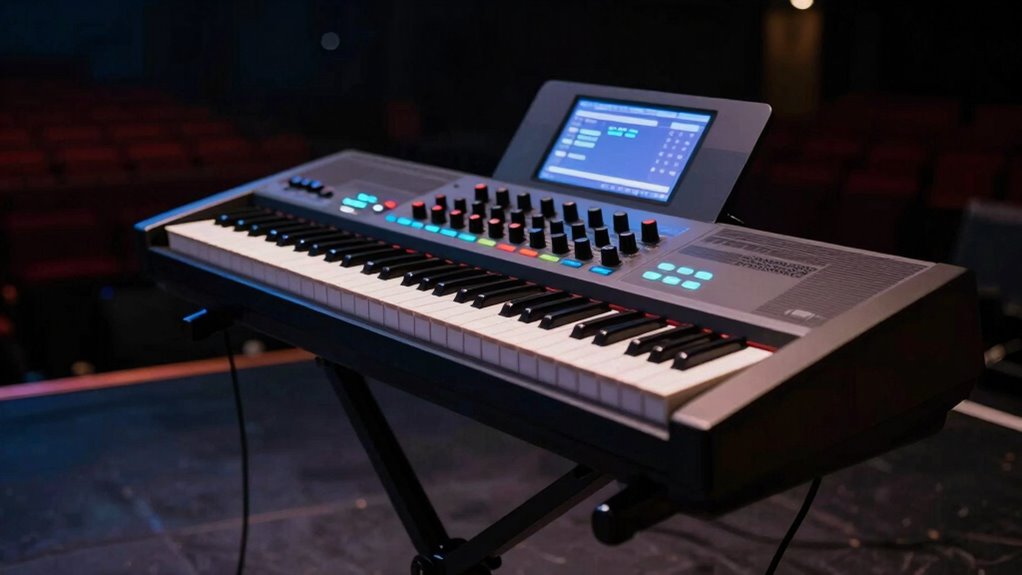
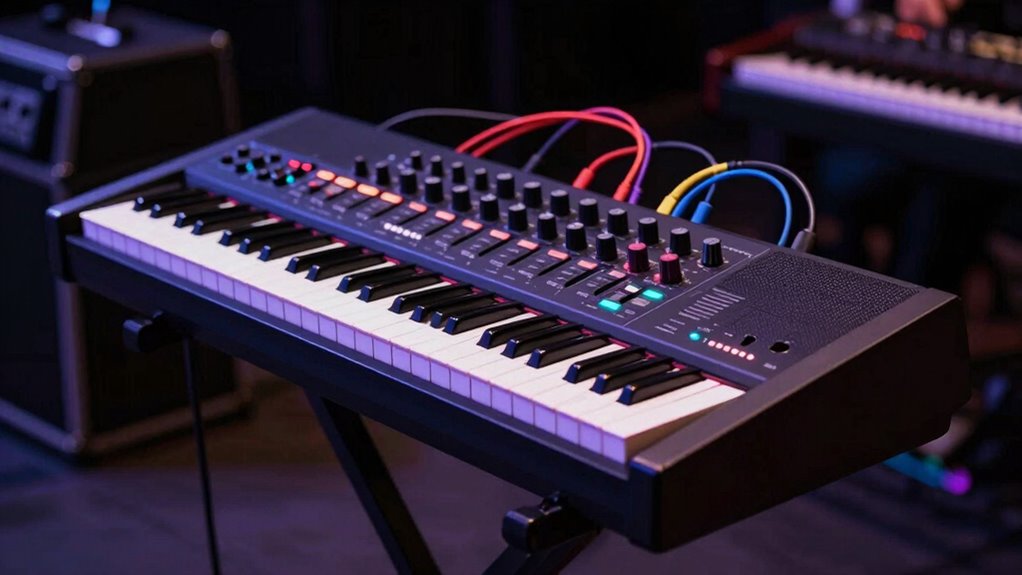
When choosing between a stage keyboard and a workstation, understanding their differences can considerably impact your performance and creativity. Both options serve musicians well but are designed with different priorities in mind. A stage keyboard typically emphasizes ease of use, lightweight design, and streamlined features. It’s built for performers who need quick access to essential sounds and controls without the bulk of a full studio setup. On the other hand, a workstation packs a wide array of features, including extensive synthesizer capabilities, sequencing, sampling, and often, built-in effects. This makes it a versatile tool suited for music production as well as live performance.
When considering synthesizer features, a workstation usually offers more advanced and customizable options. You get a broader palette of sounds, layered textures, and often, the ability to manipulate sounds in real-time through extensive editing tools. If you’re someone who loves crafting unique sounds, designing patches, or producing complex arrangements, a workstation provides the depth required for those tasks. Conversely, a stage keyboard tends to focus on readily accessible, high-quality sounds that perform well in live settings. It may not have the same deep synthesis capabilities but often includes enough variety to cover popular styles and genres, making it easier to navigate during a performance without getting bogged down in menus. Additionally, the synthesizer capabilities of a workstation tend to support more complex sound design, which can be crucial for studio work. Understanding the musical application of each type can help you choose the right instrument for your specific needs. For example, some players prefer the portability of stage keyboards, especially when frequently performing live. Moreover, the workflow of each instrument can significantly influence your efficiency and comfort during creation or performance. Recognizing the versatility offered by each type can also help you make a more informed decision based on your overall musical goals.
best stage keyboard for live performance
As an affiliate, we earn on qualifying purchases.
As an affiliate, we earn on qualifying purchases.
Frequently Asked Questions
Can a Stage Keyboard Replace a Full Synthesizer Setup?
A stage keyboard can somewhat replace a full synthesizer setup, especially if you value sound versatility and portability advantages. It offers a wide range of sounds, effects, and easy integration with other gear, making it ideal for live performances. However, for complex sound design or studio work, a dedicated synthesizer might be better. Think about your specific needs—if you need quick access and portability, a stage keyboard is a solid choice.
How Do Maintenance Costs Compare Between Stage Keyboards and Workstations?
Maintenance costs are generally lower for stage keyboards than workstations. For example, a gigging musician might find that a quality stage keyboard requires less frequent repairs or upgrades, saving on long-term expenses. With better sound quality and portability, stage keyboards are easier to maintain, as they’re designed for durability and quick fixes. In contrast, workstations’ complex features can lead to higher repair costs over time.
Are There Specific Brands Known for Reliable Stage Keyboards?
You can rely on brands like Yamaha, Roland, and Korg for dependable stage keyboards. Their brand reputation is built on durability factors, ensuring your instrument withstands frequent gigs and transport. Yamaha’s reputation for robust build quality, Roland’s innovative features, and Korg’s user-friendly interfaces make them top choices. Investing in these brands means you get reliable performance and longevity, helping you focus on your music without worrying about equipment failure.
What Are the Best Accessories for Both Device Types?
Think of accessories as the secret ingredients that elevate your performance. For both device types, prioritize quality headphones, sturdy stands, and reliable power supplies. A good sustain pedal enhances sound quality, while portable cases boost portability features. I once saw a musician transform a simple setup with a high-quality sustain pedal, proving that the right accessories make all the difference in sound clarity and ease of transport—crucial for your playing confidence.
How Do Power Requirements Differ for Stage Keyboards and Workstations?
Stage keyboards generally have lower power consumption, making them more energy-efficient and easier to power on the go. Workstations, on the other hand, often require more power due to their complex features and larger displays. When choosing, consider energy efficiency if you’re frequently performing live or on the move. You’ll want a device that balances your power needs with energy consumption to guarantee reliable performance without unnecessary energy drain.
professional music workstation keyboard
As an affiliate, we earn on qualifying purchases.
As an affiliate, we earn on qualifying purchases.
Conclusion
Choosing between a stage keyboard and a workstation is like picking the right vessel for your musical journey. If you need quick, versatile access to sounds, a stage keyboard is your sleek speedboat, ready to glide across the waves. But if you crave a full arsenal of tools to craft complex compositions, a workstation is your sturdy ship, built to navigate deep musical waters. Trust your needs, and set sail on your creative adventure.
portable stage keyboard with high-quality sounds
As an affiliate, we earn on qualifying purchases.
As an affiliate, we earn on qualifying purchases.
studio music workstation with sound editing
As an affiliate, we earn on qualifying purchases.
As an affiliate, we earn on qualifying purchases.
Halloween Picks
halloween
As an affiliate, we earn on qualifying purchases.