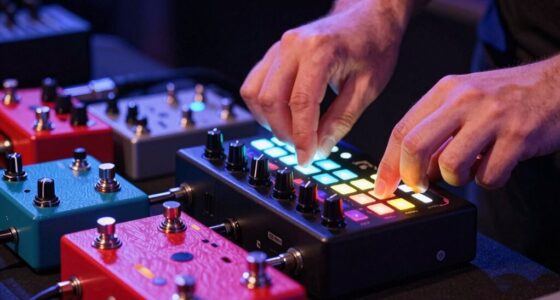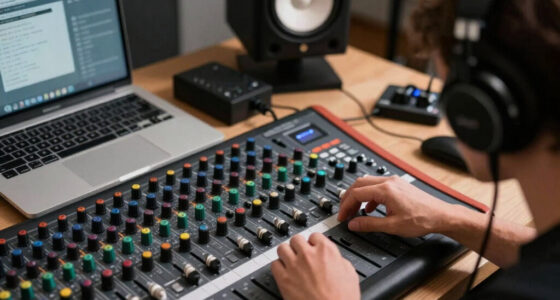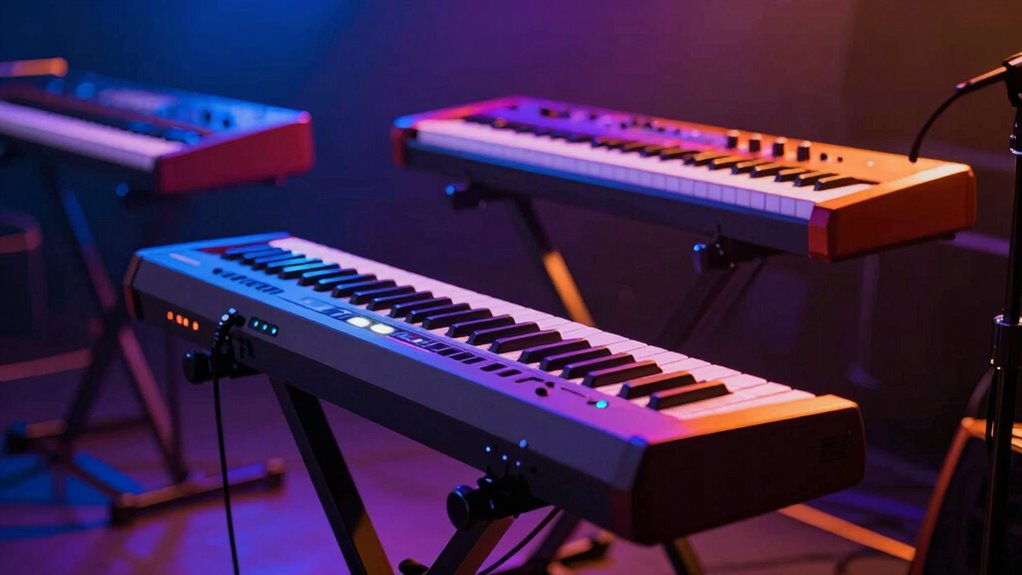

Choosing a stage keyboard for live performance means balancing sound quality, key feel, portability, and how fast you can switch sounds mid-song. The Nord Stage 4 88 stands out as the best overall pick, combining a fully-weighted keybed, seamless patch switching, and the industry’s most trusted live interface. If budget matters more than flagship features, the Yamaha CK88 delivers a genuine stage-focused workflow with built-in speakers at a far lower price, while the Roland RD-88 EX is the pick for players who want pro sounds in the lightest 88-key package. The main tradeoff in this category is weight and cost versus sound depth and control — and beginner-focused boards like the RockJam or Alesis kits make very different compromises than gigging instruments. Keep reading for the full breakdown of all 11 models and which one fits your situation.

Get audio and creator gear delivered free with Prime
- Fast, free delivery on millions of items
- Prime Video, Amazon Music and more included
- Member-only deals all year
Complete the kit


Key Takeaways
- True stage keyboards like the Nord Stage 4 and Roland V-STAGE 88 separate themselves from home keyboards through live controls (dedicated knobs, seamless sound switching, setlist modes) that arranger-style boards simply don’t have.
- Built-in speakers are the biggest value divider: the Yamaha CK88 and Alesis 88 give you self-contained sound, while the Nord and Roland pro boards assume you’ll always have a PA — which affects rehearsal flexibility.
- The Nord Stage 4 appears three times in this lineup at different key counts; the 73-key version is the smart pick for gigging musicians who fly or take public transport, while the 88 earns its extra weight only for pianists who need full hammer action.
- Learning-focused boards (The ONE Smart Keyboard, RockJam RJ5061, Yamaha PSR-E583) can technically be used on stage, but their unweighted keys and menu-driven interfaces make them poor choices for anything beyond casual or rehearsal settings.
- Weight matters more than most buyers expect: the spread runs from roughly 15 pounds for the RD-88 EX to over 50 pounds for flagship 88-key workstations, which changes everything from car choice to whether you need a second person at load-in.
| Nord Stage 4 73-Key Fully-Weighted Keyboard |  | Best Overall | Keys: 73 | Keybed: Fully-weighted Triple Sensor | Layer Control: Dedicated LED faders per Layer | VIEW ON AMAZON | See Our Full Breakdown |
| Yamaha PSR-E583 61-Key Touch-Sensitive Portable Keyboard with Premium Sound and Accessories |  | Best for One-Person-Band Gigs | Keys: 61, touch-sensitive | Voices: 890 | Accompaniment Styles: 345 | VIEW ON AMAZON | See Our Full Breakdown |
| The ONE Smart Keyboard COLOR 61 Keys Piano Keyboard with 256 Timbres and Built-in LED Lights |  | Best for Beginners Heading to Open Mics | Keys: 61 full-sized | Timbres: 256 | Polyphony: 64 notes | VIEW ON AMAZON | See Our Full Breakdown |
| Yamaha CK88 88-Key Stage Keyboard with Built-In Speakers, Black |  | Best All-in-One Stage Piano | Keys: 88 | Speakers: Built-in | Split Points: 2 (three sound zones) | VIEW ON AMAZON | See Our Full Breakdown |
| Nord Stage 4 88-Key Fully-Weighted Keyboard |  | Best Premium Pick | Keys: 88, fully weighted | Keybed: Triple-sensor weighted | Organ Engines: B3 Tonewheel, B3 Bass, Vox, Farfisa, 2 pipe organ models | VIEW ON AMAZON | See Our Full Breakdown |
| RockJam RJ5061 61-Key Keyboard Piano Kit with Stand, Bench, Headphones, and Learning Features |  | Best Starter Bundle for Kids and Casual Learners | Number of Keys: 61 | Includes: Stand, bench, headphones, note stickers | Features: Pitch bend wheel, LED panel, 200 rhythms, 200 tones, demo songs | VIEW ON AMAZON | See Our Full Breakdown |
| Yamaha MX88 88-Key Weighted Action Synthesizer |  | Best Studio-to-Stage Synth Value | Number of Keys: 88 | Action: GHS weighted | Polyphony: 128 notes | VIEW ON AMAZON | See Our Full Breakdown |
| Roland V-STAGE 88 Premium 88-Key Weighted Digital Keyboard |  | Best Premium Do-Everything Stage Board | Number of Keys: 88 weighted | Sound Engines: 4 — Acoustic Piano, SuperNATURAL Electric Piano, Virtual Tone Wheel Organ, ZEN-Core Synth | Onboard Sounds: Over 400 | VIEW ON AMAZON | See Our Full Breakdown |
| Roland RD-88 EX Stage Piano, 88-Note Keyboard |  | Best Overall for Gigging Pianists | Keys: 88-note PHA-4 hammer action with Ivory Feel | Sound Engines: SuperNATURAL and ZEN-Core | Additional Sounds: Over 3000 tones | VIEW ON AMAZON | See Our Full Breakdown |
| Alesis 88-Key Keyboard Piano with 480 Sounds, Speakers, USB MIDI, Carry-Bag, Stand, Headphones, Pedal, and Lessons |  | Best Budget 88-Key Learning Rig | Number of Keys: 88 touch-sensitive | Sounds: 480 built-in | Built-in Speakers: Yes | VIEW ON AMAZON | See Our Full Breakdown |
| Nord Stage 4 88-Key Digital Piano (Bundle with Stand, Bench, Pedal, Headphones, and Cable) |  | Best Premium Splurge for Working Professionals | Keybed: 88 keys, triple-sensor weighted hammer action (A–C) | Sound Engines: Piano, organ, and synth sections | Layering: Up to 7 independent layers | VIEW ON AMAZON | See Our Full Breakdown |
| stage keyboard for live performance | Keys | Connectivity |
|---|---|---|
| Nord Stage 4 73-Key Fully-Weig | 73 | — |
| Yamaha PSR-E583 61-Key Touch-S | 61, touch-sensitive | — |
| The ONE Smart Keyboard COLOR 6 | 61 full-sized | Bluetooth, MIDI, 3.5mm headphone jack |
| Yamaha CK88 88-Key Stage Keybo | 88 | — |
| Nord Stage 4 88-Key Fully-Weig | 88, fully weighted | — |
| RockJam RJ5061 61-Key Keyboard | — | — |
| Yamaha MX88 88-Key Weighted Ac | — | USB audio/MIDI (class compliant) |
| Roland V-STAGE 88 Premium 88-K | — | XLR outputs, 1/4-inch stereo outputs, mic input, stereo line inputs |
| Roland RD-88 EX Stage Piano | 88-note PHA-4 hammer action with Ivory Feel | USB audio/MIDI interface, USB memory port |
| Alesis 88-Key Keyboard Piano w | — | USB MIDI, Aux in, headphone out |
| Nord Stage 4 88-Key Digital Pi | — | USB MIDI; 4 assignable audio outputs |
More Details on Our Top Picks
Nord Stage 4 73-Key Fully-Weighted Keyboard
The Nord Stage 4 73 sets the benchmark in this roundup because it solves the core problem of live performance: instant, visible control while you’re on stage. The dedicated LED faders per layer mean you can see your levels in the dark instead of menu-diving, and the Layer Scene function lets you flip between two complete setups mid-song without a gap. Compared with the Nord Stage 4 88, the 73-key version trades two octaves of range for a narrower frame and slightly easier hauls — though at 37 pounds, ‘portable’ is generous. Against the Yamaha CK88, the sound engines here are deeper and the patch architecture far more flexible, but you give up built-in speakers entirely.
Pros:- Fully-weighted Triple Sensor keybed delivers expressive, premium feel
- Dedicated LED faders per layer give an at-a-glance overview on dark stages
- Layer Scene enables seamless mid-song switching between two full setups
- Ready-to-use Piano, Synth, and Organ presets speed up patch building
Cons:- At 37 pounds and 51.2 inches wide, it’s a two-hand carry despite the portable label
- Requires external amplification, unlike self-contained options like the Yamaha CK88
- Premium tier pricing puts it out of reach for hobbyists and casual players
Best for: Working gigging keyboardists who need fast, reliable sound switching across multiple bands or setlists
Not ideal for: Musicians on a budget or anyone without external amplification and a road case — it’s heavy, large, and demands surrounding gear
- Keys:73
- Keybed:Fully-weighted Triple Sensor
- Layer Control:Dedicated LED faders per Layer
- Performance Feature:Layer Scene seamless switching
- Sound Presets:Piano, Synth, and Organ library
- Weight:37 lbs
- Dimensions:51.2 x 10.2 x 19.7 inches
- Power:Corded electric
Our verdict“If live work is your livelihood and you can feed it through a PA, this is the keyboard everything else in the list is measured against.”
Yamaha PSR-E583 61-Key Touch-Sensitive Portable Keyboard with Premium Sound and Accessories
Where the Nord Stage 4 73 assumes you have a band behind you, the Yamaha PSR-E583 is built to be the band. Its 345 accompaniment styles and auto chord play generate full backing arrangements in real time, which makes it the natural pick for solo performers at restaurants, parties, and open mics. The live control knobs, pitch bend, and modulation wheels give it more expressive reach than typical arranger keyboards at this tier. That said, it’s a different animal from the Yamaha CK88: the sounds are broad rather than deep, and the unweighted 61-key bed won’t satisfy a serious pianist. The Mega Boost feature helps cut through a noisy room when you’re running it through modest amplification.
Pros:- 345 accompaniment styles create full backing arrangements for solo gigs
- 890 voices cover nearly any genre or request thrown at you live
- Live control knobs, pitch bend, and modulation wheels enable real-time expression
- Mega Boost pushes volume up for cutting through loud rooms
Cons:- No built-in speakers, so external amplification is mandatory
- Menu-driven feature set has a real learning curve before gigging confidently
- Unweighted 61-key bed limits serious piano technique
Best for: Solo and duo performers who need full backing-band arrangements from a single keyboard
Not ideal for: Pianists who need weighted action and authentic acoustic-piano touch for their repertoire
- Keys:61, touch-sensitive
- Voices:890
- Accompaniment Styles:345
- Controls:Live control knobs, modulation wheel, pitch bend wheel
- Performance Features:Auto chord play, Mega Boost
- Included:Music rest, power adapter
Our verdict“Buy this if you’re a working solo entertainer who needs an entire band in one box; skip it if weighted piano feel is non-negotiable.”
The ONE Smart Keyboard COLOR 61 Keys Piano Keyboard with 256 Timbres and Built-in LED Lights
The ONE Smart Keyboard COLOR earns its slot as the on-ramp option: the built-in LED keys and companion learning apps get a new player stage-ready far faster than traditional practice. At 7.7 pounds with battery power, it’s the easiest board here to toss in a car for a first open mic or coffeehouse set — the Nord Stage 4 73 weighs nearly five times as much. The tradeoffs are real: 61 unweighted keys, 64-note polyphony, and small 3W speakers mean it can’t compete with the Yamaha CK88 for sound depth or stage presence in a full-band context. Think of it as a training and light-gig instrument rather than a long-term stage rig, and the value case makes sense.
Pros:- LED-guided keys and learning apps dramatically shorten the beginner curve
- At 7.7 lbs with AA battery power, it’s the most transportable option here
- 256 timbres and grand-piano-sampled core sound punch above the price class
- Bluetooth, MIDI, and headphone jack support silent practice and app workflows
Cons:- 64-note polyphony can drop notes during dense playing
- 3W built-in speakers are practice-level, not performance-level
- App features depend on a compatible paired device
Best for: Beginning players who want guided learning now and low-pressure live playing later
Not ideal for: Intermediate and advanced performers — the limited polyphony, unweighted action, and small speakers won’t hold up on a real stage
- Keys:61 full-sized
- Timbres:256
- Polyphony:64 notes
- Speakers:2 x 3W built-in
- Power:AC adapter or 4 AA batteries (up to 6 hours)
- Connectivity:Bluetooth, MIDI, 3.5mm headphone jack
- Weight:7.7 lbs
- Color Options:7
Our verdict“This is the pick for a first-time player building confidence toward live sets, not for anyone who already gigs regularly.”
Yamaha CK88 88-Key Stage Keyboard with Built-In Speakers, Black
The Yamaha CK88 answers a question the Nord Stage 4 88 doesn’t: what if the keyboard is the whole rig? Its built-in speakers mean you can walk into a rehearsal, church, or small venue, set it on a stand, and play — no amp, no DI, no soundcheck. The organ engines borrowed from the Reface YC give it genuine drawbar credibility, and the two split points let you run piano in the middle, pads up top, and bass below, covering trio material solo. Compared with the PSR-E583, the CK88 trades arranger backing styles for far deeper, more authentic core sounds. The compromise is key action: it’s competent rather than luxurious, and 88 keys still mean real lifting.
Pros:- Built-in speakers eliminate external amplification for small gigs and rehearsals
- Authentic vintage drawbar and combo organ engines derived from the Reface YC
- Two split points allow three simultaneous sound zones across the keyboard
- Broad sound set spans piano, organ, strings, brass, and synth with real-time control
Cons:- Key action is serviceable but not on the level of top-tier weighted stage pianos
- Full 88-key frame makes loading and transport a genuine hassle
- No arranger or auto-accompaniment features for solo backing
Best for: Gigging players who want plug-free setups at small venues, rehearsals, and worship services
Not ideal for: Players who demand the highest-grade fully-weighted action — the CK88’s feel falls short of premium stage pianos
- Keys:88
- Speakers:Built-in
- Split Points:2 (three sound zones)
- Organ Engines:Vintage drawbar and combo transistor (Reface YC-derived)
- Sound Categories:Piano, organ, strings, brass, synth
- Real-Time Control:Onboard sound-shaping controls
- Color:Black
Our verdict“This is the stage keyboard for players who value grab-and-go simplicity and full-range sound over boutique key action.”
Nord Stage 4 88-Key Fully-Weighted Keyboard
The Nord Stage 4 88 is the no-compromise flagship of this lineup, and its fully-weighted, triple-sensor 88-key bed is the reason to pay the premium: it plays like an acoustic instrument while delivering B3 tonewheel, Vox, Farfisa, and pipe organ simulations alongside the Wave 2 Synth Engine, which supports three independently managed synth layers for complex live patches. Compared with its 73-key sibling, this version suits players whose arrangements need the full range — classical-inflected parts, left-hand bass, and two-manual organ voicings. The doubled sample memory lets you load more of the Nord Piano Library at higher fidelity than previous generations. Against the Yamaha CK88, it’s deeper in every sonic dimension but demands external amplification and costs far more.
Pros:- Fully-weighted triple-sensor 88-key bed provides the most authentic feel in the roundup
- Award-winning organ simulations including B3 Tonewheel, Vox, Farfisa, and pipe models
- Wave 2 Synth Engine runs three independent synth layers for complex patches
- Doubled sample memory supports larger, higher-fidelity Nord Piano Library setups
Cons:- The heaviest and most expensive class of instrument in this guide
- No built-in speakers, so a PA or amp is always part of the equation
- Full 88-key footprint demands a large case, stand, and vehicle
Best for: Professional keyboardists and session players who need full 88-key range and top-tier sound engines
Not ideal for: Casual or budget-conscious players — the cost, weight, and required supporting gear make it overkill for home and hobby use
- Keys:88, fully weighted
- Keybed:Triple-sensor weighted
- Organ Engines:B3 Tonewheel, B3 Bass, Vox, Farfisa, 2 pipe organ models
- Synth Engine:Wave 2, 3 independent synth layers
- Sample Memory:Doubled vs. previous generation
- Sound Libraries:Nord Piano Library compatible
- Category:Digital stage piano with piano, organ, and synth engines
Our verdict“If you make your living on stage and nothing less than full-range, flagship-grade playability will do, this is the endgame purchase.”
RockJam RJ5061 61-Key Keyboard Piano Kit with Stand, Bench, Headphones, and Learning Features
This option stands out for completeness rather than performance pedigree. Where the Alesis 88-key bundle aims at semi-serious students who want full-size keys, the RockJam kit targets absolute beginners and younger players with its 61-key layout, included bench, stand, and headphones. The pitch bend wheel and 200 rhythms make practice feel playful rather than clinical, and the bundled Simply Piano lessons give new players a structured path without paying for a teacher upfront. Compared with something like the Yamaha MX88, this is obviously a different league — unweighted mini-class keys, no pro connectivity, and a sound engine built for fun, not for the stage. That is the tradeoff: it is a learning tool, not a gigging instrument, and players who progress will outgrow it.
Pros:- Everything needed to start is included — stand, bench, headphones, and stickers
- Simply Piano lessons and demo songs make self-teaching approachable
- Pitch bend and 200 rhythms keep early practice engaging
- Headphone output allows silent practice in shared homes
Cons:- Unweighted 61 keys with no hammer action, so piano technique won’t transfer
- No professional connectivity or pro-grade sound engine
Best for: Kids, teens, and adults taking their very first steps at the keyboard who want everything in one box
Not ideal for: Gigging or advancing players — the keys are unweighted and the sound set won’t hold up on stage
- Number of Keys:61
- Includes:Stand, bench, headphones, note stickers
- Features:Pitch bend wheel, LED panel, 200 rhythms, 200 tones, demo songs
- Learning Support:Yes, via Simply Piano lessons
- Practice Options:Silent practice via included headphones
Our verdict“Buy this as a low-commitment first keyboard for a beginner household, and skip it the moment live performance becomes the goal.”
Yamaha MX88 88-Key Weighted Action Synthesizer
The MX88 earns its spot by pairing a GHS weighted 88-note action with the Motif-derived sound engine at a working musician’s price point. Compared with the Roland RD-88 EX, it lacks built-in speakers and the massive ZEN-Core tone library, but it counters with layering, zoning, and vintage effects modeling that make it genuinely useful as a gigging synth workstation, not just a piano. Its class-compliant USB audio/MIDI means one cable into a laptop running MainStage covers both sound and control — a plug-and-play simplicity the Roland V-STAGE 88 matches only at a far higher tier. The tradeoffs are real: no speakers means you always need monitoring, and the control surface is sparse compared with Roland’s knob-and-slider-heavy boards, so deep editing means menu diving.
Pros:- GHS weighted action delivers an authentic piano feel rare at this tier
- Motif sound engine with layering, zoning, and vintage effect modeling
- Plug-and-play class-compliant USB audio/MIDI for laptop rigs
- 128-note polyphony handles dense layered setups
Cons:- No built-in speakers, so amplification is mandatory at every gig
- Sparse control surface forces menu diving for sound editing
Best for: Working keyboardists who need weighted piano feel plus synth flexibility on a gig budget
Not ideal for: Players who want an all-in-one rig — no speakers and a minimal control surface mean external gear is assumed
- Number of Keys:88
- Action:GHS weighted
- Polyphony:128 notes
- Connectivity:USB audio/MIDI (class compliant)
- Sound Engine:Yamaha Motif-derived
- Display:3-digit LED plus 20×2 backlit LCD
- BPM Range:5-300
Our verdict“This pick makes the most sense for laptop-based performers who want weighted keys and synth power without paying flagship prices.”
Roland V-STAGE 88 Premium 88-Key Weighted Digital Keyboard
This is the heavyweight option in every sense. Where the Yamaha MX88 gives you one strong sound engine, the V-STAGE 88 runs four independent engines simultaneously — acoustic piano, SuperNATURAL electric piano, a virtual tone wheel organ, and the ZEN-Core synth — so a single patch can cover an entire band’s worth of keyboard parts. Compared with the Roland RD-88 EX, you trade portability and built-in speakers for balanced XLR outputs, a mic input, and 512 scene memories with scene chains for building setlists — features that matter enormously on a professional stage with a sound engineer. The drawbacks follow directly from the ambition: the interface demands a real learning curve, and the physical size and weight make load-in a two-person job. Players who want simple plug-and-play should look at the RD-88 EX instead.
Pros:- Four simultaneous sound engines covering piano, EP, organ, and synth
- Pro connectivity with balanced XLR outputs and microphone input
- 512 scenes and 128 scene chains for full setlist organization
- Piano Designer and deep customization rival dedicated instruments
Cons:- Steep learning curve before you can exploit the feature set
- Heavy and bulky, making transport and load-in a genuine hassle
- Premium positioning puts it out of reach for hobbyist budgets
Best for: Professional gigging keyboardists who need deep sound design, setlist management, and pro-grade outputs
Not ideal for: Weekend players and small-venue performers — the complexity, weight, and cost are overkill for casual gigs
- Number of Keys:88 weighted
- Sound Engines:4 — Acoustic Piano, SuperNATURAL Electric Piano, Virtual Tone Wheel Organ, ZEN-Core Synth
- Onboard Sounds:Over 400
- Memory:512 Scenes, 128 Scene Chains
- Effects:Delay, reverb, multi-effects, compressor, EQ
- Connectivity:XLR outputs, 1/4-inch stereo outputs, mic input, stereo line inputs
- Customization:Piano Designer and SuperNATURAL editing
Our verdict“If you make your living on stage and need one board to replace an entire rig, this is the investment; everyone else can save money and back strain elsewhere.”
Roland RD-88 EX Stage Piano, 88-Note Keyboard
This model hits the sweet spot the others circle around: professional sounds, a genuinely playable action, and gig-friendly practicality in one instrument. The PHA-4 hammer action with Ivory Feel is a step up in expressiveness from the Yamaha MX88’s GHS keys, and unlike both the MX88 and the V-STAGE 88, it includes built-in stereo speakers — invaluable for rehearsals, small rooms, and backstage warmups where no amp is available. The ZEN-Core engine adds over 3000 tones on top of the SuperNATURAL pianos, so synth, organ, and orchestral parts are covered without carrying a second board, and the dedicated Apple MainStage control mode makes it a natural hub for hybrid rigs. The compromises are modest but worth naming: its effects and routing depth sit below the V-STAGE 88, and the onboard speakers are for monitoring, not filling a venue.
Pros:- PHA-4 hammer action with Ivory Feel delivers highly expressive playability
- Over 3000 ZEN-Core tones plus SuperNATURAL pianos cover nearly any setlist
- Built-in stereo speakers remove the need for an amp at rehearsal
- Light, compact chassis plus included DP-10 damper pedal for easy gigging
Cons:- Onboard speakers suit monitoring, not venue-level amplification
- Effect and routing depth trails the V-STAGE 88 for complex setups
Best for: Working gigging pianists who want one light, versatile board covering piano, synth, and backing duties
Not ideal for: Sound-design obsessives who need four simultaneous engines and deep routing — the V-STAGE 88 serves that mission better
- Keys:88-note PHA-4 hammer action with Ivory Feel
- Sound Engines:SuperNATURAL and ZEN-Core
- Additional Sounds:Over 3000 tones
- Expansion:SuperNATURAL Acoustic Piano 3 Expansion
- Speakers:Built-in stereo speakers
- Connectivity:USB audio/MIDI interface, USB memory port
- Audio Playback:MP3/WAV playback and data backup
- Software Support:Dedicated control mode for Apple MainStage
- Included Accessories:DP-10 damper pedal
Our verdict“For most performing keyboardists, this is the best single-board answer — pro feel, huge sound palette, and gig-ready portability without flagship complexity.”
Alesis 88-Key Keyboard Piano with 480 Sounds, Speakers, USB MIDI, Carry-Bag, Stand, Headphones, Pedal, and Lessons
This option makes the list as the most affordable route to a full 88 keys. Unlike the RockJam RJ5061, which stops at 61 unweighted keys, the Alesis gives developing players the full keyboard span and touch sensitivity, so finger technique learned here transfers to weighted boards later. The 480 built-in sounds, lesson modes, and recording function cover the learning phase well, and the bundled stand, carry case, headphones, and sustain pedal mean there is nothing else to buy except batteries if you go portable. Against the Roland RD-88 EX the gap is obvious — the action is not hammer-weighted and the sound set is serviceable rather than stage-worthy — but that comparison misses the point. This is a practice and learning instrument, and judged as one it delivers genuine value with real compromises in feel and pro features.
Pros:- Full 88 touch-sensitive keys at an entry-level price
- 480 sounds plus lesson modes and recording support structured practice
- Complete bundle including stand, carry case, headphones, and sustain pedal
- Battery power option makes it genuinely portable
Cons:- Keys are touch-sensitive but not hammer-weighted, limiting expressive technique
- Interface takes time to learn and lacks pro-level controls
- AA batteries required for portable use are not included
Best for: Students and hobbyists who want full-size 88 keys and a complete accessory bundle on a tight budget
Not ideal for: Performers — the unweighted feel and basic sound engine won’t survive a live mix
- Number of Keys:88 touch-sensitive
- Sounds:480 built-in
- Built-in Speakers:Yes
- Connectivity:USB MIDI, Aux in, headphone out
- Includes:Stand, carry case, headphones, sustain pedal, power supply
- Power:AC adapter or 6 AA batteries (not included)
Our verdict“Choose this when the priority is affordable full-range practice at home, and step up to a weighted stage piano once gigs enter the picture.”
Nord Stage 4 88-Key Digital Piano (Bundle with Stand, Bench, Pedal, Headphones, and Cable)
For gigging musicians whose instrument is their livelihood, this bundle version of the Nord Stage 4 88 justifies its premium positioning through sheer gig-readiness. The triple-sensor weighted hammer action delivers the closest thing to an acoustic grand feel in this roundup — tighter and more expressive than the Yamaha CK88‘s action, and more performance-oriented than the Yamaha MX88, which leans studio-synth. Where this model pulls ahead of everything else here is layering: up to seven independent layers across piano, organ, and synth sections, with dedicated physical knobs and LED rings so you can tweak sounds mid-song without touching a menu. Compared with the Roland V-STAGE 88, its closest rival, the Nord’s red-panel control layout remains the fastest to navigate under stage lights, and its 512 program slots plus the swappable Nord Piano and Sample Libraries mean one board can carry an entire tour’s worth of patches. The bundled stand, bench, pedal, headphones, and cable soften the initial hit for buyers who’d otherwise assemble accessories separately.
The tradeoffs are real, though. The full 88-key weighted build makes it one of the heaviest options in this lineup — the Nord Stage 4 73 exists precisely for players who want the same engine in a lighter footprint. And unlike the Yamaha CK88, there are no built-in speakers, so this board is useless for casual practice without an amp or the included headphones. This pick makes the most sense for professionals who gig often and treat sound design as part of the show; hobbyists and beginners should look at the Alesis 88-Key or Yamaha PSR-E583 instead and save a small fortune.
Pros:- Triple-sensor 88-key hammer action delivers authentic grand piano dynamics for expressive live playing
- Up to seven independent sound layers with dedicated physical controls and LED indicators for real-time, menu-free tweaking on stage
- 512 program slots plus access to the Nord Piano and Sample Libraries let one board carry an entire setlist
- Complete bundle — stand, bench, sustain pedal, headphones, and instrument cable — covers every gig-day essential out of the box
Cons:- No built-in speakers, so it requires an amp, PA, or headphones for any sound at all
- Full 88-key weighted build makes it heavy and bulky compared with the Nord Stage 4 73 or the 61-key portables in this lineup
- Premium price puts it out of reach for hobbyists who would get comparable enjoyment from far cheaper boards
Best for: Professional gigging keyboardists and touring players who need deep sound layering, instant hands-on control, and a complete accessory package in one purchase
Not ideal for: Beginners, casual home players, and bedroom producers — it’s far more board than a learning player needs, has no built-in speakers, and the premium cost buys capabilities a hobbyist will never touch
- Keybed:88 keys, triple-sensor weighted hammer action (A–C)
- Sound Engines:Piano, organ, and synth sections
- Layering:Up to 7 independent layers
- Program Storage:512 programs
- Libraries:Nord Piano Library and Nord Sample Library compatible
- Connectivity:USB MIDI; 4 assignable audio outputs
- Included Accessories:Adjustable stand, padded bench, sustain pedal, headphones, instrument cable, polishing cloth
- Built-In Speakers:No
Our verdict“If you make your living on stage and want the most expressive keybed, deepest layering, and fastest control surface in this roundup — and can live without built-in speakers — this bundle is the one to save up for.”

How We Picked
I evaluated every board here through one specific lens: how it performs on a gig. That meant judging sound engines for cut-through in a full band mix, key feel under real playing pressure, and — most importantly — how quickly you can change sounds mid-song without digging through menus. Boards with dedicated physical controls for splits, layers, and effects ranked higher than menu-driven instruments, because live performance punishes slow navigation. I also weighed build quality against transport weight, since a board that survives the van but breaks your back isn’t a stage instrument.
The ranking order reflects a simple hierarchy: professional stage pianos first, versatile gigging synths second, and home or learning keyboards last — not because they’re bad products, but because their design priorities (lessons, accessories, LED guides) don’t serve live performance. Within tiers, I favored models that offer distinct advantages over their direct competitors, like the RD-88 EX’s weight advantage over the V-STAGE 88, or the CK88’s speaker advantage over the MX88. Value was judged by what you give up, not just what you pay.
| stage keyboard for live performance | Connectivity |
|---|---|
| Nord Stage 4 73-Key Fully-Weig | — |
| Yamaha PSR-E583 61-Key Touch-S | — |
| The ONE Smart Keyboard COLOR 6 | Bluetooth, MIDI, 3.5mm headphone jack |
| Yamaha CK88 88-Key Stage Keybo | — |
| Nord Stage 4 88-Key Fully-Weig | — |
| RockJam RJ5061 61-Key Keyboard | — |
| Yamaha MX88 88-Key Weighted Ac | USB audio/MIDI (class compliant) |
| Roland V-STAGE 88 Premium 88-K | XLR outputs, 1/4-inch stereo outputs, mic input, stereo line inputs |
| Roland RD-88 EX Stage Piano | USB audio/MIDI interface, USB memory port |
| Alesis 88-Key Keyboard Piano w | USB MIDI, Aux in, headphone out |
| Nord Stage 4 88-Key Digital Pi | USB MIDI; 4 assignable audio outputs |
Factors to Consider When Choosing Stage Keyboard For Live Performance
Before committing to any board in this roundup, it helps to understand the factors that separate a genuine stage instrument from a home keyboard, and where your money actually buys better gigs.Key Action: The Decision That Shapes Everything Else
The single biggest factor most buyers underestimate is key action, because it determines what you can actually play on stage. Fully-weighted hammer action, like the Nord Stage 4 88’s triple-sensor keybed, is non-negotiable if you’re a pianist performing solos or dynamic ballads — but it adds weight and cost. Semi-weighted and synth actions, common on 61-key boards like the Yamaha PSR-E583, are fine for organ, pads, and leads but will frustrate anyone trained on acoustic piano. A common mistake is buying unweighted keys to save money, then discovering you can’t play expressive piano parts at all. Match the action to your actual repertoire, not your aspirational one.
Sound Switching Speed: The Real Test of a Live Board
What separates stage keyboards from studio keyboards isn’t sound quality — it’s how fast you can move between sounds during a song. Professional boards offer dedicated buttons for program changes, seamless transitions that let notes ring while you switch, and physical knobs for adjusting effects without stopping your playing. Home keyboards bury these functions in menus, which works fine in your bedroom and fails badly mid-chorus. If your setlist involves changing patches between verse and chorus, or layering strings under piano on the fly, this factor should outweigh almost every spec-sheet difference. Boards like the Nord Stage 4 and Roland V-STAGE exist almost entirely because of this need.
Weight, Size, and the Reality of Load-In
Every pound matters more than it seems when you’re carrying gear at midnight after a four-hour show. An 88-key weighted board can weigh twice as much as its 73-key sibling while sounding nearly identical — the Nord Stage 4 73 versus the 88 is the clearest example in this roundup. Consider your transport situation honestly: if you take trains, fly, or play venues without loading access, a lighter board with fewer keys beats a heavy flagship you dread moving. Cases add weight too, and a soft gig bag offers far less protection than a hard case. Buy for the gigs you actually play, not the arena tour you’re imagining.
Built-In Speakers: Convenience or Compromise?
Speakers are the most misunderstood feature in this category. They’re genuinely useful for rehearsals, small gigs, busking, and monitoring — the Yamaha CK88 and Alesis 88 both justify their place partly on this. But on a proper stage, you’ll run through the house PA anyway, and built-in speakers add weight and cost while rarely matching even a modest keyboard amp. The professional boards here skip speakers entirely, and that’s a deliberate design choice, not an omission. If you perform amplified 90% of the time, treat speakers as a nice rehearsal bonus rather than a buying priority. If you play unplugged settings often, they move up the list considerably.
Connectivity and Pedal Expectations
Live work makes connectivity a nightly concern, not a technical footnote. At minimum you want balanced outputs for long cable runs to a mixing desk, a sustain pedal input that works properly with piano sounds, and MIDI or USB for connecting to a laptop or second keyboard. Pro boards also offer expression pedal jacks for swells and rotary speaker control, which organ and synth players rely on constantly. A frequent beginner mistake is buying a board with only headphone output, then discovering there’s no clean way to plug into a PA. Check the back panel before you buy, because adapters and workarounds get old fast at gig volume.
When to Pay More — and When Not To
The price gap between entry and flagship boards in this roundup is enormous, and the honest answer is that not everyone needs the top tier. Pay more when you gig regularly, when your band depends on your sound quality, or when fast live control saves performances — that’s where the Nord and Roland flagships justify themselves over years of use. Don’t pay more if you’re still learning, playing occasional open mics, or building a home setup; a board like the Yamaha PSR-E583 or the Alesis 88 covers those situations without waste. One pattern worth knowing: buying cheap twice costs more than buying right once. Aim one tier above your current need if your gigging is likely to increase within a year or two.
Frequently Asked Questions
Do I need an 88-key keyboard for live performance, or is 61 or 73 enough?
Most gigging repertoire doesn’t require all 88 keys. A 73-key weighted board like the Nord Stage 4 73 covers the vast majority of band material while being lighter and easier to transport — for many working musicians it’s the sweet spot. You only need 88 keys if you regularly play classical pieces, complex solo piano arrangements, or split-heavy setups that use the full range. Where the smaller boards fall short is unweighted or semi-weighted actions: 61-key boards like the Yamaha PSR-E583 are excellent for organ, synths, and pads, but they limit expressive piano playing. Decide based on your setlist, not on the idea that more keys automatically means more professional.
Can I use a beginner keyboard like the RockJam or The ONE Smart Keyboard for gigs?
You can, but only in limited situations — and knowing the limits saves disappointment. These boards work fine for casual rehearsals, small gatherings, singer-songwriter sets built on simple sounds, and lessons. Where they struggle is anything requiring fast sound changes, volume expression through keys, or reliable output to a PA, since their menus, lightweight actions, and connectivity are designed for learning rather than performing. The Yamaha PSR-E583 sits a notch above them with better sounds and touch response, making it the most gig-capable of the budget tier here. If you’re performing even semi-regularly, stepping up to a genuine stage board like the Yamaha CK88 pays off immediately in reliability and control.
What’s the actual difference between the Nord Stage 4 variants in this lineup?
The three Nord Stage 4 entries differ in key count and keybed feel, and that’s essentially it — the sound engine, controls, and features are identical across the range. The 73-key version uses a lighter fully-weighted action and is the practical choice for musicians who transport their own gear frequently or play tight stages. The 88-key versions use the heavier triple-sensor keybed aimed at pianists who want the most acoustic-like feel available. There’s also a compact feel difference: the 73 sits lower and closer to a classic gigging board, while the 88 commands more stage presence. Choose by your hands and your back, not by prestige — sound-wise you’re choosing the same instrument.
Should I get a stage piano with built-in speakers or rely on a PA?
It depends entirely on where you play. If your gigs run through a house PA or you own a keyboard amp, built-in speakers are mostly dead weight and cost — which is why flagship boards like the Nord and Roland options skip them. But if you play coffee shops, private events, outdoor settings, or want to rehearse without setting up monitors, speakers transform the experience, and boards like the Yamaha CK88 and Alesis 88 deliver genuine self-contained performance. The honest middle ground is a quality pair of powered speakers you bring yourself, which sound better than any built-in option and work with any board. Just don’t buy a speaker-less flagship expecting to hear anything at an acoustic gig.
Is the Roland V-STAGE 88 worth it over the RD-88 EX for live work?
The two Rolands target different performers despite sharing brand DNA. The RD-88 EX is built around being light and fast — it’s one of the easiest 88-key boards to carry nightly, with strong acoustic piano and bread-and-butter sounds, and it suits players whose sets are mostly piano-driven. The V-STAGE 88 goes much deeper on synthesis, organ modeling, and hands-on control, making it the better choice for players who shape sounds live, use complex splits and layers, or cover prog, worship, or electronic material. The tradeoff is weight and price: the V-STAGE is noticeably heavier and costs considerably more. If you mostly play piano patches and move gear yourself, the RD-88 EX makes more sense; if your rig is your instrument, the V-STAGE earns its premium.
Conclusion
After comparing all 11 boards, the right choice comes down to how and where you actually perform. Best overall goes to the Nord Stage 4 88 — nothing else combines key feel, sound quality, and live control this completely. Best value is the Yamaha CK88, which brings a true stage workflow and built-in speakers at a fraction of flagship cost. Best premium for sound-design-heavy players is the Roland V-STAGE 88, while the Roland RD-88 EX is the pick for gigging pianists who count every pound.
Best for beginners is the Yamaha PSR-E583, which offers far better sounds and touch response than the RockJam or The ONE boards while still being affordable and simple. For budget-conscious home setups with gigging potential, the Alesis 88-key bundle covers everything in one box. And if you love the Nord platform but move gear constantly, the Nord Stage 4 73 is the smart, lighter alternative to its bigger sibling. Match the board to your hands, your transport, and your setlist — that’s the whole decision.
Halloween Picks
halloween
As an affiliate, we earn on qualifying purchases.